Award-Winning AP Physics C: Electricity and Magnetism Tutors
serving Albuquerque, NM
AP Physics C: Electricity and Magnetism
Tutors in Albuquerque
Private 1-on-1 tutoring, weekly live classes for academic support, test prep & enrichment, practice tests and diagnostics, and more to elevate grades and test scores.
Based on 3.4M Learner Ratings
UniversitiesSchools & Universities
DeliveredHours Delivered
ProficiencyGrowth in Proficiency
Who needs tutoring?
No obligation. Takes ~1 minute.
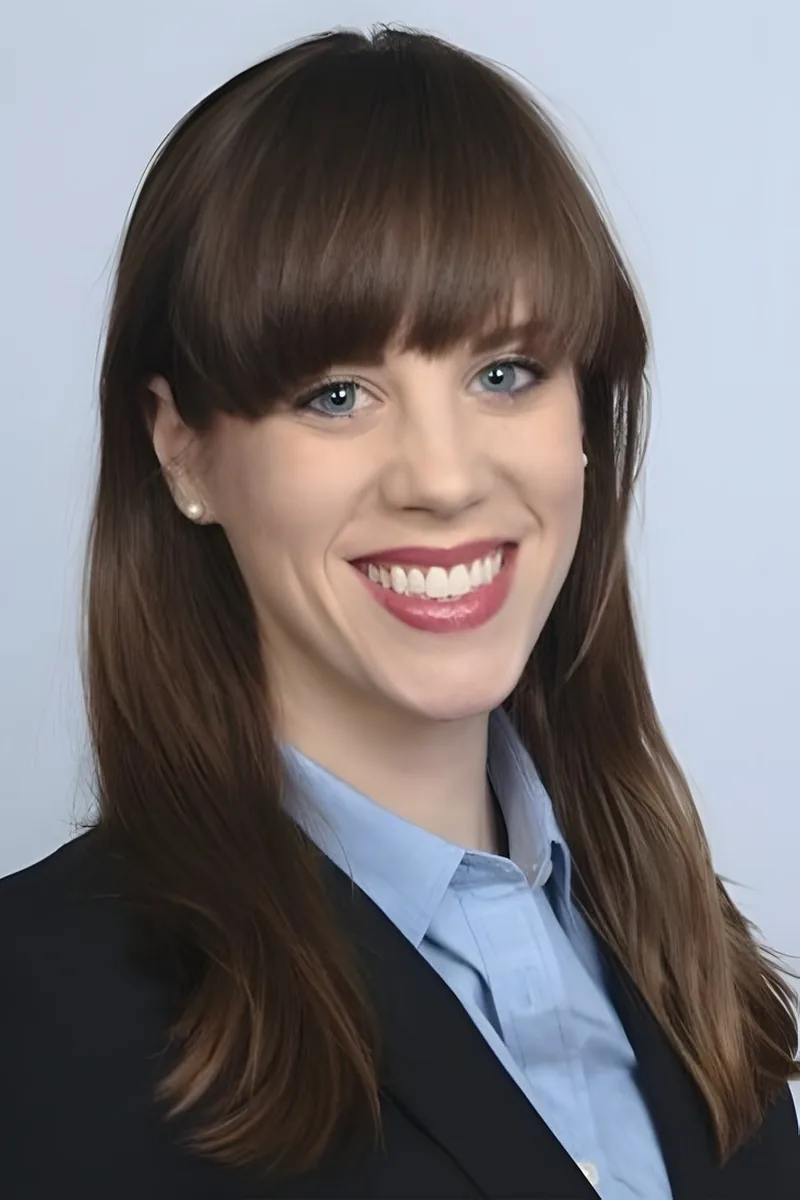
Gauss's law, Ampère's law, RC circuits — AP Physics C: E&M piles abstract vector calculus on top of already counterintuitive electromagnetic concepts. Victoria unpacks each topic by building physical intuition first, like visualizing electric field lines before setting up a flux integral, so the math serves the physics instead of obscuring it. Her background in medical imaging gives her real-world examples of how electromagnetic principles show up beyond the textbook.
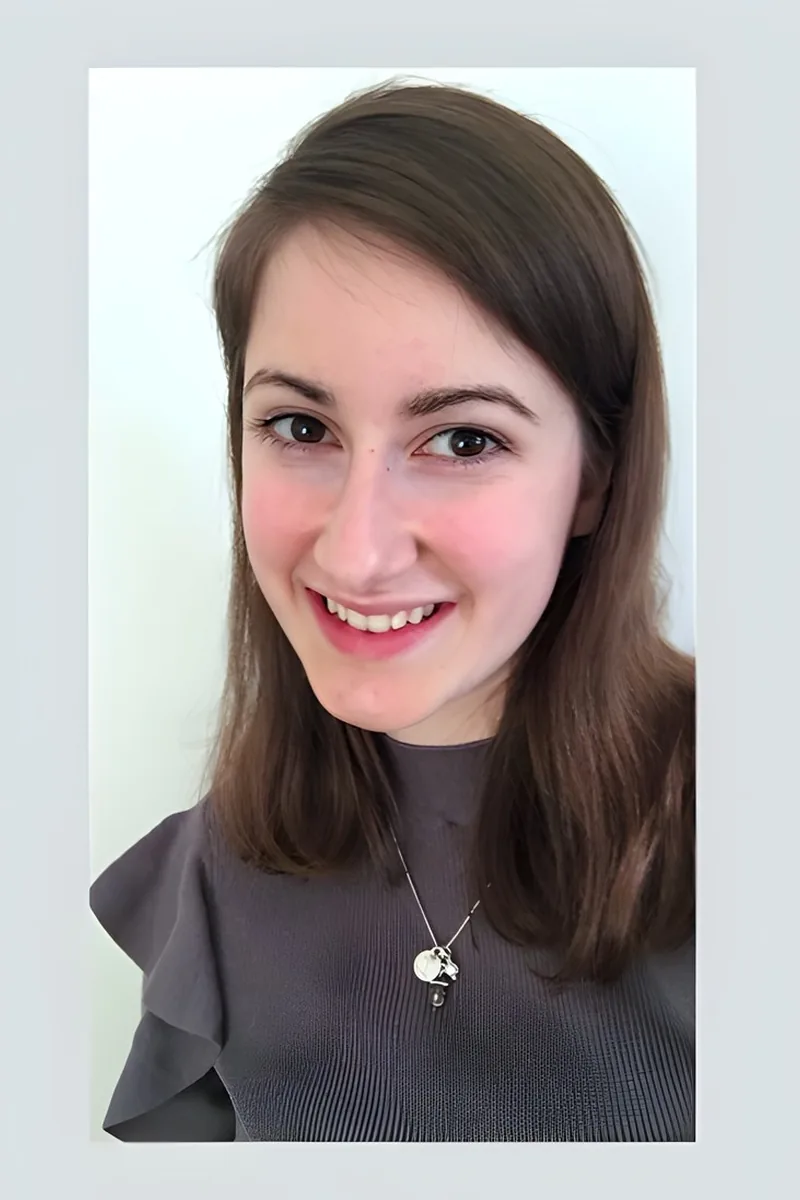
Gauss's law, Ampère's law, Faraday's law — AP Physics C: E&M throws a wall of abstract vector calculus at students who were just getting comfortable with mechanics. Lillian tackles each law by grounding it in a concrete physical scenario first, then layering in the math. Her systematic approach to problem-solving, sharpened through years of STEM coursework, translates well to navigating complex circuit and field problems.
AP Physics C: E&M is where most students first encounter vector calculus applied to real physical systems — Gauss's law in integral form, Ampère's law with displacement current, Faraday's law across non-trivial geometries. Burhanuddin's coursework at Georgia Tech goes deep into these topics daily, and he breaks down the connection between the math and the physics so that problems involving capacitors, inductors, and RC/RL circuits stop feeling like guesswork.
Electromagnetism was the centerpiece of Michael's teaching at the University of Michigan, where he designed and led undergraduate lab courses on circuits, fields, and waves. AP Physics C: E&M demands comfort with Gauss's law, Ampère's law, Faraday's law, and RC/RL circuit analysis — all topics he's taught extensively at the college level. He knows exactly where the conceptual gaps tend to open up, especially around flux integrals and the superposition of electric fields.
Gauss's law, Ampère's law, and RC circuits can feel impossibly abstract until someone connects the math to something tangible. Matthew's engineering coursework in electrical systems gives him practical fluency with E&M concepts, and he teaches students to visualize field lines and charge distributions rather than just grinding through integrals. His 5.0 rating speaks to how well that approach lands.
Gauss's law, Ampère's law, Faraday's law — AP Physics C: E&M asks students to wield vector calculus in physical contexts that feel genuinely abstract at first. Jacques tackles this by grounding each law in a concrete setup (a charged sphere, a solenoid, a changing magnetic flux) before layering in the integral formulations. His engineering training at Princeton and decades of classroom physics teaching make him unusually comfortable in this territory.
Gauss's law, Ampère's law, Faraday's law — AP Physics C: E&M asks students to wield vector calculus in physical contexts that feel deeply abstract. Shira tackles this by grounding each law in a concrete scenario first (a charged sphere, a solenoid, a changing magnetic flux) before layering on the integral setup, so students build physical intuition alongside mathematical fluency.
I love to teach. I love young minds and fresh brains. Those are just like clean sheets of papers I can draw anything I like. I really like to help young people to achieve their full capacities with my long experience of teaching. I am very patient and good at explaining complex concepts in simple terms. I am looking forward to meeting students who need my help.
Gauss's law, Ampère's law, Faraday's law, RC circuits — AP Physics C: E&M asks students to wield vector calculus in physical contexts most haven't encountered before. Justin earned his bachelor's in physics and mathematics at Washington University in St. Louis before completing a PhD in Computational Mathematics at the University of Chicago, giving him the exact blend of mathematical rigor and physical intuition this course demands. He breaks down intimidating surface integrals and field superposition problems into clear, repeatable reasoning steps.
Gauss's law, Ampère's law, Faraday's law — E&M demands comfort with vector calculus that most high schoolers haven't fully developed yet. Sanjana's applied math training at Harvard means she can teach the calculus and the physics simultaneously, connecting flux integrals and field equations to physical intuition rather than leaving students to wrestle with two subjects at once.
Gauss's law, Ampère's law, Faraday's law — AP Physics C: E&M asks students to wield vector calculus inside electromagnetic theory, which is a steep jump from most prior coursework. Steven approaches each topic by first explaining the physical picture, then showing the mathematical framework, then working through a practical example that ties both together. His PhD in chemical engineering required deep work with electromagnetic principles and multivariable calculus alike.
Gauss's law, Ampère's law, Faraday's law — AP Physics C: E&M asks students to think in vector fields and surface integrals, which is a major leap from mechanics. As an astrophysics and chemistry double major at CU Boulder, Graham works with electromagnetic theory as a core part of his studies and breaks down each law into the physical picture behind the math. He holds a 5.0 rating from students.
Testimonials
Because the right AP Physics C: Electricity and Magnetism tutor makes all the difference.
Average Session Rating – Based on 3.4M Learner Ratings
Practice AP Physics C: Electricity and Magnetism
Free practice tests, flashcards, and AI tutoring for AP Physics C: Electricity and Magnetism
Other Albuquerque Tutors
Related Science Tutors in Albuquerque
Frequently Asked Questions
AP Physics C: Electricity and Magnetism focuses on electric fields, electric potential, capacitance, current and resistance, magnetic fields, and electromagnetic induction. The course emphasizes calculus-based problem-solving, so you'll work with derivatives and integrals to analyze how charges and magnetic fields interact. Understanding these concepts deeply is essential for success on the AP exam, which tests both conceptual understanding and mathematical application.
This course combines abstract concepts with rigorous calculus, making it one of the more demanding AP sciences. Many students struggle with visualizing electromagnetic phenomena and applying calculus to physics problems simultaneously. Additionally, the exam requires quick problem-solving under time pressure, so pacing and strategic problem selection are critical skills that separate high scorers from those who fall short.
Personalized 1-on-1 instruction allows tutors to identify your specific weak areas—whether that's Gauss's law, circuit analysis, or magnetic force calculations—and target them directly. Most students see meaningful improvement when they work consistently with a tutor who can clarify difficult concepts and build problem-solving strategies tailored to your learning style. The timeline depends on your starting point and how much you practice, but many students improve by 1-2 score points with focused preparation.
Practice tests are essential—they help you understand the exam format, identify weak topics, and build stamina for the 90-minute exam. Tutors often recommend taking full-length practice tests every 2-3 weeks during your preparation, then reviewing incorrect answers in detail to understand why you missed them. This combination of practice testing and targeted review is one of the most effective ways to improve your score.
The exam gives you 90 minutes for 35 multiple-choice questions and 3 free-response problems. A smart approach is to spend about 45 minutes on multiple-choice (roughly 1.3 minutes per question) and reserve 45 minutes for free-response, where you can earn partial credit. Tutors can help you practice this pacing and teach you which problems to tackle first based on difficulty, so you maximize your points rather than getting stuck on one hard question.
Varsity Tutors connects students in Albuquerque with expert tutors who specialize in AP Physics C: Electricity and Magnetism and understand the specific challenges of this course. When you get matched with a tutor, you can discuss your current level, target score, and timeline so they can create a personalized study plan. Whether you need help with a single tough concept or comprehensive exam prep, tutors can work around your schedule and learning pace.
Your first session is typically diagnostic—the tutor will assess your current understanding of key topics, discuss your goals and timeline, and identify which areas need the most work. You might review a practice problem or past exam question to see where you struggle most. From there, the tutor will outline a customized study plan that focuses on your weaknesses while reinforcing your strengths.
Confidence comes from mastery and repeated practice under realistic conditions. Tutors help build confidence by breaking down intimidating topics into manageable pieces, celebrating progress, and having you solve problems under timed conditions so the exam format feels familiar. When you understand the material deeply and have practiced extensively, anxiety naturally decreases because you know you're prepared.
Let’s find your perfect tutor
Answer a few quick questions. We’ll recommend the right plan and match you with a top 5% tutor.