Award-Winning 12th Grade AP Economics
Tutors
Who needs tutoring?
FEATURED BY


TUTORS FROM
- YaleUniversity
- PrincetonUniversity
- StanfordUniversity
- CornellUniversity
Award-Winning 12th Grade AP Economics Tutors

Certified Tutor
2+ years
Blue
I'm a certified tutor with three years of experience in math and science. I tailor lessons to each student's learning style, making difficult concepts easy to understand. My goal is to build confidence and help students achieve lasting academic success.
Marywood University
Bachelor's

Certified Tutor
9+ years
Jai
I'm a recent Stanford graduate (Electrical Engineering and Computer Science), and have been working at a major Management Consulting firm for a few years now. I personally scored a 2360 (out of 2400) on the SAT and 35 on the ACT and was successful in gaining admission to several top universities. I'...
Stanford University
Bachelors in Electrical Engineering and Computer Science
Certified Tutor
Kate
I'm available to tutor biology, chemistry, physics, math from Algebra up through AP Calculus, SAT test prep, and French. I've been tutoring students in science and math for 7 years. I also spent 8 months working and studying in France, and have tutored high school and adult students in French. When ...
Massachusetts Institute of Technology
Masters, Environmental Engineering
Massachusetts Institute of Technology
Bachelors
Certified Tutor
I am a licensed physician from Florida who is currently changing careers. I graduated from the University of Pennsylvania in 2009 and have extensive tutoring and editing experience. While a student, I became a certified writing tutor through the Critical Writing Department. Since I completed my writ...
Nova Southeastern University
PHD, Medicine
University of Pennsylvania
Bachelors, History
University of Pennsylvania
undergraduate

Certified Tutor
6+ years
Jeffrey
I am enrolled in the Mechanical Engineering PhD program at Rice University which will begin Fall 2020, and I am hoping to return to academia as a professor after earning my PhD. In the meantime, I am looking to share my passion for gaining knowledge, specifically in STEM, by educating the up and com...
University of Notre Dame
Bachelor of Science
Rice University
Doctor of Philosophy, Mechanical Engineering
Certified Tutor
6+ years
Rhea
I am a current student at the University of Chicago. I am working towards a Bachelor of Science in Biological Sciences, and I am on the pre-medical track. I am extremely passionate about tutoring, and I have several years of experience tutoring students in my high school's learning center in various...
University of Chicago
Bachelor of Science, Biology, General

Certified Tutor
Erika
I am available to tutor middle and high school math, history and test prep. I have tutored math and history in the past and I previously taught a test prep course at a school in Hanoi, Vietnam. I have a lot of experience teaching all the need-to-know tricks to doing great on the SATS/ACTS! When I am...
Harvard University
Master of Public Policy, Public Policy
Certified Tutor
10+ years
Earnest
I am comfortable with either setting. I'm confident that I can help you (or your student) achieve to the best of their ability, so please don't hesitate to get in touch!
University of Pennsylvania
Masters, Chemical and Biomolecular Engineering
University of Pennsylvania
Bachelors, Chemical and Biomolecular Engineering
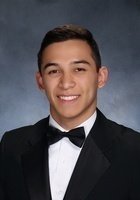
Certified Tutor
6+ years
Samuel
I am a freshman at Caltech majoring in Applied and Computational Mathematics. My favorite subject to tutor is math because I find it very rewarding to simplify complex topics to aid in understanding. I have lots of tutoring experience. In high school, I ran and taught an SAT prep class and was vice ...
California Institute of Technology
Bachelor of Science, Applied Mathematics
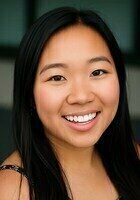
Certified Tutor
10+ years
Samantha
I'm a first-year medical student and recent graduate from Duke University, where I studied Global Health Determinants, Behaviors, and Interventions. From running a piano program at a nonprofit children's theatre to private tutoring in math, science, and standardized test prep, I enjoy helping my stu...
Duke University
Bachelors in Global Health Determinants, Behaviors, and Interventions
Harvard Medical School
Current Grad Student, MD
Top 20 Business Subjects


Meet Our Expert Tutors
Connect with highly-rated educators ready to help you succeed.
Sharon
Pre-Algebra Tutor • +29 Subjects
I am a graduate of the University of Chicago, and I will be starting a graduate program at Columbia in August. I am about to complete a year of service with City Year, an education non-profit that places young adults into under-served schools. As a City Year member, I worked full-time in the classroom with middle-school students who were in approximately the 10th percentile for math (meaning they score lower than 90% of students). One-fourth of those students were able to grow around 15 percentile points by the end of the year! Hobbies: reading, cooking, gardening, music, art, nature, books, writing
MaryAnn
Calculus Tutor • +21 Subjects
I am a published author who has enjoyed “coaching” our daughter, as she navigated through high school, college and graduate school. I mentor college juniors who are seeking careers in financial services, and I serve as a peer resource to professionals who are transitioning from private industry to the nonprofit sector. Hobbies: reading, cooking, writing, books, music, art, travel
Annie
Pre-Algebra Tutor • +28 Subjects
I am currently a second year medical student. I was a Physiological Sciences major at UCLA (class of 2015), and pursued research during my gap year between undergrad and medical school.
Matthew
Pre-Algebra Tutor • +39 Subjects
I'm a highly creative person who works best with visual thinkers. Very recently graduated from Stanford University, I majored in Human Biology with a concentration in Bioinformatics and Stem Cell Science. Technical though my background may be, I am currently gigging as a singer/songwriter/composer in NYC and tackle even the most hard-science of problems with a top-down, big-picture, holistic approach. If you have a propensity to look at problems in a cross- or inter-disciplinary manner (or want to learn how to do so), I'm the tutor for you!
Charles
AP Calculus AB Tutor • +25 Subjects
I am a junior Mechanical Engineering major at Yale, and I hope to become a Naval Aviator after college. I am also a varsity sailor, and enjoy playing music with friends when I can get some free time. I have been tutoring my fellow students throughout my entire academic career, and I would best describe my tutoring style as one that adapts to each students' needs. For example, I have always tried to frame questions in a different way so that the student can better understand the question. Some students need visual representations of numbers and systems to understand them, and others benefit more by understanding the concepts behind each formula. I prefer to tutor in math and physics, and especially with real world application problems. I hope to help students improve their standardized test scores and their understanding of the math and sciences so that they can achieve their academic goals! Hobbies: art, books, running, reading, music, writing
Zachary
Trigonometry Tutor • +35 Subjects
I am passionate about teaching and tutoring and I thoroughly enjoy helping students gain an understanding and a drive for their studies. I have a long history of working with students of all grade levels and abilities (elementary school through college), and I have a good understanding of strategies to excel in both general academics and standardized tests.
Tony
Calculus Tutor • +28 Subjects
I am a recent graduate of Yale University and incoming first year medical student at Columbia University. Originally from the DC area, I have always had a passion for science and medicine and pursued a degree in Biology while at Yale. During the 2008-2009 academic year, I tutored science, math, English, history, and Mandarin Chinese part-time with a DC-based tutoring company. At Yale, I worked as a freshman counselor to provide academic and career advice to incoming freshmen. I have taken both SAT and MCAT test prep classes and am familiar with both tests as well as the preparation necessary to score well. My personal career goals include attending medical school to pursue either immunology/infectious diseases or psych/neurology, teaching biology at the university level, and working in public/global health with either the CDC or the WHO.
Tiffany
Pre-Algebra Tutor • +56 Subjects
I am available to tutor a broad range of subjects, I am passionate about test preparation, Accountancy, and Algebra.
Sami
Pre-Algebra Tutor • +19 Subjects
I am a Duke University graduate in Economics and Computer Science. I am currently pursuing an MBA degree at the Yale School of Management. I have worked in the financial field, both at a management consulting firm and a fortune 500 company. My hobbies include playing and coaching soccer. Hobbies: reading, writing, art, books, music
Quinn
Calculus Tutor • +17 Subjects
I am willing to address any issue with an open mind and I try to develop strategies that play to a student's strengths. I would like to think I am very approachable and personable, and I have had very positive experiences with many students in the past using this philosophy. Outside of academics, I love playing basketball and watching sports, as well as chilling with friends, listening to music, and keeping up with politics and current affairs.
Top 20 Subjects
Frequently Asked Questions
Students often find the transition from microeconomics to macroeconomics conceptually difficult, especially understanding how individual market decisions aggregate to economy-wide effects. Supply and demand elasticity calculations, foreign exchange markets, and monetary policy mechanisms (particularly how the Federal Reserve influences interest rates and inflation) consistently trip up test-takers. Additionally, many students struggle with the mathematical modeling required for production possibilities curves, cost analysis, and GDP calculations—not because the math is hard, but because they haven't connected the formulas to real economic scenarios. A tutor can help you build these connections and develop the intuition needed to apply concepts to unfamiliar situations on the exam.
The free-response section tests your ability to apply economic concepts to real-world scenarios, not just define terms. Each question typically requires you to identify the relevant economic principle, draw or explain a graph, and then interpret what that graph means in context. Many students lose points by jumping straight to drawing without first identifying which concept applies—spending 30 seconds reading and thinking before you write can prevent costly mistakes. Tutors who specialize in AP Economics can teach you to recognize the question patterns (price controls, tax incidence, monetary policy transmission, etc.) and develop a consistent framework for structuring your responses so you hit all the grading rubric points efficiently.
AP Economics requires you to not just draw graphs—supply and demand curves, Phillips curves, production possibilities frontiers—but to shift them correctly and explain what the shift means economically. Students often memorize that "demand increases" without understanding *why* it increases in a given scenario, which leads to incorrect graph shifts and flawed analysis. The exam also tests whether you can read unfamiliar graphs and extract economic meaning from them, which requires deep conceptual understanding rather than memorization. A tutor can walk you through the logic of why variables shift (changes in consumer preferences, technology, input costs, expectations) and help you build the mental models that make graph work intuitive rather than mechanical.
You have roughly 70 minutes for 60 multiple-choice questions, which sounds generous until you realize some questions require reading a scenario, interpreting a graph, and working through the economic logic—all in under a minute. The key is identifying which questions are straightforward definitional checks versus which require deeper analysis, so you can allocate your time strategically. Many students waste time re-reading questions or second-guessing themselves on concepts they actually understand. Working through timed practice tests with a tutor helps you develop pattern recognition for question types and builds the confidence to move forward decisively, which is often the difference between a 4 and a 5 on test day.
Test anxiety in AP Economics often stems from encountering an unfamiliar scenario or graph on the exam and panicking because you don't immediately recognize it. When you've worked through dozens of practice problems and seen how examiners remix the same core concepts in different contexts, you build confidence that you can figure out what's being asked. Tutors can also help you develop a pre-exam routine and a problem-solving checklist (identify the concept, draw the model, predict the direction of change, interpret the result) that gives you a structured approach when you feel stuck. This shifts anxiety from "I don't know what to do" to "I have a system to work through this," which is a game-changer on test day.
The best way is to take full-length practice tests under timed conditions and analyze your mistakes by category: Did you miss it because you misunderstood the concept, misread the question, made a calculation error, or ran out of time? Grouping your errors this way reveals patterns—for example, if you consistently miss questions about inflation and unemployment relationships, that's a signal to deepen your understanding of the Phillips curve and expectations-augmented models. Tutors can help you interpret your practice test results strategically, prioritize which topics to focus on based on how many points they're worth on the exam, and create a targeted study plan rather than re-reading your textbook cover-to-cover.
Score improvement depends heavily on where you're starting and how much time you invest. A student scoring a 2 or 3 who commits to 4-6 weeks of focused tutoring (2-3 sessions per week) and completes practice problems between sessions can often reach a 4, which represents a solid understanding of core concepts. Moving from a 4 to a 5 typically requires more time and deeper mastery, as it means you need to handle complex multi-step scenarios and unusual question formats with confidence. The most significant gains come from students who use tutoring to identify specific concept gaps, work through them systematically, and then apply those concepts to new practice problems—not from last-minute cramming.
Look for a tutor who has scored well on the AP Economics exam themselves and understands the specific rubrics and expectations of the free-response section—not just someone who knows economics broadly. They should be able to explain *why* a particular answer is correct and why common student misconceptions lead to wrong answers, and they should be comfortable working through both micro and macro topics at the depth required by the AP curriculum. The best tutors stay current with recent exam questions and can teach you to recognize question patterns, manage your time strategically, and develop the intuition to apply concepts to unfamiliar scenarios—skills that separate high scorers from the rest.
Connect with 12th Grade AP Economics Tutors
Get matched with expert tutors in your subject