Award-Winning Latin Tutors
serving Grand Rapids, MI
Latin
Tutors in Grand Rapids
Private 1-on-1 tutoring, weekly live classes for academic support, test prep & enrichment, practice tests and diagnostics, and more to elevate grades and test scores.
Based on 3.4M Learner Ratings
UniversitiesSchools & Universities
DeliveredHours Delivered
ProficiencyGrowth in Proficiency
Who needs tutoring?
No obligation. Takes ~1 minute.
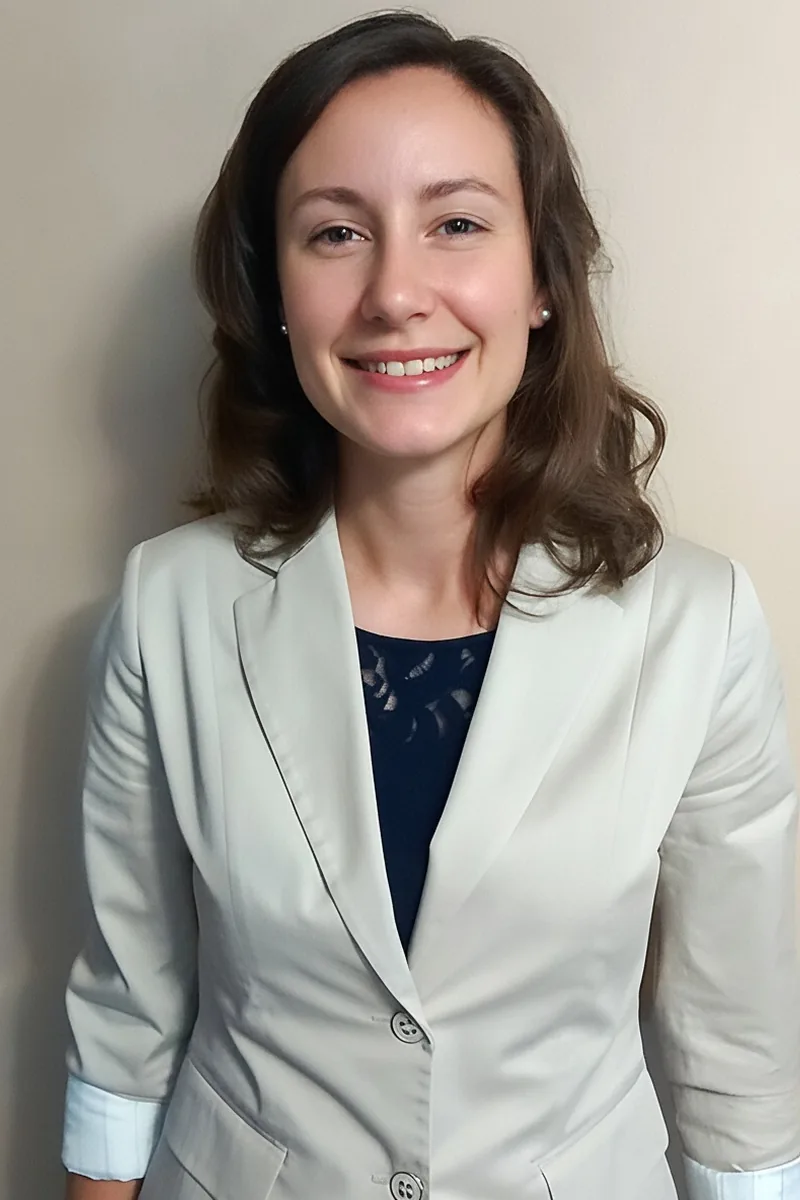
Latin is essentially a giant logic puzzle: every sentence requires students to identify case endings, parse verb forms, and reconstruct meaning from an unfamiliar word order. Mary tackles translation by building systematic habits around declensions and conjugations, then applies them to real passages so students see the language come alive in context.

I am a Dartmouth graduate. I am currently working on my med and business endeavors. I have not only an interest, but a motivation to help others. I have helped students get into Ivy League schools as well as other top universities across the country with top scholarships. I tutor in all subjects from French to Essay Writing and Algebra to Chemistry! I want my students and tutees to see the value in themselves and know that they can accomplish anything with determination and hard work! Realizing you can do it is half the battle and working hard to bring that dream to fruition is the other half!
An honors thesis on linguistic relativity among bilinguals gave Mary a researcher's eye for how languages encode meaning differently — exactly the kind of thinking that makes Latin's case system and word order feel logical rather than arbitrary. She teaches all three levels and draws on her speech-language pathology training at Vanderbilt to break down how Latin's morphological patterns actually work at a structural level, not just as rules to memorize. Rated 5.0 by students.
Four years of Latin at Notre Dame — enough to earn a minor — gave Lauren deep fluency with declensions, conjugations, and the grammatical logic that makes translating Virgil or Caesar feel less like guesswork. She teaches students to parse sentence structure methodically, starting with verb identification and working outward, so even complex passages become manageable. Rated 5.0 by students.
Physics training builds a habit of reading equations as sentences — every symbol has a role, every operation has a reason — and Cory applies that same structural decoding to Latin grammar, where case endings and verb forms function like variables in a well-defined system. He's not a classicist, but his 4.9 rating across dozens of subjects reflects someone who can break any rule-driven discipline into logical, learnable steps, which is exactly what first- and second-year Latin students need when declension tables start to blur together.
Trained in Latin and Italian philology at Palacký University in the Czech Republic, Petra brings a European classical education to a language most American students encounter only through textbooks — she learned Latin as a living system intertwined with Italian, tracing how derivatives and grammatical structures migrated from one language into the other. That dual-language fluency is especially useful for teaching vocabulary roots, verb conjugations, and the way Latin's case system laid the groundwork for Romance language grammar. Rated 4.9 by students.
Skylar took Latin through the graduate level at Johns Hopkins and earned a 5 on the AP Latin exam, so she knows the language from first-declension basics all the way through Vergil and Caesar at an advanced level. She breaks down complex constructions — ablative absolutes, indirect discourse, subjunctive clauses — by connecting grammar to the logic of what a Roman author is actually trying to say. That approach turns translation from guesswork into a skill students can repeat on any unseen passage.
Peter's history degree means he's spent years working with primary sources where Latin isn't decorative — it's the language of legal charters, church records, and the political documents that shaped Western civilization. That historical grounding gives him a concrete reason to teach case endings and verb forms: students learn to parse real inscriptions and texts, not just textbook exercises. Rated 4.8 by students.
Zachary's PhD work at Harvard sits squarely at the intersection of German philosophy and classics, meaning he reads Latin not as a classroom exercise but as a daily tool for engaging with primary texts in their original language. He teaches all four levels and is especially sharp on the grammatical precision needed for dense philosophical and literary passages — ablative constructions, purpose clauses, and the kinds of nested relative clauses that make students' eyes glaze over until someone unpacks the logic holding them together.
While Latin isn't Tara's primary subject, her science and medical coursework has given her deep familiarity with Latin roots, prefixes, and terminology that form the backbone of the language. She approaches Latin grammar with the same systematic, pattern-based thinking she uses in her science studies — breaking declensions and conjugations into logical structures rather than rote memorization lists.
Studying Classics at Yale means Maddie doesn't just translate Latin — she lives inside the language, reading original Roman texts as part of her daily coursework across all four levels and beyond. Her Socratic instinct kicks in during translation work especially: rather than correcting a misidentified subjunctive or misread ablative, she asks targeted questions that lead students to catch the error themselves and internalize the grammar rule behind it.
A college English professor with dual degrees in the field, Toni knows how deeply Latin roots and grammatical structures run through the English language — every lesson on cases, conjugations, or syntax doubles as a window into why English works the way it does. She teaches Latin as a discovery process, encouraging students to piece together translations by recognizing patterns rather than relying on word-for-word lookup. Her 4.9 rating speaks to how well that active, student-driven approach lands.
Studying Classics alongside Physics at Vanderbilt means Dylan reads Latin daily as part of his actual degree work — not as a side interest but as a core discipline. That dual training sharpens his ability to teach grammar as a logical system, walking students through subjunctive constructions, indirect statements, and the kinds of prose passages where precision with every case ending matters.
Studying through all four levels of Latin while majoring in psychology and minoring in neuroscience at Texas A&M, Paris knows the language from both the humanities and the scientific side — Latin roots show up constantly in her neuroscience coursework, which keeps the vocabulary alive and practical. She teaches grammar by building systematic habits around case identification and verb parsing, so students develop the kind of methodical reading process that holds up when sentences get long and layered. Rated 5.0 by students.
Testimonials
Because the right Latin tutor makes all the difference.
Average Session Rating – Based on 3.4M Learner Ratings
Other Grand Rapids Tutors
Related Languages Tutors in Grand Rapids
Frequently Asked Questions
Latin builds a strong foundation for understanding English vocabulary, grammar, and the Romance languages like Spanish and French. Beyond academics, learning Latin connects students to classical literature, history, and culture that shaped Western civilization. For college applications, demonstrating Latin proficiency shows intellectual rigor and commitment to deep learning.
Verb conjugation is one of the most challenging aspects of Latin because verbs change based on person, number, tense, mood, and voice. The key is breaking conjugations into patterns rather than memorizing each form individually. Personalized tutoring helps you identify which patterns you find most difficult and practice them with targeted exercises and real text examples until they become automatic.
Spaced repetition—reviewing words at increasing intervals—is one of the most effective learning techniques for vocabulary retention. Connecting Latin words to their English derivatives (like "aqua" to "aquarium") creates memorable associations. A tutor can help you build personalized vocabulary systems and integrate new words into reading practice so they stick long-term.
Reading Latin requires understanding not just individual words but also grammar structures, sentence construction, and cultural context. Tutors work with you on parsing sentences, identifying grammatical relationships, and building confidence with authentic texts from authors like Cicero, Virgil, and Ovid. With personalized 1-on-1 instruction, you can tackle challenging passages at your own pace and ask questions that might get overlooked in a classroom setting.
Yes—one of the biggest advantages of personalized tutoring is dedicated speaking practice. While classroom settings rarely provide time for conversation, tutors can engage you in Latin dialogue, help you develop proper pronunciation, and build confidence speaking the language aloud. This oral practice strengthens your overall comprehension and makes the language feel more alive and connected to its historical roots.
AP Latin exams test reading comprehension, translation accuracy, and understanding of Roman culture and history. Tutors familiar with the exam format can help you develop efficient translation strategies, practice with released exam questions, and build the cultural knowledge needed for the essay section. With targeted preparation, you'll learn to manage time effectively and approach unfamiliar passages with confidence.
Your first session focuses on understanding your current level, learning goals, and specific challenges—whether that's grammar, translation, or exam preparation. A tutor will assess your strengths and areas for growth, then work with you to create a personalized learning plan. This foundation ensures every future session builds directly toward your goals.
Varsity Tutors connects you with expert tutors who have deep knowledge of Latin grammar, classical texts, and effective teaching methods. You can specify your needs—whether you're preparing for AP exams, tackling difficult coursework, or exploring Latin for the first time—and get matched with a tutor who fits your learning style. Most tutors offer flexible scheduling to work around your school and activities.
Let’s find your perfect tutor
Answer a few quick questions. We’ll recommend the right plan and match you with a top 5% tutor.