Award-Winning College Algebra Tutors
serving Boston, MA
College Algebra
Tutors in Boston
Private 1-on-1 tutoring, weekly live classes for academic support, test prep & enrichment, practice tests and diagnostics, and more to elevate grades and test scores.
Based on 3.4M Learner Ratings
UniversitiesSchools & Universities
DeliveredHours Delivered
ProficiencyGrowth in Proficiency
Who needs tutoring?
No obligation. Takes ~1 minute.

Public policy analysis at the University of Chicago is surprisingly algebra-intensive — regression models, cost-benefit frameworks, and data-driven policy arguments all depend on fluency with functions, systems of equations, and logarithmic relationships. Noel brings that analytical training to college algebra, breaking down topics like rational expressions and inequalities by connecting them to the quantitative reasoning he used daily in his coursework. Rated 4.9 by students.
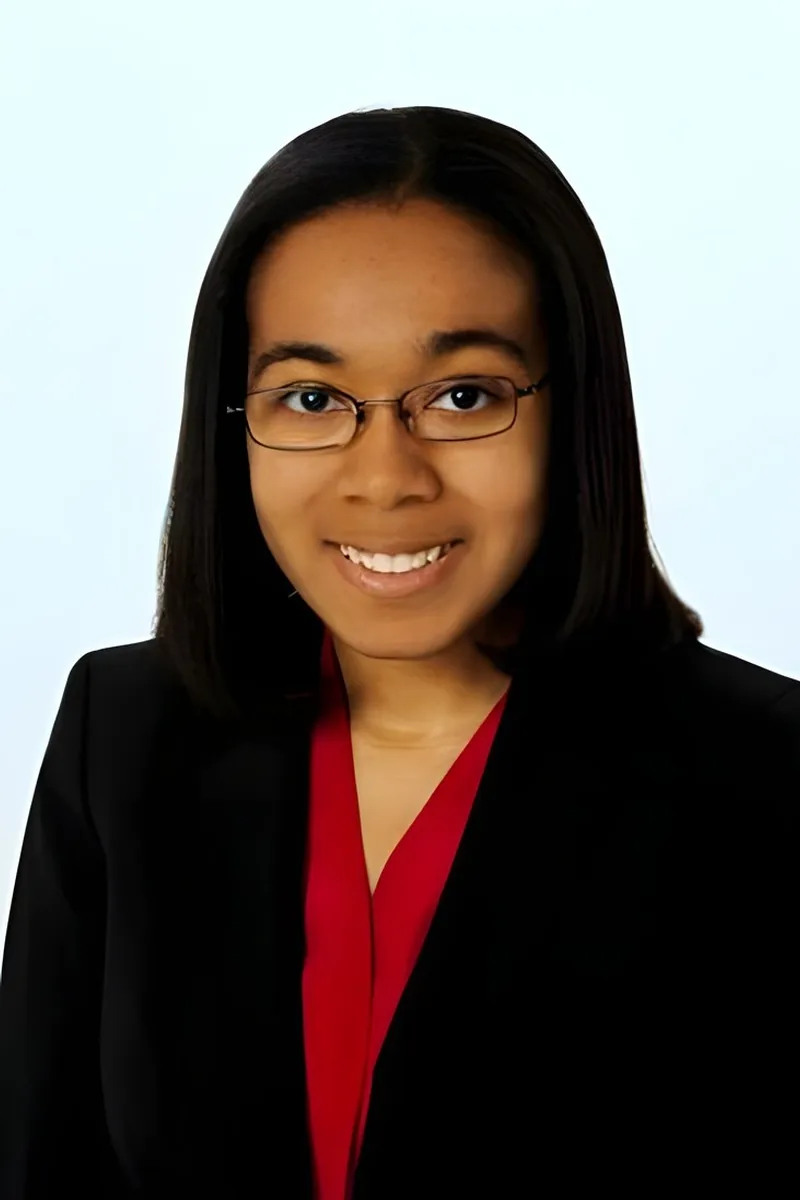
A Harvard Medical School graduate, Jean uses the analytical rigor from her science training to unpack college algebra topics like polynomial functions, logarithmic equations, and systems of inequalities. She's particularly skilled at identifying which foundational gaps — often from years earlier — are causing confusion in higher-level material, then addressing those gaps efficiently so students can keep pace with their coursework.
A chemistry degree means Won spent years solving equilibrium expressions, rate law equations, and stoichiometric systems — all of which demand the same algebraic fluency that college algebra courses test, from manipulating rational expressions to working with logarithmic and exponential functions. Now preparing for medical school, he still uses that toolkit daily for MCAT quantitative reasoning, so he can walk through a tricky polynomial or function composition problem with the confidence of someone who actually depends on these techniques outside a math classroom.
Psychology research gave Anthony a surprising amount of algebraic muscle — designing experiments means building models with functions, interpreting logarithmic scales on data plots, and solving equations that describe behavioral trends. He pairs that quantitative background with a 35 ACT and a knack for walking through problems in plain, precise language, which is exactly what makes tricky topics like rational expressions or function transformations click. Rated 5.0 by students.
I am also a first year medical student at the Tufts University School of Medicine in Boston. I have extensive experience with premedical classes and have taken and tutored the MCAT exam. I placed in the 97th percentile of the MCAT exam and I understand what the test takers want students to know and how to bridge the gap between knowing the material and doing well on the test. I am always excited when a student finally has that "ah-ha" moment and declares that they now can see how all of these seemingly separate scientific topics are actually all related. The MCAT no longer seems scary, but turns into a means of truly learning this material and providing a strong foundation for the future.
Mechanical and biomedical engineering forced Jennifer to internalize algebraic reasoning at a level most students never reach — solving systems of equations to model fluid dynamics, using logarithmic relationships to interpret sensor data, and manipulating rational expressions in circuit and signal analysis. Her dual bachelor's degrees plus a master's in biomedical engineering mean she can trace a tricky college algebra concept like function composition or exponential modeling back to the physical problem it was designed to solve, giving students a reason to care about the math instead of just memorizing steps.
Harvard Medical School requires constant quantitative reasoning — dosage calculations, pharmacokinetics, statistical models — all built on the same algebraic manipulation of functions, exponents, and equations that college algebra courses demand. Zoe's undergraduate study of Science, Technology, and Society at Vassar gave her practice translating between technical and intuitive explanations, which she now applies to unpacking problems like solving rational inequalities or interpreting logarithmic behavior. Rated 5.0 by students.
Running Alzheimer's and Parkinson's research as a biomedical engineer, Anthony regularly builds mathematical models that lean on the exact skills college algebra courses test — manipulating rational expressions, working with exponential and logarithmic functions, and solving multi-variable systems. His dual BU/Tufts engineering training means he can trace a concept like function transformations back to its underlying logic rather than just demonstrating the steps. Rated 4.9 by students.
Pharmacy students don't just take college algebra — they depend on it daily for dosage calculations, exponential decay models, and systems of equations that show up throughout their training. Amy is currently living that connection at Northeastern, which means she can explain concepts like logarithmic functions or polynomial division with real applications attached. She scored 1550 on the SAT, reflecting the quantitative fluency she brings to every session.
Polynomial division, rational expressions, logarithmic equations — college algebra packs a lot of abstraction into one course. Patrick's science background means he's used these tools extensively in research contexts, and he's skilled at connecting algebraic techniques to concrete problems so the mechanics actually make sense. He holds a 5.0 client rating.
Most college algebra students struggle not with individual steps but with knowing which technique to reach for — is this a substitution problem, a logarithmic property, or a factoring trick? Peter's biomedical engineering training at BU means he's constantly choosing between these tools under pressure, whether he's modeling physiological systems or analyzing lab data. His 1550 SAT backs up the quantitative instincts, and he's sharp at making the decision-making process behind each problem type explicit.
I am a third year student at Northeastern University. I am a double major in English and Mathematics, and studying to be a secondary school teacher here in Boston.
Three years in a biology research lab at Northeastern taught Hussein that algebra isn't optional in the sciences — modeling bacterial growth curves, calculating dilution series, and linearizing experimental data all demand fluency with exponential, logarithmic, and polynomial manipulation. He brings that applied comfort to college algebra, walking through problems like solving rational equations or interpreting function behavior with the directness of someone who's used these tools under real deadlines.
Justin pairs a math minor at Northeastern with a 35 ACT, so the algebraic reasoning behind topics like logarithmic equations, polynomial factoring, and systems of inequalities is something he's actively sharpening — not recalling from years ago. His debate background also trained him to explain his thinking step by step, which turns out to be exactly what's needed when a student is staring at a rational expression and can't see where to start. Rated 5.0 by students.
Debugging code is really just algebra in disguise — isolating variables, tracing how functions transform inputs, checking whether expressions evaluate the way you expect — and Christine does both daily as a computer science major with a math minor at Northeastern. That dual lens means she can walk through topics like rational expressions or logarithmic equations with the same systematic, step-by-step decomposition she uses to troubleshoot a program. Rated 4.9 by students.
Algebra is Desiree's self-described favorite subject, and her chemical and biomolecular engineering degree means she's spent years applying it under pressure — balancing reaction stoichiometry, modeling process dynamics, and solving systems that don't simplify neatly. She brings that real-world algebraic fluency to college algebra topics like rational expressions and exponential equations, connecting each technique to something concrete so the logic sticks. Rated 5.0 by students.
Attending the Arkansas School for Mathematics, Sciences, and the Arts — one of only sixteen public residential high schools in the country for gifted STEM students — gave Ryan an algebraic foundation that most tutors simply don't have, and his 34 ACT confirms the quantitative firepower behind it. He's especially effective at demystifying the transition points in college algebra where students stall out, like moving from basic equation-solving into domain restrictions on rational expressions or the logic behind logarithmic properties. Rated 5.0 by students.
Nnang's path through honors and AP-level math and science — capped by a CollegeBoard AP Scholar with Honors distinction — built the kind of algebraic fluency that makes him effective at untangling the spots where college algebra students typically stall, like manipulating rational expressions or working through logarithmic equations. He also tutors across the full math sequence from pre-algebra through calculus, so he can quickly pinpoint whether a gap traces back to an earlier concept and address it on the spot.
Testing electronics at Draper Labs meant Zachary was constantly solving for unknowns in circuit equations — the same algebraic reasoning behind systems of equations, rational expressions, and function manipulation that college algebra courses demand. His physics degree at Northeastern reinforced that toolkit from a theoretical angle, so he can walk through a problem like simplifying a complex rational expression by showing the logic driving each step. Rated 4.7 by students.
Testimonials
Because the right College Algebra tutor makes all the difference.
Average Session Rating – Based on 3.4M Learner Ratings
Practice College Algebra
Free practice tests, flashcards, and AI tutoring for College Algebra
Nearby College Algebra Tutors
Other Boston Tutors
Related Math Tutors in Boston
Frequently Asked Questions
College Algebra builds on high school fundamentals but moves deeper into conceptual understanding and application. Key topics include functions and their properties, polynomial and rational functions, exponential and logarithmic functions, systems of equations, matrices, and sequences. The main difference is the shift from procedural problem-solving ("how do I solve this?") to understanding why methods work and how to apply them to complex, multi-step scenarios. Many Boston students find the pace faster and the emphasis on mathematical reasoning more challenging than high school algebra.
Word problems require you to translate real-world situations into mathematical equations—a skill that's separate from being able to solve equations themselves. Many students can execute procedures but struggle to identify which concepts apply or set up the problem correctly. Tutors help by breaking down the translation process, teaching you to identify key information, recognize patterns in problem types, and develop a systematic approach. With personalized instruction, you'll build confidence in tackling unfamiliar problem types rather than relying on memorization.
"Showing work" means documenting your reasoning at each step so someone can follow your logic and understand your approach—not just seeing the final answer. This is crucial in College Algebra because instructors want to assess conceptual understanding, not just computational accuracy. Tutors help by teaching you to explain your steps clearly, justify why you chose a particular method, and organize your work in a logical way. This practice also helps you catch your own mistakes and deepens your understanding of underlying concepts.
Yes—math anxiety is common and very treatable through personalized instruction. When you work with a tutor one-on-one, you can ask questions without judgment, work at your own pace, and address specific gaps that may have built up over time. Tutors help by breaking complex topics into manageable pieces, celebrating small wins, and helping you see patterns and connections you might have missed in a classroom setting. Many students find that understanding the "why" behind concepts, rather than just memorizing procedures, reduces anxiety and builds genuine confidence in problem-solving.
Graphing requires connecting algebraic equations to visual representations—a conceptual leap that many students find challenging. Tutors help by using multiple approaches: working through transformations step-by-step, discussing how changes to an equation affect the graph, and using visual tools to build intuition. Rather than memorizing graphing rules, you'll learn to predict and explain why a graph looks the way it does. This conceptual understanding makes it much easier to work with functions throughout College Algebra and beyond.
Varsity Tutors connects you with tutors who have expertise in College Algebra and understand the specific challenges of the subject. When you get matched with a tutor, you can discuss your course materials, textbook, and instructor's expectations so instruction is tailored to what you're actually learning. Tutors familiar with Boston-area schools and colleges understand the local curriculum variations and can align support with your specific course needs. This personalized approach means you're not learning generic math—you're getting help with exactly what's on your exams and assignments.
Multi-step equations require organization, careful tracking of operations, and the ability to work systematically. Tutors help by teaching you strategies like writing out each step clearly, checking your work at intermediate stages, and verifying your answer by substituting back into the original equation. Beyond these mechanical strategies, tutors help you understand the underlying structure of equations—recognizing "families" of problems and knowing which techniques apply. This deeper understanding reduces mistakes because you're not just following memorized steps but understanding why each step makes sense.
Let’s find your perfect tutor
Answer a few quick questions. We’ll recommend the right plan and match you with a top 5% tutor.