Award-Winning College Algebra Tutors
serving Springfield, MA
College Algebra
Tutors in Springfield
Private 1-on-1 tutoring, weekly live classes for academic support, test prep & enrichment, practice tests and diagnostics, and more to elevate grades and test scores.
Based on 3.4M Learner Ratings
UniversitiesSchools & Universities
DeliveredHours Delivered
ProficiencyGrowth in Proficiency
Who needs tutoring?
No obligation. Takes ~1 minute.

Mechanical engineering at Harvard means Christopher doesn't just remember college algebra — he's actively building on it every semester, using polynomial models, systems of equations, and logarithmic relationships as the foundation for thermodynamics and structural analysis problems. He's especially good at flagging the common pitfalls in topics like rational expressions and function transformations, walking through exactly where sign errors or domain mistakes tend to creep in before they snowball. Rated 4.8 by students.
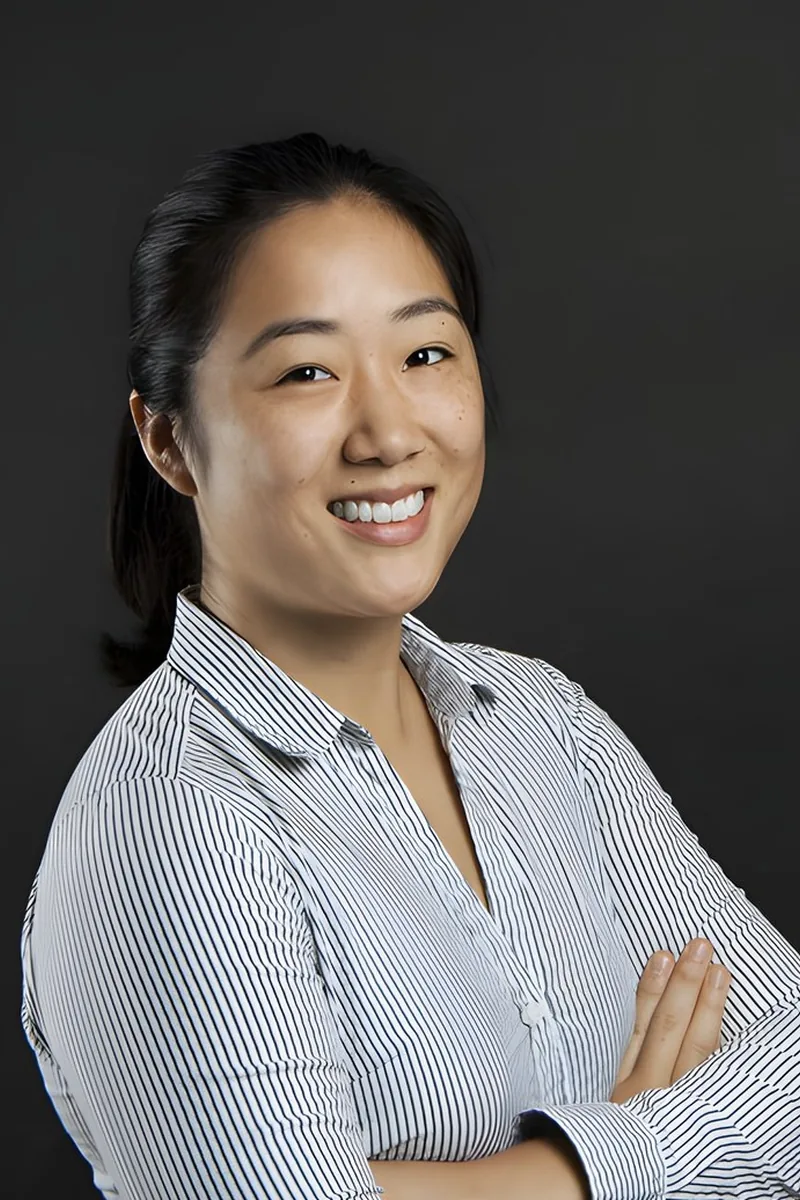
Political science at the University of Chicago is deceptively quantitative — game theory models, statistical analysis of polling data, and policy cost projections all run on the same algebraic machinery that college algebra courses formalize. Asta brings that background to topics like systems of equations and exponential functions, connecting abstract procedures to the kind of real-world modeling she actually did in her coursework. A 35 ACT and 5.0 tutoring rating back up the math instincts.
Rational expressions, polynomial division, and logarithmic equations tend to be the topics where college algebra students lose their footing. Andrew breaks these down by connecting each algebraic technique to the physics and engineering problems he's solved throughout his PhD, giving students a reason to care about the mechanics. Rated 4.9 by students.
Ben's mathematics degree from Penn means college algebra isn't something he vaguely remembers — it's the foundation he's actively building on in courses like linear algebra and multivariable calculus every semester. That proximity lets him pinpoint exactly why a student's approach to, say, solving a logarithmic equation or graphing a rational function isn't clicking, and rebuild the reasoning step by step. Holds a 5.0 rating.
Rational expressions, logarithmic equations, and function composition tend to be the spots where college algebra students get stuck — not because the ideas are impossibly hard, but because the notation gets dense fast. Kate unpacks each step methodically, drawing on the same algebraic toolkit she relied on through two bachelor's degrees and a master's in engineering.
Mechanical and aerospace engineering at Princeton means Matthew doesn't just remember college algebra — he's actively building on it every semester, using polynomial models, systems of equations, and function analysis as the foundation for his coursework in dynamics and thermodynamics. His teaching style is deliberate: walk through a problem step by step, then hand over a harder one and let the student work through the logic with guidance. A 34 ACT backs up the quantitative instincts behind that approach.
Twenty writing prizes before eighteen might not scream 'algebra tutor,' but the University of Chicago's core curriculum put Valerie through rigorous quantitative coursework alongside her Classics and Theatre studies — including the kind of function analysis, polynomial manipulation, and equation-solving that college algebra demands. Her 1540 SAT backs up that quantitative range, and her background performing improv and sketch comedy means she's unusually comfortable thinking on her feet when a student's confusion takes an unexpected turn.
Polynomial long division, rational expressions, systems of equations — college algebra covers a huge range of material at a pace that can feel relentless. Julie approaches each topic by identifying exactly where a student's reasoning breaks down and rebuilding from that point. Her philosophy training at Princeton gives her a knack for asking the right questions to surface misunderstandings quickly.
Jessica's path from a Penn history degree through medical school means she's tackled college algebra from both sides — first as a prerequisite she had to master, then as a tool she relied on for pharmacology dosing calculations and statistical reasoning in clinical research. That dual perspective lets her zero in on the conceptual gaps that trip up students working through polynomial operations and equation-solving, especially those who don't think of themselves as 'math people.' Rated 4.8 by students.
Tom's PhD in American Studies might not scream algebra, but his 1520 SAT and years teaching quantitative reasoning mean he's genuinely comfortable with the polynomial operations, function behavior, and equation-solving that college algebra demands. What sets him apart is a humanities-trained instinct for clear explanation — he unpacks each algebraic procedure in plain, precise language until the logic clicks, not just the steps. Rated 4.9 by students.
Medical school at Baylor demands constant quantitative reasoning — pharmacokinetic models built on exponential decay, dosage calculations requiring fluency with rational expressions, and data interpretation grounded in logarithmic scales. Sugi's dual Rice degree in Cognitive Science and Biochemistry means she learned college algebra concepts not as isolated exercises but as tools woven into scientific problem-solving, and she teaches them the same way. Rated 5.0 by students.
Theater and casting might seem worlds apart from polynomial division and logarithmic equations, but Amber's 35 ACT and 1570 SAT prove her quantitative instincts are serious — she's someone who genuinely operates across both hemispheres. She breaks college algebra problems into structured, sequential beats (not unlike blocking a scene), making topics like rational expressions and function transformations feel like a logical progression rather than a wall of symbols. Rated 5.0 by students.
A year as a course assistant in Harvard's math department teaching introductory calculus gave Richard a front-row seat to the exact algebra mistakes that derail students — sign errors in rational expressions, shaky intuition around function behavior, confusion over logarithmic properties. He learned to diagnose those gaps quickly and explain the underlying logic in plain terms, a skill sharpened by his own 1600 SAT and 36 ACT. That combination of classroom teaching experience and quantitative fluency makes him especially effective at catching the specific algebraic weak spots that hold students back.
Dennis's physics research at Princeton — simulating cosmic ray acceleration through turbulent plasmas — required manipulating complex algebraic structures daily, from systems of equations to exponential and logarithmic models. That hands-on fluency means he teaches college algebra as a toolkit with real purpose, breaking down polynomial behavior and function transformations by showing how each concept actually operates in quantitative work. His 36 ACT composite reflects the depth of mathematical reasoning he brings to every session.
Economics coursework at the University of Chicago means Ellie uses college-level algebra constantly — solving systems of equations, working with logarithmic and exponential functions, and manipulating matrices for applied models. She brings that daily fluency to sessions, connecting abstract algebraic techniques to problems students can actually visualize. Her 1520 SAT score speaks to the quantitative precision she carries into every topic.
A mathematics-economics degree from UCLA means Vinay didn't just pass college algebra — he relied on it daily for econometric modeling and quantitative analysis. He digs into the concepts that stall most college students, like piecewise functions, logarithmic equations, and systems of inequalities, connecting each one to a bigger mathematical picture. Rated 5.0 by students, he brings clarity to a course that often feels like a gatekeeping requirement.
Judah's biology major at WashU means he's constantly solving algebraic problems in scientific contexts — modeling enzyme kinetics with rational functions, using logarithmic equations to calculate pH, and setting up systems of equations for dilution problems. That daily practice keeps techniques like function manipulation and exponential modeling sharp and grounded in something tangible, which makes a real difference when he's walking someone through an abstract textbook exercise.
The IB Diploma programme put Dalton through a rigorous math curriculum that covered everything from polynomial division to logarithmic equations well before college, and his 35 ACT confirms the quantitative skills stuck. He tackles college algebra by zeroing in on the specific rule or property a student keeps misapplying — whether it's exponent laws inside a rational expression or domain restrictions on a composed function — and rebuilds the reasoning from that exact point. Rated 4.9 by students.
Studying Human Biology at Stanford with a concentration in game theory, Jake regularly works through the algebraic modeling that underpins strategic decision frameworks — optimizing functions, solving systems, and interpreting variable relationships in formal models. That active, applied use of algebra means he can walk through topics like rational expressions or exponential equations with the fluency of someone who relies on them, not someone recalling them from a past course. Rated 5.0 by students.
Studying applied mathematics at Stanford means Alex doesn't just remember college algebra — he's actively building on it every week in courses that treat functions, polynomial manipulation, and logarithmic reasoning as foundational vocabulary. That ongoing fluency lets him pinpoint exactly why a student's approach to, say, solving a system of equations or simplifying a rational expression went sideways, and reroute them quickly. Rated 4.8 by students.
Jean's background is in Latin American history and law, not mathematics — but her 1500 SAT and years of tutoring pre-algebra through calculus mean she's built a reliable toolkit for walking students through the polynomial operations, function behavior, and equation-solving that define a college algebra course. She's particularly effective at translating algebraic notation into plain, structured language, a skill sharpened by legal training that demands breaking dense material into logical steps.
Mechanical engineering at WashU followed by refinery work at ExxonMobil means Caroline spent years where getting an algebraic step wrong had real consequences — modeling thermodynamic systems, balancing mass and energy equations, and optimizing process variables all demand rock-solid fluency with the function manipulation, systems of equations, and logarithmic relationships that define a college algebra course. Her 1560 SAT and magna cum laude finish back up that quantitative precision, and her current MBA at MIT Sloan keeps her actively applying these tools to financial modeling and operations analysis. Rated 5.0 by students.
Margaret's psychology degree from Princeton involved more quantitative work than most people expect — statistical modeling, research design, and the algebraic manipulation underpinning both. That training, paired with a 1530 SAT, means she can walk through topics like logarithmic equations and function transformations by connecting the abstract steps to the reasoning behind them. Rated 4.9 by students.
Medical school admissions required Samantha to ace quantitative reasoning long before she started her MD — her perfect 1600 SAT and 36 ACT came from the kind of algebraic fluency that makes polynomial operations, inequalities, and function transformations feel automatic rather than formulaic. Her global health background at Duke also means she's comfortable translating abstract algebra into applied contexts, like modeling disease spread with exponential functions or interpreting data trends through logarithmic scales. Rated 5.0 by students.
The jump from high school algebra to college algebra trips students up when rational functions, logarithmic equations, and matrix operations all land at once. Steve breaks these topics down by connecting them to the engineering applications he works with daily — showing, for instance, how a system of equations models a real circuit or structure.
Allen's interdisciplinary economics and political science program at Yale leaned heavily on quantitative modeling — building cost-benefit analyses, interpreting regression outputs, and manipulating the kinds of polynomial and logarithmic functions that form the backbone of any college algebra syllabus. A 1570 SAT and 5.0 tutoring rating back up his ability to break down problems like systems of equations or rational expressions into clear, logical sequences that make the algebra feel less like arbitrary rules and more like tools with a purpose.
Rational expressions, logarithmic equations, and systems of inequalities can feel disconnected in a college algebra course unless someone ties them together. Mackenzie's economics training at Northwestern means she's used these tools to model real problems — demand curves, optimization, financial projections — and she brings that applied perspective into every session.
Kathleen's math degree at Washington University means she's currently working through multivariable calculus and beyond, so she can trace a tricky college algebra topic — like why logarithmic rules work the way they do, or how to read a piecewise function's behavior — back to the deeper structure instead of just handing over steps to memorize. Four years of tutoring students across every level from elementary through calculus have given her a sharp instinct for diagnosing exactly which earlier concept is causing a roadblock. Her 35 ACT and 1550 SAT back up the quantitative fluency she brings to every session.
Engineering coursework forced Jennifer to rely on algebraic manipulation daily — solving systems, working with rational expressions, and modeling real-world constraints with equations. She brings that applied perspective to college algebra, connecting each technique to problems where it actually matters. Her 5.0 student rating speaks to how well that approach lands.
Matt's neuroscience and chemistry coursework meant constant exposure to the algebraic machinery underneath college algebra — modeling dose-response curves with rational functions, solving equilibrium systems, and manipulating logarithmic scales for data interpretation. His Master's in nutrition deepened that quantitative work, so when he teaches topics like function transformations or exponential equations, he draws on years of actually using them in scientific contexts. Rated 5.0 by students.
Katherine's Wharton finance coursework means she uses algebraic tools — systems of equations, logarithmic functions, polynomial manipulation — on a regular basis, not just in a textbook vacuum. She connects college algebra topics to practical applications in business and data analysis, which tends to make the material click faster for students who wonder why it matters.
A bioinformatics concentration at Stanford meant Matthew spent his coursework translating biological systems into mathematical models — the kind of work where manipulating exponential functions, solving systems of equations, and interpreting logarithmic transformations aren't abstract exercises but tools for analyzing real data. That top-down, interdisciplinary instinct carries into how he teaches college algebra: connecting each technique to a bigger picture so the logic sticks, not just the steps. His 1510 SAT and 4.9 rating back up the approach.
Mosab's path through health sciences and a 1540 SAT means he's been solving the kinds of algebraic problems — exponential models, logarithmic equations, systems — that pre-med and science-track students encounter in college algebra and then immediately need again in their major coursework. He breaks down each problem type by building the logic step by step, so techniques like manipulating rational expressions or interpreting function behavior make sense rather than just following a memorized recipe. Rated 5.0 by students.
An MBA in Finance and Management means Hari spent years building financial models that run on the exact algebraic machinery college algebra courses test — solving systems of equations for break-even analysis, manipulating exponential functions for compound interest projections, and interpreting graphs of cost and revenue functions. He connects abstract topics like logarithmic properties and polynomial operations to the business scenarios where they actually matter, which tends to make the material stick for students who wonder why they need it. Rated 5.0 by students.
Polynomial functions, rational expressions, and logarithmic equations all become more manageable when you understand the underlying logic instead of memorizing steps. Dana earned a 36 ACT — including the math section — and brings that analytical precision to college algebra, breaking complex problems into clear, repeatable reasoning.
Psychology research at the doctoral level is more quantitative than most people realize — Tashina's PhD in Psychological and Brain Sciences has her running statistical models, linearizing data, and solving systems of equations that draw directly on the college algebra toolkit. She's especially good at demystifying the logic behind function transformations and logarithmic properties for students who don't think of themselves as 'math people,' since she built those skills from a liberal arts starting point herself.
Eileen's neuroscience coursework at Vanderbilt means she regularly uses logarithmic, exponential, and polynomial functions in applied contexts — exactly the material that trips students up in college algebra. She walks through problems by connecting abstract notation to concrete meaning, which makes topics like rational expressions and systems of equations far less intimidating.
Two-time Ocean County Math League champion and Princeton chemistry TA, Jon built his algebraic instincts through years of competition math before sharpening them further in graduate-level quantitative coursework — so when a college algebra student gets tangled in logarithmic equations or rational expressions, he can usually spot the misconception fast. His 33 ACT and chemistry master's mean he's comfortable attacking algebra from both the pure-math and applied-science sides, whichever clicks better for a given student.
A law student at Boston College, Stephen brings the same logical precision he uses in legal analysis to college algebra topics like polynomial functions, rational expressions, and systems of equations. His Master's in Secondary Education means he doesn't just know the math — he knows how to teach it clearly and adjust his explanations on the fly.
At Penn's Tutoring Center, Brittany worked with both undergraduate and graduate students, giving her a clear sense of how college-level algebra ramps up in pace and expectation. She tackles topics like polynomial functions, rational expressions, and systems of equations by connecting each new idea back to the algebraic reasoning students already have — just applied in more demanding contexts.
Testimonials
Because the right College Algebra tutor makes all the difference.
Average Session Rating – Based on 3.4M Learner Ratings
Practice College Algebra
Free practice tests, flashcards, and AI tutoring for College Algebra
Nearby College Algebra Tutors
Other Springfield Tutors
Related Math Tutors in Springfield
Frequently Asked Questions
College Algebra covers functions, equations, polynomials, exponential and logarithmic expressions, systems of equations, and graphing. A tutor helps you move beyond memorizing procedures to truly understanding how these concepts connect—recognizing patterns in function behavior, seeing why certain algebraic steps work, and applying these ideas to real-world problems. This deeper understanding is what prepares you for calculus and other advanced courses.
Word problems require you to translate language into mathematical expressions, then solve—a multi-step process that combines reading comprehension, algebraic skill, and problem-solving strategy. Many students can solve equations in isolation but struggle to set them up from context. A tutor helps you develop a systematic approach: identifying what you know, what you're solving for, and which algebraic tools fit the situation. With practice and guidance, word problems become less intimidating.
Graphing is often taught as a mechanical skill—plot points, connect dots—but it's really about seeing the relationship between an equation and its visual representation. A tutor helps you understand why certain transformations shift or stretch a graph, how the slope and intercepts tell a story, and how to read a graph to extract information. When you see these connections, graphing shifts from confusing busywork to a powerful tool for understanding function behavior.
Showing work isn't just for getting partial credit—it reveals your thinking process and helps identify exactly where confusion happens. When a tutor can see your steps, they spot whether you're struggling with a specific algebraic rule, making careless errors, or misunderstanding the underlying concept. This clarity lets them target help precisely. Plus, clear work habits now build the foundation for success in calculus and beyond, where complex problems demand organized, logical steps.
Math anxiety often stems from past negative experiences or the pressure of keeping pace in a classroom. Personalized 1-on-1 instruction removes that pressure—you work at your own speed, ask questions without judgment, and experience small wins that rebuild confidence. A tutor can also help you develop problem-solving strategies and self-talk that calm anxiety during tests. Over time, as you understand concepts more deeply and see yourself succeed, anxiety naturally decreases.
Yes. Varsity Tutors connects you with tutors who adapt to your course's approach, whether your class uses OpenStax, Pearson, Cengage, or another textbook. Different courses emphasize different problem types and notation, and a tutor familiar with your specific curriculum can align their explanations with what your instructor expects. They'll also work with any materials your teacher provides—lecture notes, problem sets, or exam formats—to ensure consistency and clarity.
Your first session is about understanding where you are and what you need. The tutor will likely review your current coursework, ask about topics that feel confusing, and assess your strengths and gaps. This isn't a test—it's a conversation that helps the tutor create a personalized plan. You'll leave with a clear sense of focus areas and next steps, and the tutor will tailor future sessions to address your specific challenges and goals.
Multi-step equations intimidate many students because they require juggling several operations while keeping the equation balanced. A tutor breaks this down into manageable pieces: identifying the order of operations, explaining why you perform the same operation on both sides, and showing how to check your answer. More importantly, they help you see the logic—why these steps work—rather than just memorizing a procedure. This understanding makes unfamiliar equation types feel less overwhelming.
Let’s find your perfect tutor
Answer a few quick questions. We’ll recommend the right plan and match you with a top 5% tutor.