Award-Winning AP Environmental Science Tutors
serving Baltimore, MD
AP Environmental Science
Tutors in Baltimore
Private 1-on-1 tutoring, weekly live classes for academic support, test prep & enrichment, practice tests and diagnostics, and more to elevate grades and test scores.
Based on 3.4M Learner Ratings
UniversitiesSchools & Universities
DeliveredHours Delivered
ProficiencyGrowth in Proficiency
Who needs tutoring?
No obligation. Takes ~1 minute.

Cellular and molecular biology at Johns Hopkins means Christopher studies the biochemical machinery behind processes like photosynthesis, decomposition, and nitrogen fixation — the same mechanisms that drive the ecosystem-level concepts APES tests on. He bridges that molecular understanding to big-picture topics like climate feedback loops and biodiversity loss, giving students the mechanistic "why" behind each environmental process instead of just a surface-level definition.
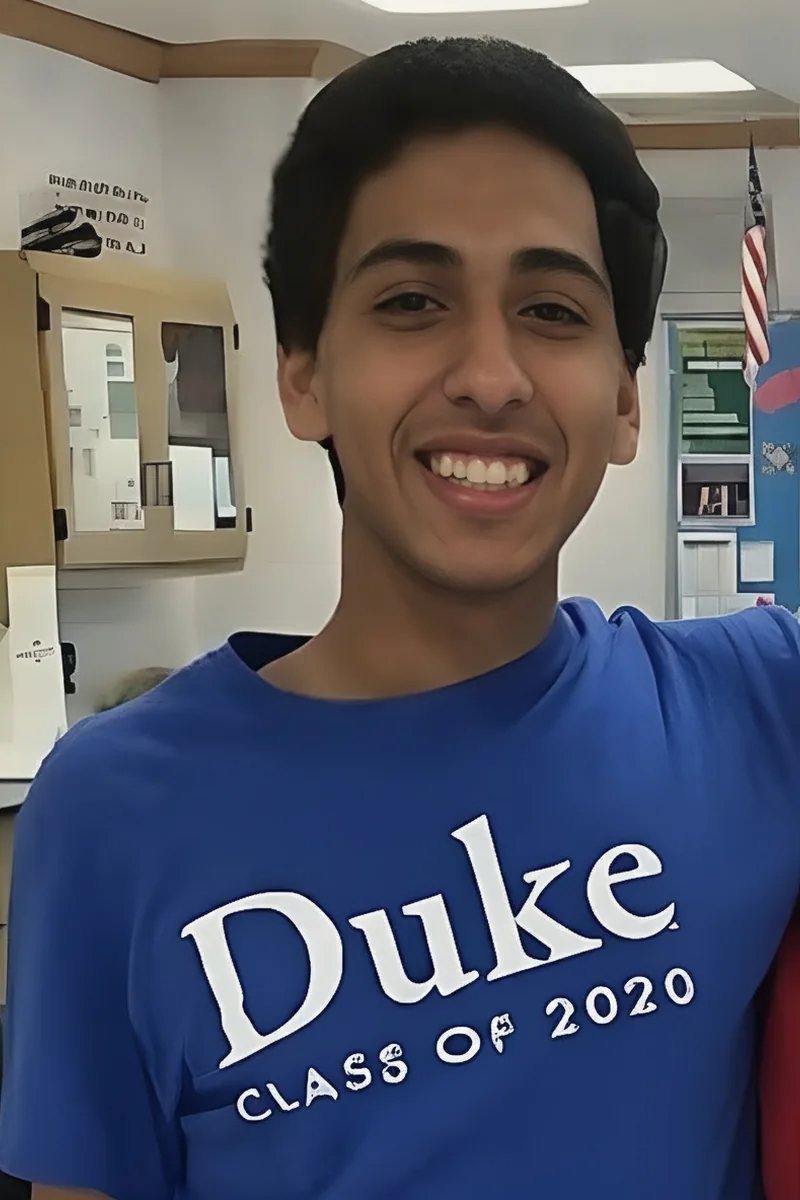
A physics degree builds the kind of systems thinking that translates directly to APES — understanding energy budgets, thermodynamic constraints on ecosystems, and how to set up the quantitative problems around resource depletion or atmospheric carbon that the exam loves to test. Nima applies that physics-trained rigor to topics like global energy flow and climate modeling, where students who only memorize vocabulary tend to lose points on calculation-heavy free-response questions.
Eric's degree in Ecology & Evolutionary Biology means he studied the actual science behind APES — population ecology, species interactions, and ecosystem-level processes — not just the survey-course version. He teaches students to think about environmental problems the way an ecologist would, tracing how a disturbance like deforestation or nutrient loading ripples through trophic levels and feedback loops until the full picture clicks.
Running a marine biology summer camp means Zoey has taught kids to trace real ecological relationships — predator-prey dynamics, nutrient runoff in coastal systems, habitat loss from human development — which map directly onto the APES curriculum's core units. Her master's in marine biology gives her the field-level understanding of biodiversity, conservation, and ecosystem interactions that turns abstract exam topics into concrete examples students actually remember. Rated 4.9 by students.
Supervising an AmeriCorps conservation program in New Mexico means Rachel doesn't just teach APES concepts like land management, resource depletion, and habitat restoration — she manages real projects dealing with them daily. Her Johns Hopkins master's in Environmental Health Sciences adds the scientific rigor behind topics like pollution pathways and risk assessment, while her public health training sharpens the kind of systems-level thinking the exam's free-response questions demand.
Stanford's Science, Technology, and Society major sits at the exact intersection APES lives in — where ecological science meets human systems, policy decisions, and technological trade-offs. Rithika's IB and National AP Scholar background means she's already navigated the kind of interdisciplinary, essay-heavy exams that APES models itself on, and she uses that experience to teach students how to connect scientific evidence to real-world environmental consequences in their free-response answers.
Having spent a year as a climate change researcher at the University of Helsinki — where she completed PhD-level atmospheric science coursework — Marika brings firsthand lab and field experience to AP Environmental Science. She digs into biogeochemical cycles, energy flow, and climate modeling with the depth the AP exam demands, connecting FRQ strategies to the actual science behind each topic.
As a PhD student researching microbial ecology, Isaac lives the material that AP Environmental Science covers — biogeochemical cycles, ecosystem dynamics, biodiversity loss, and human impact on natural systems. He brings current research context into exam prep, connecting FRQ strategies to the kind of scientific reasoning the College Board actually rewards. His 5.0 rating speaks to how well that approach lands with students.
Three years working on organic farms and sustainable land stewardship projects gave Dylan firsthand experience with the biogeochemical cycles, soil science, and ecosystem dynamics that AP Environmental Science tests in detail. He connects FRQ-style questions back to real fieldwork — explaining nutrient runoff or biodiversity loss through situations he's actually observed — which makes the material stick far better than rote review.
Chemical and biomolecular engineering coursework covers thermodynamics, mass balances, and reaction kinetics — the same principles underlying APES topics like energy transfer through trophic levels, pollutant fate in water systems, and carbon cycle calculations. Akshaya uses that engineering lens to demystify the quantitative free-response problems where students need to set up unit conversions and efficiency calculations under time pressure. Rated 4.8 by students.
Medical school at UMKC built on a cellular and molecular biology foundation means Lina understands the biological machinery — nutrient cycling, cellular respiration, photosynthetic pathways — that underpins the ecosystem-level questions APES actually tests. She teaches students to trace environmental problems back to their molecular origins, like connecting eutrophication to the specific biochemistry of decomposition and dissolved oxygen depletion. Rated 5.0 by students.
Most APES students can memorize vocabulary lists but freeze when a free-response question asks them to explain how a neurotoxin moves through a food web or why bioaccumulation affects top predators disproportionately — Jhonatan's neuroscience specialization means he actually understands those biological mechanisms at the molecular level. He teaches students to trace environmental disruptions through living systems rather than treating each unit as isolated content, which is the connective thinking the exam scores highest. Rated 5.0 by students.
Three years teaching high school biology in New Jersey gave Sasha firsthand experience with how students struggle to connect classroom ecology — food webs, nutrient cycles, population growth models — to the real-world environmental issues APES actually tests. Her science education master's means she designs lessons around those sticking points, breaking down how a concept like eutrophication links biological mechanisms to human causes to policy solutions in exactly the layered way the exam's free-response rubrics demand. She scored a 1550 on the SAT, so the data-interpretation and quantitative reasoning portions of the exam are well within her wheelhouse too.
Having earned her degree in Environmental Studies from Temple, Annie knows AP Environmental Science inside and out — from biogeochemical cycles and ecosystem energy flow to the policy and human-impact questions that dominate the free-response section. She also spent a gap year working on organic farms in New Zealand, which means topics like soil science, sustainable agriculture, and biodiversity loss come with firsthand context that sticks.
Testimonials
Because the right AP Environmental Science tutor makes all the difference.
Average Session Rating – Based on 3.4M Learner Ratings
Practice AP Environmental Science
Free practice tests, flashcards, and AI tutoring for AP Environmental Science
Other Baltimore Tutors
Related Science Tutors in Baltimore
Frequently Asked Questions
AP Environmental Science covers eight major units: energy dynamics, the biosphere, populations, earth systems and resources, land and water use, energy resources and consumption, atmospheric systems, and global change. The course emphasizes real-world environmental problems and scientific data analysis, requiring students to understand both ecological principles and their practical applications. Success on the exam depends on mastering these interconnected topics and being able to apply concepts to new scenarios.
Score improvement depends on your starting point and commitment to practice. Students who work consistently with a tutor typically see gains of 1-3 points on the 1-5 AP scale, with the most significant improvements coming from targeted work on weak units and practice with free-response questions. The key is identifying which topics (like biogeochemical cycles or energy flow) are holding you back and building mastery through repeated practice and application.
Students often struggle most with quantitative reasoning—especially calculations involving population growth, energy efficiency, and bioaccumulation—and with connecting abstract concepts like nutrient cycles to real environmental issues. The free-response section also challenges many students because it requires them to explain complex systems and defend positions with scientific evidence. A tutor can help you build confidence with calculations and develop strategies for clearly communicating your understanding in written responses.
The AP Environmental Science exam is 3 hours long and consists of two sections: a 90-minute multiple-choice section (80 questions) and a 90-minute free-response section (3 questions). The multiple-choice section tests your ability to recall concepts and interpret data, while the free-response section requires deeper analysis and written explanations. Understanding the timing and question formats is critical—tutors can help you develop pacing strategies and practice organizing your responses under timed conditions.
Effective practice test strategy involves taking full-length exams under timed conditions early in your preparation to identify weak areas, then focusing your study on those specific units before taking additional practice tests. After each practice test, review not just incorrect answers but also questions you guessed on correctly—this reveals gaps in your understanding. A tutor can help you analyze your practice test results, prioritize which topics to study, and develop targeted review plans that maximize your improvement.
Varsity Tutors connects you with expert tutors in Baltimore who specialize in AP Environmental Science and understand the specific demands of the exam. When you get matched with a tutor, you can discuss your current level, target score, and timeline so they can create a personalized study plan. Whether you need help with specific units, practice test review, or building test-taking confidence, tutors can tailor their instruction to your needs.
Your first session is typically a diagnostic conversation where your tutor learns about your current understanding of AP Environmental Science, identifies your strengths and weak areas, and understands your goals for the exam. You might take a brief assessment or review a recent practice test together to pinpoint which topics need the most focus. From there, your tutor will create a customized study plan that addresses your specific challenges and fits your timeline before test day.
Test anxiety often stems from feeling unprepared or unfamiliar with question formats—tutoring addresses both by building genuine content mastery and giving you repeated practice with timed sections and full-length exams. As you practice under realistic conditions and see your scores improve, your confidence grows naturally. Tutors can also teach you specific strategies for managing stress during the exam, like how to pace yourself, when to skip difficult questions, and how to approach free-response questions strategically.
Let’s find your perfect tutor
Answer a few quick questions. We’ll recommend the right plan and match you with a top 5% tutor.