Award-Winning Science Tutors
serving Louisville, KY
Science
Tutors in Louisville
Private 1-on-1 tutoring, weekly live classes for academic support, test prep & enrichment, practice tests and diagnostics, and more to elevate grades and test scores.
Based on 3.4M Learner Ratings
UniversitiesSchools & Universities
DeliveredHours Delivered
ProficiencyGrowth in Proficiency
Who needs tutoring?
No obligation. Takes ~1 minute.

Kevin's Stanford Biocomputation track means he straddles biology and computer science daily — analyzing biological systems through a quantitative, data-driven lens. For students navigating topics like cell biology, genetics, or experimental design, he connects abstract concepts to real research applications that make the material click.
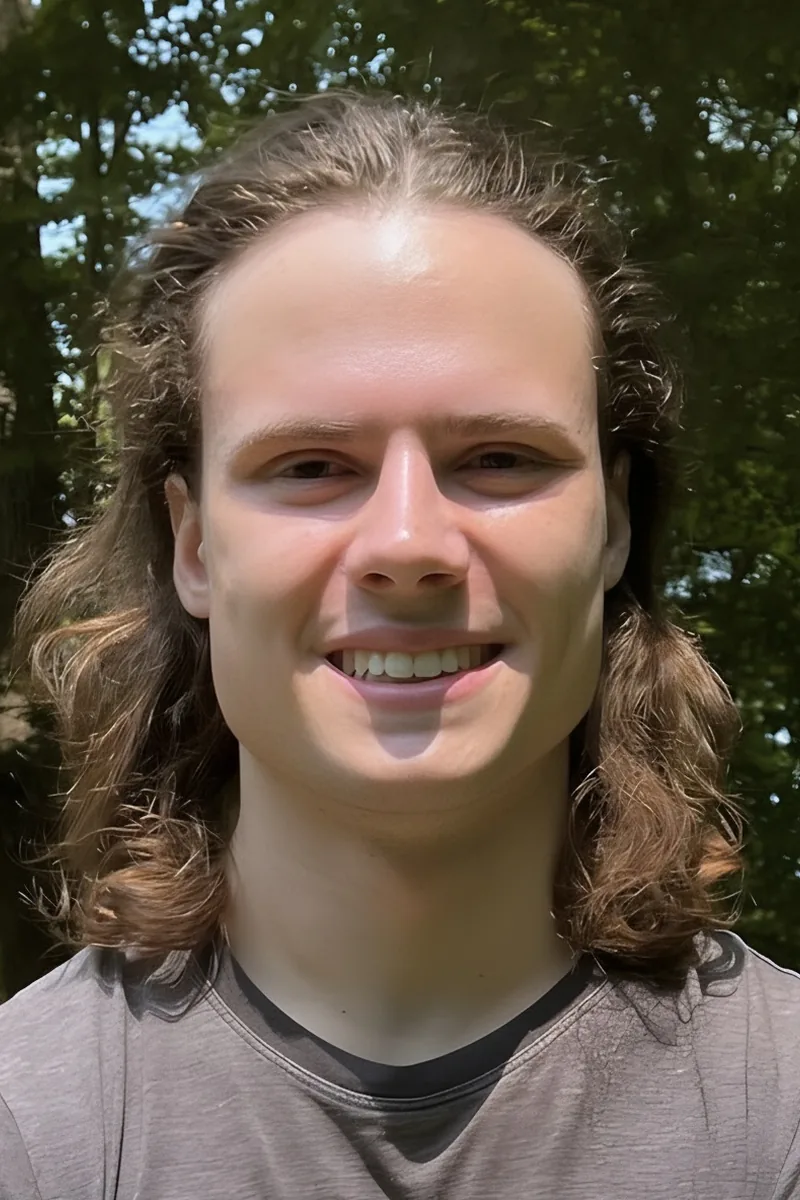
While science isn't Evan's primary discipline, his computer science and game development training required coursework in physics and applied mathematics — particularly mechanics, optics, and wave behavior as they relate to simulations and rendering. He approaches science problems with the same systematic, logical decomposition he uses when debugging code.
Logan teaches across both science and math — plus holds a perfect 36 ACT, which includes the Science section's rapid-fire data interpretation and experimental reasoning — so he knows how to read a graph, trace variables through an experiment, and explain results clearly under pressure. His communication degree also means he's sharp at coaching students through the part of science they often dread most: putting what they observe into precise, written explanations.
Elementary and middle school science is where curiosity either takes root or stalls out. Kelsey's classroom teaching experience means she knows how to connect topics like the water cycle, simple machines, or ecosystems to hands-on thinking rather than rote definitions — turning vocabulary-heavy units into something students actually want to explore.
A kinesiology degree from Rice required deep coursework in anatomy, physiology, and biomechanics, so Addison knows how to break down scientific processes — like cellular respiration or force diagrams — into logical, digestible steps. She connects abstract concepts to real-world examples, which makes topics like energy transfer or the scientific method click faster.
Biomedical engineering sits at the intersection of physics, chemistry, and biology — so Matthew doesn't just know science subjects in isolation. He unpacks scientific reasoning by connecting principles across disciplines, whether that means explaining how fluid dynamics applies to blood flow or how energy conservation governs a chemical reaction. His 35 ACT reflects comfort across every branch of science students typically encounter.
ACT Science is less about knowing biology or chemistry cold and more about reading graphs, interpreting data, and spotting patterns under time pressure — skills Benjamin has sharpened through years of teaching quantitative reasoning and standardized test prep. He breaks each passage into a data extraction exercise, teaching students to ignore the intimidating scientific jargon and zero in on what the tables and figures actually say.
Anthony's double English background — bachelor's and master's — might not scream science, but it built exactly the close-reading and analytical writing skills that separate students who can parrot definitions from those who can actually interpret a data table or explain an experimental result in their own words. He's strongest on the literacy-heavy side of science: decoding dense textbook passages, writing clear lab reports, and constructing evidence-based explanations that hold up under scrutiny.
An English and Political Science double major might not scream 'science tutor,' but Diana's coursework in research methods and evidence-based argumentation maps well onto what science classes actually ask students to do — form hypotheses, support claims with data, and communicate findings clearly. Her 32 ACT composite confirms she can handle the analytical and quantitative reasoning science demands, and her strength in reading comprehension makes her especially useful when students struggle to parse dense textbook passages or extract meaning from lab instructions.
I am no longer needed.
A math degree means Jesse spent years working through the quantitative backbone of science — calculating rates, converting units, interpreting graphs, and applying formulas to physical systems. He brings that numerical fluency to science tutoring, making the math-heavy portions of topics like motion, energy, and chemical equations feel straightforward rather than intimidating. His 33 ACT confirms he can handle the data-interpretation and reasoning demands the subject throws at students.
Growing up with a learning disability taught Kaylee something most science tutors take for granted — that the standard way of studying doesn't work for every student, and sometimes you need to rebuild a concept from scratch before it sticks. Her speech-language pathology training at Brescia University sharpens that instinct, since the field demands breaking complex processes (how the body produces sound, how the brain processes language) into observable, testable steps — exactly the kind of thinking science coursework requires.
Environmental Studies majors spend their days connecting biology, chemistry, and earth science into a single framework — which gives Grace a practical, cross-disciplinary lens for breaking down science concepts. She's especially comfortable with ecology, environmental systems, and the data interpretation skills that tie scientific topics together.
An accounting degree might not scream 'science,' but Sowmya's coursework in economics and psychology — both built on hypothesis testing, data collection, and statistical reasoning — gave her direct practice with the scientific method in action. She's especially strong at walking students through how to set up controlled comparisons and read results carefully, connecting those skills to the classification and measurement tasks that come up constantly in middle and high school science.
Much of elementary and middle school science comes down to reading carefully, following directions in a lab activity, and writing clear observations — all skills Patty sharpens daily as an ESL and literacy instructor. She's especially good at helping students who struggle with the language-heavy side of science, like decoding a word problem about ecosystems or explaining a result in their own words rather than copying from a textbook.
While science isn't Alexander's core discipline, his analytical training in history translates surprisingly well to the skills students need most: interpreting data, understanding cause-and-effect relationships, and constructing evidence-based explanations. He's particularly useful for students who struggle with the reading-heavy side of science — parsing lab reports, understanding experimental design, and pulling conclusions from charts and graphs.
Between a completed biochemistry degree from WKU and current bioengineering studies at UofL, Andrew has an unusually deep bench in science — spanning cell biology, organic chemistry, physics, and everything in between. He connects scientific vocabulary and processes to everyday examples so younger students build genuine curiosity instead of just memorizing definitions.
As a working ecologist, Haileigh applies the scientific method in the field every day — designing experiments, interpreting data, and drawing evidence-based conclusions. She brings that hands-on familiarity to biology, chemistry, and earth science topics, making abstract concepts like energy transfer and cellular processes feel grounded in real research.
A biology major with a neuroscience minor at the University of Kentucky, Dharani brings real coursework depth to topics like cell biology, genetics, and basic chemistry that students encounter in general science classes. She connects abstract concepts — like how enzymes catalyze reactions or how DNA replication actually works at the molecular level — to concrete examples that make them easier to retain.
A double degree that paired French with Biochemistry means Jenna spent semesters in chemistry and biology labs running experiments, analyzing data sets, and writing up results using the scientific method. She's particularly strong at walking through how to read graphs, set up unit conversions, and connect classroom vocabulary to what's actually happening in a reaction or system.
A neuroscience degree means Janki spent years connecting chemistry, biology, and physics into a single framework — exactly the kind of cross-disciplinary thinking that general science courses demand. She breaks down topics like cellular respiration, force and motion, or the scientific method by tying them back to real-world examples that make abstract ideas click.
Five semesters as a chemistry teaching assistant — covering everything from stoichiometry and thermodynamics to reaction mechanisms — gave Troy a deep bench for explaining scientific concepts across disciplines. His biochemistry degree and biology minor mean he can bridge the gap between chemistry and life sciences, connecting topics like enzyme kinetics or cellular respiration to the underlying chemical principles that make them click.
Teaching organic chemistry recitations at the University of Kentucky gave Jason a front-row seat to where science students get stuck: not the facts themselves, but connecting concepts across chemistry, biology, and physics. He unpacks those connections explicitly, whether a student is working through the periodic table for the first time or tackling energy transfer in a high school physics class.
Three years of tutoring basic math and science across four countries — from Beijing to Athens to Taipei — gave Wilson a knack for explaining concepts like measurement, forces, and simple chemical reactions to students with wildly different starting points and learning styles. His TEFL certification also means he's trained to make technical vocabulary accessible, which matters in science where a single unfamiliar term can derail an entire lesson.
Nicole's MA in Spanish might not scream science, but her ACT prep tutoring sharpened her ability to coach students through data interpretation, passage analysis, and evidence-based reasoning — the same skills that drive success in science classrooms. She's especially handy when the obstacle isn't the science itself but decoding what a question or textbook passage is actually asking, since breaking down dense academic language is what she does daily across multiple subjects. Holds a 5.0 rating.
Studying agricultural biotechnology means Isabella spends her weeks moving between biology labs, chemistry lectures, and plant science fieldwork — so she understands how scientific disciplines overlap. She unpacks concepts like the scientific method, cell biology, and basic chemistry by tying them to tangible examples, such as how plants convert sunlight into energy or why soil pH matters for crop growth.
A dietetics degree sits at the intersection of biology, chemistry, and human physiology, which gives Amy a broad scientific foundation she applies to general science tutoring. She's particularly comfortable with life science topics — cell biology, metabolism, organ systems, and nutrition science — and connects abstract concepts to real-world examples students can visualize.
A math degree from Rose-Hulman — one of the top STEM schools in the country — means Jacob learned science not as a set of facts to memorize but as a set of quantitative problems to solve, from unit analysis and rate calculations to interpreting graphs of experimental data. His computer science master's adds a second layer: the algorithmic, step-by-step reasoning that makes designing experiments and tracing cause-and-effect feel systematic rather than overwhelming. Rated 4.9 by students.
I am a graduate of a liberal arts university, with majors in both Spanish and Studio Arts. As a Teach for America alumni I have worked as a Spanish and Art teacher in elementary, middle, and high school settings in both public and private schools. Additionally I have worked with nonprofit organizations to provide arts education. I primarily tutor Spanish, English, Reading and ACT prep. I believe everyone deserves access to a quality education, and I look forward to working with you to meet and exceed your goals!
This isn't Faith's core area, but her analytical reading background turns out to be surprisingly useful for science — especially when students need to interpret lab reports, pull meaning from dense textbook passages, or write up observations clearly. She approaches science assignments the way she approaches a close reading: break it into parts, figure out what each piece is doing, then put the picture back together.
Studying Chemical Physics means Carter doesn't just know science formulas — he understands the experimental reasoning behind them, from conservation laws in mechanics to molecular behavior in chemistry. He breaks down word-heavy science problems by teaching students to identify what's actually being asked before reaching for an equation. That translational skill is what turns confusing prompts into solvable steps.
A neuroscience and behavioral biology degree means Nick doesn't just know scientific facts — he understands how to design experiments, interpret data, and connect findings across disciplines like biology, chemistry, and physics. He breaks down the scientific method and core concepts like energy transfer, cell biology, and ecosystems in ways that make students think like scientists rather than memorize vocabulary lists.
A dual degree in physics and mathematics gives Mark an unusually deep toolkit for teaching science at any level, whether a sixth grader is learning about forces and motion or a high schooler is tackling energy conservation and wave behavior. He connects abstract scientific principles to concrete, everyday examples — explaining why a curveball curves or how a microwave heats food — so the concepts actually stick.
Three separate science degrees mean Zosia doesn't just know chemistry or biology in isolation — she understands how energy transfer in physics explains chemical bonding, which in turn drives cellular processes. That cross-disciplinary perspective is exactly what makes her effective at teaching foundational science concepts like the scientific method, experimental design, and data interpretation. She builds each session around the specific science course and topics a student is wrestling with.
Biomedical engineering trained Sam to move fluidly between biology, chemistry, and physics — the same integration students need when tackling science coursework. He unpacks concepts like cellular respiration or circuit analysis by tying them back to the underlying math, which turns abstract diagrams into something students can actually reason through.
While science isn't Valerie's primary discipline, the University of Chicago's core curriculum required her to take rigorous coursework in the natural sciences alongside her Classics major. She's also trained in Emergency Medical Services, which gave her hands-on fluency with anatomy, physiology, and clinical reasoning that she brings to science tutoring sessions.
An economics degree requires serious fluency in hypothesis testing, data analysis, and statistical reasoning — and Kathy's dual background in economics and studio art means she can tackle both the quantitative and observational sides of science coursework. She's particularly good at teaching students how to read graphs, set up controlled comparisons, and translate raw data into clear written explanations, blending the analytical rigor of her econ training with an artist's eye for visual detail.
A neurobiology-focused biology degree from Northwestern means Nina didn't just take introductory science — she studied cellular mechanisms, genetics, and brain physiology in depth. She connects textbook concepts like mitosis or enzyme kinetics to real research contexts, which tends to make the material click faster than rote memorization. Rated 5.0 by students.
A statistics and machine learning certificate at Princeton means Julie spends her coursework building models, testing hypotheses against real data, and evaluating whether results are statistically meaningful — all of which is applied scientific reasoning. She brings that quantitative rigor to science tutoring, especially when students need to move from memorizing definitions to actually interpreting experiments, reading graphs, and explaining what their data means. Her 4.9 rating suggests the approach lands.
Andrew holds a BS in Physics and a PhD in Biomedical Engineering, which means he's spent over a decade thinking scientifically — designing experiments, interpreting data, and connecting abstract principles to measurable outcomes. He unpacks concepts in mechanics, electricity, and biology-adjacent topics like biomechanics with the kind of depth that comes from genuine research experience. Students get explanations rooted in understanding, not just memorized definitions.
Testimonials
Because the right Science tutor makes all the difference.
Average Session Rating – Based on 3.4M Learner Ratings
Practice Science
Free practice tests, flashcards, and AI tutoring for Science
Nearby Science Tutors
Other Louisville Tutors
Related Science Tutors in Louisville
Frequently Asked Questions
Many students struggle with connecting abstract scientific concepts to real-world applications, especially in chemistry and physics where visualization is critical. Others find it difficult to keep up with the fast pace of lab work and problem-solving in classroom settings, particularly when class sizes make it hard to get individual feedback. Personalized tutoring helps students slow down, ask questions without pressure, and build the foundational understanding they need to tackle more complex topics.
In a classroom with a 14:1 student-teacher ratio, teachers must move at an average pace that doesn't always match individual learning speeds. Personalized 1-on-1 instruction allows tutors to identify exactly where a student's understanding breaks down—whether it's in reading graphs, understanding atomic structure, or lab technique—and spend as much time as needed on that specific concept. Tutors can also tailor explanations to match how each student thinks, using analogies and examples that resonate with them personally.
Yes, tutors are familiar with Kentucky's academic standards for science and can align instruction with what students are learning in their specific schools and grade levels. Whether your student is working through middle school life science, high school biology, chemistry, or physics, tutors can support their coursework while also building deeper conceptual understanding. This alignment ensures tutoring reinforces what's happening in class while filling in gaps that may be holding them back.
The first session is an opportunity for a tutor to understand your student's current level, learning style, and specific challenges—whether that's test anxiety, difficulty with lab reports, or struggling with a particular unit. The tutor will ask diagnostic questions and may work through a sample problem to see where understanding breaks down. From there, they'll create a personalized plan that targets the areas where your student needs the most support.
Look for improvements in specific areas: better grades on quizzes and exams, increased confidence asking questions in class, improved lab reports or written explanations, and stronger performance on standardized science assessments. Many students also show progress through deeper engagement with the material—they start asking "why" questions and connecting concepts across units. A good tutor will track progress on specific learning goals and adjust their approach based on what's working.
Tutors work with students across all grade levels, from elementary science through high school AP and honors courses. Common topics include life science, earth science, biology, chemistry, physics, environmental science, and anatomy. Whether a student needs help understanding the basics of the scientific method or preparing for AP Biology, Varsity Tutors can connect you with an expert tutor who specializes in that specific area.
Absolutely. Many students struggle not just with the science concepts but with lab technique, data analysis, and writing clear lab reports. Tutors can walk through the reasoning behind lab procedures, help students understand what their data means, and teach them how to write reports that clearly communicate their findings. This practical support often translates directly to better grades on lab assignments and exams.
Yes, tutors work with students to prepare for unit tests, semester exams, AP exams, ACT science sections, and other standardized assessments. They focus on identifying knowledge gaps, teaching test-taking strategies specific to science (like process of elimination for multiple choice), and building confidence through practice problems and mock tests. Targeted test prep with a tutor often results in significant score improvements because it addresses both content knowledge and test-specific skills.
Let’s find your perfect tutor
Answer a few quick questions. We’ll recommend the right plan and match you with a top 5% tutor.