Award-Winning Elementary Math Tutors
serving Des Moines, IA
Who needs tutoring?
FEATURED BY


TUTORS FROM
- YaleUniversity
- PrincetonUniversity
- StanfordUniversity
- CornellUniversity
Award-Winning Elementary Math Tutors serving Des Moines, IA

Certified Tutor
Molly
Place value, regrouping, and early fractions click faster when a tutor knows exactly where young learners tend to get stuck. Molly has spent three years teaching math intervention in 2nd through 4th grade classrooms, so she can pinpoint a gap in number sense and address it before it snowballs. Rated...
Northwestern University
Master of Science in Education
Columbia University in the City of New York
Bachelor in Arts, History

Certified Tutor
Building number sense early changes everything about how a student experiences math later on. Katie teaches elementary concepts like place value, basic fractions, and multi-digit multiplication in ways that emphasize understanding over rote memorization — using visual models and real-world examples ...
University of Notre Dame
Bachelor in Arts

Certified Tutor
Rebecca
Getting multiplication facts, place value, and basic fractions right early on shapes how a student feels about math for years. Rebecca approaches elementary math by making those foundational concepts tangible — using visual models and step-by-step reasoning so kids understand the 'why' behind each o...
Northwestern University
Bachelor of Arts in Psychology (minor in Religious Studies)

Certified Tutor
Asta
Building number sense early — understanding place value, basic fractions, and the logic behind multiplication — shapes how a student thinks about math for years. Asta's experience working with younger learners across different educational systems in both Hong Kong and the U.S. gives her a practical ...
University of Chicago
Bachelor in Arts in Political Science

Certified Tutor
Getting fractions, long division, and place value right at the elementary level sets the trajectory for everything that comes after in math. Matthew takes a patient, step-by-step approach — showing how a problem works, then giving the student a chance to try similar ones while asking questions along...
University
Bachelor's

Certified Tutor
15+ years
Natalie
Multiplication tables, long division, and fractions don't have to feel like a grind. Natalie turns elementary math into something approachable by using visual models and real-world examples — splitting a pizza into equal parts or measuring ingredients for a recipe. Her warmth and love of learning ma...
Rice University
Bachelors, Biochemistry and Cell Biology, English

Certified Tutor
14+ years
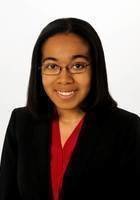
Claire
Early math confidence shapes everything that comes after, which is why Claire emphasizes understanding place value, basic operations, and number sense through hands-on, visual methods rather than rote worksheets. Her interactive teaching style — developed across years of language and subject instruc...
The University of Texas at Austin
Bachelor in Arts, Double Major: Spanish Literature; History
Certified Tutor
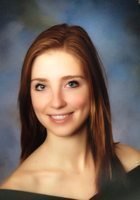
Jean
Teaching young learners multiplication tables or place value requires patience and creativity in equal measure. Jean has taught students as young as toddlers and understands that elementary math sticks best when it's hands-on — using tangible examples, patterns, and games rather than rote drills. He...
Harvard College
Bachelor in Arts, Sociology
Harvard Medical School
Doctor of Medicine, Medicine
Certified Tutor
Laura
Laura's Montessori education through eighth grade taught her that young kids learn math best through discovery — figuring out why regrouping works, not just memorizing the steps. She brings that same exploratory approach to arithmetic and early problem-solving, letting students build understanding t...
Princeton University
Bachelor of Arts in History

Certified Tutor
14+ years
Jason
Multiplication tables and long division aren't just procedures to memorize — they're building blocks that shape how a kid thinks about numbers for years to come. Jason earned a master's in education studying how younger students develop mathematical reasoning, and he brings that research-informed pe...
University of Pennsylvania
PHD, Medicine and Education
University of Pennsylvania
Master's degree in Education
Yale University
Bachelor's degree in History
Other Des Moines Tutors
Related Math Tutors in Des Moines
Frequently Asked Questions
Elementary students often struggle with the shift from memorizing procedures to understanding why math works the way it does. Word problems, multi-step equations, and building number sense are frequent pain points. Many students also develop math anxiety when they don't grasp foundational concepts like fractions, decimals, and place value—gaps that compound as they progress. Personalized 1-on-1 instruction helps identify exactly where understanding breaks down and rebuilds confidence through targeted practice.
The first session focuses on understanding your child's current level, learning style, and specific challenges. A tutor will work through a few math problems to see how your student approaches them, whether they can explain their thinking, and where gaps might exist. This diagnostic helps create a personalized plan that aligns with your child's school curriculum and learning pace. You'll also discuss goals—whether that's catching up, building confidence, or staying ahead.
Tutors use multiple strategies to build conceptual understanding: visualizing problems with manipulatives or drawings, connecting new concepts to things students already know, and asking questions that guide discovery rather than just providing answers. When a student understands *why* 3 × 4 equals 12, not just that it does, they can apply that knowledge to new situations like fractions or algebra later. This deeper understanding reduces anxiety and makes math feel logical rather than arbitrary.
Word problems require students to read carefully, extract relevant information, decide which operation to use, and then execute the math—that's a lot of steps. Many students can do the arithmetic but get lost translating words into mathematical thinking. Tutors help by teaching problem-solving strategies like drawing diagrams, breaking problems into smaller steps, and identifying key information. With practice and guided support, students learn to see word problems as puzzles to solve rather than sources of frustration.
Showing work isn't just about getting the right answer—it helps students organize their thinking and lets teachers (and tutors) see where confusion happens. Encourage your child to write down each step, label what they're doing, and explain their reasoning in words when possible. A tutor can model clear work habits and help your student develop a system that works for them, whether that's organizing steps vertically, using boxes for different parts of a problem, or drawing pictures to represent their thinking.
Yes. Des Moines schools use various approaches, and tutors understand how different curricula—whether traditional, Singapore Math, or others—teach the same concepts. Varsity Tutors connects you with tutors who can align their instruction with your child's specific textbook and classroom approach, so tutoring reinforces what's happening in school rather than confusing things with a different method. This alignment makes learning more cohesive and helps your student succeed in the classroom.
Absolutely. Math anxiety often stems from past struggles or feeling rushed, and personalized instruction directly addresses both. Working 1-on-1 at a comfortable pace, celebrating small wins, and experiencing success builds confidence quickly. When students understand concepts rather than just guessing, and when they have a patient adult who believes in them, anxiety decreases naturally. Many students go from dreading math to actually enjoying it once they feel competent.
Tutors highlight connections across topics—like how skip counting relates to multiplication, or how fractions connect to division. By exploring patterns through examples and asking guiding questions, students begin to see math as an interconnected system rather than isolated rules to memorize. This pattern recognition is powerful because it helps students predict outcomes, solve new problems independently, and develop mathematical thinking that transfers across different topics and grade levels.
Connect with Elementary Math Tutors in Des Moines
Get matched with local expert tutors