Award-Winning Science Tutors
serving Indianapolis, IN
Science
Tutors in Indianapolis
Private 1-on-1 tutoring, weekly live classes for academic support, test prep & enrichment, practice tests and diagnostics, and more to elevate grades and test scores.
Based on 3.4M Learner Ratings
UniversitiesSchools & Universities
DeliveredHours Delivered
ProficiencyGrowth in Proficiency
Who needs tutoring?
No obligation. Takes ~1 minute.

Teaching high school history means Ben spends most of his day doing exactly what good science instruction requires — walking students through how to evaluate evidence, distinguish correlation from causation, and build arguments from data rather than gut feelings. His four years of ACT prep also sharpened his ability to break down the ACT Science section's graph-reading and experimental-design questions into repeatable, step-by-step strategies. Rated 5.0 by students.
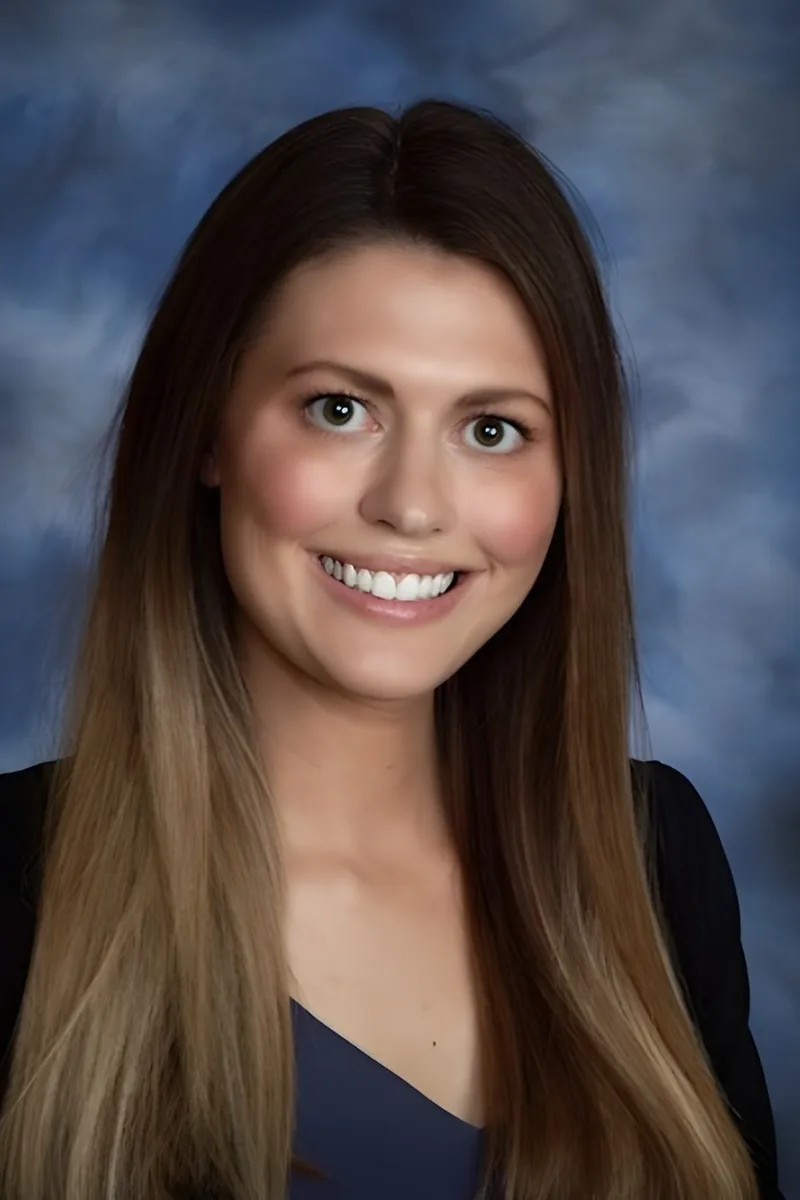
Four years of medical school coursework — from physiology and pharmacology to biochemistry and pathology — means Emily has studied science at a depth most tutors simply haven't reached. She breaks down topics like genetics, human body systems, and chemical processes by connecting them to how they actually function in clinical medicine, giving students a richer understanding than definitions alone provide. Rated 5.0 by students.
Growing up with ADHD meant Owen never learned science by sitting still and reading a textbook — he learned it by doing, questioning, and connecting concepts to the real world. That same hands-on instinct shapes how he tackles topics like the scientific method, ecosystems, and basic physics, turning abstract ideas into something students can actually picture and reason through.
A Bachelor of Science in Environmental Science means Aleta spent years in labs and fieldwork studying ecosystems, chemistry, and earth systems. She teaches science by emphasizing the scientific method itself — forming hypotheses, interpreting data, and understanding how evidence supports conclusions — skills that transfer across biology, chemistry, and physical science courses.
I'm currently a Process Assistant at an Amazon warehouse, which is like an assistant manager. My job is interesting, active, and varied, but I missed tutoring and want to make math and other subjects as easy as possible to approach and grasp for students. With the right time and a commitment to tailoring a tutoring style for the person being assisted, any student can pass their classes and retain lifelong knowledge and experience. I'm looking forward to working with you!
Chemical engineering sits at the intersection of physics, chemistry, and biology, which gives Joubert an unusual ability to explain how scientific disciplines overlap — why thermodynamics matters in both a chemistry and physics context, or how cellular transport connects to fluid dynamics. He draws on cross-disciplinary examples to make abstract science concepts tangible and easier to retain.
While science sits outside Thomas's core degrees, his experience supporting students across a wide range of subjects means he can tackle introductory and middle-school science concepts like the scientific method, basic ecology, and earth science vocabulary. He treats each topic as a reading-and-reasoning exercise, connecting new terminology to ideas students already understand.
A legal education trains you to weigh evidence, spot weak reasoning, and build airtight arguments from facts — and Bill applies that same discipline when walking students through hypothesis testing, data interpretation, and lab write-ups. His math fluency also means the quantitative side of science (calculating averages, reading graphs, converting units) doesn't become a separate obstacle. Rated 4.9 by students.
Few science tutors bring both a biology degree and active graduate-level genetics research to the table. Lauren unpacks concepts like cell division, heredity, and molecular biology by connecting textbook diagrams to real mechanisms she encounters in her genetic counseling program. That context turns abstract processes into something students can visualize and retain.
Data analysis is Jack's day job at The Heritage Group, so he approaches science through the lens of interpreting evidence, reading graphs, and understanding how variables interact. His quantitative background is especially useful for students tackling physics or earth science problems that require setting up equations and making sense of experimental data.
An economics degree builds a surprisingly practical science skill set — reading graphs, isolating variables, and testing whether data actually supports a conclusion or just looks like it does. John applies that same analytical framework to science material, walking students through how to set up an experiment, control for confounding factors, and interpret results with precision rather than guesswork.
A linguistics degree trains you to do something most people never learn explicitly: observe a system, form a rule, test it against new data, and revise when it breaks. Lauren applies that exact cycle — which is really just the scientific method wearing different clothes — to teaching students how to design experiments, interpret results, and figure out what went wrong when a hypothesis doesn't hold. Her 34 ACT confirms she can handle the quantitative and reading-comprehension demands that science coursework piles on simultaneously.
I am a professional tutor with years of experience. I have helped students jump letter grades and improve as much as 8 composite points on the ACT and 200 points on the SAT. I have over 6 years and 1000 hours of test prep experience and over 6 years of experience tutoring math up to and including calculus, various science subjects, English, and Spanish. I like to meet all the tutoring needs of a student. This includes covering not only the academic subjects (including math, science, and language) and test prep (ACT and SAT) but also assisting with study skills and organization. I also have experience in working with students with various learning disabilities, including ADD/ADHD. I have helped students in all levels of courses, including honors and AP levels.
A pre-physical therapy concentration means Ryan's coursework is steeped in anatomy, biology, and the kind of applied science that connects textbook concepts to how the human body actually works — useful context when a student needs to understand why cells divide or how energy moves through a system. He breaks down scientific vocabulary and processes by grounding them in concrete, physical examples rather than abstract definitions. Rated 5.0 by students.
Darren's physics background spans AP Physics 1 and 2, and his math training gives him a fluency with the equations that often intimidate science students. He teaches students to translate word problems into free-body diagrams or energy equations, connecting the math they already know to the physical scenarios they're trying to solve.
Two years as a high school student tutor taught Charles that most science struggles aren't actually about the content — they're about reading a graph wrong, misunderstanding what a question is asking, or losing track of units in a calculation. His 34 ACT confirms he can handle the data interpretation and analytical reasoning that science coursework throws at students, and his finance training reinforces the same quantitative thinking that shows up in everything from balancing chemical equations to interpreting experimental results.
A classics and philosophy education means Austin spent years doing exactly what science asks students to do — reading dense material carefully, constructing logical arguments, and defending claims with evidence. His 33 ACT confirms he can handle the data interpretation and quantitative reasoning that science coursework throws at students, and his Latin training makes decoding scientific terminology (most of which derives from Latin and Greek) almost second nature.
Running experiments in Duke's Bilbo neuroimmunology lab gives Lauren a perspective on science that most tutors can't offer: she uses the scientific method professionally. Whether a student is learning about cell biology, chemical reactions, or basic physics, she connects textbook concepts to how scientists actually design experiments and interpret data.
Aidan's dual background in premedicine and computing at Notre Dame means he's comfortable across biology, chemistry, physics, and the quantitative reasoning that ties them together. He tackles science by connecting abstract formulas to tangible scenarios — like explaining Newton's third law through the biomechanics of walking — so the concept sticks long after the tutoring session ends.
Biochemistry at Notre Dame means Amy lives at the intersection of biology, chemistry, and physics — so she can explain how a concept like cellular respiration connects energy transfer, chemical equilibria, and molecular structure all at once. Her 35 ACT composite reflects the same cross-disciplinary thinking she brings to breaking down scientific reasoning for students tackling everything from the scientific method to ecology.
Studying Human Biology at Dartmouth and working with Emergency Medical Services, Victoria connects scientific concepts to real-world applications — explaining how osmosis works in an IV drip or why cells divide the way they do. She breaks down the scientific method, lab analysis, and core life science topics so students understand the reasoning behind each answer, not just the answer itself. Rated 5.0 by students.
Christie's listed as a science substitute, and her real depth is in history — but that cross-disciplinary teaching experience means she knows how to walk students through reading dense informational texts, pulling key details from charts, and building evidence-based explanations, all of which are core science skills. Her ESL background is a genuine asset for students who struggle with the specialized vocabulary that makes science textbooks feel like a foreign language. Rated 5.0 by students.
Because engineering sits at the intersection of physics, chemistry, and applied math, Alexandra approaches science as a connected set of ideas rather than isolated facts. She's especially strong at walking through force diagrams, energy concepts, and the quantitative reasoning that trips students up when science problems start involving equations.
A computer science and math curriculum at Washington University in St. Louis means Victoria spends most of her time doing what science courses ask students to do — forming hypotheses, testing them systematically, and debugging when results don't match expectations. She's especially strong on the quantitative side, walking students through data tables, unit conversions, and graph interpretation with the precision her CS training demands. Rated 5.0 by students.
Medical anthropology sits at the intersection of biology and social science, so Jennifer is comfortable moving between topics like cell structure and experimental design without losing the thread of why each concept matters. She breaks down the scientific method as a thinking tool rather than a worksheet formula, connecting lab skills to the kind of evidence-based reasoning students will use well beyond class.
Pre-med coursework at Notre Dame meant Kristen spent years in biology, chemistry, and physics labs before starting medical school at Indiana University. She unpacks scientific concepts by connecting them to how the body and natural world actually work — making topics like cell biology, chemical reactions, and the scientific method feel less abstract and more intuitive.
Aerospace engineering at Purdue means Ritik lives in physics, thermodynamics, and applied math daily, so he can connect abstract science concepts to tangible examples — like explaining Newton's third law through rocket propulsion or energy conservation through roller coaster design. He's tutored science across age groups from elementary through college and adjusts the depth accordingly.
A neuroscience major on a pre-med track, Shivram lives in the overlap of biology, chemistry, and physics daily — from cellular mechanisms to the physical forces behind neural signaling. He unpacks scientific concepts by tying them to real systems in the body, which makes abstract topics like energy transfer or chemical bonding feel concrete and easier to retain.
Teaching English to multilevel classrooms in Cambodia forced Walker to find creative, visual ways to explain unfamiliar concepts — a skill that translates surprisingly well to science, where students often need the same kind of concrete, step-by-step unpacking of abstract ideas like energy transfer or chemical changes. His Asian History degree also trained him in evaluating evidence and constructing arguments from sources, which maps directly onto interpreting experimental data and reasoning through the scientific method. A 33 ACT and 4.9 rating confirm he can handle the quantitative and analytical demands the subject throws at students.
A master's in plant biology and a bachelor's in general biology give Dan unusual range across the sciences — from cell biology and genetics to ecology and anatomy. He connects concepts across disciplines instead of treating each unit as isolated material, which is exactly what middle school science demands as students encounter life, earth, and physical science in the same year. Rated 5.0 by students.
Pre-med coursework at Notre Dame has put Matthew through rigorous chemistry, biology, and physics sequences, so he's comfortable tackling topics from cell structure and chemical reactions to force diagrams and energy conservation. He approaches science the way his math training taught him — by identifying the core principle first and then applying it to specific problems, rather than treating each question as a new puzzle.
Kelly scored a 32 on the ACT, which includes a Science section built around interpreting experimental data, graphs, and conflicting scientific viewpoints. She treats science questions as exercises in careful reading and logical deduction, teaching students to pull key variables from dense passages quickly. That analytical approach transfers well to general science coursework where lab reports and data interpretation are central.
Computational modeling coursework at Notre Dame required Abby to apply physics, biology, and chemistry concepts inside mathematical frameworks, so she's comfortable translating scientific ideas across disciplines. She breaks down topics like the scientific method, data interpretation, and basic lab reasoning by tying them to real-world examples students can visualize.
Leading Carmel High School's Science Olympiad team to back-to-back Nationals appearances meant Satvik had to master — and teach — everything from cellular biology to electromagnetism to thermodynamics. He earned 800s on the Physics and Chemistry SAT Subject Tests and 5s on multiple AP science exams, giving him the cross-disciplinary fluency to explain how concepts in one science connect to another.
Two years in Purdue's Aerospace Engineering program and a role as a Supplemental Instruction Leader for General Chemistry gave Victor a deep, hands-on understanding of core science — from stoichiometry and gas laws to Newtonian mechanics. He breaks problems into smaller reasoning steps so students learn to set up solutions themselves instead of hunting for a formula to match the question.
A biology major headed to Indiana University School of Medicine, Payal brings deep content knowledge across life sciences, chemistry, and the scientific method itself — from cell respiration pathways to stoichiometry to designing controlled experiments. She also completed AP Chemistry and AP Biology, so she knows exactly which concepts tend to trip students up at the high school level. Rated 4.9 by students.
Om holds a biochemistry degree from Gonzaga, which means he's spent years at the intersection of biology and chemistry — from cellular respiration pathways to molecular bonding and thermodynamics. He unpacks scientific concepts by connecting them to real laboratory processes, making topics like the scientific method, experimental design, and data analysis feel intuitive rather than abstract.
Studying chemical engineering means Alexis lives inside scientific reasoning every day — balancing equations, interpreting lab data, and connecting molecular behavior to large-scale phenomena. She breaks down the scientific method and core concepts in chemistry and physics by tying them to real experiments and tangible examples rather than abstract definitions.
Having TA'd freshman engineering courses at Purdue while studying topics across physics, chemistry, and biology, Akio understands how scientific thinking develops — from forming hypotheses to interpreting data and connecting evidence to conclusions. He's particularly strong at translating abstract science vocabulary into concrete examples students can visualize and remember.
Holding a master's in Biomedical Sciences and minors in both Chemistry and Psychology, Jessica covers an unusually wide swath of the science curriculum. She digs into topics like cellular respiration, Mendelian genetics, Newton's laws, and chemical bonding with the depth of someone preparing for medical school — because she literally is. Students get explanations grounded in real scientific training, not just textbook summaries.
Testimonials
Because the right Science tutor makes all the difference.
Average Session Rating – Based on 3.4M Learner Ratings
Practice Science
Free practice tests, flashcards, and AI tutoring for Science
Nearby Science Tutors
Other Indianapolis Tutors
Related Science Tutors in Indianapolis
Frequently Asked Questions
Many Indianapolis students struggle with connecting abstract scientific concepts to real-world applications, especially in chemistry and physics where visualization is critical. With an average student-teacher ratio of 19:1 in local schools, students often don't get individualized time to work through misconceptions or explore topics at their own pace. Personalized 1-on-1 instruction helps students build foundational understanding before moving to more complex material, whether they're working through life science, earth science, or physical science standards.
Tutors work with students across Indianapolis's 82 school districts and understand how Indiana's science standards map to classroom expectations at each grade level. They assess where students are struggling—whether it's lab skills, test-taking strategies, or conceptual understanding—and tailor their approach accordingly. This personalized instruction complements classroom learning by reinforcing what students are already studying while filling in knowledge gaps that might be holding them back.
During an initial session, a tutor will assess your student's current science knowledge, learning style, and specific challenges—whether that's struggling with the scientific method, lab reports, or standardized test preparation. They'll ask about your student's science class, recent assignments, and goals to create a personalized plan. This foundation helps the tutor design targeted instruction that builds confidence and measurable progress from the very first session.
Tutors connect with students across all grade levels in Indianapolis, from elementary science through high school AP and honors courses. They work with life science, earth science, physical science, biology, chemistry, physics, environmental science, and anatomy. Whether your student needs foundational support in middle school science or advanced preparation for AP exams, personalized instruction can be tailored to their specific course and goals.
Yes. Beyond classroom concepts, tutors help students develop hands-on lab skills, understand experimental design, and learn how to write clear lab reports—all critical components of science success. Personalized instruction allows tutors to work through the scientific method step-by-step, help students interpret data, and build confidence with equipment and procedures. This practical support is especially valuable for students preparing for standardized science assessments or looking to strengthen their understanding before advanced courses.
Tutors help students master both the content and test-taking strategies needed for success on Indiana science assessments, AP exams, and other standardized tests. They identify knowledge gaps, teach efficient problem-solving approaches, and provide targeted practice with real test questions. Personalized instruction allows tutors to focus on the specific topics and question types where your student struggles most, leading to measurable score improvement.
In a classroom of 19+ students, teachers must move at an average pace that doesn't work for every learner. Personalized 1-on-1 instruction lets tutors slow down on tough concepts, use multiple explanations and examples, and adjust difficulty based on your student's understanding in real time. This targeted approach builds deeper comprehension, increases engagement, and helps students catch up or get ahead—all at their own pace.
Varsity Tutors connects you with expert tutors who are matched to your student's specific needs, grade level, and science course. You'll discuss your student's challenges and goals, and a tutor will be available to begin personalized instruction on a schedule that works for your family. The first session is an opportunity to assess where your student stands and create a plan for measurable improvement.
Let’s find your perfect tutor
Answer a few quick questions. We’ll recommend the right plan and match you with a top 5% tutor.