Award-Winning Pre-Calculus Tutors
serving Indianapolis, IN
Pre-Calculus
Tutors in Indianapolis
Private 1-on-1 tutoring, weekly live classes for academic support, test prep & enrichment, practice tests and diagnostics, and more to elevate grades and test scores.
Based on 3.4M Learner Ratings
UniversitiesSchools & Universities
DeliveredHours Delivered
ProficiencyGrowth in Proficiency
Who needs tutoring?
No obligation. Takes ~1 minute.
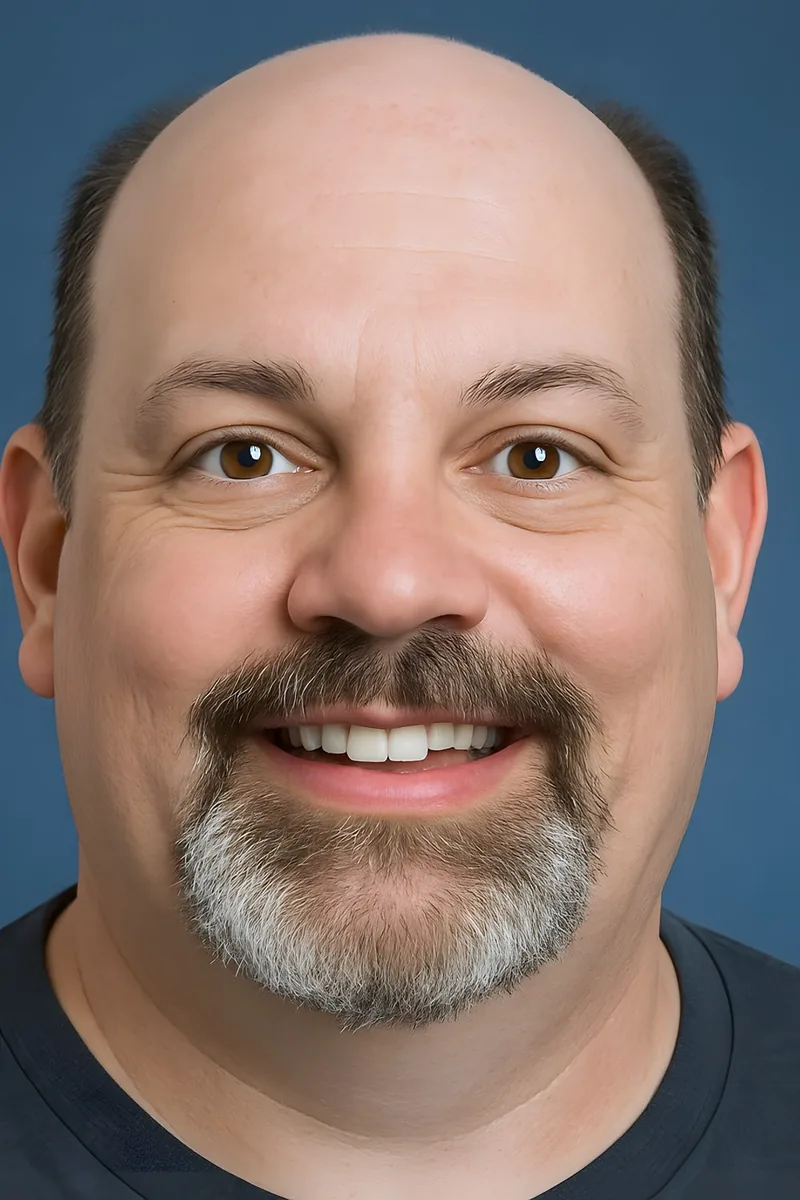
I enjoy helping students learn more about math. It is a great feeling to see the "light bulb" turn on. I have been a math teacher and tutor for over 10 years, which includes teaching secondary, collegiate, and graduate courses. I earned a B.S. in mathematics from the University of Notre Dame. I also have an M.B.A. in quantitative business analysis from Indiana University and earned my secondary mathematics teaching license/certification at Indiana Wesleyan University.

I'm currently a Process Assistant at an Amazon warehouse, which is like an assistant manager. My job is interesting, active, and varied, but I missed tutoring and want to make math and other subjects as easy as possible to approach and grasp for students. With the right time and a commitment to tailoring a tutoring style for the person being assisted, any student can pass their classes and retain lifelong knowledge and experience. I'm looking forward to working with you!
Chemical engineering drills one thing relentlessly: translating between different representations of the same relationship — a skill that maps directly onto pre-calculus work with graphs, equations, and tables of function behavior. Joubert uses that training to teach topics like rational functions and asymptotic behavior by connecting the visual, algebraic, and numerical sides until students can move fluidly between them. Rated 4.9 by students.
Triple-majoring in math, computer science, and economics at IUPUI means Darren encounters pre-calculus concepts from three different angles — polynomial modeling in econ forecasts, recursive structures in programming, and the pure function theory that ties it all together. He's especially sharp on the transition from algebraic thinking to the kind of abstract function analysis that trips students up right before calculus, breaking down how transformations, compositions, and inverses actually work instead of just what buttons to press.
Having earned a 35 ACT and a 1540 SAT while completing dual science and computing degrees at Notre Dame, Aidan built the kind of cross-disciplinary math fluency that makes him especially sharp on the pre-calculus topics where algebra starts becoming abstract — rational functions, composite functions, and the shift from manipulating expressions to analyzing their behavior. He zeroes in on the conceptual bridge between what students already know from algebra and the functional thinking calculus will demand, making sure each new idea has a logical foothold rather than floating as an isolated procedure.
Two years as a math instructor at Mathnasium gave Amy a sharp sense of where students get stuck on the bridge between algebra and calculus — particularly with function transformations, rational expressions, and the shift from computing answers to analyzing behavior. Her biochemistry major at Notre Dame keeps her actively using these tools, especially logarithmic and exponential models, so she teaches them with current fluency rather than distant memory. A 35 ACT and 1570 SAT confirm the quantitative depth behind her approach.
Aerospace engineering at Purdue means Ritik solves trajectory and orbital mechanics problems that depend entirely on the trigonometric functions, polar coordinates, and parametric equations pre-calculus students are just starting to wrestle with. He earned a 36 ACT by developing the kind of mathematical intuition he now teaches — breaking down topics like composite functions and identities into steps that build logically from algebra rather than appearing out of nowhere. That engineering context lets him show students exactly where these tools get used, which makes the abstraction feel earned.
Leading Carmel High School's Science Olympiad team to back-to-back Nationals appearances meant Satvik was constantly teaching peers how to connect algebraic reasoning to the physics and engineering problems waiting on the other side of pre-calculus. That bridge-building perspective — showing how rational functions, sequences, and trigonometric graphs actually feed into the aerospace engineering he now studies at Georgia Tech — turns pre-calc from a checklist of disconnected topics into a coherent story. A perfect 36 ACT and 5.0 rating from students back up the approach.
A double major in applied and computational math plus statistics at Notre Dame means Abby didn't just pass through pre-calculus — she built an entire degree on top of it, using polynomial modeling, trigonometric structures, and function composition as everyday tools in her coursework. She zeroes in on the moment where algebra skills have to evolve into functional thinking, walking students through how transformations and asymptotic behavior actually work instead of handing them shortcut rules to memorize.
Limits, trigonometric identities, and polar coordinates all converge in pre-calc, and students often struggle because the course demands fluency across so many different mathematical ideas at once. Om's path through a biochemistry degree required heavy quantitative coursework, so he knows how to unpack each of these topics and show how they set up the logic of calculus.
Everything in Pre-Calculus — polar coordinates, conic sections, the unit circle — exists to set up the thinking you'll need in calculus. Akio treats each topic as a preview of what's coming, connecting trigonometric identities and function transformations to the derivative and integral concepts they eventually support. That forward-looking approach tends to make the material feel purposeful rather than arbitrary.
Tutoring at both Mathnasium and Kumon before college gave Christopher a clear picture of where students typically stall in pre-calculus — especially when rational functions and polynomial end behavior shift from concrete calculation to abstract reasoning. His finance and business analytics studies at Indiana keep him actively using these function families for modeling and forecasting, so he teaches them as practical tools with real structure rather than isolated textbook chapters.
As an actuarial science major, Jonathan spends his coursework building and manipulating the exact function families — exponential, logarithmic, polynomial — that pre-calculus students are learning to navigate for the first time. He's especially sharp on the algebra-to-calculus bridge: getting students comfortable with composite functions and rate-of-change intuition so the transition feels natural rather than abrupt. His 32 ACT reflects solid quantitative instincts across the board.
Neuroscience at Indiana University means Wahala regularly encounters the math that sits right at the pre-calculus boundary — exponential models for neural firing rates, logarithmic relationships in sensory perception, and the trigonometric functions that describe oscillatory brain signals. She tackles these topics by connecting them back to solid algebra foundations, building each new concept layer by layer so the jump toward calculus feels like a natural next step. Holds a 5.0 rating and a 35 ACT.
The leap into pre-calculus — trigonometric identities, limits, polar coordinates — demands comfort with every algebra skill that came before it. Franklin treats pre-calc as a bridge course, connecting the algebraic foundations students already have to the function analysis and graphing intuition they'll need for calculus. His 1460 SAT score speaks to the kind of mathematical fluency he brings to these sessions.
Teaching game theory to advanced middle schoolers in Hong Kong meant Carter had to make concepts like optimization, strategic equilibrium, and functional reasoning accessible — skills that map directly onto the pre-calculus toolkit of analyzing function behavior, interpreting graphs, and building toward limits. His economics degree from Brown kept him deep in the quantitative side of social science, where polynomial and logarithmic models aren't abstract exercises but everyday working tools. Holds a 5.0 rating and a 1570 SAT.
Doing research in Spectral Graph Theory at MIT means Enrico encounters the full toolkit of pre-calculus — eigenvalue behavior, polynomial roots, matrix transformations — at a level where shaky fundamentals would be immediately exposed. He teaches the course by making definitions click intuitively, so that concepts like composite functions or rational expressions feel like natural extensions of algebra rather than arbitrary new rules. His 36 ACT, 1570 SAT, and 5.0 rating confirm the depth behind that intuition.
A math degree from Penn means Ben didn't just pass through pre-calculus — he built everything that came after on top of it, from linear algebra to multivariable calculus. That depth lets him teach topics like rational functions and trigonometric identities by revealing the structural logic underneath, so students carry real understanding into calculus instead of a fragile set of memorized steps. Holds a 5.0 rating.
Studying molecular biology at Yale means Maxwell constantly encounters the mathematical scaffolding that pre-calculus builds — exponential models for gene expression kinetics, logarithmic scales for concentration data, and trigonometric functions underlying structural biology. He zeros in on how these function families actually behave and transform, connecting the symbolic manipulation back to intuition so students aren't just memorizing identities in isolation. His 33 ACT and 5.0 rating back that up.
Tutoring calculus students at Penn's Tutoring Center taught Brittany exactly which pre-calculus skills matter most — she saw firsthand where gaps in trigonometric reasoning or shaky function manipulation derailed students in Gen Chem and Physics. Her psychology training also gives her a sharp read on how students get stuck, letting her adjust explanations of topics like polynomial end behavior or composite functions on the fly. She's been teaching math since her Mu Alpha Theta days in high school and hasn't stopped since.
Pre-calc is where math pivots from computation to conceptual thinking — suddenly students need to analyze function behavior, understand transformations, and reason about limits informally. Zofia's approach zeroes in on building that analytical shift, especially around trigonometric functions and their graphs, so that calculus feels like a natural continuation rather than a cliff.
Chemical engineering at Georgia Tech means Aimee has been solving problems built on pre-calculus concepts — rational functions in reactor design, trigonometric models in thermodynamic cycles, logarithmic relationships in kinetics — since her first semester. She teaches the course by showing how each topic threads into the next, so the jump from polynomial behavior to limits feels like a natural step rather than a cliff. Her 33 ACT and 4.9 rating reflect the kind of structured, patient approach that makes that transition stick.
Differential equations, calculus, and physics all live on Bidyut's teaching roster — which means he knows exactly which pre-calculus skills (and which specific weak spots) will matter most once students move forward. His biomedical engineering training at Johns Hopkins keeps him fluent in the trigonometric, exponential, and composite function reasoning that pre-calc demands, and he teaches those topics by connecting them to the applied problems where sloppy understanding actually costs you. A 36 ACT and 5.0 rating back up the depth he brings.
Everything in Pre-Calculus — trigonometric identities, rational functions, limits intuition — exists to set students up for calculus, but most courses don't make that connection explicit. Annie does, because she's already on the other side of it: her engineering program at Cornell showed her exactly which Pre-Calc skills matter most and where gaps tend to cause trouble later.
The jump to pre-calculus is where students suddenly need to think about trigonometric identities, limits of sequences, and polar coordinates all at once. Margaret tackles each of these by connecting them back to algebraic reasoning students already have, rather than treating every unit as brand new. Rated 4.9 by students, she's especially effective at demystifying the transition into calculus-level thinking.
Trigonometric identities, logarithmic functions, and the behavior of rational expressions all land differently when a student can see what's happening on a graph. Dylan leans heavily on visual and graphical reasoning to make Pre-Calculus concepts intuitive rather than procedural — an approach sharpened by his physics and math coursework at Vanderbilt. He's particularly effective at bridging the gap between algebraic manipulation and the conceptual thinking calculus will demand.
The jump from algebra to calculus-readiness often stalls at one specific point: understanding how functions actually behave — why a rational expression blows up near an asymptote, how composite functions layer transformations, what makes polynomial end behavior predictable. Samuel tackles that conceptual bridge head-on, drawing on his applied mathematics training at Caltech where these ideas aren't theoretical warm-ups but working tools. His 1550 SAT confirms the quantitative sharpness behind his teaching.
Testimonials
Because the right Pre-Calculus tutor makes all the difference.
Average Session Rating – Based on 3.4M Learner Ratings
Practice Pre-Calculus
Free practice tests, flashcards, and AI tutoring for Pre-Calculus
Nearby Pre-Calculus Tutors
Other Indianapolis Tutors
Related Math Tutors in Indianapolis
Frequently Asked Questions
Pre-Calculus marks a shift from memorizing procedures to understanding why those procedures work. Many students struggle with this transition—they can follow steps but get stuck when asked to explain concepts or apply them to unfamiliar problems. Personalized tutoring helps students build conceptual understanding by connecting formulas, graphs, and real-world applications so the material clicks rather than just sticks.
Word problems require students to translate English into mathematical language, identify what's being asked, and choose the right approach—skills that don't always develop from textbook practice alone. Tutors work with students to break down complex problems into manageable steps, recognize patterns across different problem types, and build confidence in tackling unfamiliar scenarios. This systematic approach turns word problems from a source of frustration into an opportunity to deepen understanding.
Graphing requires students to visualize abstract relationships and understand how changes to equations affect the shape and position of curves—a conceptual leap that's hard to make from lectures or textbook diagrams alone. Personalized tutoring lets students explore transformations interactively, see how parameters change graphs in real time, and build intuition about function behavior. This visual, hands-on approach helps students move beyond memorizing rules to truly understanding the connections between equations and their graphs.
The first session is about understanding where you are and where you want to go. Tutors will assess your current strengths and gaps—whether that's function notation, trigonometry, logarithms, or something else—and learn about your learning style and goals. From there, you'll work together to create a personalized plan that targets your specific challenges and builds momentum toward mastery.
Yes. Varsity Tutors connects you with tutors experienced in the major Pre-Calculus textbooks and approaches used across Indianapolis's 82 school districts. Whether your school uses a traditional sequence, integrated curriculum, or honors-level material, tutors can align their instruction with your specific coursework and help you succeed on your school's assessments.
Teachers expect students to show clear, organized work—but many students don't know how to structure their solutions effectively. Tutors model how to write out each step, explain your reasoning, and organize work so it's easy to follow and debug mistakes. This skill is essential in Pre-Calculus and pays dividends in calculus and beyond, where rigorous justification becomes even more important.
Absolutely. Math anxiety often stems from past experiences where concepts felt rushed or confusing—and personalized tutoring directly addresses that by giving you time, space, and a patient guide to work through material at your own pace. When you understand why something works rather than just memorizing it, and when you see yourself solving problems correctly, confidence builds naturally. Many students find that one-on-one instruction transforms their relationship with math.
Pre-Calculus is the foundation for Calculus—mastering functions, trigonometry, and algebraic manipulation now makes Calculus concepts far more accessible later. Tutors help you build deep understanding of these topics and develop problem-solving habits that transfer directly to Calculus. Students who work with tutors in Pre-Calculus often find the transition to Calculus smoother and feel more confident tackling limits, derivatives, and integrals.
Let’s find your perfect tutor
Answer a few quick questions. We’ll recommend the right plan and match you with a top 5% tutor.