Award-Winning SAT Math Tutors
serving Indianapolis, IN
SAT Math
Tutors in Indianapolis
Private 1-on-1 tutoring, weekly live classes for academic support, test prep & enrichment, practice tests and diagnostics, and more to elevate grades and test scores.
Based on 3.4M Learner Ratings
UniversitiesSchools & Universities
DeliveredHours Delivered
ProficiencyGrowth in Proficiency
Who will be getting tutoring?
No obligation. Takes ~1 minute.
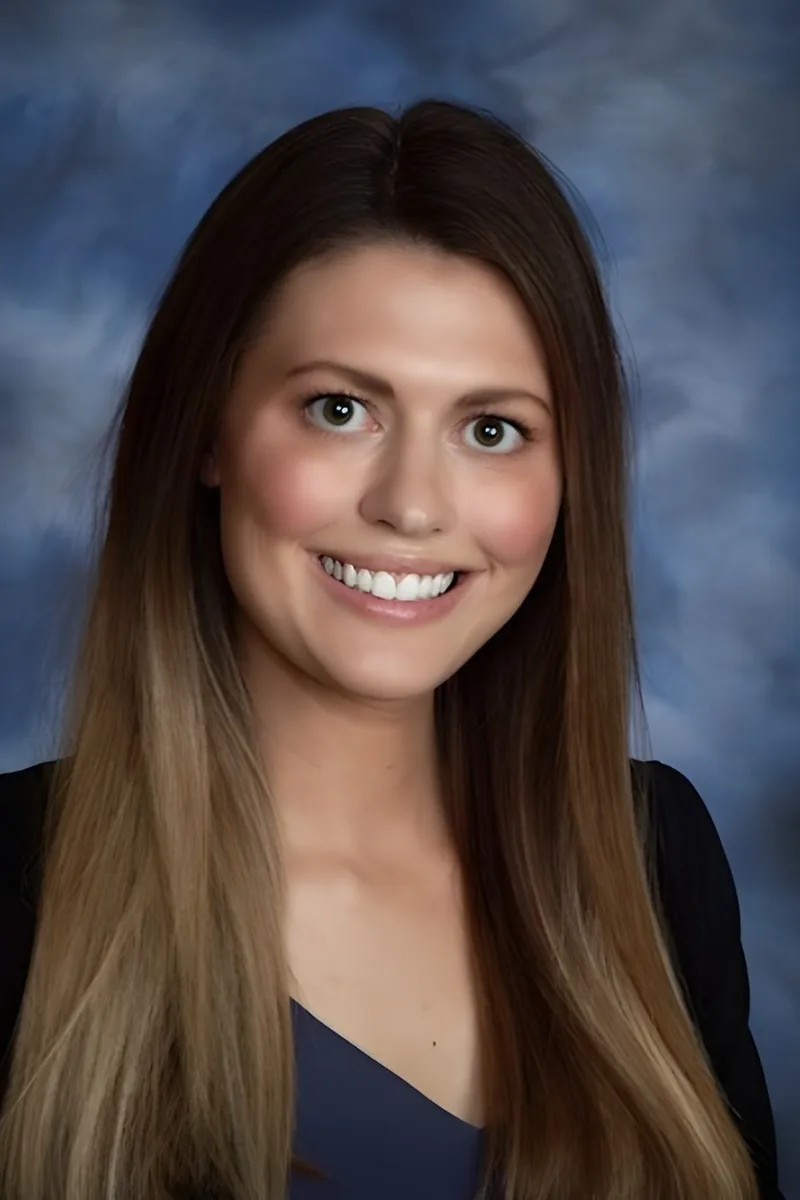
Emily scored a 1480 SAT and brings a math-heavy academic background that includes minors in both mathematics and chemistry. She tackles SAT Math by drilling the specific algebra, data analysis, and advanced math concepts that the College Board tests most frequently — and teaches students to distinguish between problems that deserve full work and ones that reward estimation or back-solving.

I'm currently a Process Assistant at an Amazon warehouse, which is like an assistant manager. My job is interesting, active, and varied, but I missed tutoring and want to make math and other subjects as easy as possible to approach and grasp for students. With the right time and a commitment to tailoring a tutoring style for the person being assisted, any student can pass their classes and retain lifelong knowledge and experience. I'm looking forward to working with you!
I am currently and MS Economics students at Purdue University as well as a Data Analyst for The Heritage Group. I have experience tutoring graduate-level econometrics and macroeconomics.
I'm fluent in Spanish and proficient in Mandarin. I worked with all the Spanish speaking clients as a paralegal at a law firm and lived in Nanjing China while I studied at Nanjing University. I'm also TEFL certified.
Classics and philosophy trained Austin to think in precise logical structures — the same skill that untangles the SAT Math section's deliberately tricky word problems, where understanding what's being asked matters as much as knowing the math. His 1570 SAT means he's already cracked the test at a near-perfect level, and he teaches students to convert convoluted phrasing into straightforward algebraic setups before solving anything.
I am a junior at Purdue University studying Aerospace Engineering and am part of the Air Force ROTC program. I have 6 years of tutoring experience at places including Kumon, Mathnasium, and Purdue University. I have worked with kids of all ages from kindergarten to sophomores in college, each with their own set of unique strengths, and tutored a variety of subjects, including calculus, trigonometry, geometry, thermodynamics, chemistry, and physics. Like many of my previous students, I struggled to understand concepts that I was being taught and was a terrible test taker. However, I found ways to overcome my obstacles and develop an better intuition for what I was learning. I believe that it is only this intuition and understanding that helps overcome these obstacles. My least favorite thing to see people be discouraged, so with a little bit of guidance and reassurance, I want to show people that they are capable of anything they put their mind to.
Leading Carmel High School's Science Olympiad team to back-to-back Nationals appearances meant Satvik was drilling competition-level math and physics problems under time pressure long before he sat the SAT and scored 1540. That competition mindset shapes how he teaches SAT Math — he trains students to recognize problem types within seconds, especially on the quadratic and exponential function questions where most test-takers waste time choosing between multiple valid approaches. Rated 5.0 by students.
A biochemistry major at Notre Dame who spent two years teaching math to students of all levels, Amy brings both deep content knowledge and real instructional experience to SAT Math prep. She scored a 1570 composite and tackles the topics students most commonly lose points on — systems of equations, quadratic modeling, and data interpretation — with an emphasis on recognizing what each question is actually asking.
Notre Dame's Science-Computing program had Aidan grinding through calculus, statistics, and quantitative coursework alongside computer science — building the kind of cross-disciplinary problem-solving speed that the SAT Math section rewards, especially on its data-analysis and function-modeling questions. His 1540 SAT means he's already proven he can perform under that specific test's time pressure, and he teaches students to recognize which tool a problem actually calls for instead of defaulting to the longest algebraic approach.
I am a student at Duke University pursuing a Bachelor of Science in Neuroscience with Chemistry and German minors. On campus I am involved in the Bilbo lab, which focuses on neuroimmune interactions in abnormal brain development. I am very passionate about helping others enjoy and learn about various fields in STEM.
Anya's five years teaching math from arithmetic through college-level coursework means she can quickly pinpoint whether a student's SAT Math struggles stem from content gaps — like shaky quadratic reasoning or misunderstood systems of equations — or from test-taking habits like misreading word problems. She addresses whichever root cause is actually holding the score back.
I'm a first-year physics major at Butler University, and I tutor because I believe that everyone deserves to have an education tailored to their own personal learning style. I'm especially focused on SAT preparation, where I earned a 1580, and I also tutor AP Calculus AB, AP Economics, AP Physics, AP English Language and Composition, and various other subjects. My tutoring style is interactive and built around questions and guided practice. I like to understand how a student is thinking before jumping in, then help them refine their approach step by step. Sessions are flexible depending on the student's goals, sometimes that means slowing down and building core concepts, and other times it means focusing on efficiency, test strategy, or practice problems. For the SAT in particular, the math section relies on strong fundamentals and careful reading, and the Reading and Writing section is very improvable with targeted grammar practice and familiarity with question patterns.
Engineering students at Notre Dame don't just take calculus — they use it, which means Alexandra's daily math workload keeps her sharp on the algebra, functions, and quantitative reasoning the SAT Math section tests. Her 1530 SAT score came from learning to treat the no-calculator questions as puzzles in efficiency, and she teaches that same mindset: figure out what the problem rewards, then take the cleanest path there. Rated 5.0 by students.
Victoria's 1510 SAT composite came partly from treating the math section like a science experiment — testing strategies, tracking which problem types ate the most time, and building repeatable approaches for each one. She's particularly sharp on translating wordy setups into clean equations, a skill biology students often struggle with since their math tends to live inside formulas rather than word problems. Rated 5.0 by students.
The SAT Math section rewards students who can switch gears fast between algebra, geometry, and data questions — and Wahala's neuroscience training at Indiana University built exactly that kind of flexible quantitative thinking, from statistical analysis to experimental design math. He scored a 1500 on the SAT and zeroes in on the ratio and percent problems that students consistently underestimate on test day, teaching a read-then-translate approach that prevents careless setup errors. Rated 5.0 by students.
Akio earned a 1530 SAT composite and approaches the Math section as a strategy problem: knowing when to use the calculator, when algebra is faster than plugging in, and how to read word problems for exactly the equation they're asking you to set up. He's especially sharp on the passport-to-advanced-math questions involving quadratics, exponentials, and polynomial reasoning.
I am a graduate student at the University of Indianapolis. Currently, I am going to school for my Masters in Education and my Indiana Teaching License in Social Studies for grades 6-12. I have worked as a Special Education Instructional Assistant at Carmel High School where I worked with students in Biology, Algebra I, and Geometry. I graduated from Purdue University with a B.S. in Economics with a Statistics Concentration and History and Political Science minors. My first two years at Purdue however I was an Aerospace Engineering Major. Through college I worked as a Supplemental Instruction Leader for General Chemistry. Currently I am a coach at Carmel Swim Club who loves photography, fantasy sports, reading, and writing. My favorite topics to tutor are History and Science, plus I have experience in Math, Stats, and Economics. I firmly believe that the best way to tutor is to focus on learning strategies that will carry on for the rest of their life, and I do my best to share my love for learning with my students.
Algebra and data analysis make up the bulk of SAT Math, and Mariam's biology degree means she's spent years working with statistical models, graphs, and quantitative reasoning in real contexts. She unpacks each problem type — linear equations, systems, exponential growth, scatterplot interpretation — and shows students how to identify what the question is actually asking before they start solving. Her 1470 SAT score and 5.0 student rating back up her approach.
Scoring 1470 on the SAT gave Payal firsthand insight into how the math section layers algebra and data analysis into word-heavy, context-rich problems. She walks students through the art of translating wordy setups into clean equations — the skill that separates a good score from a great one. Her 4.9 rating speaks to how well that approach lands.
Om earned a 1470 SAT composite and approaches the math section by sorting problems into the handful of concept clusters College Board tests repeatedly: linear equations, quadratic behavior, ratios, and data interpretation. He teaches students to spot which cluster a problem belongs to before solving, which cuts down on wasted time and second-guessing.
I'm Priyanka Prasad! I'm a senior Mathematics and Economics major at Butler University. I have minors in Management Information Systems, Business Administration, and French. I've been a Math and Economics tutor throughout my time in college. These are subjects in which many students struggle during high school and college, and I find helping students to feel more confident in them to be so rewarding!In my spare time, I love to travel, learn new languages, cook, dance, and work with young people. I've done this as a freelance tutor for the past 4 years and also through mentorship opportunities through College Mentors for Kids and working as a tutor for refugees for a local school system.
Victoria scored a 1490 on the SAT and approaches the math section as a strategy problem: knowing which questions reward algebraic shortcuts, when to back-solve from answer choices, and how to manage time across the no-calculator and calculator portions. She walks through heart-of-algebra, passport-to-advanced-math, and data-analysis questions with an eye on the specific traps the test writers set.
I am a rising sophomore at Indiana University studying finance and business analytics. On campus, I am involved with Microsoft Excel peer tutoring, the Sales and Financial Services Clubs, and the university's Hutton Honors College. I am originally from Vernon Hills, Illinois, where I have additional past tutoring experience at Mathnasium and Kumon.
Dayle's 1440 SAT composite came partly from a disciplined approach to SAT Math that she now breaks down for her students: identifying which problems reward algebra, which reward estimation, and which are fastest with back-solving. Her biochemistry background keeps her comfortable across the full range of topics from linear equations to data analysis and trigonometry.
Scoring a 1480 on the SAT, Kunal knows exactly where the math section tries to trip students up — especially on no-calculator questions involving quadratics, systems, and data interpretation. He teaches specific strategies for pacing and eliminating answer choices so students spend their time on the problems that actually move their score.
I am a recent graduate of Indiana University-Bloomington, where I majored in Political Science and Mandarin Chinese. This past year I studied abroad and worked in China with the Chinese Flagship Program. I love studying history, languages, literature, and writing, and when I'm not helping students as a tutor, you can find me swing dancing, listening to jazz music, experimenting with vegan baking, and walking my dog.
Franklin scored a 1460 on the SAT and developed a systematic approach to the Math section that zeroes in on the question types students lose the most points on — multi-step word problems, quadratic modeling, and data analysis. He breaks each problem into recognizable patterns so students spend less time second-guessing and more time executing. Rated 5.0 by students.
I am a 19 year old who appreciates school and knowledge more than anything. I have always been drawn to learning more and as a result I have felt the responsibility to pass knowledge on to those who are struggling with a concept I have mastered. I excel in math and science and hope to help kids who are interested in these topics overcome the obstacles that come with the education process, in order to continue learning more. I have had many inspirational academic mentors in my life that have allowed me to become the man I am today and as a result I am glad to be in the position to pay it forward.
Scoring 1480 on the SAT herself, Rachel knows the specific traps the SAT Math section sets — problems that look like algebra but hinge on reading comprehension, or grid-ins designed to punish rushing. She walks students through the no-calculator and calculator sections differently, building comfort with mental math shortcuts where they matter most. Her sessions zero in on the question types each student consistently misses rather than re-teaching material they already know.
I am a sophomore majoring in Multidisciplinary Engineering at Purdue University. I have four years of experience tutoring students in Chemistry, Physics, English, and high school mathematics. I love tutoring students in all subjects because I want to give everyone the opportunity to understand complicated concepts. I am a very visual person, so I can adapt written or abstract material into something students can actually see. Outside of tutoring, I enjoy hiking, playing the viola, and binge-watching TV shows.
Scoring an 800 on SAT Math means knowing when to use algebra and when a strategic shortcut is faster. Katie earned a perfect 1600 composite and unpacks each problem type — from polynomial functions to coordinate geometry — with an emphasis on the decision-making that saves time under pressure. Her 5.0 rating speaks to how well that approach lands with students.
I'm a rising junior at Brown University studying biomedical engineering. I have lots of experience in middle school through college level instruction in STEM and SAT/ACT prep. My goal is to provide a fun and productive learning environment by only teaching subjects that I am passionate about.
Electrical engineering at Columbia means Zhenrui solves algebra and geometry problems under pressure daily — and his 1570 SAT confirms he knows how to do it within the specific constraints of this test. He's particularly effective on the passport-to-advanced-math questions involving polynomial and exponential functions, where his engineering instinct to check whether an answer makes physical sense catches errors that pure algebraic manipulation misses.
Scoring well on SAT Math often comes down to recognizing which tool a problem is really testing — is it a systems question disguised as a word problem, or a quadratic hidden in a table? Astoria's 1530 SAT composite and science-heavy coursework at WashU give her sharp instincts for the algebraic and data-analysis concepts that dominate this section. She teaches students to read problems strategically so they spend less time second-guessing their approach.
I am 22 years old and just graduated from the University of Kentucky with a double degree in French and Biochemistry. I have been a tutor for over a year now at UK's tutoring center. I believe that anyone can learn anything with enough practice and encouragement, and I love helping students overcome challenges and gain more self-confidence!
Scoring high on SAT Math requires knowing when a problem wants algebra and when it wants a shortcut — and the difference often hides in how the question is worded. Nikhil earned a 1540 SAT and an engineering degree, so he teaches students to read each problem strategically, especially on the no-calculator section where efficiency matters most.
I'm not tutoring or buried in my textbooks, you will either find me rock climbing at the Triangle Rock Club, playing Ultimate Frisbee, working on my car, or enjoying the great outdoors (beaches, mountains, forests--you name it, I love it). On rainy weekends I enjoy tinkering with computers and old electronics, playing Pokemon, or picking at my guitar.
I am excited to help anyone who might need it!
I am available to tutor in a broad range of subjects, though I am most passionate about Economics, History, and Civics. Please feel free to contact me and I would be happy to arrange a session.
The SAT Math section rewards students who can quickly translate a wordy setup into a clean algebraic expression — a skill Keith honed through years of political science coursework that demanded pulling precise claims from dense, jargon-heavy texts. His 1560 SAT means he's already cracked the test's particular blend of algebra and data reasoning, and he teaches students to approach each problem like a legal argument: identify what's actually being asked, strip out the irrelevant details, then solve.
Testimonials
Because the right SAT Math tutor makes all the difference.
Average Session Rating – Based on 3.4M Learner Ratings
Practice SAT Math
Free practice tests, flashcards, and AI tutoring for SAT Math
Nearby SAT Math Tutors
Other Indianapolis Tutors
Related Test Prep Tutors in Indianapolis
Frequently Asked Questions
Score improvement depends on your starting point and commitment level, but students typically see gains of 50-100+ points over 8-12 weeks of focused tutoring. The key is identifying your specific weak areas—whether that's algebra, geometry, or test-taking strategy—and targeting those systematically. Varsity Tutors connects you with expert tutors who can diagnose exactly where you're losing points and create a personalized study plan to address those gaps.
Your first session focuses on assessment and goal-setting. The tutor will review your practice test scores, identify patterns in the types of questions you're missing, and understand your timeline for test day. You'll also discuss your target score and any specific concerns—like timing issues or particular math topics that feel shaky. This foundation helps create a customized tutoring plan tailored to your needs.
Pacing is one of the most common challenges on SAT Math—you have 80 minutes for 58 questions. Expert tutors teach you strategies like identifying easier vs. harder questions, knowing when to skip and come back, and practicing with strict time limits to build speed without sacrificing accuracy. They'll also help you recognize which question types eat up your time and develop techniques to work through them more efficiently.
Practice tests are essential—they're the best way to identify weak areas, get comfortable with the test format, and build stamina for the full 3+ hour exam. Varsity Tutors recommends taking full-length practice tests every 1-2 weeks and reviewing them thoroughly with your tutor to understand why you missed questions. This data-driven approach ensures your tutoring sessions focus on the math concepts and strategies that will have the biggest impact on your score.
For Indianapolis students, the most frequent struggles include word problems (especially those requiring multi-step reasoning), geometry and trigonometry questions, and managing test anxiety under time pressure. Many students also struggle with the test's specific question formats—like grid-ins or questions with multiple correct answers—even when they know the underlying math. Expert tutors focus on both content mastery and strategic approaches to tackle these challenges head-on.
Absolutely. Test anxiety often stems from feeling unprepared or unfamiliar with question formats, both of which tutoring directly addresses. By building confidence through targeted practice, learning proven test-taking strategies, and simulating real test conditions, you'll feel more in control on test day. Tutors also teach techniques like pacing yourself to avoid panic and managing your mindset when you encounter a difficult question.
Look for tutors with strong math backgrounds, proven SAT prep experience, and a track record of helping students improve their scores. The best tutors understand not just the math content but also the SAT's specific format, timing demands, and question patterns. When you connect with Varsity Tutors, we match you with expert tutors who have demonstrated success in SAT Math preparation and can adapt their teaching to your learning style.
Most students benefit from 1-2 tutoring sessions per week combined with 5-7 hours of independent practice, depending on your target score and starting point. A typical 8-12 week preparation timeline allows time for skill-building, practice tests, and refinement. Your tutor will help you create a realistic schedule that fits your school commitments—especially important for Indianapolis students juggling coursework and extracurriculars.
Let’s find your perfect tutor
Answer a few quick questions. We’ll recommend the right plan and match you with a top 5% tutor.