Award-Winning Japanese Tutors
serving Indianapolis, IN
Japanese
Tutors in Indianapolis
Private 1-on-1 tutoring, weekly live classes for academic support, test prep & enrichment, practice tests and diagnostics, and more to elevate grades and test scores.
Based on 3.4M Learner Ratings
UniversitiesSchools & Universities
DeliveredHours Delivered
ProficiencyGrowth in Proficiency
Who needs tutoring?
No obligation. Takes ~1 minute.

Most students stall in Japanese once they move past hiragana and katakana into kanji recognition and grammatical particles like は versus が. Wahala minors in Japanese at Indiana University Bloomington and treats the language as a system to decode — connecting sentence structure, verb conjugation patterns, and cultural context so that reading and conversation reinforce each other.
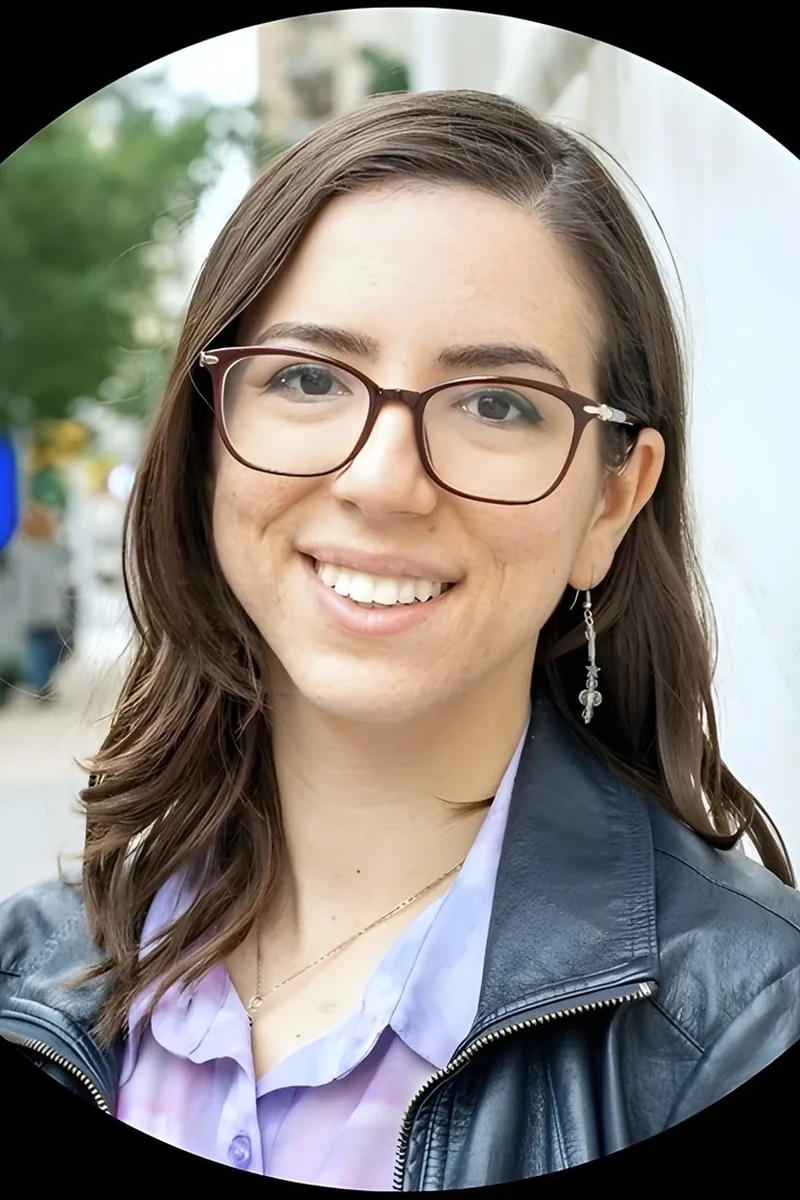
Learning Japanese means juggling three writing systems, a grammar structure that's the reverse of English, and cultural nuances that change how you speak depending on who you're talking to. Natasha taught Japanese at the high school level and lived in Japan teaching in elementary schools, giving her the kind of practical fluency that makes hiragana drills, particle usage, and conversational practice feel grounded in real life. She's 5.0-rated and works with beginners through advanced learners.
Brian prepared for and took the SAT Subject Test in Japanese with Listening, which means he's worked through the grammar structures, kanji recognition, and listening comprehension challenges that define intermediate Japanese study. He approaches language learning with the same systematic thinking he applied to economics and CS at Caltech — breaking down sentence patterns and verb conjugations into logical rules rather than pure memorization.
Earning a full bachelor's degree in Japanese — not just a minor or a few semesters — means Jina can teach well beyond survival phrases into kanji readings, grammar particles like は vs. が, and the nuances of keigo (formal speech). She brings the same analytical rigor from her science training to breaking down sentence structure and verb conjugation patterns.
Holding a degree in Japanese Studies, Andrew brings deep familiarity with not just hiragana, katakana, and kanji but also the cultural context that shapes how the language actually works — keigo politeness levels, sentence-ending particles, and the logic behind counter words. He connects grammar patterns to real conversation so students internalize structures instead of just drilling flashcards.
Most students learning Japanese hit a wall somewhere between mastering hiragana and actually constructing sentences with particles, verb conjugations, and counters. Kai has been teaching Japanese through the student organization meetings on campus, building lessons that move learners from basic self-introductions to reading short passages and holding simple conversations.
Linguistics training gives Andrew a structural advantage when teaching Japanese — he understands how languages build meaning differently, which matters when explaining why particles replace prepositions or why verbs land at the end of every sentence. His background in Korean and German means he's personally navigated multiple grammar systems far removed from English, and he applies that comparative instinct to make Japanese word order and conjugation feel logical rather than arbitrary.
As a native Japanese speaker with over fifty years of fluency in reading, writing, and conversation, Hatsuki teaches the language the way it's actually used — from particle usage and keigo (honorific speech) to the nuances between hiragana, katakana, and kanji in everyday contexts. She currently lives in the U.S. with her family, giving her a natural understanding of where English speakers stumble with Japanese grammar and pronunciation.
Darin brings an analytical learner's perspective to Japanese, tackling the language's grammar patterns and writing systems with the same systematic approach he applied to his scientific training. For students working through hiragana, katakana, kanji recognition, or verb conjugation, he offers structured methods that make consistent progress feel achievable.
I currently work for an afterschool enrichment program (Best Brains) tutoring elementary English and math, and I have 4+ years of experience as a private ESL tutor for both children and adults. I am working toward my Masters of Science in Secondary English Education and ESL at the University of Wisconsin- Madison. I graduated from the University of Oregon with a Bachelor of Arts in Comparative World Literature and Japanese, and from the University of Wisconsin-Madison with a Master of Arts in Japanese Language and Literature. I began tutoring while I was in high school, assisting with algebra homework. In college, I volunteered as a kindergarten reading assistant through a program called Start Making a Reader Today. I later volunteered while in graduate school at a local high school tutoring students in beginner Japanese. I have also been employed by the University of Wisconsin as a Teaching Assistant, and taught in Religious Studies and East Asian Studies. In all cases, it has been a pleasure watching students progress in their academics and to see them grow as young scholars. I especially enjoy teaching language arts because of the feeling of connection that language can bring. My favorite part of teaching is seeing the smiling face of someone the moment that they finally "get" something they've been struggling with and watching their confidence boost. In my free time, I host a small book club, pen pal with friends around the world, and try my hand at new recipes.
Shona's semester abroad in Seville proved that immersion reshapes how you learn any language — a lesson she carries into teaching Japanese, where she emphasizes building comfort with sentence patterns and particles through active use rather than translation drills. Her AP Japanese Language and Culture tutoring draws on both her structured math-trained thinking and her own experience navigating a second language in real-world settings. Rated 4.9 by students.
Cori is pursuing a Japanese minor at MIT, which means she's actively working through the grammar structures, kanji readings, and particle usage that trip up most learners. That proximity to the learning process gives her a practical sense of what sticks and what needs extra repetition.
I am particularly passionate about math as well as standardized test prep. I studied math on a double-accelerated track throughout middle school and high school, covering math from algebra to multivariable calculus. Aside from teaching academic subjects, I am also trained in playing the piano and violin, having taken lessons for piano from the ages of 4 to 18 and playing violin in my school orchestra from 5th to 12th grade. I love working with students to improve their skills in an area of study, and my favorite part is getting to see them gain confidence in themselves and their own abilities!
Testimonials
Because the right Japanese tutor makes all the difference.
Average Session Rating – Based on 3.4M Learner Ratings
Nearby Japanese Tutors
Other Indianapolis Tutors
Related Languages Tutors in Indianapolis
Frequently Asked Questions
Classroom settings often limit one-on-one speaking time, but personalized 1-on-1 instruction with a Japanese tutor provides dedicated conversation practice you won't find in a typical school environment. A tutor can engage you in real dialogue, correct your pronunciation and grammar in the moment, and tailor conversations to your interests and proficiency level. This consistent speaking practice is essential for developing confidence and fluency in Japanese.
Japanese verbs conjugate based on tense, formality level, and whether they're regular or irregular—a system very different from English. Many students struggle because conjugation patterns don't follow one simple rule; instead, you need to master multiple patterns and understand when to use formal (keigo) versus casual speech. A tutor can break down these patterns systematically, show you how they connect, and give you targeted practice so conjugation becomes intuitive rather than overwhelming.
Memorizing lists rarely sticks—research on spaced repetition and retrieval practice shows that vocabulary retention improves dramatically when you encounter words in context and revisit them strategically over time. A tutor can introduce vocabulary through reading, conversation, and writing exercises, then circle back to reinforce what you've learned. This approach helps you build a working vocabulary you can actually use, rather than words that fade from memory after a test.
Yes. While full immersion requires time in Japan, personalized tutoring can create an immersion-like experience by incorporating cultural context, authentic materials, and consistent exposure to natural Japanese. A tutor can teach you how native speakers actually use the language, explain cultural nuances behind expressions, and help you understand Japanese media, news, or literature. This approach deepens your understanding beyond textbook Japanese and builds real communicative competence.
Reading and writing require mastery of hiragana, katakana, and kanji—plus grammar patterns that differ from spoken Japanese. A tutor can guide you through authentic texts at your level, teach you efficient kanji-learning strategies, and provide feedback on your writing to help you develop a natural, accurate voice. With personalized instruction, you'll build these skills in a logical sequence rather than struggling through them alone.
Absolutely. Japanese pronunciation involves pitch accent, vowel length, and subtle distinctions that can change word meaning—details that are hard to self-correct. A tutor provides immediate feedback on your pronunciation, models native-like intonation, and helps you develop an ear for these distinctions through listening and repetition exercises. Regular practice with a tutor accelerates your path to clear, confident pronunciation.
Your first session is a chance for a tutor to assess your current level, understand your goals (whether you're preparing for the JLPT, supporting classroom learning, or pursuing fluency), and learn your learning style. They'll ask about your background with Japanese, identify specific challenges you're facing, and outline a personalized plan to help you progress. This foundation ensures your tutoring is targeted and effective from day one.
Indianapolis schools serve over 152,000 students across 82 districts, and Japanese programs vary widely in depth and resources. Personalized tutoring fills gaps by providing expert instruction tailored to your school's curriculum, helping you move ahead if you're excelling, or catching you up if you're falling behind. Whether you're in a rigorous Japanese program or need to supplement limited classroom instruction, a tutor gives you the focused support to succeed.
Let’s find your perfect tutor
Answer a few quick questions. We’ll recommend the right plan and match you with a top 5% tutor.