Award-Winning Calculus Tutors
serving Indianapolis, IN
Calculus
Tutors in Indianapolis
Private 1-on-1 tutoring, weekly live classes for academic support, test prep & enrichment, practice tests and diagnostics, and more to elevate grades and test scores.
Based on 3.4M Learner Ratings
UniversitiesSchools & Universities
DeliveredHours Delivered
ProficiencyGrowth in Proficiency
Who needs tutoring?
No obligation. Takes ~1 minute.

Teaching high school history means Ben regularly builds lessons around change over time — which is, at its core, what a derivative measures. His math tutoring experience through the undergraduate level lets him walk students through limits, differentiation rules, and early integration by connecting each concept to the intuition behind it rather than just the notation. Rated 5.0 by students.
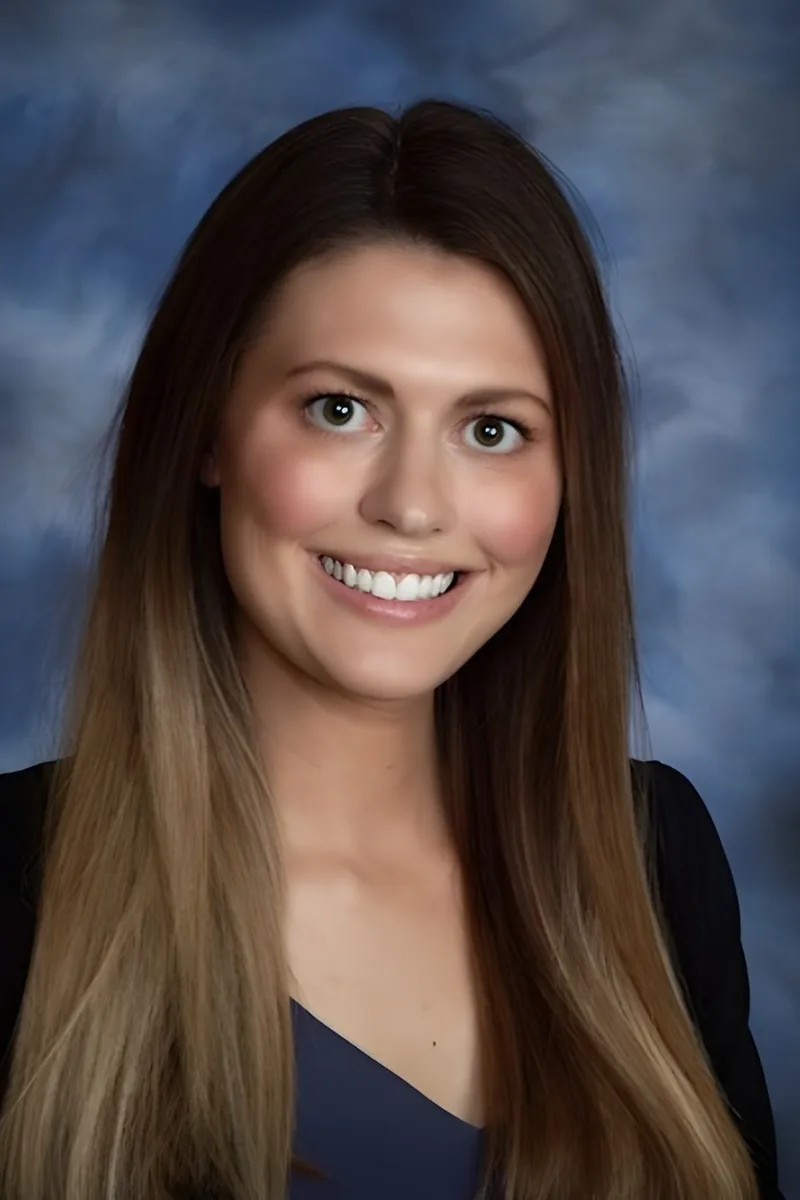
Between a biology major, a math minor, and a 4.0 GPA at Indiana University — where she actually worked for the Department of Mathematics — Emily has spent more time inside calculus than most tutors claiming it as a subject. She teaches derivatives and integrals by connecting them to the biological rate-of-change problems she's encountered throughout her science career, from enzyme kinetics in undergrad to pharmacokinetic modeling in medical school. Rated 5.0 by students.
Limits, derivatives, and integrals each build on the one before, so a shaky understanding of one concept creates a cascade of confusion. Owen tackles calculus by making sure students can articulate *why* a rule works — not just apply it mechanically — which is especially useful when problems shift from straightforward differentiation to applied optimization or related rates.
Finance MBA coursework means Aleta has worked through the calculus that underpins marginal analysis, optimization models, and the time-value-of-money derivations that most business students skim past. She digs into how derivatives and integrals actually drive financial decision-making — why a cost curve bends where it does, or how continuous compounding emerges from a limit. That real-world grounding gives abstract rules a purpose students can hold onto.
I'm currently a Process Assistant at an Amazon warehouse, which is like an assistant manager. My job is interesting, active, and varied, but I missed tutoring and want to make math and other subjects as easy as possible to approach and grasp for students. With the right time and a commitment to tailoring a tutoring style for the person being assisted, any student can pass their classes and retain lifelong knowledge and experience. I'm looking forward to working with you!
Chemical engineering coursework is essentially calculus applied on repeat — heat transfer equations, reaction rate modeling, fluid dynamics — so Joubert has spent years solving the kinds of differential and integral problems that students encounter for the first time in a calculus course. He teaches each new rule by connecting it to the physical intuition behind it, like why an integral accumulates area or how a derivative captures instantaneous change. Rated 4.9 by students.
History degrees don't scream calculus, but Thomas's analytical habits — tracing how one event causes the next, tracking rates of change across economies and populations — map surprisingly well onto the logic of derivatives and limits. He treats each new calculus concept the way he'd treat a historical argument: break it into pieces, make sure every step follows from the last, and don't move on until the reasoning is airtight. Rated 5.0 by students.
Law school trains you to build arguments one logical step at a time — which turns out to be exactly how calculus works, moving from limits to derivatives to integrals in a chain where each idea depends on the last. Bill's JD background gives him that sequential rigor, and his lifelong love of math means he actually enjoys digging into the mechanics of things like the chain rule or related rates problems. Rated 4.9 by students.
Between a biology degree with a math minor and a master's in genetic counseling, Lauren has used calculus in contexts most tutors haven't — modeling gene frequency changes across populations, interpreting growth curves, and working through the quantitative backbone of genetics research. That combination means she can teach integration and differentiation as tools that actually do something, not just abstract procedures on a worksheet. Rated 4.9 by students.
Economics graduate work at Purdue means Jack uses calculus daily — optimization problems, marginal analysis, and the derivative-heavy reasoning that underpins econometric modeling are all part of his toolkit. That fluency lets him teach concepts like the chain rule or integration techniques by connecting them to real decision-making frameworks where rates of change drive the answer.
Economics runs on calculus — marginal cost, marginal revenue, and elasticity are all derivative problems in disguise, and John's BS in Economics means he's worked through that math in contexts where it drives real decisions. He teaches early calculus concepts like limits and differentiation by connecting them to the optimization and rate-of-change questions that show up in economic modeling, giving the abstraction a purpose students can hold onto.
Linguistics trains you to see structure in complex systems — phonological rules, syntactic trees, morphological patterns — and that same structural thinking applies surprisingly well to unpacking how a derivative describes change or why integration reverses the process. Lauren's 1520 SAT confirms she has the quantitative chops to back it up, and her analytical instincts from language analysis give her a distinctive way of walking through calculus notation so each symbol carries meaning rather than mystery.
I am a professional tutor with years of experience. I have helped students jump letter grades and improve as much as 8 composite points on the ACT and 200 points on the SAT. I have over 6 years and 1000 hours of test prep experience and over 6 years of experience tutoring math up to and including calculus, various science subjects, English, and Spanish. I like to meet all the tutoring needs of a student. This includes covering not only the academic subjects (including math, science, and language) and test prep (ACT and SAT) but also assisting with study skills and organization. I also have experience in working with students with various learning disabilities, including ADD/ADHD. I have helped students in all levels of courses, including honors and AP levels.
Pre-physical therapy coursework means Ryan has encountered calculus where it actually lives — force-velocity relationships in biomechanics, tissue stress-strain curves, and the rate-of-change problems that underpin human movement analysis. He teaches derivatives and integrals by anchoring them in those physical scenarios, turning abstract notation into something a student can practically visualize. Rated 5.0 by students.
The leap from understanding derivatives as a formula to understanding them as a rate of change is where calculus actually begins. Darren digs into the conceptual side — related rates, the meaning behind the Fundamental Theorem, why integration and differentiation are inverses — while still drilling the mechanical techniques students need for exams. Pursuing a math degree at IUPUI, he's deeply immersed in the material every day.
I enjoy helping students learn more about math. It is a great feeling to see the "light bulb" turn on. I have been a math teacher and tutor for over 10 years, which includes teaching secondary, collegiate, and graduate courses. I earned a B.S. in mathematics from the University of Notre Dame. I also have an M.B.A. in quantitative business analysis from Indiana University and earned my secondary mathematics teaching license/certification at Indiana Wesleyan University.
Limits, derivatives, and integrals each demand a different kind of thinking, and Andrew teaches all three by tying the formal definitions back to the geometric intuition behind them. His graduate math background means he's comfortable going deeper when a student asks "why does the chain rule work?" instead of just restating the formula. He also teaches Calculus 2, Calculus 3, and differential equations, so he knows exactly which Calc 1 skills matter most down the road.
Finance majors at Notre Dame don't just take calculus — they use it, working through marginal analysis, optimization problems, and the derivative-based logic behind investment modeling and cost curves. Charles brings that applied business lens to the subject, connecting the mechanics of differentiation and integration to questions about how quantities actually change in the real world. His 34 ACT composite confirms the quantitative chops to back it up.
Three bachelor's degrees — including one in philosophy — trained Austin to dissect arguments step by step, which turns out to be exactly what clicking with limits and continuity requires: following a chain of logic where each claim depends precisely on the one before it. His 1570 SAT confirms he can handle serious quantitative work, and he brings that same rigor to walking through derivative rules and integration techniques so students see the reasoning, not just the formula.
Whether it's the epsilon-delta definition of a limit or integration by parts, calculus rewards students who understand the reasoning behind each technique. Aidan's science-computing program at Notre Dame was calculus-intensive, covering everything from single-variable through multivariable applications. He explains concepts by connecting the algebra to the geometry — showing what an integral actually represents before drilling computation.
Working in Duke's Bilbo lab on neuroimmune interactions means Lauren regularly encounters the calculus underneath the science — rate-of-change models for inflammatory responses, differential equations describing neural development, and integration across experimental data sets. That daily exposure keeps her fluent in derivatives and integrals in a way that's grounded in real problems, not just textbook exercises. Her 35 ACT composite and 4.8 rating back up the quantitative chops.
Biochemistry at Notre Dame means Amy doesn't just study calculus — she uses it, working through reaction rate equations, enzyme kinetics models, and the integration problems that show up throughout physical chemistry coursework. Two years as a math instructor at Mathnasium sharpened her ability to explain everything from limit definitions to integration techniques in language that actually sticks. Her 1570 SAT and 35 ACT confirm the quantitative chops behind that teaching experience.
Biology at Dartmouth means Victoria has worked through calculus in its natural habitat — modeling population dynamics, enzyme kinetics, and the exponential growth curves that underpin ecology and epidemiology. A 34 ACT confirms she handles quantitative reasoning at a high level, and she teaches derivatives and integrals by connecting each concept back to the biological systems where rates of change actually matter. Rated 5.0 by students.
While history is Christie's primary expertise, her math teaching background means she can walk students through derivatives, integrals, and limit problems with a patient, step-by-step approach. She's especially effective with students who need concepts explained multiple ways before they click.
Engineering coursework at Notre Dame means Alexandra isn't just recalling calculus from a textbook — she's actively applying integration techniques, differential equations, and series convergence in her own classes right now. That immediacy makes a difference when walking through tricky topics like improper integrals or Taylor series, because she can pinpoint exactly where the reasoning tends to break down.
Studying both computer science and math at Washington University means Victoria doesn't just know how to solve a limit or evaluate an integral — she understands why the techniques work and when each one applies. She's especially strong on the conceptual leaps that trip students up, like the formal definition of a limit, improper integrals, and convergence tests for series.
Medical Anthropology at Penn isn't a math degree, but Jennifer's coursework involved enough quantitative analysis — epidemiological modeling, statistical reasoning about health outcomes — that she's comfortable with the conceptual machinery behind derivatives and rates of change. Her 34 ACT composite backs up that quantitative fluency, and she approaches early calculus by connecting each new rule to a concrete question worth answering rather than drilling notation in isolation.
Asian History might seem far from calculus, but Walker's 33 ACT composite demonstrates strong quantitative reasoning, and his teaching experience across math levels — from middle school arithmetic through algebra — means he understands how to build toward the conceptual leaps that early calculus demands. He's particularly effective at translating the intimidating notation of limits and derivatives into plain-language explanations, treating each new rule as a logical extension of algebra students already know.
Kristen's pre-health coursework at Notre Dame required heavy use of calculus in contexts like modeling biological rates of change and pharmacokinetics, so she teaches derivatives and integrals with real applications baked in. She's especially sharp at walking through chain rule and integration techniques step by step, connecting each new concept back to the logic behind it.
The leap from understanding derivatives mechanically to knowing *why* the chain rule works or what an integral actually accumulates — that's where most calculus students stall. Dan's quantitative training through his biology and conservation research means he regularly applied calculus to real modeling problems, and he teaches it with that same emphasis on meaning over memorization.
Aerospace engineering at Purdue means Ritik doesn't just study calculus — he uses it daily, from computing thrust curves and orbital trajectories to modeling fluid dynamics across airfoil surfaces. That applied fluency lets him teach derivatives, integrals, and series by connecting each concept to the physical systems where they actually matter. His 36 ACT composite and years of math tutoring at Kumon, Mathnasium, and Purdue back up the depth he brings to the subject.
Studying neuroscience at Duke means Shivram regularly encounters calculus in disguise — action potential models, synaptic decay functions, and the rate equations that describe how neurons communicate all depend on derivatives and integrals. That daily exposure gives him a fluency with the chain rule, related rates, and integration techniques that comes from actually using them to solve scientific problems, not just drilling textbook exercises.
Studying math at Notre Dame, Matthew lives in the world of limits, derivatives, and integrals daily — not just as textbook exercises but as tools that connect to physics, biology, and engineering problems he encounters in his pre-med coursework. He's especially strong at walking through the chain rule and integration techniques in a way that builds intuition rather than rote steps.
Biology and neuroscience coursework at Indiana University meant Payal spent semesters applying calculus to real problems — modeling enzyme kinetics, analyzing rates of neural signal propagation, and interpreting growth curves where derivatives and integrals aren't abstract but essential. That science-embedded experience with calculus lets her teach the mechanics of differentiation and integration alongside the reasoning that makes them stick. Rated 4.9 by students.
The jump from understanding derivatives conceptually to actually applying the chain rule, implicit differentiation, or integration by parts is where most calculus students stall out. Om tackled calculus as part of his biochemistry program at Gonzaga, so he approaches each technique with an eye toward practical problem-solving rather than pure abstraction.
Political science majors don't usually list calculus on their résumé, and Kelly is honest that it's not her deepest subject — but her 1440 SAT and experience tutoring algebra and math mean she can support students navigating the early conceptual territory like limits and basic differentiation. She's especially good at slowing down the reasoning behind each step, treating a new rule the way she'd treat a policy argument: nothing moves forward until the logic is airtight.
Every week as an undergraduate teaching assistant at Georgia Tech's College of Computing, Satvik ran recitation sections that required breaking down calculus-level math for large groups of students with different backgrounds. That experience sharpened his ability to explain limits, integration techniques, and applications of derivatives in multiple ways until one sticks. He earned a 5 on the AP Calculus BC exam and uses calculus daily in his aerospace engineering program.
Two years as an aerospace engineering major at Purdue meant Victor lived in calculus — derivatives, integrals, differential equations, and their real-world applications in physics and modeling. He switched to economics but kept that deep quantitative fluency, and now he connects calculus concepts to tangible problems so the abstraction doesn't feel arbitrary.
Abby studied Applied and Computational Mathematics at Notre Dame, where calculus wasn't just a course — it was the foundation for everything from differential equations to optimization models. She unpacks concepts like the chain rule, related rates, and integral applications by connecting them to the real-world problems they were designed to solve. That computational background means she's equally comfortable with theory and with the messy applied problems that show up on exams.
Chemical engineering at Purdue means Alexis uses calculus constantly — integration techniques, differential equations, and limit applications aren't abstract exercises for her but daily tools. She teaches derivatives and integrals by grounding them in what they actually represent: rates of change and accumulation. Students who need calculus to feel intuitive rather than mechanical tend to do well working with her.
Testimonials
Because the right Calculus tutor makes all the difference.
Average Session Rating – Based on 3.4M Learner Ratings
Nearby Calculus Tutors
Other Indianapolis Tutors
Related Math Tutors in Indianapolis
Frequently Asked Questions
Many students struggle with the transition from algebra and precalculus to the conceptual thinking Calculus requires—especially understanding limits, derivatives, and integrals beyond just memorizing formulas. Word problems that require translating real-world scenarios into mathematical models, multi-step problem-solving, and connecting graphical, algebraic, and numerical representations often trip students up. Personalized 1-on-1 instruction helps students build these connections and move beyond procedural understanding to truly grasping why the concepts work.
Showing work in Calculus isn't just about getting the right answer—it demonstrates your understanding of the process and helps identify exactly where mistakes happen. Teachers and tutors can see if you're applying the correct rules (like the chain rule or product rule) or if you're struggling with a specific step. When you work with a tutor, they can guide you through proper problem-solving strategies and help you develop the habits that lead to success on tests and in higher-level math courses.
Graphing is crucial in Calculus because it connects abstract concepts like derivatives and integrals to visual patterns you can actually see. Many students find it easier to understand what a derivative represents (the slope of a tangent line) or what an integral represents (area under a curve) when they can visualize it. Tutors can work with you to strengthen graphing skills, interpret graphs accurately, and see how changes in equations translate to changes in their visual representations.
Yes. Indianapolis schools use different approaches to teaching Calculus, and tutors connected through Varsity Tutors are familiar with various curricula and textbooks. Whether your school uses AP Calculus AB, AP Calculus BC, IB Higher Level Math, or standard Calculus I courses, tutors can align their instruction with your specific course materials and teaching approach. This ensures you're reinforcing what you're learning in class while building deeper understanding.
Math anxiety is real, and Calculus—being a challenging subject—can amplify it. Working 1-on-1 with a tutor creates a low-pressure environment where you can ask questions without worry, work at your own pace, and build confidence as you see concepts click into place. Tutors can help you develop problem-solving strategies, celebrate small wins, and reframe how you think about challenging problems. Many students find that understanding the 'why' behind concepts reduces anxiety and makes Calculus feel much more manageable.
Word problems require you to translate English into mathematical language, set up the right equations or functions, and then apply Calculus techniques—that's a lot of steps where things can go wrong. The key is breaking problems into smaller pieces: identify what you're looking for, determine which Calculus concept applies (derivative, integral, optimization, etc.), and work systematically through the solution. Tutors can teach you a framework for approaching word problems and practice with you until the process becomes automatic.
Your first session is all about understanding where you are and where you want to go. A tutor will likely assess your comfort level with prerequisite topics (like limits and functions), identify specific areas where you're struggling, and learn about your goals—whether that's improving your grade, preparing for the AP exam, or building conceptual understanding. From there, you'll develop a personalized plan that targets your needs and builds momentum toward success.
Proofs require a different kind of thinking than computation—you need to justify why something is true using definitions, theorems, and logical reasoning. Many students find this intimidating because it feels less concrete than plugging numbers into formulas. Tutors can break down proof strategies, show you how to structure arguments, and give you practice writing proofs in a supportive setting. Over time, you'll develop the logical reasoning skills that make proofs feel less mysterious.
Let’s find your perfect tutor
Answer a few quick questions. We’ll recommend the right plan and match you with a top 5% tutor.