Award-Winning Chemistry Tutors
serving Chicago, IL
Award-Winning
Chemistry
Tutors in Chicago
Private 1-on-1 tutoring, weekly live classes for academic support, test prep & enrichment, practice tests and diagnostics, and more to elevate grades and test scores.
Based on 3.4M Learner Ratings
UniversitiesSchools & Universities
DeliveredHours Delivered
ProficiencyGrowth in Proficiency
Who needs tutoring?
No obligation. Takes ~1 minute.
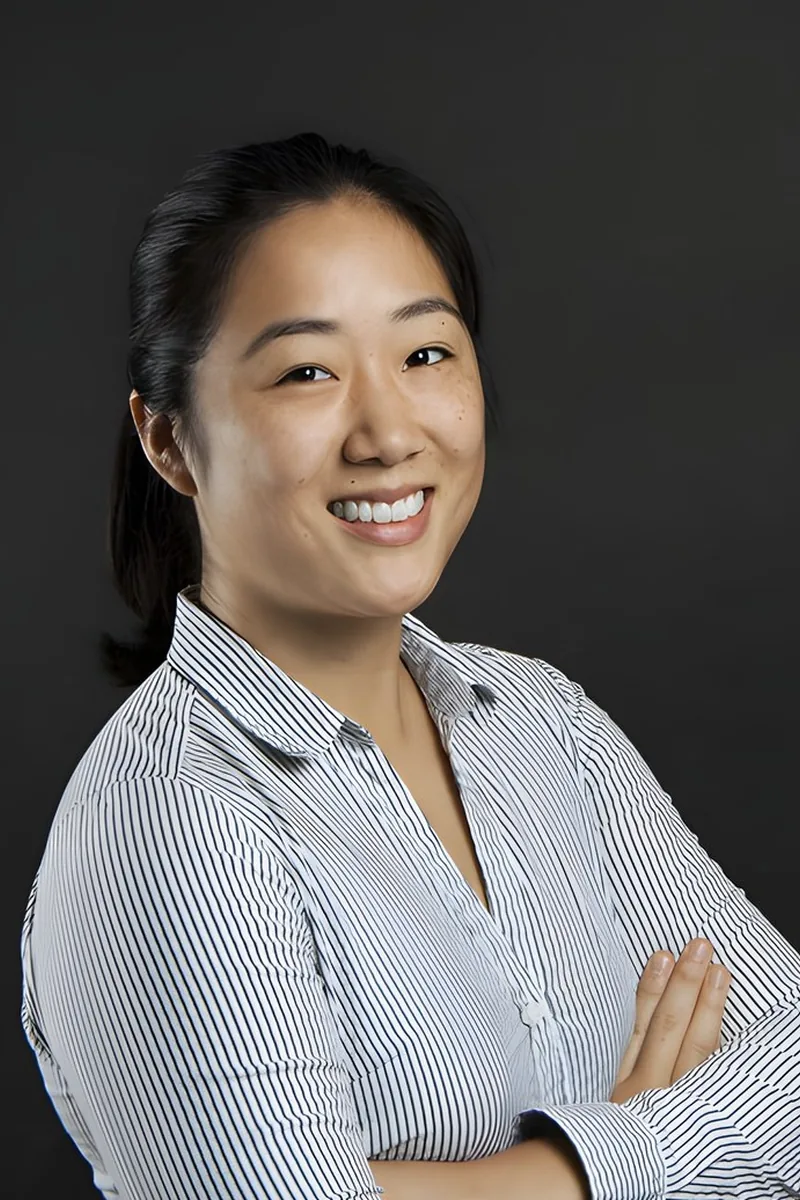
Political science might seem far from chemistry, but Asta's 35 ACT — including the Science section — required quick, accurate reasoning through data-heavy passages on reaction rates, gas behavior, and experimental design. She applies that same structured, analytical approach to breaking down chemistry problems like dimensional analysis and mole conversions, making the logic behind each step visible. Rated 5.0 by students.
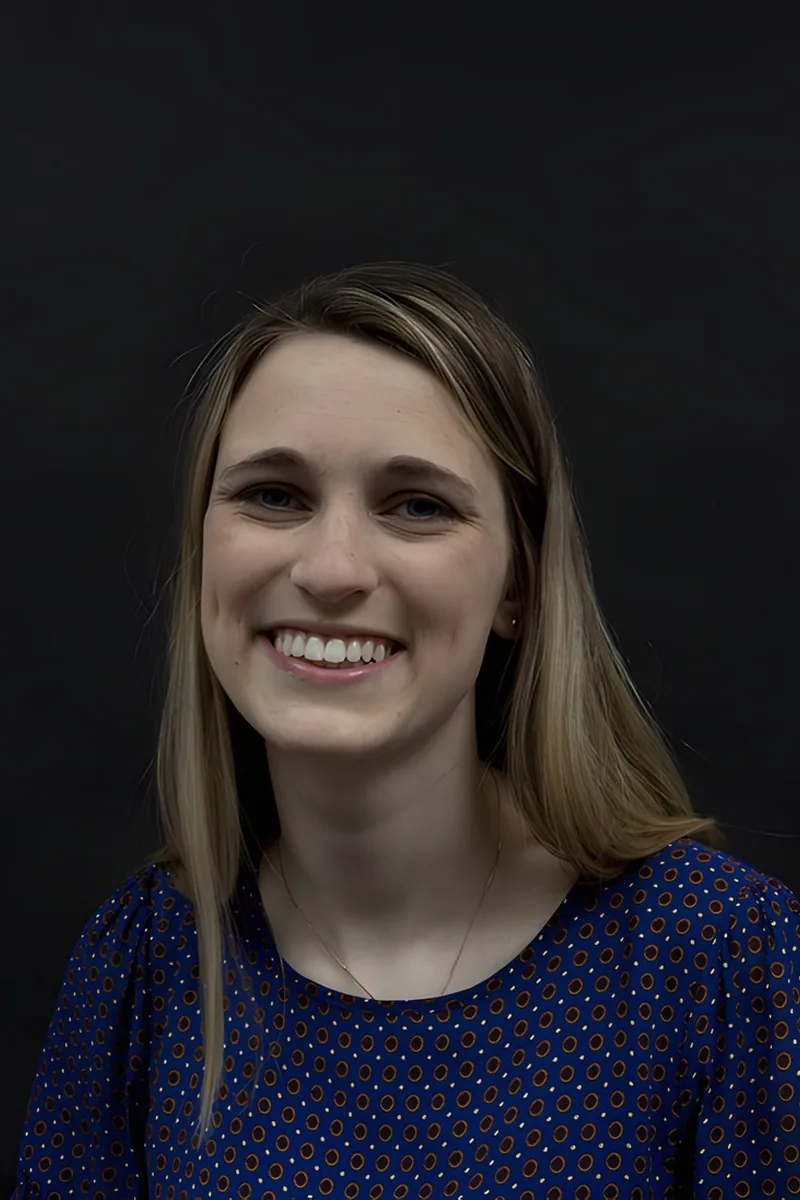
Balancing equations, stoichiometry, and mole conversions are where most chemistry students first feel lost — the logic is straightforward, but the notation makes it look harder than it is. Amber's biological sciences concentration required extensive chemistry coursework, so she knows how to demystify dimensional analysis and connect molecular-level ideas to calculations students can actually follow.
From stoichiometry and equilibrium to electrochemistry and thermodynamics, Austin approaches chemistry as a subject built on a handful of core principles rather than hundreds of isolated facts. His background — a B.S. in Chemical Science from Michigan and an ongoing chemistry PhD at Northwestern — means he can trace each topic back to the underlying logic and show students how to reason through unfamiliar problems on their own.
Pre-dental coursework at UIC means Kheya has taken general chemistry and its prerequisites with the stakes turned up — her guaranteed dental school admission depends on mastering material like acid-base reactions, molecular geometry, and stoichiometry at a high level. She pairs that firsthand experience with a deliberate, repetition-heavy teaching style, working through practice problems until the reasoning behind each step becomes automatic rather than memorized.
Studying biological and physical sciences at the University of Chicago means Sofia tackles chemistry from both the theoretical and applied sides — thermodynamics, equilibrium, and reaction kinetics show up constantly in her coursework and neurobiology lab research. She breaks down stoichiometry and balancing equations by connecting them to real chemical systems rather than treating them as abstract math puzzles.
Stoichiometry, equilibrium, and thermochemistry all demand comfort with both the math and the conceptual model running underneath it. Lee's engineering training makes him particularly effective at explaining why an equation balances or why Le Chatelier's principle predicts a specific shift — not just how to get the right answer on a worksheet. He connects chemistry concepts to tangible applications in materials science and biology.
A master's degree in chemistry teaching means Klaas doesn't just know the content — he's studied how people learn it. He unpacks everything from electron configurations to thermodynamics by building intuition around what atoms and molecules are actually doing, turning abstract formulas into stories about energy and structure.
Balancing equations, stoichiometry, and molecular geometry all require a mix of math fluency and spatial reasoning that trips up a lot of students. Callie tackles chemistry from both angles — her pre-med coursework at UChicago keeps her sharp on the content, and her math tutoring background means she can break down the quantitative side without skipping steps. She loads sessions with practice problems so students build confidence through repetition, not just review.
Taryn holds a PhD in Chemistry, which means she's lived this subject from introductory stoichiometry all the way through advanced thermodynamics, quantum mechanics, and spectroscopy. She teaches general chemistry by anchoring abstract ideas — electron orbitals, equilibrium constants, acid-base titrations — to the physical phenomena they describe. Students walk away understanding not just how to solve a problem but why the chemistry behaves the way it does.
Balancing equations, understanding mole ratios, and navigating electron configurations all require a different kind of thinking than most students have practiced before. Pal tackles chemistry by linking atomic-level behavior to observable patterns, an approach sharpened by his pre-med coursework and research in neurobiology at UIC's College of Medicine.
From stoichiometry to acid-base equilibria to molecular orbital theory, chemistry rewards students who understand the 'why' behind each calculation. Grant's background — a biochemistry degree plus rigorous medical coursework — means he can connect abstract concepts like enthalpy or Le Chatelier's principle to tangible examples from biology and medicine that make the material stick.
Hannah's pre-med track meant multiple semesters of chemistry — general, organic, and biochemistry — so she's been through the gauntlet of stoichiometry, equilibrium, acid-base reactions, and molecular structure firsthand. She unpacks these topics by tying chemical behavior back to underlying principles rather than treating each problem type as its own isolated recipe. That approach is especially useful for students who understand the math but can't see the bigger picture of what's happening at the molecular level.
Balancing equations and stoichiometry problems often trip students up because they require both conceptual understanding and careful math — Masooma tackles both sides simultaneously. Her experience teaching AP Chemistry alongside college-level coursework at the University of Chicago means she can adjust explanations whether a student is seeing mole ratios for the first time or revisiting them before an exam.
As a chemistry major at Princeton, Martina lives inside this subject daily — from balancing redox reactions to interpreting molecular orbital diagrams. She explains stoichiometry, equilibrium, and thermodynamics by tying each concept back to the underlying "why," which makes the problem-solving feel logical instead of like memorizing a catalog of rules.
Before diving into PhD-level materials science at Northwestern, Adam built his chemistry foundation at Canisius College, where he also ran outreach events that forced him to explain concepts like stoichiometry, equilibrium, and atomic structure to audiences with zero background. That experience made him unusually good at finding the analogy or demonstration that makes a tricky idea click. He holds a 5.0 rating from students.
Understanding the "why" behind chemical behavior — why certain reactions are spontaneous, why electronegativity shapes molecular geometry — is what Ellen prioritizes over rote formula memorization. Her biology major and chemistry minor at Oberlin gave her a dual perspective that's especially useful when chemistry overlaps with real-world applications in biochemistry and environmental science. Rated 5.0 by students.
A chemistry minor and current medical student at Northwestern, Sareen breaks down tricky topics like stoichiometry, equilibrium, and acid-base reactions by tying them to real biochemical processes she encounters in her coursework. That dual perspective — textbook fundamentals plus clinical relevance — makes abstract concepts click faster. Rated 5.0 by students.
A bachelor's degree in chemistry and a master's in chemical engineering means Daniel has spent years inside this subject — from balancing redox reactions to applying thermodynamic principles to real industrial processes. He teaches chemistry by connecting molecular-level behavior to observable phenomena, so concepts like equilibrium, stoichiometry, and bonding feel intuitive rather than like disconnected rules to memorize. His dual perspective bridges the gap between pure chemistry theory and practical application.
Hanna teaches General Chemistry at both the high school and college level, so she's seen where students hit walls — balancing redox equations, interpreting mole ratios, or connecting atomic structure to periodic trends. Her biology degree means she naturally ties chemical concepts to biological systems, which adds a layer of meaning that pure memorization can't. She unpacks each topic step by step until the underlying logic is clear.
Most chemistry struggles come down to not seeing the pattern — why certain elements behave similarly, how mole ratios actually map onto what's happening in a reaction, or what makes an acid strong versus weak. Rohan's psychology background gives him an unusual edge here: he reads how a student is processing a concept and adjusts his explanation in real time, whether that means switching to a visual model for molecular geometry or slowing down the logic chain in a stoichiometry problem. Rated 5.0 by students.
Understanding chemistry means getting comfortable with the invisible — atoms rearranging, electrons shifting, energy flowing in and out of reactions. Kyle connects these abstract ideas to tangible engineering applications like corrosion, material properties, and water treatment, giving students concrete anchors for concepts like redox reactions and bonding. He carries a 4.9 rating across his subjects.
Pursuing a PhD in chemistry after completing a physics degree gives Edward an unusual vantage point — he understands chemical bonding, thermodynamics, and reaction kinetics through both the math and the molecular-level intuition. He unpacks topics like stoichiometry and equilibrium by showing students the quantitative logic underneath, which makes balancing equations and predicting products far less mysterious.
Studying biology at Lewis University means Yusuf lives in chemistry — from thermodynamics and equilibrium to organic reaction mechanisms and acid-base systems. He approaches each topic by connecting molecular-level behavior to observable phenomena, which makes abstract concepts like electron orbitals or Le Chatelier's principle click. His SAT score of 1480 speaks to the analytical rigor he brings across subjects.
Balancing equations and stoichiometry are often where Chemistry starts feeling overwhelming, but they're really just systematic problem-solving once the logic clicks. Grant's engineering training gave him a strong quantitative approach to chemical concepts like molar ratios, gas laws, and thermodynamic calculations. He unpacks each problem step by step, emphasizing unit analysis and dimensional reasoning to keep the math from becoming a guessing game.
Studying chemistry with a biochemistry and medicinal chemistry concentration at DePaul — and serving as a teaching assistant there — Kate lives inside this subject daily. She unpacks everything from stoichiometry and thermodynamics to organic reaction mechanisms with the depth of someone who doesn't just teach chemistry but actively works in it.
Balancing equations, stoichiometry, and mole conversions trip students up when they try to memorize procedures without understanding what's actually happening at the molecular level. Beth teaches chemistry by connecting the math to the physical reality — what atoms are doing, why ratios matter, how units tell you where to go next.
Stoichiometry, electron configurations, acid-base equilibria — chemistry demands that students hold multiple abstract ideas in their heads simultaneously. Jacob's biochemistry degree required mastering all of these at a deep level, and his 5.0 rating suggests he's effective at making that complexity accessible to others.
Balancing redox reactions, predicting solubility, and navigating stoichiometry all require a kind of systematic puzzle-solving that Kurt genuinely enjoys. His science-heavy PA coursework demanded fluency in general and organic chemistry, and he uses that background to explain not just how to set up a problem but why the underlying rules — like electron configurations driving periodic trends — actually make sense.
I've been working with students for over seven years, from middle school all the way through college, across subjects like math, calculus, statistics, linear algebra, chemistry, and physics, with a lot of SAT and ACT prep mixed in. My background is perhaps a little unconventional. I have two bachelor's degrees, one in Engineering and one in Communication Studies, plus a Master's in Design. That combination means I can guide you through challenging technical material and communicate it in a way that is easy to grasp. What I care most about is helping students get to a place where they don't need me anymore. I know that sounds like a strange thing for a tutor to say, but I think it's the right goal. I'm not here to walk you through steps to copy down. I want you to understand why something works, because that's what holds up under pressure, on a test you haven't seen before. If you're ready to ace that test or prove that theorem that's been bugging you, reach out and let's work together
I am a firm believer in the idea that there is no better feeling than that "aha!" moment.
I am currently a sophomore at Northwestern University with a Neuroscience Major and Psychology minor.
I am an undergraduate student at the University of Illinois at Chicago majoring in Public Health. I have numerous years of experience in guiding and educating high school and middle school students in civic engagement. I want to help students realize their full potential, even when subjects seem bleak or if external factors get in the way of their success. I believe that students have the ability to be successful if given the right resources, provided the necessary support, and empowered to make a change for themselves.
I'm hoping to eventually become a doctor. As a self-described science nerd, I'm fascinated by the intricacies of how the world around us works, and I think that is infectious to my students. One of my favorite subjects to tutor is Biology because it explains how we ourselves function. My enthusiasm has helped me make science and math engaging and accessible to the students I work with. My experience includes teaching middle school, high school, and college students in both subject specific review and test preparation. I have an approach that is centered around finding the root cause of a students struggles, be it misunderstanding of content, time management, or any other reason, and offering multiple specifically-tailored methods for the student to employ before settling on what works best for them. I aim for my clients to improve as overall students as well, so that they can be successful in the face of any future academic challenges.
Hi! I am Vivek Pisharodi and I work in operations for a software company called Gamma Technologies. I graduated with a bachelor's degree in Chemical and Biomolecular Engineering from Georgia Tech and a master's degree in Material Science and Engineering from the University of Washington, focusing on electrochemical battery synthesis and analysis. My tutoring journey began as a way to stay engaged during a gap year between undergraduate and graduate school, but it quickly became a passion. I found immense fulfillment in helping students build confidence in math and science, guiding them toward academic success. While at the University of Washington, I continued tutoring student-athletes, supporting them in balancing rigorous coursework with their athletic commitments.
I am a Molecular Engineering major at the University of Chicago, I am currently taking time off to focus on other aspects of my career but I don't want to stop tutoring outside college campus!. I am a child of immigrants and have spent my life tutoring my siblings and younger students, and I loved working with them! See y'all in class!
As a Ph.D. student in Computational and Applied Mathematics at the University of Chicago, with a Bachelor's in Mathematics from MIT, I am passionate about making mathematics accessible and engaging for all learners. My experience as a teaching assistant for calculus courses has honed my ability to design effective problem sets and lead dynamic recitations, while also providing personalized support through office hours and one-on-one tutoring. I specialize in subjects such as Algebra I & II, AP Calculus, Differential Equations, and Linear Algebra. I strive to create a supportive learning environment where students feel comfortable asking questions and exploring concepts. My teaching philosophy centers on patience, encouragement, and tailored lessons that align with each student's unique goals and learning style. I am dedicated to helping students build both their mathematical skills and their confidence, ensuring they can tackle challenges with a sense of accomplishment.
Graduate of St. Louis University with a Degree in Chemical Biology and Pharmacology I know from experience how difficult chemistry and biology can be. These were not topics that just came naturally for me, and during college I had to spend a lot of time sitting down with these topics and trying to work them out in my head. Because of this, I have a lot of empathy to students struggling in their courses, and I enjoy working as a tutor who can help students who may feel overwhelmed. About lessons: Lessons with me are very flexible. I am willing to: - Create a guided lesson for you reviewing what you covered in class and break down difficult terminology in text-books and slideshows - Create student-specific study materials and study guides if you feel the resources available to you in class are not sufficient -Help guide you through your homework and practice exams If your goals for a course change over time, I will adapt to your needs as a student!
I am a second-year student at the University of Michigan-Ann Arbor and I am in the College of Engineering. I am not exactly sure as to what I want to do after College, but I do know that I would like to do something that involves Physics, Chemistry, and Computer Science. In High School, I would teach/tutor elementary school students at a tutoring center in Chicago called Ivy Garden. I tutor many High School Math and Science subjects (including AP courses) as well as Math and Science test prep for the ACT. My favorite subjects to tutor are Calculus and Physics because they are applicable with many things in your daily life. I am inspired to tutor those who are struggling in Math and Science courses because people are very discouraged while studying these subjects and I feel that, with the proper instruction, not only will people get better at those subjects; but they will become more confident in themselves. I believe that understanding something conceptually is ten times more valuable than knowing how to use an equation and I like using real world examples when I am tutoring. On my free time I enjoy playing NBA 2K and actual basketball.
Testimonials
Because the right Chemistry tutor makes all the difference.
Average Session Rating – Based on 3.4M Learner Ratings
Practice Chemistry
Free practice tests, flashcards, and AI tutoring for Chemistry
Nearby Chemistry Tutors
Other Chicago Tutors
Related Science Tutors in Chicago
Frequently Asked Questions
Chemistry students in Chicago often struggle with visualizing abstract concepts like molecular structures and bonding, balancing chemical equations, and understanding stoichiometry and unit conversions. Many students also find it difficult to connect theoretical concepts to real-world applications, which makes the subject feel disconnected from everyday life. Personalized tutoring helps bridge these gaps by breaking down complex ideas into understandable pieces and showing how chemistry applies to everything from cooking to environmental science.
Your first session is focused on understanding your specific needs and learning style. A tutor will assess your current chemistry knowledge, identify which topics are causing the most difficulty, and discuss your goals—whether that's improving your grade, preparing for an AP exam, or building a stronger foundation. From there, the tutor creates a personalized plan tailored to your pace and learning preferences, ensuring every session moves you toward measurable progress.
Personalized chemistry tutoring helps you understand the scientific method, design experiments thoughtfully, and interpret results accurately. Tutors can explain the theory behind lab procedures, help you predict outcomes, and work through data analysis and error evaluation. This deeper understanding transforms labs from rote activities into meaningful learning experiences that reinforce classroom concepts and develop critical scientific reasoning skills.
No—chemistry is fundamentally about understanding relationships and patterns. While formulas and facts are tools, real chemistry mastery comes from grasping why reactions happen, how atoms interact, and what principles govern chemical behavior. Expert tutors focus on building conceptual understanding first, which makes formulas and facts stick naturally and helps you apply knowledge to new problems rather than just memorizing for tests.
Balancing equations requires visualizing atoms and tracking them systematically—a skill that doesn't always come naturally. Students often try random approaches instead of using a logical method, which leads to frustration. Tutors teach systematic strategies and help you develop the mental visualization skills needed to balance equations confidently, turning a common pain point into a strength.
AP Chemistry requires mastery of both content and test-taking strategy. Expert tutors help you build deep understanding of core topics like thermodynamics, equilibrium, and kinetics, then practice applying that knowledge under timed conditions. They also identify your weak areas, teach you how to approach multiple-choice and free-response questions strategically, and provide feedback that builds confidence for exam day.
Varsity Tutors connects you with tutors who have strong backgrounds in chemistry, whether through advanced degrees, teaching experience, or specialized expertise in areas like organic chemistry or AP exam preparation. Each tutor is vetted for their knowledge and ability to explain complex concepts clearly. You can discuss a tutor's specific background and experience before your first session to ensure they're the right fit for your goals.
Many students see noticeable improvement within 3-4 weeks of consistent tutoring, especially when they're addressing specific weak areas like balancing equations or understanding equilibrium. However, the timeline depends on your starting point, the complexity of topics you're working on, and how frequently you meet. Regular sessions combined with practice between meetings accelerate progress, and your tutor will track your growth and adjust the plan as needed.
Let’s find your perfect tutor
Answer a few quick questions. We’ll recommend the right plan and match you with a top 5% tutor.