Award-Winning Science Tutors
serving Honolulu, HI
Science
Tutors in Honolulu
Private 1-on-1 tutoring, weekly live classes for academic support, test prep & enrichment, practice tests and diagnostics, and more to elevate grades and test scores.
Based on 3.4M Learner Ratings
UniversitiesSchools & Universities
DeliveredHours Delivered
ProficiencyGrowth in Proficiency
Who needs tutoring?
No obligation. Takes ~1 minute.
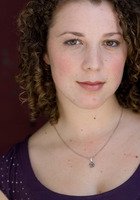
Teaching across four states and two countries — and to ages ranging from kindergarten through high school — gave Rebecca a sharp sense of how different learners process scientific concepts, especially visual and kinesthetic learners who need more than a textbook explanation to grasp ideas like energy transfer or states of matter. Her training in drama and art techniques means she often teaches through demonstration and hands-on models, turning abstract processes into something students can actually see and manipulate. That approach tends to make the vocabulary-heavy side of science far less intimidating.
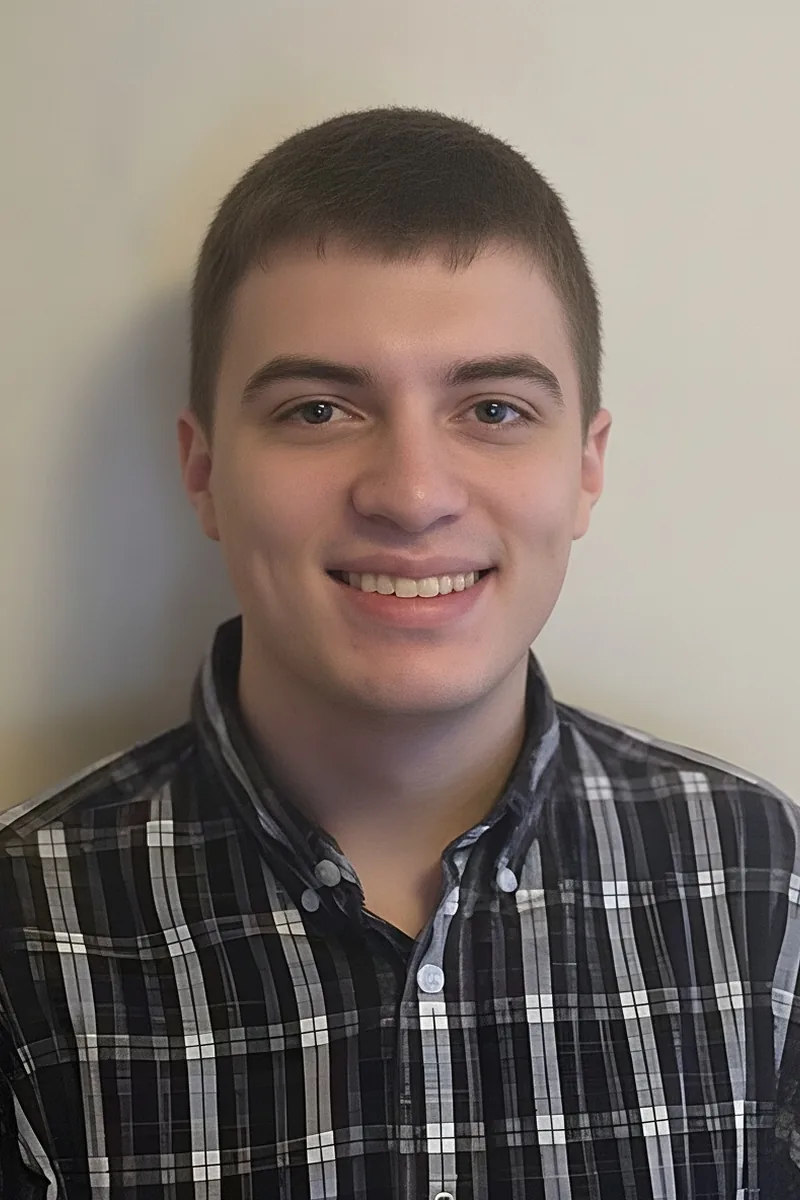
Tom's PhD in American Studies involved extensive research methodology — designing studies, evaluating sources for reliability, and building evidence-based arguments — which maps cleanly onto teaching students how to work through hypotheses, control variables, and interpret experimental outcomes. His Latin training also gives him an unusual edge when it comes to unpacking scientific terminology, since so many terms in biology and chemistry trace back to roots he already knows cold. Rated 4.9 by students.
Reid treats science as a way of thinking rather than a collection of facts to memorize. He walks students through how to read data tables, design controlled experiments, and connect observations to underlying principles — the same analytical habits that show up across biology, chemistry, and earth science courses.
Kevin's Philosophy, Politics, and Economics major at Penn requires him to constantly evaluate claims against evidence — the same core skill students need when forming hypotheses, interpreting lab data, and explaining why an experiment turned out the way it did. His 34 ACT confirms he can handle the quantitative and reading-heavy demands of science material, and his statistics background means he's comfortable walking students through graphing relationships and drawing conclusions from data sets.
A statistics and machine learning certificate at Princeton means Julie spends her coursework building models, testing hypotheses against real data, and evaluating whether results are statistically meaningful — all of which is applied scientific reasoning. She brings that quantitative rigor to science tutoring, especially when students need to move from memorizing definitions to actually interpreting experiments, reading graphs, and explaining what their data means. Her 4.9 rating suggests the approach lands.
Ben's science tutoring draws on his IB Chemistry background and the quantitative rigor of his Penn math training, which means he's especially effective when science gets mathematical — balancing equations, interpreting rate laws, or working through stoichiometry. He teaches students to translate word-heavy science problems into clean mathematical setups they can actually solve.
Between her biomedical engineering major, pre-med coursework, and active autism research at the Yale School of Medicine, Ellie covers biology, chemistry, and physics with the depth of someone who uses all three daily. She unpacks tricky concepts — enzyme kinetics, circuit analysis, stoichiometry — by linking them to real experiments and clinical applications that make the material stick.
As a curriculum developer building courses for middle and high schoolers, Elena knows exactly how to make dense material click — including the scientific vocabulary, classification systems, and cause-and-effect reasoning that science coursework demands. Her Religious Studies training at McGill involved rigorous textual analysis and structured argumentation, skills she now channels into teaching students how to read scientific texts carefully, interpret what an experiment actually shows, and explain their reasoning clearly.
While science isn't Keith's primary academic background, his analytical training in political science and law makes him effective at teaching students how to read data, interpret experiments, and reason through cause-and-effect relationships. He's particularly useful for students who struggle with the reading-heavy side of science — understanding what a question is really asking and pulling the right information from charts and passages.
Earning a medical doctorate means Jessica didn't just study science — she lived it across biology, chemistry, physics, and anatomy for years. She teaches scientific concepts by linking them to real processes in the body or the natural world, making abstract ideas like energy transfer or cellular respiration tangible and easier to retain.
Engineering at Yale means Charles lives at the intersection of physics, chemistry, and applied math every day — analyzing forces in a truss, modeling heat transfer, or interpreting experimental data. He brings that hands-on perspective to general science tutoring, connecting abstract formulas to physical situations students can actually picture. Whether the topic is kinematics, energy conservation, or interpreting lab results, he makes the reasoning behind each step visible.
A neurobiology-focused biology degree from Northwestern means Nina didn't just take introductory science — she studied cellular mechanisms, genetics, and brain physiology in depth. She connects textbook concepts like mitosis or enzyme kinetics to real research contexts, which tends to make the material click faster than rote memorization. Rated 5.0 by students.
A PhD in Computational Mathematics from the University of Chicago means Justin doesn't just know science — he understands the quantitative reasoning that ties physics, chemistry, and earth science together. He breaks down concepts like energy conservation, wave behavior, and data analysis by connecting them to real-world phenomena, from climate modeling to how lenses form images. Rated 5.0 by students.
Testimonials
Because the right Science tutor makes all the difference.
Average Session Rating – Based on 3.4M Learner Ratings
Practice Science
Free practice tests, flashcards, and AI tutoring for Science
Other Honolulu Tutors
Related Science Tutors in Honolulu
Frequently Asked Questions
Many students struggle with connecting abstract scientific concepts to real-world applications, especially in chemistry and physics where visualization is critical. With Honolulu's diverse student population across 105 schools, students often need help bridging gaps from different middle school preparation levels. Personalized tutoring addresses these gaps by breaking complex topics into manageable pieces and using examples relevant to each student's learning style.
In a classroom of 20+ students, teachers must move at an average pace—which means some students fall behind on foundational concepts while others get bored. With personalized 1-on-1 instruction, a tutor can slow down to reinforce critical skills like lab technique or problem-solving strategies, or accelerate through material a student already understands. This targeted approach helps students build confidence and actually understand the 'why' behind scientific principles rather than just memorizing facts.
Yes. Varsity Tutors connects you with tutors who understand Hawaii's science standards and the progression from middle school through high school science courses. Whether your student is working through general science, biology, chemistry, physics, or AP-level courses, tutors can align instruction with what's being taught in the classroom and help reinforce those concepts with targeted practice and explanation.
Absolutely. Beyond lecture content, strong science students need to master lab techniques, data analysis, and experimental reasoning. Tutors can walk through lab procedures, help students understand why certain steps matter, and teach the critical thinking skills needed for designing experiments and interpreting results—skills that are essential for success in AP Science courses and beyond.
The first session is about understanding where your student is starting from. The tutor will assess current knowledge, identify specific gaps or misconceptions, and listen to what's causing frustration—whether it's a particular unit, test anxiety, or difficulty with problem-solving strategies. From there, you'll develop a personalized plan focused on your student's goals, whether that's improving a grade, preparing for a test, or building deeper understanding.
Progress shows up in multiple ways: improved test and quiz scores, better performance on lab reports and assignments, increased confidence asking questions in class, and deeper understanding when explaining concepts. Many students also see gains in their ability to tackle unfamiliar problems—a sign they're building real scientific thinking skills rather than just memorizing. Your tutor can share specific observations about growth areas and work with you to set clear, measurable goals.
Varsity Tutors connects you with tutors who have strong backgrounds in science—many hold degrees in biology, chemistry, physics, or related fields, and many have classroom teaching experience. Each tutor is vetted for subject expertise and the ability to explain complex concepts clearly. When you're matched with a tutor, you'll know their qualifications and can be confident they understand both the content and how to teach it effectively.
Yes. Whether preparing for unit tests, semester exams, the Hawaii state science assessment, or standardized tests like the SAT and ACT science sections, tutors can help students build both content knowledge and test-taking strategies. Personalized prep focuses on the specific areas where your student struggles, uses practice problems similar to what they'll see on the actual test, and builds the confidence needed to perform well under pressure.
Let’s find your perfect tutor
Answer a few quick questions. We’ll recommend the right plan and match you with a top 5% tutor.