Award-Winning AP Calculus BC Tutors
serving Honolulu, HI
AP Calculus BC
Tutors in Honolulu
Private 1-on-1 tutoring, weekly live classes for academic support, test prep & enrichment, practice tests and diagnostics, and more to elevate grades and test scores.
Based on 3.4M Learner Ratings
UniversitiesSchools & Universities
DeliveredHours Delivered
ProficiencyGrowth in Proficiency
Who needs tutoring?
No obligation. Takes ~1 minute.

Most BC students hit a wall not because the new material is impossibly hard, but because their AB foundations have quiet gaps that only surface once series and parametric curves enter the picture. Eric, a computer science major at WashU, approaches calculus the way he approaches debugging code — tracing errors back to their source, whether that's a shaky understanding of limits feeding into convergence tests or weak integration skills undermining Taylor polynomial construction. His logical, step-by-step problem-solving style translates naturally into breaking down BC's trickiest topics.
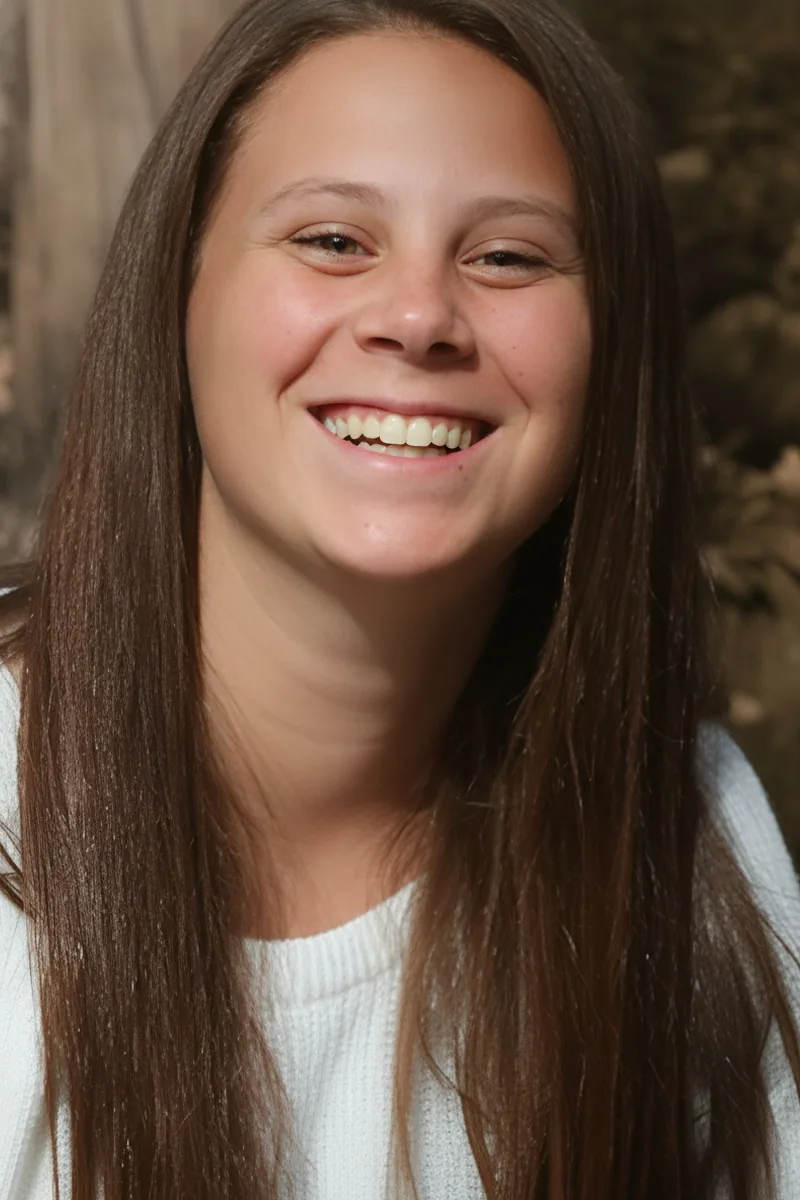
Rachel's 35 ACT and economics coursework at WashU mean she's comfortable with the quantitative reasoning BC demands, though her real edge is in how she breaks down the transition from AB material into BC-specific territory — particularly series convergence and polynomial approximations, where students often memorize tests without understanding what they're actually checking. She approaches each new BC tool by rebuilding the calculus logic underneath it, so topics like the ratio test or integration by parts hold up under exam pressure instead of falling apart.
Molecular biology might seem distant from BC Calculus, but Agustin's 1560 SAT and deep comfort with competition math mean he's built the kind of rigorous problem-solving instincts that make topics like convergence tests and parametric derivatives tractable rather than terrifying. He breaks down the logic behind each technique — why the ratio test actually tells you something, how polar area integrals connect back to Riemann sums — so the BC extension from AB feels like a natural next step. Rated 4.5 by students.
Duke's computer science program required Michelle to live inside the calculus that powers algorithm analysis — convergence behavior, recursive sequences, and the kind of series manipulation that BC students encounter when Taylor polynomials and ratio tests suddenly demand more than AB intuition. She breaks down those topics by tracing each one back to the underlying limit and derivative logic, so the leap to BC feels like a natural next step rather than a wall. Holds a 5.0 rating from students.
Georgetown's math program gave Peter a rigorous grounding in the theoretical side of calculus — the kind where you prove convergence rather than just test for it — which translates directly into how he teaches BC topics like series, Taylor polynomials, and the Lagrange error bound. He's tutored every level of calculus since high school, and that range means he quickly spots when a BC struggle is actually an AB gap in disguise. Holds a 5.0 rating.
Penn's economics program leans heavily on calculus-driven modeling, and Mandy is working through that curriculum right now — which means BC topics like series approximations and integration techniques show up in her coursework as tools for analyzing economic behavior, not just abstract exercises. She's especially clear at walking through the logic of convergence tests and connecting new BC material back to the AB foundations underneath it. Holds a 5.0 rating.
Sanjana doesn't just know AP Calculus BC — she teaches it, serving as a Course Assistant for Harvard's introductory calculus sequence. That means she's seen exactly where students stumble on Taylor series, parametric equations, and convergence tests, and she knows how to untangle those concepts in real time. Rated 5.0 by students.
Studying applied mathematics at Stanford means Alex isn't just recalling BC topics from a past exam — he's actively using series, parametric equations, and advanced integration in his current coursework, which keeps his explanations sharp and grounded in how the math actually behaves. He's especially good at tracing a tricky convergence test or Lagrange error bound back to the core AB reasoning that makes it click. Rated 4.8 by students.
Scoring a 36 on the ACT while studying environmental engineering at Cornell means Akanksha lives in the calculus that BC demands — her coursework in fluid dynamics and pollutant modeling leans heavily on integration techniques, series approximations, and differential equations. She breaks down the transition from AB to BC by treating topics like convergence tests and parametric curves as practical extensions of tools students already trust, not as an overwhelming new syllabus. Rated 4.8 by students.
Running a peer-tutoring program in high school meant Ryan spent years diagnosing exactly where classmates got stuck on calculus problems — a skill he's sharpened further through his civil engineering coursework at Cornell, where series expansions and integration techniques show up constantly in structural analysis and fluid mechanics. He breaks down the BC-specific leap into convergence tests and Taylor polynomials by grounding each new idea in the derivative and integral logic students built in AB. His 35 ACT and 4.7 rating speak to the precision he brings to every session.
Environmental engineering graduate work is essentially applied calculus — Kate's thesis work required series approximations for modeling fluid dynamics and integration techniques for analyzing pollutant transport, so BC topics like Taylor polynomials and improper integrals are tools she's used professionally, not just academically. She's particularly good at showing how convergence tests follow a logical decision tree rather than feeling like a random grab bag of techniques. Rated 4.9 by students.
Biomedical engineering at Johns Hopkins means Bidyut uses series approximations and differential equations to model biological systems — the same convergence tests and integration techniques that define the BC curriculum beyond AB. He's especially sharp at showing how a topic like Taylor polynomial error bounds connects back to the derivative reasoning students already trust, turning what feels like a wall of new material into a logical extension. Holds a 5.0 rating and a 36 ACT composite.
Testimonials
Because the right AP Calculus BC tutor makes all the difference.
Average Session Rating – Based on 3.4M Learner Ratings
Practice AP Calculus BC
Free practice tests, flashcards, and AI tutoring for AP Calculus BC
Other Honolulu Tutors
Related Math Tutors in Honolulu
Frequently Asked Questions
AP Calculus BC covers all of AB Calculus plus additional topics including sequences, series, parametric equations, polar coordinates, and vector-valued functions. The course emphasizes limits, derivatives, integrals, and applications of calculus. For students in Honolulu, personalized tutoring can help you master both the foundational AB material and the advanced BC concepts at your own pace.
Your score depends on your starting point, study consistency, and how well you understand core concepts. Most students see meaningful improvement with focused preparation—typically 1-2 score points over several months of regular practice. Personalized 1-on-1 instruction helps identify your specific weak areas (like integration techniques or series convergence) so you can target your study time effectively and build confidence before test day.
Students often struggle with series and convergence tests, parametric and polar equations, and applying calculus concepts to complex multi-step problems. Time management during the exam is another major challenge—the multiple-choice section requires quick problem-solving, while the free-response section demands clear mathematical communication. Expert tutors for students in Honolulu can break down these topics into manageable pieces and help you develop efficient problem-solving strategies.
Your first session focuses on understanding where you stand. A tutor will assess your comfort with foundational calculus concepts, review your current coursework, and discuss your AP exam goals and timeline. This diagnostic helps create a personalized study plan targeting your specific needs—whether that's strengthening limits and derivatives or mastering advanced BC topics like series. You'll leave with clarity on what to focus on first.
Effective test strategy includes knowing which problems to tackle first, recognizing when to use a calculator vs. working by hand, and managing your time across 105 minutes of multiple-choice and 90 minutes of free-response questions. Practice tests are essential—they help you identify timing patterns and question types that slow you down. Tutors can review your practice test performance with you, point out recurring mistakes, and teach you strategies for approaching unfamiliar problem formats with confidence.
Most students benefit from consistent preparation starting 3-4 months before the exam, with 5-8 hours of focused study per week. If you're working through the course concurrently with your class, that might look like weekly tutoring sessions plus independent practice. The key is steady, targeted practice rather than cramming. Personalized tutoring helps you use your study time efficiently by focusing on concepts you actually need to strengthen rather than reviewing material you've already mastered.
Look for tutors with strong calculus backgrounds—ideally those who have taught AP Calculus BC, scored well on the exam themselves, or have advanced mathematics training. They should understand the specific AP exam format and be able to explain both the 'how' and the 'why' behind calculus concepts. Varsity Tutors connects you with expert tutors for students in Honolulu who have proven experience helping students master BC content and improve their scores.
Test anxiety often stems from feeling unprepared or uncertain about problem-solving strategies. Personalized tutoring builds genuine confidence by helping you master difficult concepts, practice under timed conditions, and develop a toolkit of strategies for approaching unfamiliar problems. When you understand the material deeply and know what to expect on exam day, anxiety naturally decreases. Tutors can also help you develop mental strategies for staying calm and focused during the actual test.
Let’s find your perfect tutor
Answer a few quick questions. We’ll recommend the right plan and match you with a top 5% tutor.