Award-Winning Organic Chemistry Tutors
serving Honolulu, HI
Organic Chemistry
Tutors in Honolulu
Private 1-on-1 tutoring, weekly live classes for academic support, test prep & enrichment, practice tests and diagnostics, and more to elevate grades and test scores.
Based on 3.4M Learner Ratings
UniversitiesSchools & Universities
DeliveredHours Delivered
ProficiencyGrowth in Proficiency
Who needs tutoring?
No obligation. Takes ~1 minute.
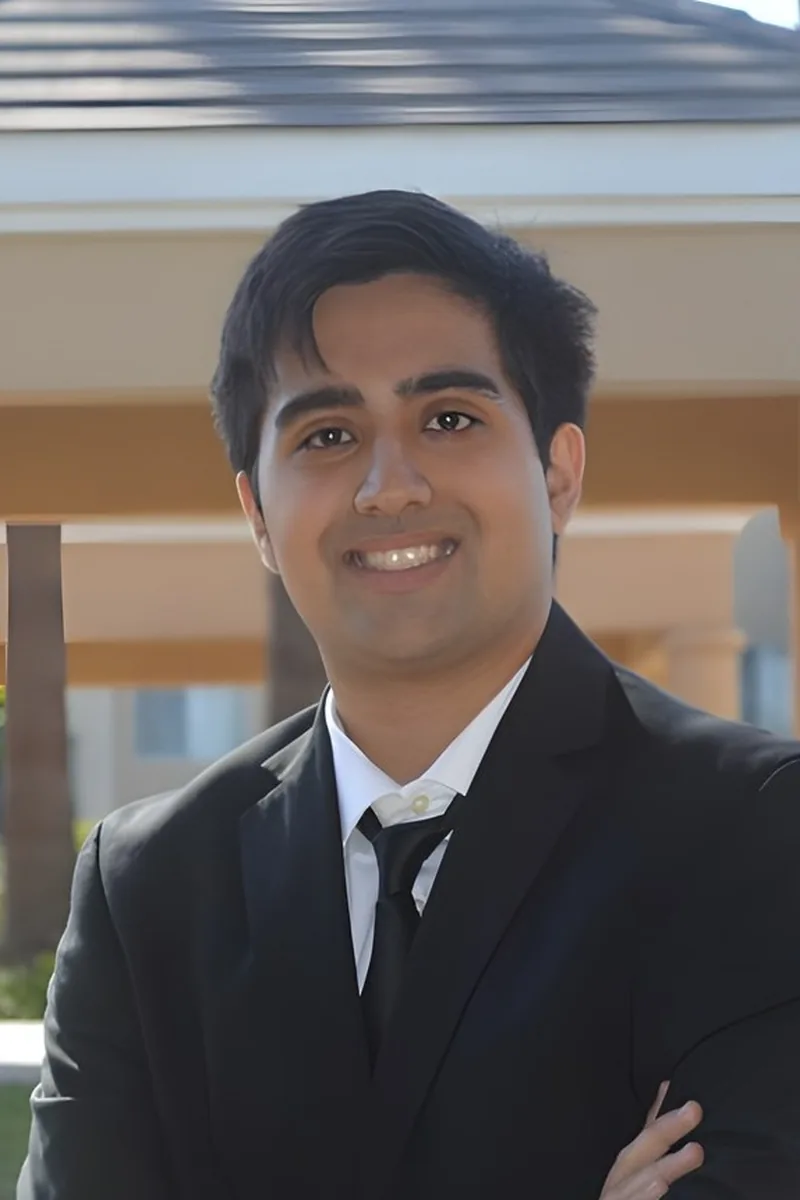
Reaction mechanisms are the language of organic chemistry, and most students struggle because they try to memorize arrows instead of understanding electron flow. Abrahim unpacks each mechanism — SN1 vs. SN2, E1 vs. E2, electrophilic aromatic substitution — by starting with nucleophilicity, sterics, and leaving-group ability so the logic drives the arrow-pushing rather than the other way around. His 5.0 rating speaks to how well that approach clicks.
Reaction mechanisms are the language of organic chemistry, and Casey reads them fluently after years of bioengineering coursework that demanded constant fluency in electron-pushing, stereochemistry, and functional group transformations. She teaches students to recognize patterns across reaction types — why nucleophilic additions behave the way they do, how leaving groups dictate substitution vs. elimination — so each new chapter feels like a variation on something familiar rather than a fresh nightmare.
Reaction mechanisms click when you understand electron movement — why a nucleophile attacks one carbon over another, how steric hindrance redirects a pathway, what drives an elimination versus a substitution. Enric's PhD in Chemistry means he's spent years thinking at the mechanistic level and can unpack arrow-pushing, stereochemistry, and retrosynthetic analysis in ways that make each reaction type feel logical rather than arbitrary.
Reaction mechanisms are the backbone of organic chemistry, and most students struggle not because the material is impossibly hard but because they try to memorize hundreds of reactions instead of learning the handful of electron-pushing patterns that explain almost all of them. Rebecca's science training means she teaches students to read a mechanism the way you'd read a sentence — subject, verb, object — so new reactions become predictable rather than surprising.
Having earned a chemistry degree from Yale, Zosia spent years immersed in the subject well past the introductory orgo sequence — which means she can contextualize tricky topics like electrophilic aromatic substitution and acyl chemistry within the broader landscape of how molecules actually behave. She walks students through spectral analysis and multi-step synthesis by building from first principles of electronegativity and sterics, so each new reaction type feels like an extension of what they already know rather than a fresh page to memorize. Rated 4.9 by students.
Having taught General Chemistry, Organic Chemistry, and GOB courses for health professions repeatedly at the college level, Jeremy approaches reaction mechanisms as skills to be practiced — not facts to be memorized. His PhD in Chemistry from Yale means he can trace arrow-pushing, stereochemical analysis, and multi-step synthesis all the way down to first principles, then rebuild them at whatever level a student needs. He holds a 4.6 rating.
Reaction mechanisms are the language of organic chemistry, and Josef teaches students to read them — arrow pushing, stereochemistry, and functional group reactivity — rather than memorize hundreds of individual reactions. His biochemistry focus at Cornell means he can connect orgo concepts like nucleophilic substitution and carbonyl chemistry directly to biological molecules students will encounter later.
Reaction mechanisms are the language of organic chemistry, and Daniel learned to speak it fluently through his microbiology and dental science training. He walks through arrow-pushing, stereochemistry, and functional group reactivity by emphasizing the "why" behind each electron movement — so students can predict products on exam day instead of relying on memorized templates.
Siddharth's biology degree means he first encountered organic chemistry through the lens of biomolecules — amino acid reactivity, lipid structures, and the functional group behavior that drives metabolic pathways. That biological framing gives him a practical way to teach arrow-pushing and reaction classifications, connecting each mechanism to molecules students can visualize rather than treating them as abstract exercises.
Being on the pre-med track at Northwestern while studying both biology and chemistry means Kade is taking organic chemistry alongside the same students he tutors — he knows which professors emphasize what, which problem sets are brutal, and where the common mistakes hide in topics like stereochemistry and acyl substitution. That proximity to the material gives him a practical, recently-tested understanding of how to break down multi-step synthesis problems into manageable pieces.
Having completed both semesters of organic chemistry at the University of Michigan — on top of AP Chemistry before that — Ajay knows exactly where students get stuck, whether it's arrow-pushing in reaction mechanisms or keeping substitution and elimination pathways straight. He teaches students to recognize electron behavior patterns so new reactions feel predictable instead of random.
Reaction mechanisms are the language of organic chemistry — if you can't follow electron movement through a nucleophilic substitution or an elimination, every new reaction feels like something to memorize from scratch. Cassandra teaches students to recognize the patterns that repeat across seemingly different reactions: leaving group quality, steric effects, acid-base behavior. That pattern-recognition approach, sharpened by her biology and biochemistry background, turns a notoriously overwhelming course into something students can actually reason through.
Testimonials
Because the right Organic Chemistry tutor makes all the difference.
Average Session Rating – Based on 3.4M Learner Ratings
Practice Organic Chemistry
Free practice tests, flashcards, and AI tutoring for Organic Chemistry
Other Honolulu Tutors
Related Science Tutors in Honolulu
Frequently Asked Questions
Organic Chemistry requires you to visualize molecules in 3D space and understand how they interact—skills that don't come naturally to most students. Beyond memorization, you need to grasp reaction mechanisms, electron movement, and how structure determines function. Many students struggle because they try to memorize reactions instead of understanding the underlying principles that predict how molecules behave.
Expert tutors break down abstract concepts like resonance structures, stereochemistry, and reaction mechanisms into manageable pieces, often using visual aids and molecular models to help you see what's happening at the atomic level. They can identify whether you're struggling with foundational concepts (like hybridization or formal charges) or higher-level reasoning, then target instruction to fill those gaps. Personalized 1-on-1 instruction allows tutors to slow down on difficult topics and accelerate through material you've mastered.
Your first session focuses on understanding where you stand—what topics feel solid, where you're getting stuck, and what your specific goals are (exam prep, lab report help, or mastering a particular unit). The tutor will likely work through a practice problem or two to assess your problem-solving approach and identify whether you need help with conceptual understanding or test-taking strategies. From there, you'll develop a plan tailored to your needs and timeline.
Yes—tutors can help you understand the purpose behind lab procedures, interpret experimental results, and connect what happens in the lab to the theoretical concepts you're learning in lecture. Whether you're struggling to write lab reports, understand why a reaction didn't work as expected, or grasp the chemistry behind your experimental observations, personalized instruction bridges that theory-to-practice gap. This is especially valuable for students in Honolulu's schools who want to deepen their scientific reasoning skills.
Understanding mechanisms is far more valuable than pure memorization. When you understand why a reaction occurs—how electrons move, what intermediates form, and what factors favor certain products—you can predict and explain reactions you've never seen before. Tutors emphasize this conceptual foundation, teaching you to recognize reaction patterns and apply principles rather than relying on flashcards. This approach builds stronger problem-solving skills and typically leads to better exam performance.
Visualization is a skill that improves with practice and the right tools. Tutors often use molecular models, drawing techniques, and step-by-step walkthroughs to help you build mental images of how molecules rotate, bond, and interact in three dimensions. Consistent practice with wedge-dash notation, Fischer projections, and Newman diagrams—guided by someone who can correct your thinking in real time—accelerates this skill development far more than studying alone.
Varsity Tutors connects you with expert tutors who specialize in Organic Chemistry and understand the specific curriculum and pacing used in Honolulu schools. You'll share your goals, schedule, and learning style, and we'll match you with a tutor whose expertise and teaching approach fit your needs. The process is straightforward, and you can start personalized instruction quickly.
That depends on your starting point and the exam scope, but most students benefit from 4-8 weeks of consistent tutoring before a major exam like a midterm or final. Regular sessions (typically 1-2 per week) give you time to learn new material, practice problems, and build confidence. Your tutor will help you create a study plan that covers the most important concepts and gives you plenty of time for practice testing and review.
Let’s find your perfect tutor
Answer a few quick questions. We’ll recommend the right plan and match you with a top 5% tutor.