Award-Winning College Physics Tutors
serving Honolulu, HI
College Physics
Tutors in Honolulu
Private 1-on-1 tutoring, weekly live classes for academic support, test prep & enrichment, practice tests and diagnostics, and more to elevate grades and test scores.
Based on 3.4M Learner Ratings
UniversitiesSchools & Universities
DeliveredHours Delivered
ProficiencyGrowth in Proficiency
Who needs tutoring?
No obligation. Takes ~1 minute.
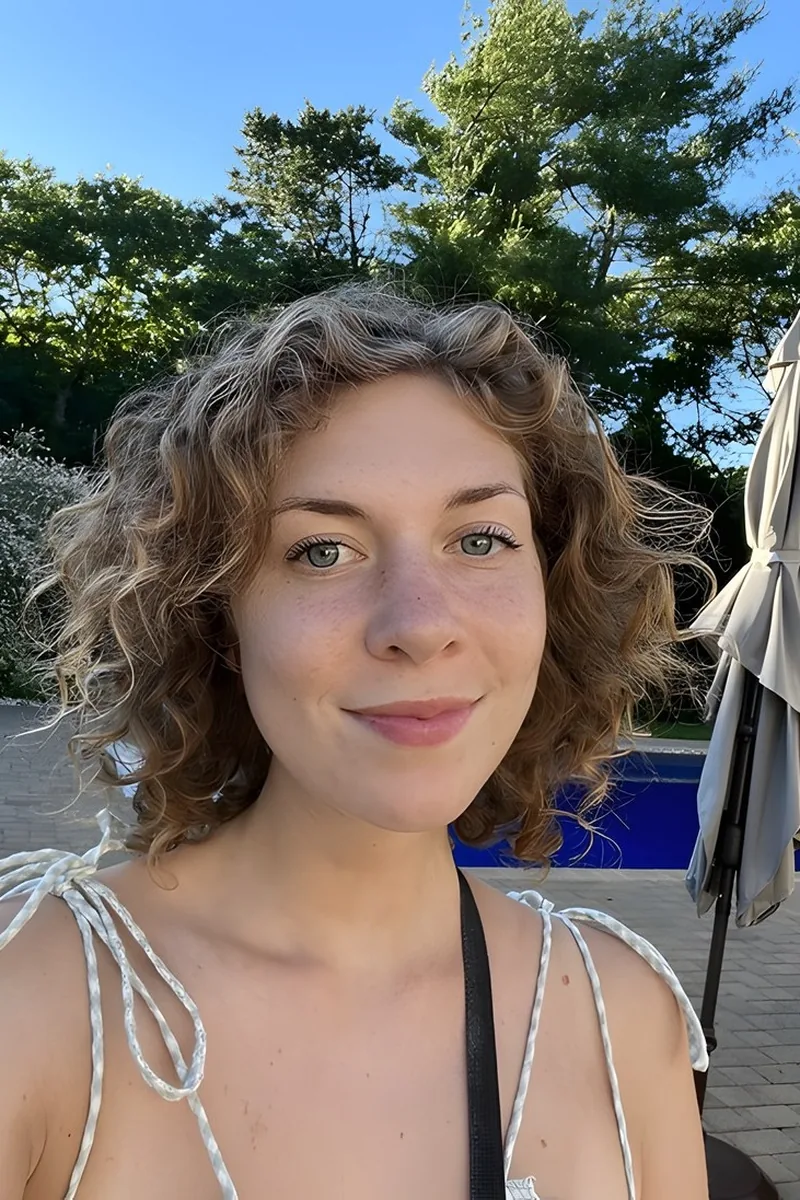
A chemistry degree from Yale means Zosia spent years in courses where physics does the heavy lifting — thermodynamics driving reaction spontaneity, quantum mechanics explaining atomic structure, electrostatics governing molecular interactions — so she knows these concepts from the inside out. She's particularly effective at teaching students to translate word-heavy problem statements into clean free-body diagrams or energy bar charts before touching an equation. Rated 4.9 by students.
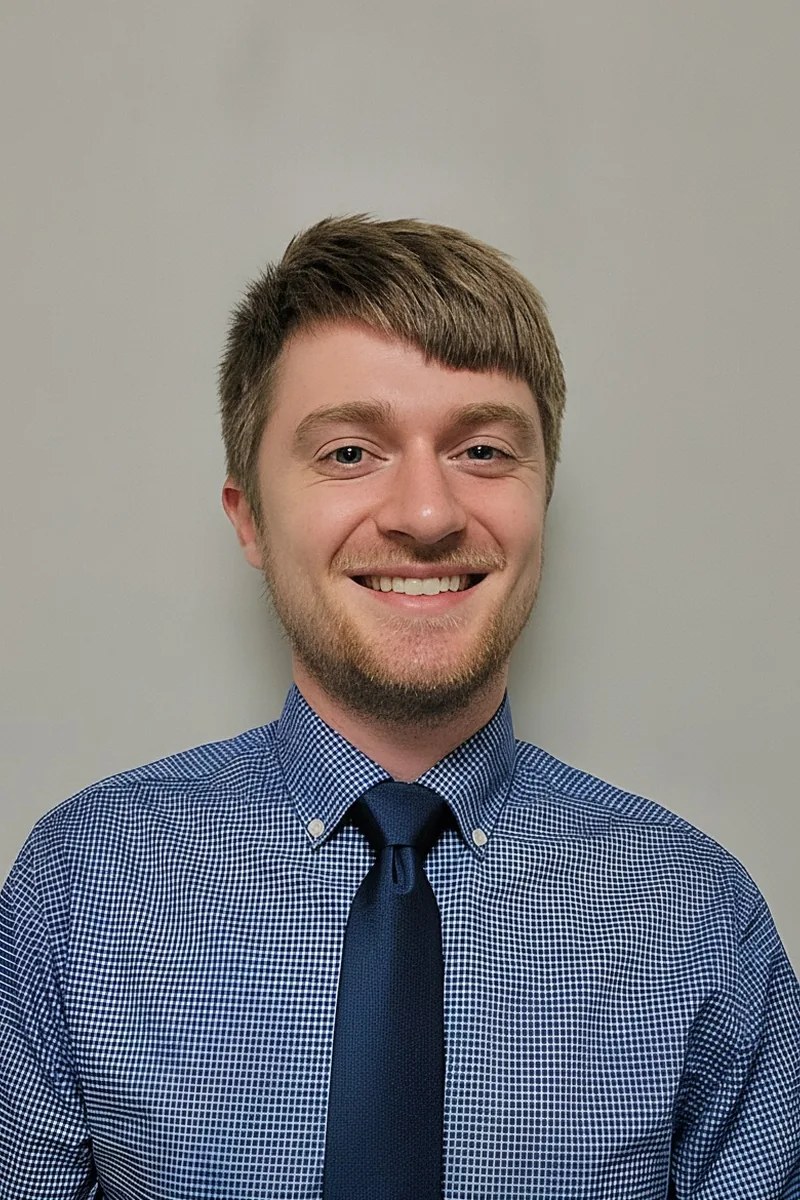
College-level physics ramps up fast, and the jump from textbook examples to exam problems can be brutal. Bryan earned his B.S. in Physics and tackles that gap by teaching problem-solving frameworks — symmetry arguments in electrostatics, constraint equations in multi-body dynamics — that transfer across chapters instead of requiring a new trick every week.
Environmental engineering is essentially physics with consequences — Kate's master's work required her to model fluid flow, heat transfer, and pressure systems in real infrastructure, which means she's solved the same types of problems that show up on college physics exams but with actual design constraints attached. That applied perspective makes her particularly effective at teaching students to set up force balances and energy equations from a physical scenario rather than reverse-engineering from a formula sheet. Rated 4.9 by students.
TA-ing MIT's Physics II course gave Cori front-row experience with the stumbling blocks college students face — from applying Maxwell's equations to navigating multi-step problems in mechanics and thermodynamics. She approaches each topic by building physical intuition first, then layering on the math. Her engineering background means she can also show how these principles appear in real material systems and design problems.
Engineering coursework at Cornell means Abby is actively grinding through the same calculus-based physics — mechanics, wave motion, electromagnetism — that her students are tackling, which keeps her explanations grounded in the specific problem styles and pitfalls that show up on current exams. She breaks down multi-step problems by isolating the physical principle first, then translating it into the math, so students stop guessing which equation to use. Holds a 5.0 rating.
Pursuing an MD at Stanford after a double major in economics and molecular/cellular biology, Maggie brings a pre-med perspective to college physics that makes topics like optics, fluid dynamics, and wave mechanics feel immediately relevant rather than abstract. She's especially sharp at teaching students to set up problems cleanly — translating a physical scenario into the right free-body diagram or energy equation before doing any math. Rated 5.0 by students.
Three science-focused bachelor's degrees — including biology — meant Garrett sat through the full calculus-based physics sequence and kept coming back to it in physiology and physical chemistry, where concepts like fluid dynamics, pressure gradients, and energy transfer show up again and again. That repeated exposure across disciplines gives him an intuitive feel for when to apply conservation of energy versus momentum, or how to reason through a thermodynamics problem without getting lost in the formalism. His 1530 SAT speaks to the quantitative sharpness he brings to each session.
A PhD in biomedical engineering means Andrew has spent years applying physics to biological systems — modeling forces on joints, analyzing fluid flow through tissues, understanding how electromagnetic fields interact with the body. That depth in mechanics, thermodynamics, and E&M carries directly into the calculus-based problem solving college physics courses demand. Rated 4.9 by students.
Between earning a mechanical engineering bachelor's and pursuing his master's, Aaron has taken calculus-based physics from every angle — statics, dynamics, thermodynamics, fluid mechanics — and now applies those principles daily in graduate-level research and coursework. He breaks down problems by teaching students to sketch the physical situation first, identify constraints, and only then select the right conservation law or force equation. Holds a 5.0 rating.
A computer science degree from UCLA means Michael spent semesters deep in the physics that underpins simulation and graphics — kinematics, force modeling, energy systems — and his 1560 SAT confirms the quantitative chops to handle calculus-based problem solving. He teaches students to treat each physics problem like debugging code: isolate what you know, identify the governing principle, then execute step by step until the answer falls out.
Studying molecular biophysics at Brown means Srini lives at the intersection of physics and biology — applying thermodynamics, electromagnetism, and wave mechanics to understand how molecules actually behave in living systems. That dual perspective makes him especially effective at unpacking the conceptual reasoning behind problems in mechanics, circuits, and optics that trip up so many college students.
Princeton's mechanical and aerospace engineering program is essentially a four-year immersion in applied physics — Fred spent it solving problems in fluid dynamics, thermodynamics, structural mechanics, and orbital motion, which maps directly onto the topics that fill college physics syllabi. He breaks down force diagrams and energy methods by connecting them to the engineering contexts where those concepts actually get used, making abstract problem sets feel more concrete. His 1550 SAT reflects the quantitative precision he brings to calculus-heavy coursework.
Testimonials
Because the right College Physics tutor makes all the difference.
Average Session Rating – Based on 3.4M Learner Ratings
Other Honolulu Tutors
Related Science Tutors in Honolulu
Frequently Asked Questions
College Physics usually covers mechanics (motion, forces, energy, momentum), waves and sound, thermodynamics, electricity and magnetism, and often includes introductory modern physics. The course emphasizes both conceptual understanding and mathematical problem-solving, requiring you to apply physics principles to real-world scenarios rather than just memorize formulas. Most College Physics courses include lab work where you'll design experiments and collect data to test theoretical predictions.
Many students struggle with abstract concepts because physics requires you to "see" things you can't observe directly. Tutors can help you develop mental models by connecting concepts to tangible examples—like understanding electric fields through water flow analogies or visualizing vector addition through real-world motion problems. Working through problems step-by-step with visual aids, diagrams, and interactive explanations makes these invisible forces and interactions much more concrete and memorable.
Absolutely. Beyond helping you understand the theory, tutors can guide you through experimental design, data analysis, and scientific reasoning—skills that are just as important as the physics content itself. They can help you interpret lab results, understand why your data might differ from theoretical predictions, and develop the problem-solving approach that makes you a better experimental scientist overall.
Understanding physics means knowing *why* formulas work and *when* to apply them, not just plugging numbers into equations. Tutors focus on building conceptual understanding by teaching you the reasoning behind each principle and how different concepts connect. This approach helps you tackle unfamiliar problems with confidence because you understand the underlying physics, rather than relying on pattern-matching formulas you've memorized.
Your first session is about understanding your specific challenges and learning style. A tutor will likely discuss which topics are giving you trouble, review your current coursework, and assess whether you need help with conceptual understanding, problem-solving techniques, or exam preparation. From there, they'll tailor a personalized approach that addresses your gaps and builds confidence in the areas where you're struggling most.
Unit conversions and dimensional analysis trip up many College Physics students because they require careful attention to detail and a systematic approach. Tutors can teach you reliable strategies—like the factor-label method for conversions—and help you develop habits that prevent careless errors. With practice and clear explanations, these mechanical skills become automatic, freeing up your mental energy for the deeper physics concepts.
Varsity Tutors connects you with experienced physics tutors who understand the College Physics curriculum and can adapt their teaching to your learning style. Whether you need help preparing for exams, understanding difficult concepts, or mastering problem-solving techniques, you can get matched with a tutor who has the expertise and availability that works for your schedule.
Effective exam prep goes beyond reviewing notes—it requires practicing problems under timed conditions and identifying gaps in your understanding before test day. Tutors can help you work through practice problems, teach you test-taking strategies specific to physics, and focus your studying on the concepts you find most challenging. This targeted approach typically leads to better retention and higher exam scores than cramming alone.
Let’s find your perfect tutor
Answer a few quick questions. We’ll recommend the right plan and match you with a top 5% tutor.