Award-Winning High School Chemistry Tutors
serving Honolulu, HI
High School Chemistry
Tutors in Honolulu
Private 1-on-1 tutoring, weekly live classes for academic support, test prep & enrichment, practice tests and diagnostics, and more to elevate grades and test scores.
Based on 3.4M Learner Ratings
UniversitiesSchools & Universities
DeliveredHours Delivered
ProficiencyGrowth in Proficiency
Who needs tutoring?
No obligation. Takes ~1 minute.

Balancing equations, mole conversions, and gas law calculations all come down to organized quantitative reasoning — exactly the skill set Sanjana sharpens as an applied math student at Harvard. She connects the math behind chemistry to the conceptual "why," so topics like limiting reagents and solution dilutions start making sense instead of feeling like arbitrary formulas.
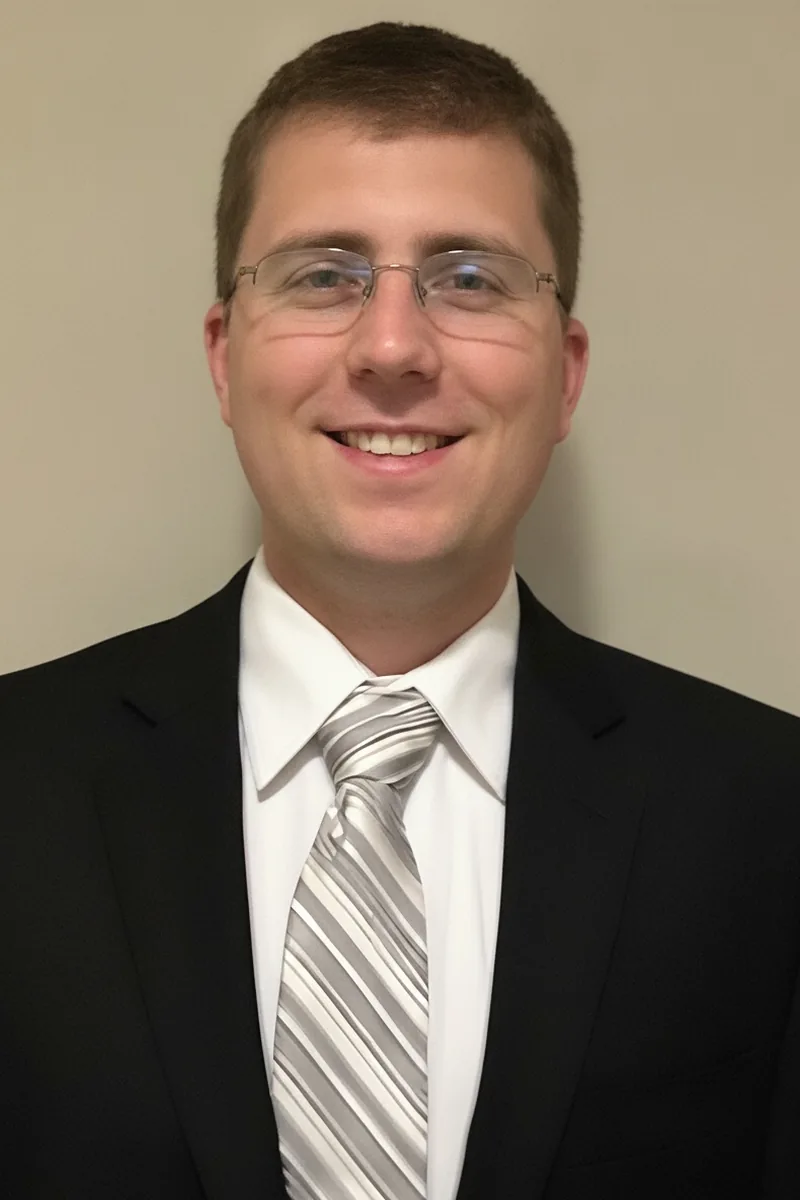
Starting chemistry for the first time can feel like learning a new language — moles, electron configurations, Lewis structures — and Eric excels at translating that language into something intuitive. He holds a master's in chemistry and approaches introductory topics with patience and specificity, making sure students understand the 'why' behind each concept before moving to the next one.
Stoichiometry, equilibrium, and reaction kinetics stop being abstract once a student sees how they connect to each other — and Aimee teaches those connections explicitly. Her chemical and biomolecular engineering degree from Georgia Tech required mastering these concepts at a deep quantitative level, which means she can explain not just how to balance an equation but why the math works the way it does.
When mole conversions and electron configurations start piling up in high school chemistry, the subject can feel like pure memorization. Andrew reframes it: he walks through the logic of the periodic table so students can predict reactivity, bonding behavior, and molecular geometry from first principles instead of flashcards. Rated 4.8 by students.
Three science bachelor's degrees plus a medical doctorate means Sydny has taken chemistry at every level — from introductory courses through the biochemistry and pharmacology that med school demands daily. She unpacks topics like stoichiometry and gas laws by connecting them to the biological and medical contexts where those calculations actually do something, which tends to make the abstract feel worth learning.
Stoichiometry and electron configurations tend to pile up fast in high school chemistry, and students who fall behind on one unit often struggle to catch up in the next. Paula's approach is to anchor each new concept — whether it's Lewis structures or acid-base equilibria — to the periodic table trends that tie the whole course together. She teaches the logic underneath the formulas so students aren't just memorizing steps.
Balancing equations, understanding molarity, and predicting reaction products all click faster when a student sees the logic underneath the formulas. Li's medical and science background means she can explain why a precipitation reaction happens at the molecular level, then walk through the math step by step.
Premed neuroscience coursework at Rice put Aditi through rigorous chemistry sequences where concepts like equilibrium, stoichiometry, and thermodynamics weren't electives — they were prerequisites for everything that followed. She zeroes in on the periodic table as a predictive tool, teaching students to use trends in electronegativity and atomic radius to reason through bonding and reactivity questions rather than memorize isolated facts. Rated 4.8 by students.
A physics major might seem like an unusual pick for chemistry, but Nima's deep comfort with atomic structure, thermodynamics, and quantitative problem-solving maps directly onto the trickiest parts of high school chem — stoichiometry, equilibrium calculations, and electron configurations. He approaches chemical concepts through the lens of why atoms and molecules behave the way they do, not just how to balance the equation.
Running an immunology lab at Columbia means Matthew uses chemistry daily — from buffer calculations to understanding reaction kinetics in biological systems. For high school students tackling stoichiometry, equilibrium, or electron configurations, he explains the logic behind each concept rather than handing out shortcuts that fall apart on harder problems. Rated 5.0 by students, he makes the quantitative side of chemistry far less intimidating.
Balancing equations, mole conversions, and periodic trends are the building blocks of high school chemistry, and Camille tackles each one by teaching the underlying logic rather than handing students a formula sheet. Her pre-med background at Duke means she's fluent in the problem-solving style these courses demand. Rated 5.0 by students.
This isn't Hasan's core area — his degrees are in Literary Arts and Visual Arts from Brown — but his role as a lead teacher at a classical academy means he regularly supports students across subjects, including chemistry fundamentals like nomenclature, dimensional analysis, and basic stoichiometry. He's strongest at teaching students how to read and dissect word-heavy chemistry problems, applying the same close-reading instincts from his literary training to pull apart what a question is actually asking.
Testimonials
Because the right High School Chemistry tutor makes all the difference.
Average Session Rating – Based on 3.4M Learner Ratings
Other Honolulu Tutors
Related Science Tutors in Honolulu
Frequently Asked Questions
High school chemistry requires balancing abstract molecular concepts with concrete problem-solving skills. Students often struggle with balancing chemical equations, mastering unit conversions and stoichiometry, and visualizing how atoms and molecules interact at scales we can't see. Many also find it challenging to connect theoretical concepts to real-world applications—understanding not just what happens in a reaction, but why it happens and how it applies beyond the textbook.
Personalized 1-on-1 instruction allows tutors to identify exactly where you're getting stuck—whether it's foundational concepts like atomic structure, problem-solving strategies, or test-taking skills. Tutors can break down abstract concepts into visual, step-by-step explanations tailored to how you learn best, and help you practice the types of problems you'll see on exams. This targeted approach builds both content mastery and scientific reasoning skills, which transfer across all your science courses.
Yes. Tutors can help you understand the scientific method behind your experiments, prepare for lab practicals, and connect what you observe in the lab to the theoretical concepts you're learning in class. They can also help you interpret lab results, write strong lab reports, and develop the critical thinking skills needed to troubleshoot when experiments don't go as expected—all valuable skills for chemistry and beyond.
Your first session is about understanding your goals and learning style. The tutor will assess your current understanding of chemistry concepts, identify specific areas where you need support, and learn how you learn best—whether through visual diagrams, hands-on problem-solving, or detailed explanations. From there, they'll create a personalized plan to help you build confidence and improve your performance in the course.
Not at all. While chemistry does involve learning some key formulas and facts, the real focus is on understanding the principles behind them. Effective chemistry tutoring emphasizes conceptual understanding—why elements behave the way they do, how to apply the periodic table strategically, and how to reason through problems you've never seen before. When you understand the concepts, you can solve new problems and remember information more effectively than through memorization alone.
Balancing equations requires understanding both the rules of chemistry and developing a systematic problem-solving approach. Many students struggle because they're trying to memorize patterns rather than understanding the underlying principle: that atoms must be conserved in a reaction. A tutor can teach you a step-by-step strategy, help you practice with increasingly complex equations, and build your confidence so you can tackle any equation on a test.
Varsity Tutors connects you with expert tutors who specialize in high school chemistry and understand what Honolulu students need to succeed. You can get matched with a tutor who fits your schedule and learning style, and start personalized instruction designed to help you master the concepts and build test confidence. Whether you need help with specific units, exam prep, or consistent support throughout the year, tutors are available to meet your needs.
Unit conversions and stoichiometry are skills that improve with practice and clear understanding of the underlying logic. Tutors can teach you the dimensional analysis method, help you set up problems systematically, and give you targeted practice with feedback. Over time, these problem-solving strategies become automatic, and what once felt overwhelming becomes a reliable tool for tackling chemistry problems with confidence.
Let’s find your perfect tutor
Answer a few quick questions. We’ll recommend the right plan and match you with a top 5% tutor.