Award-Winning AP Computer Science Tutors
serving Riverside, CA
AP Computer Science
Tutors in Riverside
Private 1-on-1 tutoring, weekly live classes for academic support, test prep & enrichment, practice tests and diagnostics, and more to elevate grades and test scores.
Based on 3.4M Learner Ratings
UniversitiesSchools & Universities
DeliveredHours Delivered
ProficiencyGrowth in Proficiency
Who needs tutoring?
No obligation. Takes ~1 minute.
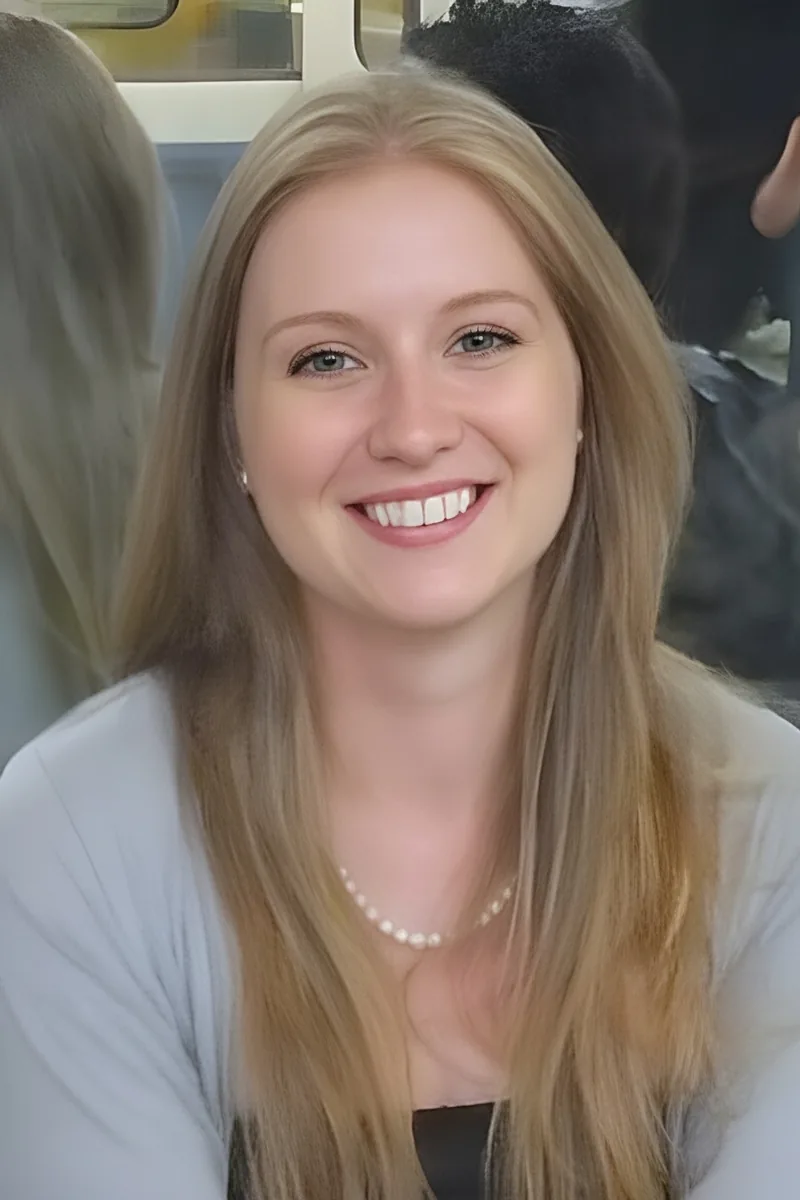
Christina's CS degree means she's written enough Java to know exactly where AP Computer Science A gets tricky — the leap from writing simple methods to designing full classes with inheritance, or the moment recursion stops feeling like magic and starts making sense. She teaches students to trace through code systematically, building the kind of debugging instinct that pays off on both multiple-choice and free-response sections.

Double-majoring in computer science and English gives Milan an unusual edge when it comes to AP Computer Science A — he writes Java with technical precision but also explains it in plain language, which matters when students are stuck on why a recursive call unwinds the way it does or how inheritance actually changes method behavior. His CS coursework means topics like array traversal, class design, and algorithm tracing are daily practice, not distant exam material.
Most AP Computer Science A students get tripped up not on syntax but on thinking through what their code actually does — tracing a loop iteration by iteration or figuring out why a method returns the wrong value. Dennis teaches across Java, JavaScript, and web development, which means he can explain object-oriented concepts from multiple angles and show students how the same logical patterns appear across languages. Rated 5.0 by students.
I'm a recent graduate of the California Institute of Technology in Economics and Computer Science. I was also accepted at Harvard, Princeton, MIT, and Stanford. I have a broad range of interests spanning science, math, engineering, social science, the humanities, the arts, and athletics (I also played on the Caltech basketball team). My background allows me to tutor general college prep, especially the SAT, ACT and the GRE. I love to teach analytical thinking, ranging from advanced Math and Physics to strategies for understanding literature and developing arguments.
I am a Thomas Jefferson High School for Science and Technology graduate and currently attend Vanderbilt University majoring in Computer Engineering with a minor in Business. I've tutored in various subjects for about 6 years now. I've done it so much, one of the companies I started was tutoring-based. In all, I am a technology-oriented entrepreneur, an impact-driven member of the community, and a striving academic. My passion for computer engineering and dedication to solving the world's problems push me to continue to be better tomorrow than I am today. I am currently pursuing a career in engineering and business where I hope to improve the lives of those around me every step of the way.
I am a current sophomore at Cornell University pursuing a B.S. in Biomedical Engineering. I have done extensive coursework in biology, physics, chemistry, math, and lab sciences. I love applying engineering problem-solving skills to the biological sciences. For the past year, I have been a teaching assistant for introductory biology classes. In my free time, I participate in cancer immunotherapy research which focuses on melanoma.
I am a undergraduate student at Cornell University. I am studying computer science in the College of Engineering. I have been tutoring in all subjects since 9th grade, mostly computer science and mathematics and SAT. My teaching philosophy is based on hands-on learning, and the motto of 'practice makes perfection'. The more you face the problem head on and break it into smaller pieces, the easier the problem becomes to solve. In my spare time, I like to go outside on runs and play basketball with my friends
Two years writing computerized tasks for Ohio State's Clinical Neuroscience Laboratory gave Luke hands-on experience building software to solve real research problems — the kind of structured, logical coding that maps directly onto AP Computer Science A topics like control flow, method design, and class construction. His psychology training also sharpens how he explains tricky concepts, since he's attuned to where confusion actually originates rather than just what the correct answer looks like. Rated 4.8 by students.
I'm Dennis. I study physics, math, and computer science. I have done research about cosmic ray acceleration at supernova shock fronts in the Princeton University Department of Astrophysics, simulating how the turbulent plasmas push protons and ions. I have also worked at the Norfolk State University Department of Engineering, designing, simulating, optimizing, and building light filters for wavelength-division optical-electronic multiplexers. Another field I study is the mathematics of quasicrystals and aperiodic tilings, such as the Penrose tiling of rhombuses.
Hackathons and robotics competitions taught June to debug under pressure and think through code systematically — exactly the skills AP Computer Science A tests on free-response questions. Her electrical engineering studies at Brown mean she understands computing from the hardware up, giving her a concrete way to explain why Java handles variables, memory, and control flow the way it does.
I am interested in Physics and Mathematics and working out practical problems from plumbing to electronics. I will someday go back for my Ph.D. in Physics but until then I am looking to grow as an engineer or computer programmer.
Two years as a Java teaching assistant at Illinois Institute of Technology means Muntaser has watched hundreds of students wrestle with the exact concepts AP Computer Science A tests — inheritance, loop tracing, array logic — and learned how to explain them in ways that actually land. His computer engineering degree and professional software engineering work add a layer most tutors can't: he knows how these OOP principles play out in real codebases, not just on exam day.
Robotics engineering at Penn means Mohamed writes code daily to solve real problems — sensor integration, control systems, data processing. He brings that applied perspective to AP Computer Science, teaching algorithmic thinking and program design principles through problems that show students why the concepts matter beyond the exam.
The AP Computer Science exams test specific Java skills — recursive methods, sorting algorithms, 2D arrays — but they also require students to trace code under time pressure. Jake's CS coursework and strong test prep background (1540 SAT) mean he knows how to teach both the programming concepts and the exam strategy simultaneously.
Triple-majoring in Computer Science, Mathematics, and Economics at IUPUI means Darren lives in Java and algorithmic thinking daily — not just for one class, but across disciplines that each demand rigorous logic and clean code. That cross-disciplinary perspective is especially useful for AP Computer Science A's free-response questions, where breaking a problem into smaller computational steps mirrors the same decomposition skills his math and econ coursework reinforces every week.
Ryan studies computer science at UVA and knows the AP Computer Science curriculum inside out — from object-oriented design and recursion to array manipulation and sorting algorithms in Java. He teaches students to think through problems before writing a single line of code, building the kind of algorithmic reasoning that earns 5s on the exam. Rated 5.0 by students.
Testimonials
Because the right AP Computer Science tutor makes all the difference.
Average Session Rating – Based on 3.4M Learner Ratings
Nearby AP Computer Science Tutors
Other Riverside Tutors
Related Technology and Coding Tutors in Riverside
Frequently Asked Questions
AP Computer Science A covers fundamental programming concepts including variables, data types, control structures, arrays, and object-oriented programming. The course also includes algorithms, searching and sorting, and 2D arrays. Students learn to write, test, and debug Java programs while understanding computational thinking principles. The exam tests both multiple-choice questions and free-response coding problems that require you to write and analyze code.
Score improvement depends on your starting point and commitment level. Most students see meaningful gains—typically 1-2 points on the 1-5 scale—when working with a tutor to target weak areas like object-oriented programming or algorithm design. The key is identifying exactly where you're losing points (whether it's syntax errors, logic mistakes, or misunderstanding question formats) and practicing those specific skills repeatedly. Consistent practice with feedback tends to produce the strongest results.
Many students struggle with the transition from writing simple programs to understanding object-oriented design and inheritance. The free-response section is particularly challenging because it requires not just knowing syntax, but thinking through algorithms and explaining your code logic clearly. Time management during the exam is another frequent issue—students often get stuck debugging code mentally instead of moving forward. A tutor can help you develop strategies for breaking down complex problems and managing your time effectively during the test.
The free-response section requires practice writing complete, correct code under time pressure. You should work through multiple practice problems, focusing on understanding what each question is asking before you start coding. Common mistakes include not reading the full problem, forgetting to handle edge cases, and syntax errors that prevent code from running. A tutor can review your code, point out logical errors, and help you develop a systematic approach to solving these problems—like planning your solution before writing code and testing with sample inputs.
Most students benefit from starting test prep 2-3 months before the exam, dedicating 5-7 hours per week to focused study. This includes reviewing concepts, practicing multiple-choice questions, and working through free-response problems. If you're starting later or struggling with specific topics, more intensive preparation with a tutor can help you catch up efficiently. The goal is consistent practice rather than cramming—regular exposure to different problem types helps you build confidence and catch patterns in how questions are asked.
Look for tutors who have strong Java programming experience and have successfully taught or tutored AP Computer Science. They should understand the specific format of the AP exam, including the multiple-choice and free-response sections, and be able to explain both the 'what' and the 'why' behind coding concepts. Varsity Tutors connects you with expert tutors who can assess your current level, identify your specific weak areas, and create a targeted study plan. The best tutors combine deep subject knowledge with the ability to explain complex concepts clearly.
In your first session, a tutor will assess your current understanding of AP Computer Science concepts and identify which topics need the most work. They may ask you to solve a practice problem or review code you've written to understand your strengths and gaps. From there, you'll work together to create a personalized study plan that focuses on your specific challenges—whether that's object-oriented programming, algorithms, or exam strategy. This diagnostic approach ensures your tutoring time is spent on what actually matters for your score.
Test anxiety in AP Computer Science often stems from uncertainty about whether your code is correct or fear of running out of time. A tutor can help you build confidence through repeated practice with timed problems, so the exam format feels familiar. Developing a systematic approach—like reading the entire question first, planning your solution before coding, and allocating specific time to each section—reduces anxiety by giving you a clear strategy. Mock exams under timed conditions are particularly helpful for building the confidence that comes from successfully solving problems under pressure.
Let’s find your perfect tutor
Answer a few quick questions. We’ll recommend the right plan and match you with a top 5% tutor.