Award-Winning AP Computer Science Tutors
serving Mission Viejo, CA
AP Computer Science
Tutors in Mission Viejo
Private 1-on-1 tutoring, weekly live classes for academic support, test prep & enrichment, practice tests and diagnostics, and more to elevate grades and test scores.
Based on 3.4M Learner Ratings
UniversitiesSchools & Universities
DeliveredHours Delivered
ProficiencyGrowth in Proficiency
Who needs tutoring?
No obligation. Takes ~1 minute.
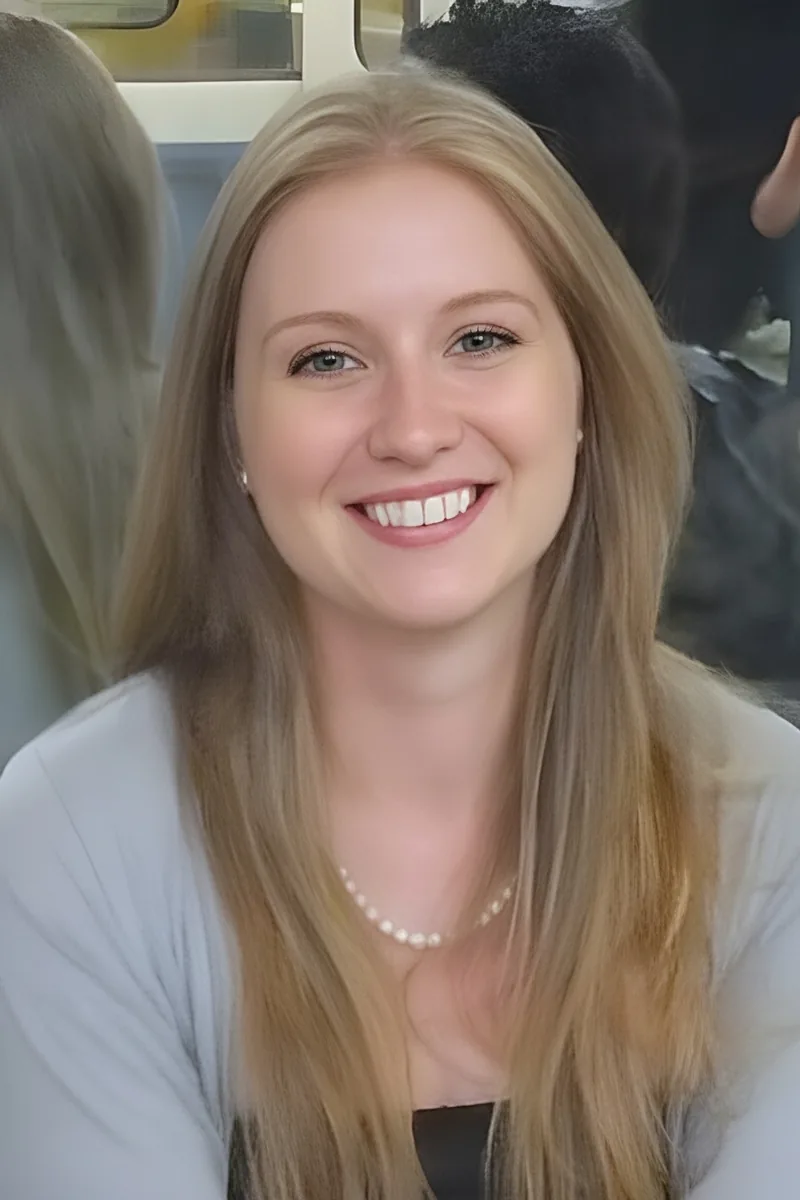
Christina's CS degree means she's written enough Java to know exactly where AP Computer Science A gets tricky — the leap from writing simple methods to designing full classes with inheritance, or the moment recursion stops feeling like magic and starts making sense. She teaches students to trace through code systematically, building the kind of debugging instinct that pays off on both multiple-choice and free-response sections.

Double-majoring in computer science and English gives Milan an unusual edge when it comes to AP Computer Science A — he writes Java with technical precision but also explains it in plain language, which matters when students are stuck on why a recursive call unwinds the way it does or how inheritance actually changes method behavior. His CS coursework means topics like array traversal, class design, and algorithm tracing are daily practice, not distant exam material.
Most AP Computer Science A students get tripped up not on syntax but on thinking through what their code actually does — tracing a loop iteration by iteration or figuring out why a method returns the wrong value. Dennis teaches across Java, JavaScript, and web development, which means he can explain object-oriented concepts from multiple angles and show students how the same logical patterns appear across languages. Rated 5.0 by students.
I'm a recent graduate of the California Institute of Technology in Economics and Computer Science. I was also accepted at Harvard, Princeton, MIT, and Stanford. I have a broad range of interests spanning science, math, engineering, social science, the humanities, the arts, and athletics (I also played on the Caltech basketball team). My background allows me to tutor general college prep, especially the SAT, ACT and the GRE. I love to teach analytical thinking, ranging from advanced Math and Physics to strategies for understanding literature and developing arguments.
I'm currently majoring in bioengineering/pre-med at Rice University. I graduated as the valedictorian of my high school class. My interests include biology, math, and violin performance. I've done neuroscience research at the Jungers Center for Neuroscience Reseach and the Oregon National Primate Research Center. I've also done molecular biology research at the Oregon Stem Cell Center.
I am a freshman at Caltech majoring in Applied and Computational Mathematics. My favorite subject to tutor is math because I find it very rewarding to simplify complex topics to aid in understanding. I have lots of tutoring experience. In high school, I ran and taught an SAT prep class and was vice president of my school's NHS chapter where I ran our tutoring program, and I, myself, tutored. I also was a teaching assistant in the summer of 2020 for a class in discrete mathematics through a program called PACT (Program in Algorithmic and Combinatorial Thinking). I love learning and hope to make the process enjoyable for you!
While computer science isn't John's primary credential, his engineering training at a program rigorous enough to earn Tau Beta Pi membership gave him strong foundations in algorithmic thinking and problem decomposition. He approaches AP Computer Science concepts like recursion, sorting algorithms, and object-oriented design with the structured logic of an engineer who learned to code as a working tool.
Currently studying computer science at MIT, Brice writes Java and Python regularly enough that AP Computer Science A topics like inheritance, polymorphism, and recursive methods feel like second nature rather than exam abstractions. He teaches the *why* behind each design pattern — why you'd use an ArrayList over an array, why a method should return a value instead of printing it — so students build real programming intuition. Rated 4.9 by students.
I am currently a Harvard student majoring in Computer Science with a minor in Applied Mathematics. I graduated Class Valedictorian in high school and was named National Merit Finalist. I took 16 AP classes in high school, including AP Calculus AB, AP Calculus BC, AP Computer Science A, AP Physics C : Mechanics and AP Physics 1, with a score of 5 in all of the tests. I scored a 1570/1600 in my SAT and 800 in the SAT Math Level 2 Subject Test and 790 in the SAT Physics Subject Test.
I am an economics student at Brown University and recently completed a government-funded exchange year in Germany through the CBYX scholarship. My goal is to help you or your child make the most out of your time and learn in the ways suited to you!
I am a graduate of Stanford University, where I received a BS in Cognitive Science and an MS in Computer Science. After graduation, I spent a summer in Palestine, where I taught web development, app development, and entrepreneurship to a cohort of overenthusiastic high school students; now, I've moved halfway across the country from the Bay Area to the Twin Cities. From volunteering with organizations like Twin Cities Rise and The Mid-Continent Oceanographic Institute to checking out art institutions like the Walker and Mia, it's been such a wonderful time settling into this new place that I call home.
Two years writing computerized tasks for Ohio State's Clinical Neuroscience Laboratory gave Luke hands-on experience building software to solve real research problems — the kind of structured, logical coding that maps directly onto AP Computer Science A topics like control flow, method design, and class construction. His psychology training also sharpens how he explains tricky concepts, since he's attuned to where confusion actually originates rather than just what the correct answer looks like. Rated 4.8 by students.
Between physics problem sets and computer science coursework at Cornell, Joel writes Java and Python to solve real computational problems — not just classroom exercises. That dual perspective is especially useful for AP Computer Science A topics like algorithm design and object-oriented programming, where understanding the logic behind the code matters as much as getting it to compile. His 35 ACT reflects the kind of precise, systematic thinking that translates directly to tracing through free-response questions.
The AP Computer Science exam tests both coding fluency and the ability to trace through unfamiliar code under time pressure. Shlomo tackles both sides — drilling array manipulation, recursion, and ArrayList operations while also teaching the test-taking strategy that keeps students from burning time on free-response questions. His math background is especially useful for the algorithm-analysis problems that blend logic with computation.
I am interested in Physics and Mathematics and working out practical problems from plumbing to electronics. I will someday go back for my Ph.D. in Physics but until then I am looking to grow as an engineer or computer programmer.
I am a rising sophomore at Harvard College, currently on leave for the semester. I am a B.A. candidate in mathematics and physics, and I have both professional and academic experience in computer science as well.
Testimonials
Because the right AP Computer Science tutor makes all the difference.
Average Session Rating – Based on 3.4M Learner Ratings
Nearby AP Computer Science Tutors
Other Mission Viejo Tutors
Related Technology and Coding Tutors in Mission Viejo
Frequently Asked Questions
AP Computer Science covers foundational programming concepts including variables, data types, control structures, and object-oriented programming. The course also includes algorithms, data structures, recursion, and sorting/searching methods. Students learn to write, test, and debug code while understanding how computers process information and solve problems—skills that build toward the AP exam's multiple-choice and free-response sections.
The AP Computer Science exam consists of two sections: a 90-minute multiple-choice section (40 questions) and a 90-minute free-response section (4 questions). The multiple-choice section tests conceptual understanding and code reading, while the free-response section requires writing code to solve problems. Success on both sections depends on understanding core concepts deeply and practicing with realistic exam-style questions.
Many students struggle with translating problem descriptions into working code, especially in the free-response section where time management matters. Understanding recursion and working with complex data structures like 2D arrays also trips up learners. Additionally, debugging code under exam pressure and avoiding syntax errors are common pain points. Targeted practice with these specific topics—combined with strategies for reading questions carefully—helps students build confidence.
A tutor can identify your specific weak areas—whether that's object-oriented programming, algorithm design, or exam pacing—and create a focused study plan. They can walk you through free-response problems step-by-step, teach you to spot common mistakes in code, and help you practice under timed conditions. Regular one-on-one instruction also builds confidence by clarifying concepts that feel confusing in a classroom setting.
Most students benefit from consistent practice throughout the school year, with increased intensity in the weeks leading up to the May exam. If you're working with a tutor, weekly sessions combined with 5-7 hours of independent practice per week is a solid foundation. In the final month before the exam, many students increase to multiple tutoring sessions per week and complete full practice tests to build stamina and identify remaining gaps.
Practice tests reveal which topics need more work and help you get comfortable with the exam's timing and question formats. Taking full-length, timed practice tests under realistic conditions builds test-taking stamina and reduces anxiety on exam day. Reviewing your mistakes afterward—especially understanding why you missed free-response problems—is where real learning happens and scores improve most.
Score improvement depends on your starting point and consistency with tutoring and practice. Students who work with a tutor and commit to regular practice typically see meaningful gains—often 1-2 points on the 1-5 AP scale. The biggest improvements come from targeted work on your weakest topics and learning to approach free-response problems systematically, rather than trying to improve everything at once.
Varsity Tutors connects you with expert tutors who specialize in AP Computer Science and understand the specific demands of the exam. When you get started, you'll share your current level, goals, and availability, and we'll match you with a tutor who fits your needs. Your first session is a great opportunity to discuss your strengths and challenges, so the tutor can build a personalized study plan for the rest of the year.
Let’s find your perfect tutor
Answer a few quick questions. We’ll recommend the right plan and match you with a top 5% tutor.