Award-Winning AP Computer Science Tutors
serving San Diego, CA
AP Computer Science
Tutors in San Diego
Private 1-on-1 tutoring, weekly live classes for academic support, test prep & enrichment, practice tests and diagnostics, and more to elevate grades and test scores.
Based on 3.4M Learner Ratings
UniversitiesSchools & Universities
DeliveredHours Delivered
ProficiencyGrowth in Proficiency
Who needs tutoring?
No obligation. Takes ~1 minute.
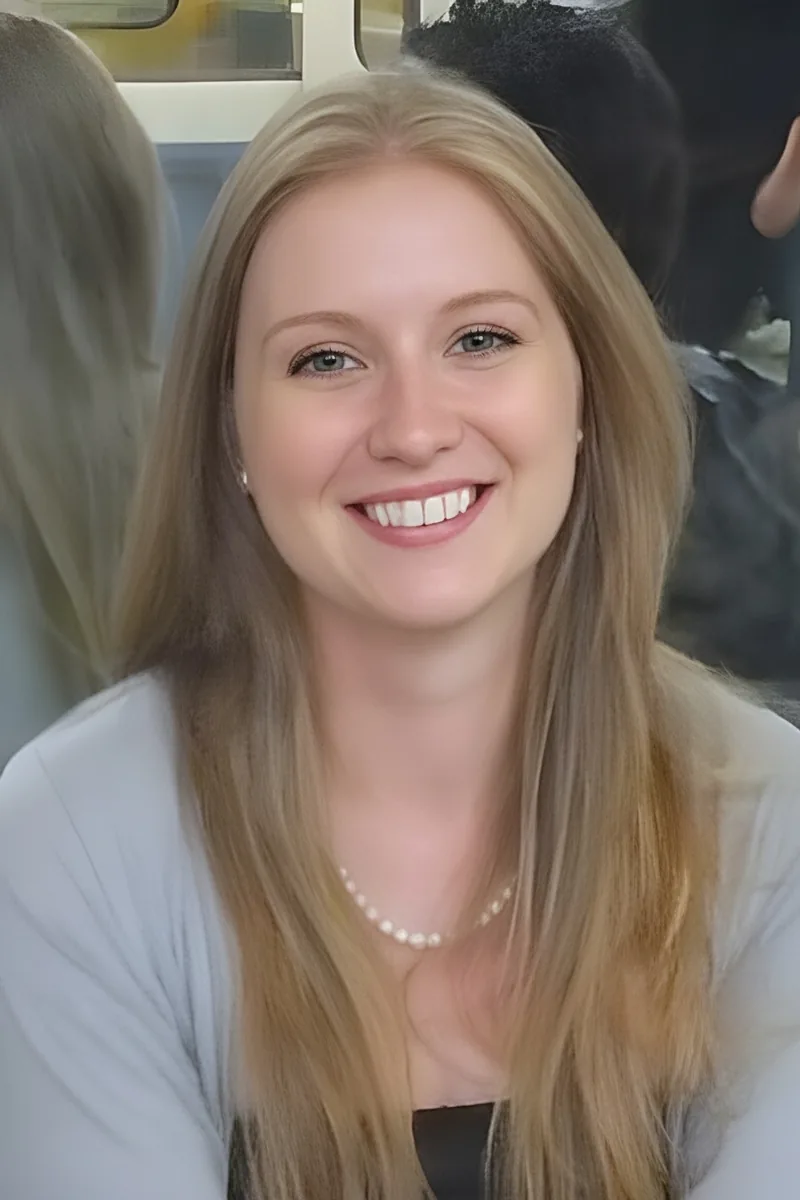
Christina's CS degree means she's written enough Java to know exactly where AP Computer Science A gets tricky — the leap from writing simple methods to designing full classes with inheritance, or the moment recursion stops feeling like magic and starts making sense. She teaches students to trace through code systematically, building the kind of debugging instinct that pays off on both multiple-choice and free-response sections.

Double-majoring in computer science and English gives Milan an unusual edge when it comes to AP Computer Science A — he writes Java with technical precision but also explains it in plain language, which matters when students are stuck on why a recursive call unwinds the way it does or how inheritance actually changes method behavior. His CS coursework means topics like array traversal, class design, and algorithm tracing are daily practice, not distant exam material.
Most AP Computer Science A students get tripped up not on syntax but on thinking through what their code actually does — tracing a loop iteration by iteration or figuring out why a method returns the wrong value. Dennis teaches across Java, JavaScript, and web development, which means he can explain object-oriented concepts from multiple angles and show students how the same logical patterns appear across languages. Rated 5.0 by students.
I'm a recent graduate of the California Institute of Technology in Economics and Computer Science. I was also accepted at Harvard, Princeton, MIT, and Stanford. I have a broad range of interests spanning science, math, engineering, social science, the humanities, the arts, and athletics (I also played on the Caltech basketball team). My background allows me to tutor general college prep, especially the SAT, ACT and the GRE. I love to teach analytical thinking, ranging from advanced Math and Physics to strategies for understanding literature and developing arguments.
I am very passionate about teaching material in a way that works with each student's personal learning needs and making sure that they understand the material at its core, not just how to answer a test question. Because I majored in Neuroscience, I have expertise in a wide range of sciences, as Neuroscience is a very interdisciplinary subject. I have also had extensive experience in Computer Science. Outside of Neuroscience, I devoted a lot of time to studying the humanities. I even started a blog my junior year as an outlet to further pursue these academic interests! As a result, I also enjoy tutoring in Literature, English, and Writing.
Robotics engineering at Penn means Mohamed writes code daily to solve real problems — sensor integration, control systems, data processing. He brings that applied perspective to AP Computer Science, teaching algorithmic thinking and program design principles through problems that show students why the concepts matter beyond the exam.
Scoring a 5 on the AP Computer Science exam while simultaneously deep in calculus, biology, and chemistry APs gave William a clear picture of how CS thinking differs from other STEM disciplines — it's less about formulas and more about structuring logic step by step. His dual engineering track at Vanderbilt (biomedical and chemical) means he regularly writes code to process lab data and model systems, keeping Java concepts like iteration, array handling, and method design sharp through actual use rather than exam review alone.
Ryan studies computer science at UVA and knows the AP Computer Science curriculum inside out — from object-oriented design and recursion to array manipulation and sorting algorithms in Java. He teaches students to think through problems before writing a single line of code, building the kind of algorithmic reasoning that earns 5s on the exam. Rated 5.0 by students.
The AP Computer Science A exam leans heavily on array manipulation, recursive methods, and class design — topics that reward structured thinking over memorization. Lloyd's data science background at Rochester means he tackles these concepts daily, and he teaches students to trace through code by hand so they can predict output on free-response questions without second-guessing.
Studying Computer Science at Cornell gives Jonathan daily exposure to the data structures, object-oriented design, and algorithmic thinking that drive the AP Computer Science exam. He breaks down topics like recursion and sorting algorithms by connecting them to real engineering problems from his coursework, making abstract concepts click faster.
Jett codes in Java, Python, and C as part of his electrical and computer engineering program at UT Austin, so the AP Computer Science A curriculum — from writing classes to implementing algorithms — overlaps with work he's already doing for his degree. Where he especially shines is connecting programming logic to the underlying hardware, explaining how a for-loop or recursive call actually executes at the machine level, which makes debugging and tracing problems far less mysterious. Rated 5.0 by students.
I am currently a Harvard student majoring in Computer Science with a minor in Applied Mathematics. I graduated Class Valedictorian in high school and was named National Merit Finalist. I took 16 AP classes in high school, including AP Calculus AB, AP Calculus BC, AP Computer Science A, AP Physics C : Mechanics and AP Physics 1, with a score of 5 in all of the tests. I scored a 1570/1600 in my SAT and 800 in the SAT Math Level 2 Subject Test and 790 in the SAT Physics Subject Test.
I am an economics student at Brown University and recently completed a government-funded exchange year in Germany through the CBYX scholarship. My goal is to help you or your child make the most out of your time and learn in the ways suited to you!
I am a graduate of Stanford University, where I received a BS in Cognitive Science and an MS in Computer Science. After graduation, I spent a summer in Palestine, where I taught web development, app development, and entrepreneurship to a cohort of overenthusiastic high school students; now, I've moved halfway across the country from the Bay Area to the Twin Cities. From volunteering with organizations like Twin Cities Rise and The Mid-Continent Oceanographic Institute to checking out art institutions like the Walker and Mia, it's been such a wonderful time settling into this new place that I call home.
I'm a sophomore at Vanderbilt University, majoring in Physics and Classics and minoring in Mathematics and Computer Science. I'm qualified to teach a wide variety of subjects, but prefer to focus on the fields I'm studying in school listed above; I have a passion for those areas that I want to share with everyone, no matter the education level or confidence. I believe that no one is "bad at math," but many people haven't been taught math and science concepts in a way that matches how they best learn. As a result, I try to tailor my teaching style to be the best it can be for each individual student. With regard to math and physics, I myself prefer a physical, graphical understanding of different concepts, so I do best at explaining what seemingly abstract concepts actually mean in the real world and how they act on a graph.
I'm a sophomore at Vanderbilt University studying computer science, currently focusing on iOS and game development. I like growing as a person, but I find it much more interesting and rewarding to grow other people. Seeing a student change, not in intellect but in perspective, is fascinating. I like to focus more on concepts rather than memorization so that students will have the tools to excel in any facet of academia, beyond some random test that holds too much significance.
Testimonials
Because the right AP Computer Science tutor makes all the difference.
Average Session Rating – Based on 3.4M Learner Ratings
Nearby AP Computer Science Tutors
Other San Diego Tutors
Related Technology and Coding Tutors in San Diego
Frequently Asked Questions
AP Computer Science focuses on programming fundamentals, data structures, algorithms, and object-oriented design principles. The course emphasizes practical problem-solving through coding projects and requires students to demonstrate mastery of Java programming, understand how computers work at a systems level, and apply computational thinking to real-world challenges. The exam includes both a multiple-choice section and a free-response coding section that tests your ability to write, analyze, and debug programs.
Score improvement depends on your starting point and consistency with tutoring. Students who work with tutors typically see gains of 1-2 score points (on the 1-5 scale) when they identify weak areas early and practice regularly. The most significant improvements come from focused practice on your specific challenges—whether that's mastering object-oriented programming concepts, improving algorithm efficiency, or building confidence with the free-response section. Starting tutoring 3-4 months before the exam gives you time to strengthen fundamentals and practice under timed conditions.
Many students struggle with object-oriented programming concepts like inheritance and polymorphism, translating real-world problems into code logic, and managing time during the free-response section of the exam. Others find it difficult to debug complex code or understand how to optimize algorithms for efficiency. Additionally, students who haven't built strong foundational programming skills sometimes feel overwhelmed by the pace of the course. Personalized tutoring helps you identify which concepts are holding you back and build a targeted study plan to address them.
Your first session focuses on understanding your current skill level, learning goals, and specific challenges. A tutor will review your class materials, discuss which topics feel confusing, and likely work through a coding problem together to see how you approach problem-solving. This helps identify whether you need help with fundamental programming concepts, exam strategy, or building confidence with timed practice. From there, your tutor will create a personalized plan that targets your needs and fits your timeline before the AP exam.
Practice tests are essential for AP Computer Science success because they help you understand the exam format, practice time management, and identify weak areas before test day. The free-response section especially requires timed practice—you need to write clean, efficient code under pressure, which is very different from working on assignments in class. Most students benefit from taking at least 3-4 full-length practice exams starting 6-8 weeks before the test. A tutor can review your practice test responses, point out patterns in your mistakes, and help you refine your approach to both the multiple-choice and coding sections.
Look for tutors who have strong Java programming experience, have taught or tutored AP Computer Science specifically, and understand the College Board's exam format and grading rubric. It's also valuable if they've helped other students prepare for the exam and can share strategies for the free-response section. Varsity Tutors connects you with expert tutors who can demonstrate their expertise and teaching approach—you can discuss their experience with AP Computer Science and ask how they've helped students improve their scores and confidence.
Ideally, you should begin focused exam preparation 3-4 months before the test in May. If you're struggling with core concepts like loops, arrays, or object-oriented programming, starting earlier (even at the beginning of the school year) gives you time to build a solid foundation without cramming. Students in San Diego's 52 school districts follow similar AP exam schedules, so timing your tutoring sessions to align with your school's curriculum ensures you're reinforcing what you're learning in class. A tutor can help you create a study schedule that balances coursework with targeted practice on your weakest areas.
Test anxiety often stems from uncertainty about whether you can solve problems under time pressure. Regular practice with timed coding problems, mock exams, and detailed feedback builds confidence and reduces anxiety significantly. Tutors can also teach you test-taking strategies like reading free-response questions carefully before coding, writing pseudocode first to organize your thoughts, and managing your time across multiple problems. As you practice more and see yourself successfully solving problems, your confidence grows and anxiety naturally decreases.
Let’s find your perfect tutor
Answer a few quick questions. We’ll recommend the right plan and match you with a top 5% tutor.