Award-Winning AP Human Geography Tutors
serving Tucson, AZ
AP Human Geography
Tutors in Tucson
Private 1-on-1 tutoring, weekly live classes for academic support, test prep & enrichment, practice tests and diagnostics, and more to elevate grades and test scores.
Based on 3.4M Learner Ratings
UniversitiesSchools & Universities
DeliveredHours Delivered
ProficiencyGrowth in Proficiency
Who needs tutoring?
No obligation. Takes ~1 minute.
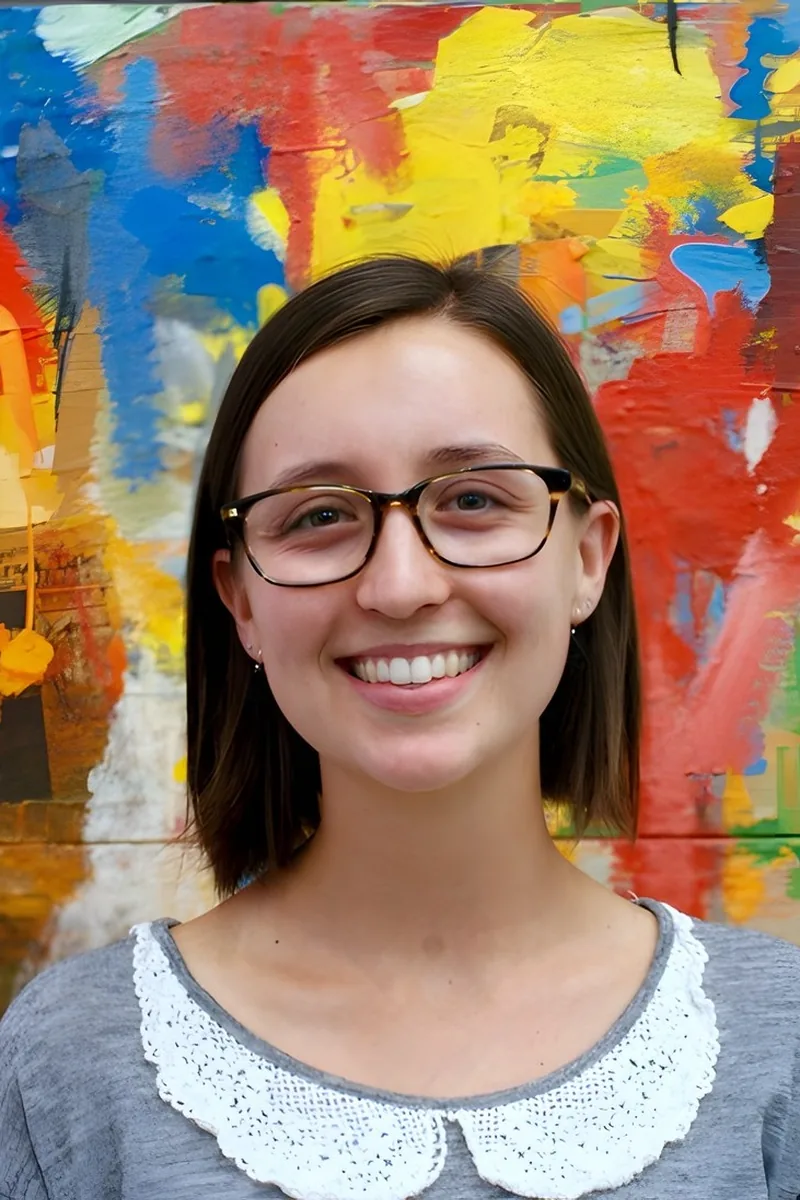
Samantha's American Studies program is essentially AP Human Geography's reading list in degree form — she's deep in the cultural landscapes, migration narratives, and political structures that show up across Units 3 through 7. That academic grounding, plus a 35 ACT, means she can break down both the conceptual side (why Mackinder's heartland theory matters, how acculturation differs from assimilation) and the test-strategy side of stimulus-based multiple choice and FRQs.

Elena's Child Development studies at Vanderbilt give her a sharp understanding of how population dynamics, family structures, and cultural practices vary across regions — concepts that map directly onto AP Human Geography units covering population, migration, and cultural patterns. She pairs that with strong SAT performance (1540) and a knack for teaching younger students complex ideas in accessible ways, which translates well to breaking down dense models like the demographic transition or Zelinsky's migration framework for exam prep. Rated 5.0 by students.
Spatial thinking trips up a lot of AP Human Geography students — understanding why cities develop where they do, how migration reshapes cultural landscapes, or what Ravenstein's laws actually predict. Amena tackles the free-response questions by teaching students to link geographic models to real-world examples, which is where most exam points are won or lost.
Rima's health policy background gives her a concrete way into some of AP Human Geography's trickiest units — she can explain why the epidemiological transition or Rostow's development model aren't just abstract diagrams but reflections of real policy decisions that reshape how populations grow, move, and organize. That cross-disciplinary perspective, combined with her humanities training in reading and writing analysis, makes her particularly useful when students need to connect dense vocabulary to the kind of process-based explanations the FRQs demand. Holds a 5.0 rating.
Yale's History of Science, Medicine, and Public Health program immerses Stephanie in exactly the kind of cross-regional analysis AP Human Geography rewards — tracing how disease, technology, and institutional power reshape populations and landscapes across time. She applies that training to units on population dynamics, political organization, and development models, unpacking concepts like the epidemiological transition or supranational governance with real case studies rather than textbook definitions. Rated 5.0 by students.
AP Human Geography's free-response questions ask students to connect geographic concepts — like urbanization models or cultural diffusion — to real-world examples in a structured written argument. Eileen approaches these as analytical writing exercises, teaching students to unpack the prompt, organize their evidence, and write concisely enough to finish on time.
Twelve AP classes and a math-focused mind at UChicago mean Felix approaches AP Human Geography's models — things like the von Thünen agricultural model or gravity model — with the quantitative intuition most social studies tutors lack. He's sharp at teaching students to decode the exam's data-heavy stimulus questions, reading population pyramids and development indicators with precision rather than guesswork. Rated 5.0 by students.
Between a history BA and a master's in history, Alison has spent years tracing the migration patterns, colonial legacies, and political boundary shifts that form the backbone of AP Human Geography's toughest units. She's especially strong at connecting those historical threads to geographic models — showing students why the Rimland theory or Ratzel's organic state concept emerged when and where they did, rather than treating them as standalone definitions. Holds a 5.0 rating.
Population pyramids, Ravenstein's laws of migration, and the Wallerstein world-systems model can feel abstract until someone ties them to actual places and patterns. Kshitij approaches AP Human Geography by grounding each model in concrete examples — why Rostow's stages look different in Sub-Saharan Africa versus East Asia, or how gerrymandering reshapes political boundaries. That real-world anchoring makes the free-response questions far less intimidating on exam day.
Graham's astrophysics and chemistry coursework at CU Boulder means he's constantly working with spatial data, models, and systems thinking — skills that translate surprisingly well to AP Human Geography's emphasis on interpreting maps, population models, and development frameworks. His environmental science background gives him a concrete handle on Unit 5 (Agriculture) and Unit 7 (Industrial Development), where understanding resource distribution and land use isn't abstract but something he studies from the physical side. Rated 5.0 by students.
A Latin American History degree from Duke means Jean spent years studying the exact processes — colonialism, land reform, rural-to-urban migration, political boundary shifts — that AP Human Geography tests across nearly every unit. She unpacks models like Rostow's stages of development or the core-periphery framework using real Latin American case studies that make the content stick far better than textbook definitions alone. Her 1500 SAT also reflects the analytical reading skill that pays off on the exam's stimulus-based questions.
Cultural anthropology is essentially the discipline AP Human Geography was built from — Scott's honors degree in the field means concepts like cultural diffusion, language families, and ethnic territoriality aren't exam vocabulary to him but frameworks he's studied in depth at Washington University in St. Louis. He's particularly strong at unpacking the exam's trickier FRQ prompts where students need to connect anthropological models to real-world stimulus material, drawing on the same analytical reading skills behind his 1580 SAT. Rated 4.8 by students.
Testimonials
Because the right AP Human Geography tutor makes all the difference.
Average Session Rating – Based on 3.4M Learner Ratings
Practice AP Human Geography
Free practice tests, flashcards, and AI tutoring for AP Human Geography
Other Tucson Tutors
Related Social Studies Tutors in Tucson
Frequently Asked Questions
The AP Human Geography exam tests your understanding of how people and their cultures interact with geography across eight units: thinking geographically, population and migration patterns, cultural patterns and processes, political organization of space, development and inequality, cities and urbanization, agriculture and rural land use, and human-environmental interaction. The exam is 2 hours and 15 minutes long, consisting of 60 multiple-choice questions and three free-response questions that require you to analyze geographic concepts and real-world examples.
Score improvement depends on your starting point and how consistently you work with a tutor. Students who struggle with conceptual understanding often see the most dramatic gains—typically 1-3 score points—when they get personalized instruction that addresses their specific weak areas. Regular practice with released exam questions, combined with targeted review of challenging units like political geography or development patterns, helps you build both content knowledge and test-taking confidence.
Students in Tucson and beyond often struggle most with political geography (understanding geopolitics, boundaries, and territorial disputes), development and inequality frameworks (comparing countries using different metrics), and synthesizing information across multiple units on the free-response questions. Many students also find it difficult to move beyond memorizing definitions and instead develop the analytical skills needed to explain cause-and-effect relationships and apply concepts to unfamiliar regions and scenarios.
The three free-response questions require you to demonstrate geographic thinking by identifying concepts, explaining processes, and providing specific examples—not just listing facts. Working with a tutor, you can practice breaking down prompts to identify what's being asked, develop a clear thesis or main idea, and support your answer with concrete examples from different world regions. Practicing under timed conditions (roughly 20 minutes per question) helps you manage pacing and avoid the common mistake of writing too much on one question at the expense of the others.
Most students benefit from starting exam prep 6-8 weeks before the May test date, dedicating 3-5 hours per week to review and practice. If you're taking the course for the first time, consistent tutoring throughout the year helps you build understanding unit by unit rather than cramming. For students catching up or targeting a score increase, intensive tutoring in the final 4-6 weeks paired with daily practice tests can make a meaningful difference.
An effective AP Human Geography tutor understands not just the content but the exam itself—they know which concepts appear frequently, what the College Board is really asking in free-response questions, and how to help you move from memorization to analytical thinking. Look for someone who can explain complex topics like development indicators or geopolitical conflicts in clear, relatable ways, and who uses released AP exam questions to build your familiarity with the test format and time constraints. Varsity Tutors connects you with expert tutors in Tucson who specialize in AP Human Geography and understand how to prepare you for exam day.
Your tutor will start by assessing your current understanding of AP Human Geography concepts, identifying which units feel strongest and where you need the most support. They'll ask about your goals—whether you're aiming for a 3, 4, or 5—and discuss your learning style so they can tailor instruction to how you learn best. This foundation helps your tutor create a personalized study plan focused on your priorities, whether that's building conceptual understanding, practicing free-response writing, or mastering multiple-choice strategies.
Practice tests are essential—they help you identify weak areas, get comfortable with the exam format and timing, and build confidence before test day. Taking full-length practice exams under timed conditions (2 hours 15 minutes) several weeks before the May exam allows you and your tutor to diagnose exactly where you're losing points. You can then focus your remaining study time on those specific units or question types rather than reviewing material you already know well.
Let’s find your perfect tutor
Answer a few quick questions. We’ll recommend the right plan and match you with a top 5% tutor.