Award-Winning Chemistry Tutors
serving Phoenix, AZ
Chemistry
Tutors in Phoenix
Private 1-on-1 tutoring, weekly live classes for academic support, test prep & enrichment, practice tests and diagnostics, and more to elevate grades and test scores.
Based on 3.4M Learner Ratings
UniversitiesSchools & Universities
DeliveredHours Delivered
ProficiencyGrowth in Proficiency
Who needs tutoring?
No obligation. Takes ~1 minute.
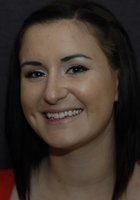
Four years as a Military Police Officer in the Arizona Army National Guard built Rachelle's discipline for methodical problem-solving — a skill she now applies to walking through nomenclature, mole conversions, and reaction balancing step by step. Her philosophy training at Arizona State (summa cum laude) also sharpens how she teaches students to reason through multi-step problems, since constructing a logical argument and setting up a stoichiometry calculation require the same careful chain of reasoning.
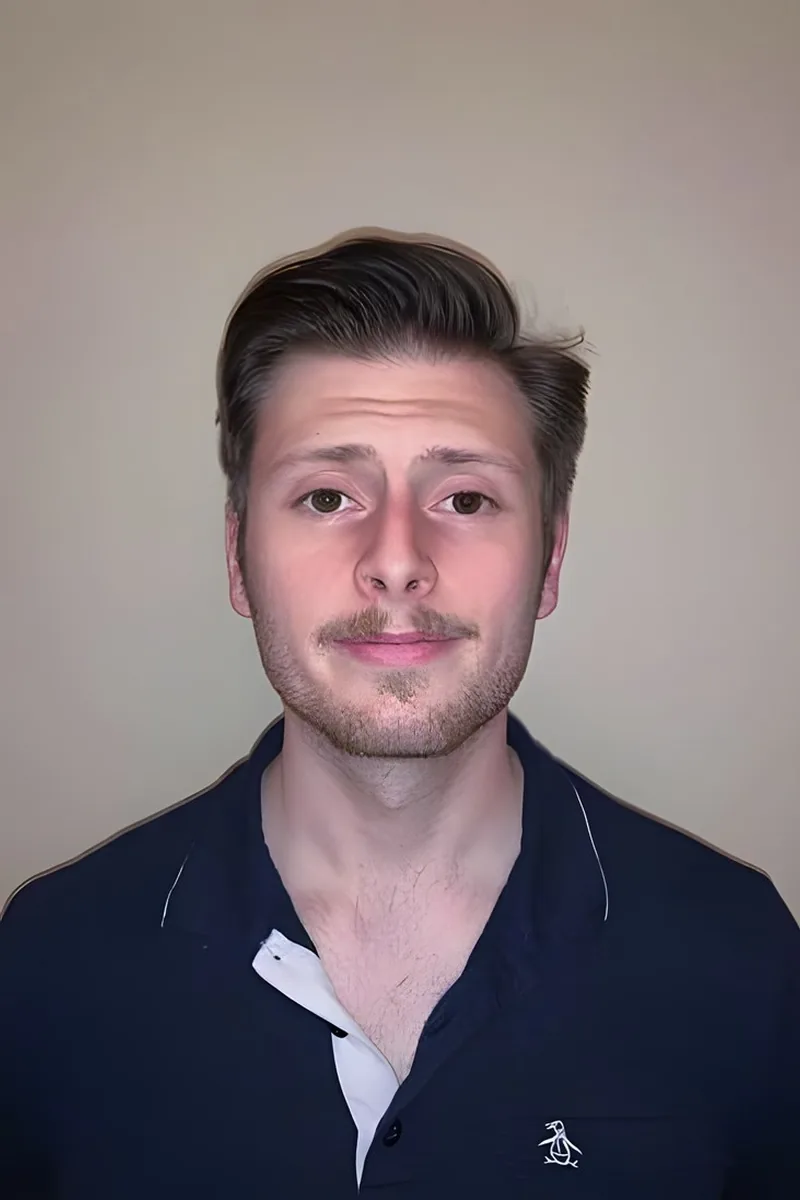
Tutoring general chemistry at Arizona State for the past year, Sebastian has seen firsthand where students get stuck — stoichiometry, equilibrium expressions, and thermodynamics tend to top the list. He tackles each topic by connecting the math to what's actually happening at the molecular level, which makes balancing equations and solving ICE tables feel less mechanical.
A PhD in Genetics means Cameron understands chemistry from the molecular level up — how electron orbitals shape bonding, why reaction kinetics matter in biological systems, and how thermodynamics governs everything from enzyme catalysis to gas behavior. He breaks down abstract concepts like equilibrium and stoichiometry by tying them to real processes students can visualize.
Geochemistry was a core part of Paul's undergraduate training, so concepts like stoichiometry, chemical bonding, and reaction equilibria aren't textbook abstractions for him — they're tools he used to analyze mineral compositions and environmental samples. He walks students through problem-solving strategies that make balancing equations and unit conversions feel systematic rather than overwhelming.
Engineering students at Georgia Tech take rigorous chemistry coursework covering stoichiometry, thermochemistry, and molecular bonding — so Naveen knows firsthand which concepts trip students up and which shortcuts actually hold up under pressure. He teaches dimensional analysis and reaction balancing as systematic processes, giving students a reliable method instead of guesswork.
Balancing equations and predicting products becomes far less intimidating once a student understands what's actually happening at the atomic level. Maurice teaches chemistry by connecting stoichiometry, periodic trends, and bonding concepts to a coherent picture of how matter behaves. His math fluency also means unit conversions and mole calculations never become a separate obstacle.
Balancing equations and stoichiometry calculations are where most chemistry students first feel lost, and Pooja addresses both by slowing down the dimensional analysis process until each conversion step is clear. Her biology background at the University of Houston also means she can connect chemical concepts like acid-base equilibria and bonding to real biological systems students may already understand.
Mechanical engineering coursework threw Daniel into the deep end of chemistry early — material science, thermodynamics, and combustion all required him to genuinely understand concepts like bonding, phase changes, and reaction energetics rather than just pass a gen-chem exam. He uses that applied perspective to teach topics like stoichiometry and gas laws by showing students the logic driving each calculation, so the steps make sense instead of feeling like arbitrary recipes.
Leading informal review sessions for general chemistry at UC Berkeley taught Yuxuan which concepts consistently confuse students — stoichiometry that seems straightforward until limiting reagents appear, or acid-base equilibria that fall apart once buffers enter the picture. He explains each topic by building from the atomic-level reasoning up, so students can troubleshoot unfamiliar problems instead of relying on memorized shortcuts.
I have over two years of tutoring and teaching experience at Case Western Reserve University. I served as a Supplemental Instructor for ENGR 145 (Chemistry of Materials), where I created worksheets, led review sessions, and helped students develop strong conceptual foundations. I later worked as a Teaching Assistant for ENGR 210 (Circuits and Instrumentation), grading assignments and assisting students with hands-on circuit building and lab work. As a Biomedical Engineering major on the pre-med track, I specialize in tutoring pre-health and engineering courses, including General and Physical Chemistry, Math, Biology, Physics, and Anatomy and Physiology. I also provide MCAT preparation in the B/B, C/P, and P/S sections. My teaching approach focuses on clear explanations, active problem-solving, and adapting to each student's learning style. I strive to make challenging material approachable while helping students build confidence and independent learning skills.
I am a first-year student pursuing a Bachelor of Science in Computer Science at Harvey Mudd College. Throughout all four years of high school, I tutored my peers in subjects such as chemistry, algebra, geometry, calculus, and statistics. Passionate about sharing my learning with younger students in the community, I was also a primary instructor for the Kumon Math and Reading Center, where I spent three years teaching math and reading to students who ranged from pre-K to 12th grade. Additionally, as an assistant instructor for the Arizona Science Center's Camp Innovation, I empowered youth by delivering science programming to children between the ages of four and seven. Through such experiences, I've realized the impact that I can have as a tutor.
I am a rising sophomore at Duke University. My dream is to become a doctor someday, so I am currently on the pre-med track and taking several chemistry and biology courses. Although my current focus is in science, I have a passion for history and culture. This past summer I participated in a study abroad program in Costa Rica, where I had the privilege of meeting and speaking with people from several different backgrounds, such as an indigenous tribe and the "ancianos" from a senior living home. Because this invaluable experience, I am continuing my studies in Spanish language and culture. Because I graduated high school only a year ago, the subjects that I was taught are still fresh in my mind, especially AP courses. I am very familiar with the AP curriculum, as I have taken 10 AP classes over the course of high school, and spent a fair amount of time preparing and learning strategies for taking the tests. I enjoy learning and teaching a broad range of subjects, but I have the most experience tutoring in Algebra, Spanish, and History. My primary concern is to foster a positive environment for the student, so they feel confident in asking me questions and comfortable making mistakes. In my free time, I play badminton, read fiction, serve the community, and go on the occasional hunt for Pokmon.
Hi, I recently earned my Ph.D. in Organic Chemistry from Purdue University and have entered the private sector. In my program, I found that teaching and instructing students was very enjoyable and I wish to continue that by being a tutor. I have been a successful tutor for over a decade and know how to instruct to a variety of different skill sets and learning abilities.
As a dedicated tutor with a strong foundation in Chemical & Biomolecular Engineering from Johns Hopkins University, I have a passion for teaching complex subjects like Chemistry, Biochemistry, and Physics. Although my formal tutoring experience is limited, I have actively helped peers understand challenging material throughout my academic journey. My approach centers on identifying students' specific areas of confusion and building from there, fostering a supportive environment where they can thrive. I believe that teaching is most effective when students engage with the material actively, and I strive to make learning enjoyable and approachable. Outside of academics, I enjoy playing basketball, soccer, chess, and participating in engineering projects, which further enhances my problem-solving skills. I am eager to inspire students and help them achieve their academic goals.
A lot of early chemistry confusion comes down to the mole concept — students can balance equations and name compounds but freeze when asked to convert between grams, moles, and particles. Jake zeroes in on that unit-conversion logic early, building the kind of quantitative reasoning that makes later topics like solution concentration and gas laws far less intimidating.
Between a microbiology degree and a doctorate in dental science, Daniel has taken more chemistry than most people ever will — from stoichiometry and equilibrium through acid-base reactions and thermodynamics. He explains each concept by connecting it to something tangible, like how buffer systems keep blood pH stable, which makes abstract formulas easier to internalize.
From balancing redox equations to interpreting equilibrium expressions, chemistry rewards students who understand the 'why' behind each calculation. Amanda teaches the conceptual reasoning alongside the math — explaining why Le Chatelier's principle works the way it does, not just how to apply it on a worksheet. She holds a 4.9 rating and draws on her biology and chemistry training to show how chemical principles connect to the natural world.
Stoichiometry, molecular geometry, acid-base equilibria — chemistry is full of topics that look intimidating until someone shows you the pattern underneath. Madeleine's applied math training means she's comfortable with the quantitative side, while her physical sciences coursework at Barrett Honors College covered general and analytical chemistry in depth. She connects each concept to a clear framework so students can solve problems confidently, not just follow recipes.
Balancing equations, stoichiometry, and periodic trends all start to make sense once a student sees the logic underneath — River's approach is to teach that logic explicitly rather than hand over a set of shortcuts. His conservation biology degree at ASU required organic chemistry, biochemistry, and general chemistry sequences, so he's comfortable across the full introductory curriculum. Rated 4.8 by students.
A biochemistry degree from ASU's Honors College means Hritik didn't just study chemistry — he lived in it, from organic reaction mechanisms to thermodynamics to lab technique. He's particularly effective at unpacking stoichiometry and equilibrium problems, two areas where students often memorize formulas without understanding the logic underneath. His 4.0 GPA speaks to the depth of that understanding.
Stoichiometry, equilibrium, acid-base reactions — chemistry is full of concepts that seem disconnected until someone shows you the thread running through them. Arpita ties topics together using color-coded notes and diagrams developed through her biology honors program at Emory, where general chemistry is foundational to everything she studies. She's rated 5.0 and treats every question as worth answering fully before moving on.
Balancing equations, understanding molarity, and navigating stoichiometry all require a kind of structured problem-solving that comes naturally to Alina after earning her civil engineering degree. She approaches chemistry the way she approaches engineering problems — by identifying what you know, what you need, and which relationships connect them. That methodical style is especially effective for students who feel overwhelmed by multi-step chemistry calculations.
From balancing redox reactions to predicting molecular geometry with VSEPR theory, chemistry rewards students who understand the 'why' behind each rule. Hanna tutored chemistry extensively at Arizona State and went on to apply it daily in her medical school coursework, so she explains concepts like stoichiometry and acid-base equilibria with both academic rigor and practical context. She holds a 5.0 student rating.
A biochemistry degree means Charles didn't just take chemistry — he lived in it, from stoichiometry and gas laws through organic reaction mechanisms. He approaches tricky topics like mole conversions and equilibrium by walking through the logic step by step rather than handing students a formula to memorize.
Stoichiometry, equilibrium, acid-base titrations — chemistry demands both conceptual understanding and careful quantitative reasoning. Musa's year in ASU's tutoring center showed him exactly where students get stuck, from balancing redox reactions to interpreting Le Chatelier's principle under pressure. He walks through each problem type until the underlying logic is clear, not just the arithmetic.
Stoichiometry, equilibrium, and thermodynamics each require a different kind of thinking, and jumping between them is where most chemistry students lose their footing. Ekta tackles each topic with structured problem-solving: set up the relationships, track the units, check the logic. Her biomedical engineering coursework gave her deep practice with these concepts in both general and applied chemistry settings.
Stoichiometry, equilibrium, and thermodynamics each require a different kind of thinking — dimensional analysis for one, conceptual reasoning for another, and mathematical modeling for the third. Paul identifies which mode a student needs to strengthen and tailors his explanations accordingly, drawing on his strong science background to ground abstract formulas in real chemical behavior.
I am fluent in English (professional) and Mandarin (native). From my 25+ years in universities and major companies in the industry (as engineer, software developer, team manager), I worked extensively, face-to-face, with people and groups of diversified culture and professional background in roles from teaching, training for 1:1 or large audience, customer support world wide, product demonstration and publication presentations at leading industrial conferences.
I am a graduate of the University of California, Los Angeles- Letters of Science department. I received my Bachelor's in biological sciences in June 2020. While in school, I worked part-time as an Accounts Payable Assistant for the library business services and I volunteered a lot of my time providing assistance to hospitalized geriatric populations at UCLA medical center. I was also part of a free clinic community where I provided preventive medicine advice and performed glucose and blood pressure exams on the medically underserved communities in South Los Angeles. In addition, as part of a Peer Mentorship Program, I guided incoming freshmen in getting adjusted to the college environment and provided resources for academic services available on campus. Since graduation, I have worked as an Accounts Receivable Specialist, tutored students on Upchieve and Junior Achievement online platforms, and improved my learning and organizational skills using skillshare. While I am interested in tutoring a wide range of subjects, I am most passionate about teaching Science, Math, and English. I am a strong advocate for education and I truly believe in the power of collaborative learning and helping students achieve their academic goals. In my spare time, I enjoy spending time with family, going on hikes, and participating in volleyball and badminton matches!
I am an attorney located in Scottsdale, Arizona. I received my law degree from Tulane University in New Orleans. I graduated from Northwestern University with a degree in History and Economics as well.
From balancing redox equations to working through equilibrium and acid-base titration problems, Gordon breaks chemistry down into the underlying patterns that make each unit build on the last. His ASU biology background required extensive coursework in general chemistry, so he teaches it with an eye toward how these principles show up in real lab and life science contexts.
I am a graduate of Brigham Young University where I majored in International Relations and Russian and of Thunderbird School of Global Management where I earned an MBA in International Business. My college and graduate studies include coursework in Writing, Literature, Geography, History, Political Science, Russian, Music, Business, Math, Science, and Art. Because of my experience with many different disciplines, I am able to teach a wide variety of subjects and have experience working with students of all ages from middle school to middle aged. My greatest skill as a tutor is the ability to adapt challenging material to the viewpoint of my students. This allows me to build bridges of understanding that help more analytical people feel at home in creative disciplines or vice versa. If you are a gifted artist struggling with Math, or an aspiring scientist struggling with creative writing, I'm your man! I am also a very experienced writer and editor. In my free time I enjoy hiking, literature, ultimate Frisbee, international travel, soccer, baking, music, strategy games, and philosophical discussions. I have lived in Africa, Western Europe, and Russia and visited over a dozen countries. Please note that due to the many different subjects I have studied, the list of classes above is not complete. If you have tutoring needs for a very specific subject, I may well have taken a course in that area. Feel free to reach out with questions!
I am currently in the process of obtaining a Bachelor of Science degree in pure mathematics at Rice University in Houston, Texas. I tutor a wide range of subjects including U.S. History, algebra, calculus, chemistry, comparative politics, economics, and test preparation. Although I enjoy tutoring in all of these subjects, I especially like tutoring math-related subjects such as high school algebra, calculus, and linear algebra. Outside of class and tutoring, I enjoy golfing, stargazing, collecting foreign coins, and playing the violin.
As an aspiring physician currently pursuing my Bachelor's in Physiology and Medical Sciences at the University of Arizona, I am passionate about empowering students to achieve their academic and personal aspirations. With over 5 years of tutoring experience across a diverse range of subjects including ACT, SAT, AP exams, and college application essays. I have developed a keen understanding of the unspoken rules that govern these assessments. My approach is student-centered and adaptive; I tailor my strategies to meet individual learning styles, whether that means incorporating engaging games for those with attention challenges or allowing self-directed learners to guide our sessions. Having recently navigated the same academic landscape as my students, I am intimately familiar with the pressures they face, and I strive to demystify the testing process. I am particularly excited about tutoring AP Biology, AP Calculus, and college applications, as these areas require not just content mastery but also strategic insight into what admissions officers are truly seeking. Outside of tutoring, I enjoy cooking, 3D printing, and weightlifting, all of which enrich my perspective and foster a supportive learning environment. Through tutoring, my goal is not just to teach but to mentor, equipping students with the tools they need to thrive in their educational journeys.
Stoichiometry is often the first real wall in Chemistry — suddenly, understanding a concept isn't enough, and students need to track units, mole ratios, and limiting reagents simultaneously. Sharan walks through these multi-step problems by teaching a consistent setup method that works from simple mole conversions all the way through solution chemistry. Her Cornell science coursework means she's solving these kinds of problems regularly herself.
As a certified chemistry teacher running a 12th-grade course at one of Philadelphia's top magnet schools, Kathleen tackles everything from stoichiometry and gas laws to electrochemistry and organic functional groups. She connects each concept to lab-scale reasoning — predicting what should happen, explaining what actually did, and figuring out why they sometimes differ.
Balancing redox reactions or predicting products from a solubility table requires a kind of structured problem-solving that doesn't always come naturally. Akarsh's molecular biology training gave him deep fluency in chemical bonding, stoichiometry, and reaction kinetics, and he teaches students to approach each problem type with a clear, repeatable method.
A neuroscience degree with a chemistry minor means Matt didn't just take general chemistry — he built on it through organic, analytical, and biochemistry courses that kept reinforcing core principles like equilibrium, thermodynamics, and molecular bonding. He unpacks abstract concepts like Le Chatelier's principle or orbital hybridization using concrete examples that make the logic click rather than feel arbitrary.
Studying Chemical and Biomolecular Engineering at Johns Hopkins means Joshitha lives inside chemistry — thermodynamics, reaction kinetics, stoichiometry — every semester. She brings that depth to tutoring by walking through the reasoning behind each concept rather than handing students formulas to memorize. Whether it's balancing redox reactions or predicting molecular geometry, she connects the 'how' to the 'why.'
Testimonials
Because the right Chemistry tutor makes all the difference.
Average Session Rating – Based on 3.4M Learner Ratings
Practice Chemistry
Free practice tests, flashcards, and AI tutoring for Chemistry
Other Phoenix Tutors
Related Science Tutors in Phoenix
Frequently Asked Questions
Most Phoenix high schools follow a standard chemistry curriculum that includes atomic structure, bonding, chemical reactions, stoichiometry, thermodynamics, and equilibrium. Many schools also incorporate lab work and the scientific method as core components. If your student is in an honors or AP Chemistry course, the depth and pace will be faster, with additional topics like organic chemistry and electrochemistry. Connecting with a tutor who knows the specific curriculum your student's school uses—whether it's a large district school or a charter—can help ensure targeted support for exactly what they're learning.
Balancing equations trips up many students because it requires understanding both the conceptual reason (conservation of mass) and the procedural steps simultaneously. Students often try to memorize patterns instead of grasping the underlying logic. A tutor can break this down systematically—starting with why balancing matters, then walking through the process step-by-step with plenty of practice problems. Once students understand the 'why,' the skill becomes much more manageable, and they can tackle more complex equations confidently.
Lab work is where chemistry becomes real—students see reactions happen and collect actual data. However, many students struggle to connect what they observe in the lab to the theoretical concepts they're learning in class. A tutor can help by explaining the purpose of each experiment, walking through the scientific method in context, and showing how to interpret results and troubleshoot when things don't go as expected. This bridges the gap between theory and hands-on learning, deepening understanding and improving lab reports and exam performance.
Unit conversions and stoichiometry are foundational skills that unlock so much of chemistry—once students are confident here, molar calculations, limiting reactants, and gas law problems become much more approachable. The key is practice with a clear system (dimensional analysis is usually best) and understanding what each conversion actually means. A tutor can help students develop a reliable method, build fluency through targeted practice, and address the specific conversions or problem types that trip them up most, so they build genuine confidence rather than just memorizing formulas.
Chemistry requires visualizing things too small to see—atoms, electrons, bonds, and molecular geometry—which is genuinely hard for many students. A tutor can use multiple strategies to build this skill: drawing structures, using models, explaining concepts from different angles, and connecting abstract ideas to concrete examples. For instance, understanding that ionic bonds form because electrons move between atoms (with real consequences for properties like melting point) makes the concept stick better than memorizing bond types. With support developing strong mental models, students move from confusion to confident problem-solving.
Chemistry requires both, but understanding comes first. A student who memorizes the periodic table but doesn't understand atomic structure will struggle with bonding, reactions, and problem-solving. The goal is to build conceptual understanding deeply enough that facts and formulas make sense and stick naturally. A tutor helps by explaining the 'why' behind concepts, showing connections between topics, and using practice problems to reinforce understanding rather than rote memorization. When students truly understand, they retain information longer and can apply it to new problems—which is what chemistry exams actually test.
Varsity Tutors connects students in Phoenix with tutors who have strong chemistry backgrounds and experience helping high school students master the subject. When you reach out, you can specify your student's grade level, course type (regular, honors, or AP), and the specific topics they need help with. Varsity Tutors matches your student with someone who understands both the Phoenix school curriculum and how to explain chemistry concepts clearly. Starting with a first session lets you see if the tutor's style clicks with your student's learning needs.
Let’s find your perfect tutor
Answer a few quick questions. We’ll recommend the right plan and match you with a top 5% tutor.