Award-Winning Spanish Tutors
serving Philadelphia, PA
Spanish
Tutors in Philadelphia
Private 1-on-1 tutoring, weekly live classes for academic support, test prep & enrichment, practice tests and diagnostics, and more to elevate grades and test scores.
Based on 3.4M Learner Ratings
UniversitiesSchools & Universities
DeliveredHours Delivered
ProficiencyGrowth in Proficiency
Who needs tutoring?
No obligation. Takes ~1 minute.
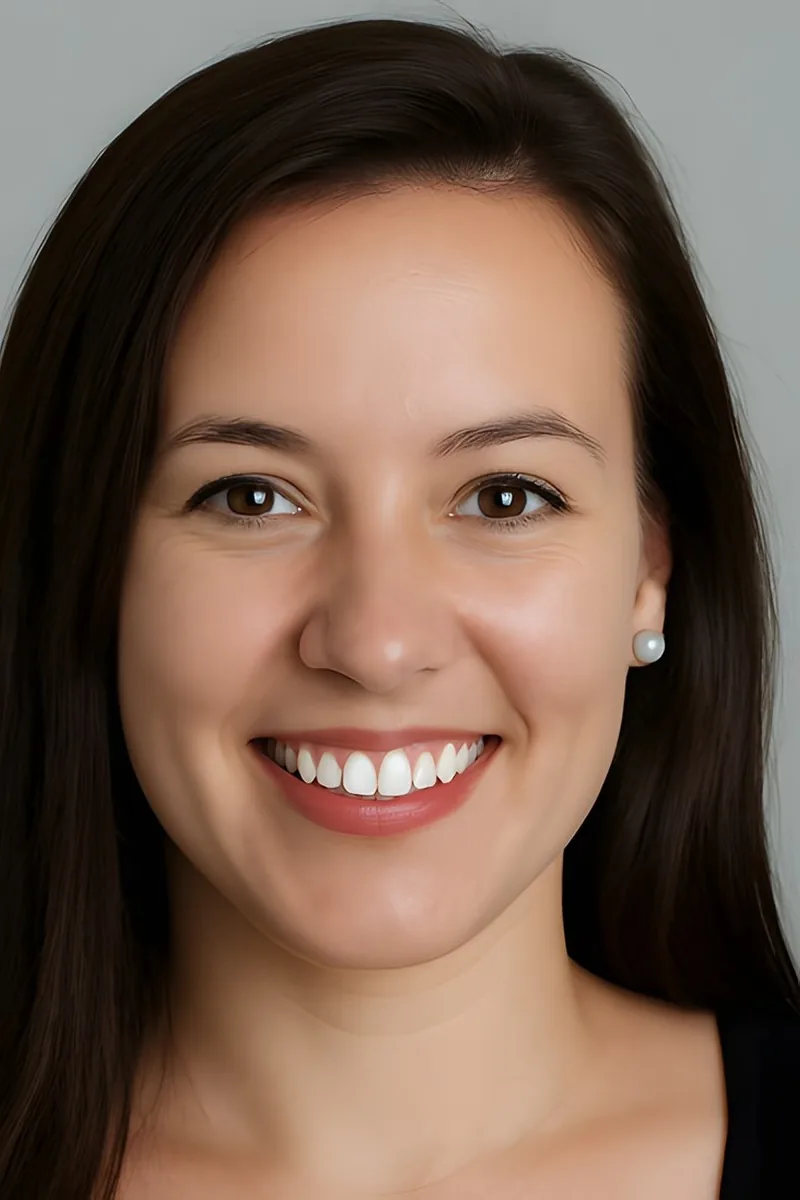
Kate teaches Spanish at multiple levels, from verb conjugation fundamentals in Spanish 2 through the subjunctive mood and complex sentence structures in Spanish 4. Her engineering background gives her a systematic way of breaking down grammar rules that clicks for students who think analytically.
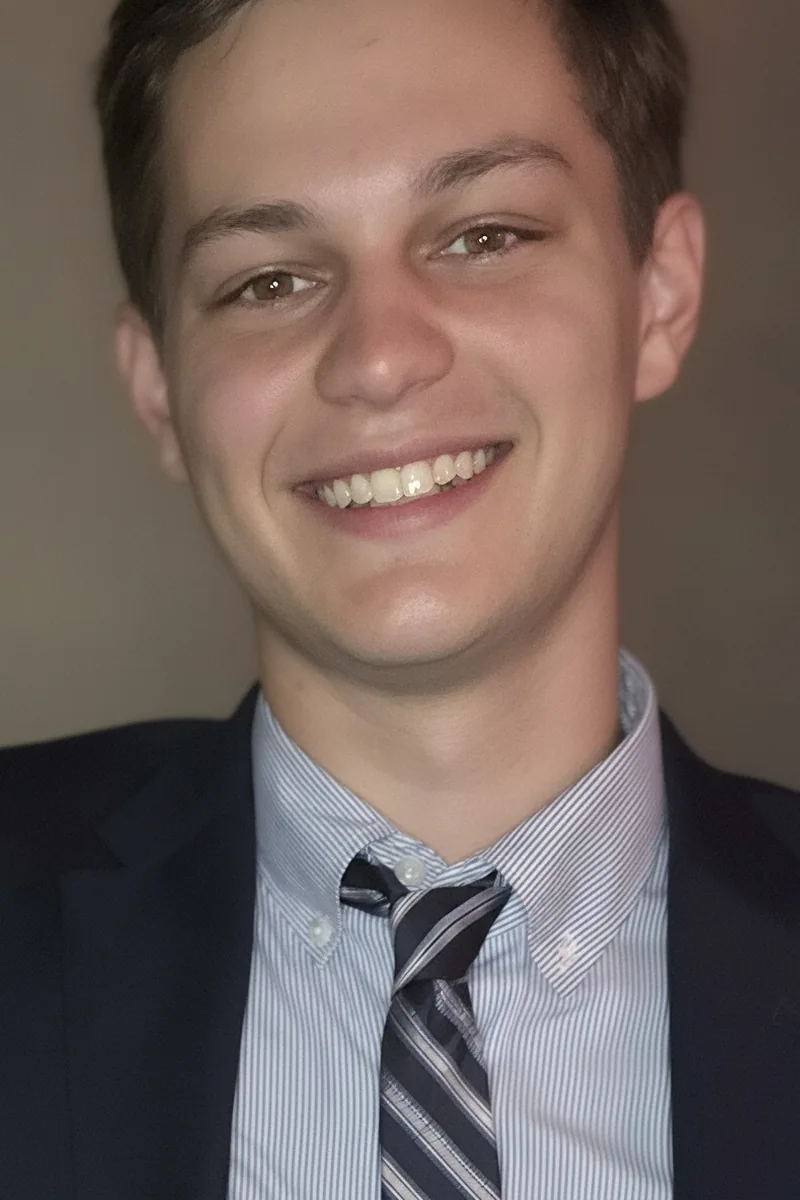
Simon teaches Spanish across four levels, from foundational conjugation patterns in the present tense to navigating subjunctive mood and complex reading passages at the advanced level. His approach treats grammar as a logical system — once a student sees why irregular preterite verbs follow certain patterns, retention improves dramatically.
Matt minored in Spanish during his undergraduate studies and has carried the language through multiple levels of coursework, from foundational grammar to advanced composition. He tackles tricky areas like subjunctive mood, ser versus estar distinctions, and preterite-imperfect contrasts by linking each rule to real usage patterns rather than rote conjugation charts. Rated 5.0 by students.
Alessia approaches Spanish with the structural mindset of someone trained across multiple Romance languages, including Italian, French, and Latin. That cross-linguistic perspective is especially useful for breaking down tricky concepts like ser vs. estar, subjunctive mood triggers, and preterite-imperfect distinctions — areas where English speakers tend to stall.
Medical school at Penn doesn't leave much room for language study, but Daniel's biology degree at Wheaton included coursework alongside Spanish-speaking lab partners and study groups — enough to build a working grasp of grammar fundamentals and everyday vocabulary. He's strongest with students in Spanish 1 who need someone patient and methodical to walk them through present-tense conjugations and basic sentence structure.
Alina teaches Spanish across all four levels, so she understands exactly where students plateau — usually around the subjunctive mood and the difference between ser and estar in nuanced contexts. As someone who learned Spanish alongside French, she knows the specific tricks that make a second Romance language click faster.
Studying international relations means Patrick regularly engages with Spanish-language news sources, policy documents, and political speeches from across Latin America — context that makes vocabulary and grammar feel purposeful rather than abstract. He connects lessons on topics like subjunctive constructions or formal versus informal register to real-world material, so students see how the language actually functions outside a textbook.
Alex teaches Spanish with an emphasis on building grammatical accuracy early — verb conjugations, pronoun placement, and sentence structure — so that more advanced reading and conversation feel natural rather than overwhelming. His approach draws on the same close attention to language patterns he developed studying literature at Brown.
I'm Aderinsola, (Sola for short) and I graduated with my Bachelors in Public Health from Johns Hopkins University and my Masters in Biophysics/Physiology from Stony Brook University. While I was in college, I realized that the best way to comprehend what is taught isn't always in a classroom, but through your peers so I'm ready to help you in any way I can by simplifying everything into everyday language.
Having taught both Spanish 1 and Spanish 2, Cameo covers everything from foundational verb conjugations and noun-adjective agreement through more complex grammar like preterite vs. imperfect distinctions. She approaches language learning through the lens of cognitive science, applying evidence-based memory and practice techniques that make vocabulary and grammar rules stick.
Learning Spanish requires more than vocabulary lists and conjugation drills, though those matter too. Stephen teaches grammar as a system — showing how verb tenses relate to each other, why the subjunctive exists, and how sentence structure in Spanish differs from English in ways that trip up native English speakers. His own experience as both a language learner and an English major gives him a useful double perspective on how languages work.
Reading novels in other languages is one of Kristina's go-to hobbies, and she brings that real-world immersion mindset to Spanish tutoring. Rather than drilling conjugation tables in isolation, she connects verb tenses and grammatical structures to actual reading and conversation so vocabulary sticks. She's especially effective at walking students through the early stages of building confidence with sentence construction and comprehension.
Teaching Spanish in middle and high school classrooms gave Jennifer a sharp sense of where students typically get stuck — verb conjugation patterns, pronoun placement, and the shift from present to past tenses. She builds lessons that reinforce these trouble spots through context and repetition, layering in vocabulary so grammar rules actually stick.
I'm also a recent graduate of The New School, with a Bachelor of Arts in Literary Studies.
Alex teaches Spanish with an emphasis on building grammatical accuracy — verb conjugations, pronoun placement, and sentence structure — before layering in vocabulary and reading comprehension. His analytical mindset as a math major translates surprisingly well to parsing the rules underlying a new language.
I am open to tutoring in a broad range of subjects, including Algebra, Spanish I/II, ESL and Biology (SAT II, AP, and MCAT).
I am a published author and write every day. I studied creative writing in college, which means I took classes in journalism, poetry, and prose writing. I also studied anthropology, which means that I spent most of my days writing essays. I can help you find your voice and write with authority. I can help you structure essays in all forms (persuasive, expository, research, college admissions, etc). I will help you edit essays and learn techniques to edit more effectively on your own.
Four years living in Viña del Mar, Chile, gave Anna the kind of Spanish fluency you can't get from a textbook — she taught at a Chilean university, navigated daily life in Spanish, and absorbed the idiomatic rhythms of real conversation. She brings that immersion experience into lessons on verb conjugation, subjunctive mood, and reading comprehension, connecting grammar rules to how Spanish is actually spoken.
Cognitive science trains you to study how the brain acquires and processes language — and that's exactly what Elliot spent years doing through his BA and PhD work. He applies that understanding of memory encoding and pattern recognition to Spanish, breaking conjugation systems and vocabulary acquisition into steps that align with how the brain actually learns. Rated 5.0 by students.
Olivia has tutored Spanish from level 2 through level 4, which means she knows exactly where the grammar gets tricky — subjunctive mood, object pronoun placement, and the difference between preterite and imperfect that trips up nearly everyone. She connects new structures to patterns students already recognize, building fluency that holds up on timed assessments and in real conversation.
Teaching across Spanish 1 and Spanish 2, Patrick breaks the language down into manageable building blocks — verb conjugation patterns, pronoun placement, and sentence structure — so students see the logic underneath the grammar. His own love of reading and writing carries over into how he approaches Spanish composition and comprehension exercises.
Theresa has studied Spanish through the advanced level and tackles grammar topics like subjunctive mood, preterite vs. imperfect, and direct/indirect object pronouns by connecting rules to real usage patterns rather than isolated conjugation charts. She also brings conversational fluency into lessons, so students practice applying grammar in context instead of only on worksheets.
Living in Costa Rica and spending three years in the Dominican Republic turned Spanish from a classroom subject into Courtney's everyday language. She teaches grammar concepts like the subjunctive and ser vs. estar through real conversational contexts, drawing on the regional vocabulary and idiomatic expressions she picked up across two different Spanish-speaking countries.
Learning Spanish verb conjugations and vocabulary in isolation rarely sticks — Molly connects new grammar structures like the subjunctive and preterite vs. imperfect to conversational contexts so the rules actually make sense. Her experience across multiple levels of Spanish means she can adjust whether a student is just starting with ser vs. estar or tackling more complex reading passages.
Minoring in Spanish at the University of Pittsburgh while completing a neuroscience degree means Mary juggles the language alongside heavy science coursework — so she knows exactly what it takes to retain vocabulary and nail conjugation patterns when Spanish isn't your only focus. She leans on the study strategies that got her through organic chemistry and physiology to make grammar concepts like ser versus estar or subjunctive triggers stick under pressure.
As a Spanish minor at the University of Pittsburgh, Zora brings both academic grammar knowledge and practical conversational experience to her Spanish sessions. She digs into verb conjugations, pronoun placement, and sentence structure in ways that build real fluency — not just worksheet completion. Students working through Spanish 1 or 2 concepts get a tutor who can explain the "why" behind tricky rules like ser versus estar or the subjunctive mood.
I am a current undergraduate student at the University of Pittsburgh, studying Political Science and Psychology with a minor in Spanish. I have ample experience in tutoring and working with children ranging from preschool to 12th grade. Through the Bev Hickman Writing Center at Catonsville High School, I received a full school year's worth of intense writing tutoring training, including AP essays, college applications, cover letters, resumes, and other class assignments. I have also gained experience in childcare through Trinity Summer Camp, where I worked as a counselor for ages 3.5 to 5 for 7 weeks; we focused on creating an enriching environment for education and fun, managing a wide array of behaviors and personalities.
Currently pursuing a graduate degree in Spanish & Portuguese Languages and Cultures, Mia brings deep academic knowledge to everything from subjunctive mood usage to nuanced vocabulary distinctions that trip up intermediate learners. She treats grammar not as a set of rules to memorize but as a window into how Spanish speakers actually think and communicate. Rated 5.0 by students.
Because Philip learned Spanish through immersion while living outside the United States, he understands both the intuitive leaps and the grammatical stumbling blocks that come with picking up the language. He's been tutoring Spanish at Carnegie Mellon for over a year, covering everything from ser-versus-estar distinctions to subjunctive mood triggers. Students get a tutor who actually thinks in Spanish, not one who's translating from English in real time.
Psychology training at NYU means Cassandra spent years studying how people process and retain new information — a background she applies directly when teaching Spanish vocabulary acquisition and grammar concepts like ser versus estar or preterite versus imperfect. She builds lessons around how memory actually works, using spaced repetition and contextual cues to make new language stick rather than fade after a quiz.
Alexander has taught Spanish from introductory through advanced levels, giving him a clear sense of where students typically stall — whether that's mastering ser vs. estar, navigating the subjunctive mood, or building enough vocabulary to hold a real conversation. His structured, patient approach (reflected in a 5.0 rating) makes grammar rules feel less arbitrary and more logical.
Ben taught himself Spanish in high school and became fluent enough to serve as a translator for groups traveling through Latin America — so he knows firsthand what it takes to internalize verb conjugations, pronoun usage, and sentence structure without a classroom safety net. That self-taught path means he can pinpoint exactly where concepts like ser vs. estar or the subjunctive mood tend to trip learners up, and explain them in ways that actually click.
Pooja isn't just tutoring Spanish as a side subject — she's completing a full Spanish major at the University of Pittsburgh, which means she's deeply familiar with advanced grammar like the subjunctive mood, complex tense sequencing, and nuanced vocabulary. She connects grammatical rules to how native speakers actually use the language, making conjugation patterns and sentence structure feel intuitive rather than arbitrary.
Having taught across Spanish 1 through Spanish 4, Alexa adjusts her approach depending on whether a student is wrestling with ser vs. estar or tackling subjunctive mood in complex clauses. She emphasizes building verb conjugation instincts through contextual practice — short dialogues, written responses, and targeted drills — so grammar feels less like memorization and more like pattern recognition.
I am an undergraduate student at the University of Pennsylvania. I have been tutoring for over 6 years now, and I have found it to be an extremely rewarding and enjoyable experience. I specialize in mathematics, particularly at the high school level, and I also have experience tutoring other subjects. I also have done SAT prep for the mathematics section of the New SAT and am very familiar with the recent changes to the exam. My belief is that everyone is capable of learning with enough time, explanation, and practice, and I hope to pass this on to all the students I work with. For this reason, I believe in teaching students how to think and problem solve, rather than just having them memorize patterns or facts.
I'm currently a fourth year medical student at a private medical school in Texas. I've been involved with tutoring since middle school continuing all the way through medical school. There are so many different ways to teach based on how students learn best and I am passionate about meeting the individual needs of students so they can succeed. I took unconventional approaches to learning as instilled by mentors throughout my life that greatly increased my ability to learn and comprehend material . I've worked with tutoring students in ACT prep, SAT prep, MCAT prep, IB and AP courses, as well as STEM subjects from elementary school through to college. Recently, I've also tutored for USMLE Step 1 & 2. I also edit and work with students who need tutors for writing and reading comprehension. I have extensive experience in both college and medical school admissions and work yearly with students on essays and applications. I went to high school at the Downingtown STEM Academy and graduated May 2018 from the University of Alabama with a 4.2. I have a BS in Biology with minors in Social Work and Social Welfare. I will be graduating with an MD and MPH in May 2022. I tutor english, math, geometry, algebra, SAT, ACT, MCAT, USMLE chemistry, biology, organic chemistry, and writing along with other subjects. I've worked with rural students in Alabama, students in the Greater Philadelphia area, and students in urban areas. I believe education should be personalized and while schools can't provide this due to lack of resources, tutors are a great substitute for that. Education is the gateway to social mobility and happiness and I seek to prepare my student to meet their individual goals. I work to create an environment where the student can focus on understanding the material for their own understanding and not for others which significantly increases the students confidence in the subject matter and their desire to learn more.
I'm a first-year med student at Pitt Med. I graduated from Tufts University in Medford, Massachusetts with a BS in Biology this past May. As much as I love medicine and the hard sciences, most of my tutoring experience is in general ACT prep, in addition to academic and creative writing, middle school math and reading, and high school and college math. Some of my favorite all-time classes were medical sociology in college and AP US Government and Politics in high school. Through Tufts, I taught English as a second language (3 semesters) and citizenship exam prep (1 semester) to Hispanic immigrants and refugees, which taught me a lot about how to gauge students' understanding, teach tough subjects, plan activities, provide flashcards and the best possible study materials, and make the most of the students' time. I love tutoring because I know how much a tutor's patience one-on-one can make the difference. I love sharing my study tips and test-taking strategies so they can study efficiently and make the best use of their time to get that desired result. I want students to feel heard and supported and help them find methods best suited to them. I want to help students enjoy learning and find more confidence in themselves through mastering tough subject matter.
I am a senior with a Neuroscience major at Swarthmore College. My favorite subjects include Biology and Psychology. I am interested in teaching students how to develop a better grasp of their academic material, improve their learning skills, and succeed in whatever course they take. Outside of the classroom, I enjoy playing violin, reading, and traveling. I also have extensive community service experience and have traveled to China, Kenya, and the Dominican Republic to engage in volunteer work.
Hi! I enjoy tutoring and am passionate about teaching people. My bigger goal is to help students see the bigger picture behind a given concept; not just teaching a method or a series of steps, but also showing them the logic of how somebody might develop that method. I have five years of teaching and tutoring experience, with particular experience in Organic Chemistry, Calculus, and Spanish.
Cassandra teaches Spanish at the introductory and intermediate levels, covering verb conjugation, pronoun usage, and sentence construction. Her background in comparative literature and Latin gives her a structural understanding of how Romance languages work, which makes explaining concepts like the subjunctive or ser-versus-estar distinctions more intuitive for students.
Testimonials
Because the right Spanish tutor makes all the difference.
Average Session Rating – Based on 3.4M Learner Ratings
Other Philadelphia Tutors
Related Languages Tutors in Philadelphia
Frequently Asked Questions
In a typical classroom with a 14.4:1 student-teacher ratio, students get limited opportunities to speak Spanish aloud. With personalized 1-on-1 instruction, you get dedicated conversation practice every session—a tutor can focus entirely on your pronunciation, accent, and ability to think and respond in Spanish without the pressure of peers listening. This consistent speaking practice is one of the most effective ways to build conversational confidence and fluency.
Spanish verb conjugation involves multiple tenses (present, past, future, subjunctive) with different rules for regular and irregular verbs—it's one of the biggest hurdles for learners. A tutor can break conjugation patterns into manageable chunks, show you the logic behind irregular verbs, and use spaced repetition and practice testing to help these patterns stick in your memory. Rather than memorizing tables, you'll learn to recognize patterns and apply them naturally in conversation.
Cramming vocabulary lists doesn't work—research on learning shows that spaced repetition (reviewing words at increasing intervals) and using words in meaningful contexts dramatically improve retention. A tutor can introduce vocabulary in context, ask you to use new words in sentences and conversation, and strategically revisit words over multiple sessions. This approach helps vocabulary stick and become part of your active vocabulary, not just something you recognize on a test.
Reading and writing require different strategies than speaking. A tutor can guide you through authentic Spanish texts at your level, teach you to recognize grammar patterns in context, and provide detailed feedback on your writing—correcting not just errors but helping you understand why something is incorrect. This personalized approach helps you internalize grammar rules naturally rather than memorizing them abstractly.
Language and culture are inseparable—understanding Spanish-speaking cultures helps you use language more authentically and stay motivated. Tutors can weave cultural context into lessons, discuss idioms and expressions that reflect cultural values, recommend Spanish-language media, and help you understand the nuances of how native speakers communicate. This immersion-style approach makes learning feel more relevant and engaging.
Your first session is about assessment and connection. A tutor will ask about your current Spanish level, what you're studying in school, your goals (whether that's passing a class, preparing for an AP exam, or achieving conversational fluency), and any specific challenges you're facing. From there, they'll create a personalized plan tailored to your needs and learning style, so every session builds toward your goals.
The AP Spanish Exam tests all four language skills—reading, writing, listening, and speaking—with specific question formats and time constraints. A tutor can help you master the exam's structure, practice each section with timed drills, improve your essay-writing skills for the free-response section, and build your listening comprehension through authentic Spanish audio. With personalized feedback on your weak areas, you can focus your preparation strategically.
Look for tutors with strong Spanish fluency (ideally native speakers or near-native proficiency), teaching experience, and familiarity with the Spanish curriculum used in Philadelphia schools. Varsity Tutors connects you with expert tutors who have proven experience helping students at your level, whether you're in middle school Spanish, AP Spanish, or preparing for college-level study. The right tutor will understand both the language and the specific challenges students face.
Let’s find your perfect tutor
Answer a few quick questions. We’ll recommend the right plan and match you with a top 5% tutor.