Award-Winning Spanish Tutors
serving Hartford, CT
Spanish
Tutors in Hartford
Private 1-on-1 tutoring, weekly live classes for academic support, test prep & enrichment, practice tests and diagnostics, and more to elevate grades and test scores.
Based on 3.4M Learner Ratings
UniversitiesSchools & Universities
DeliveredHours Delivered
ProficiencyGrowth in Proficiency
Who needs tutoring?
No obligation. Takes ~1 minute.
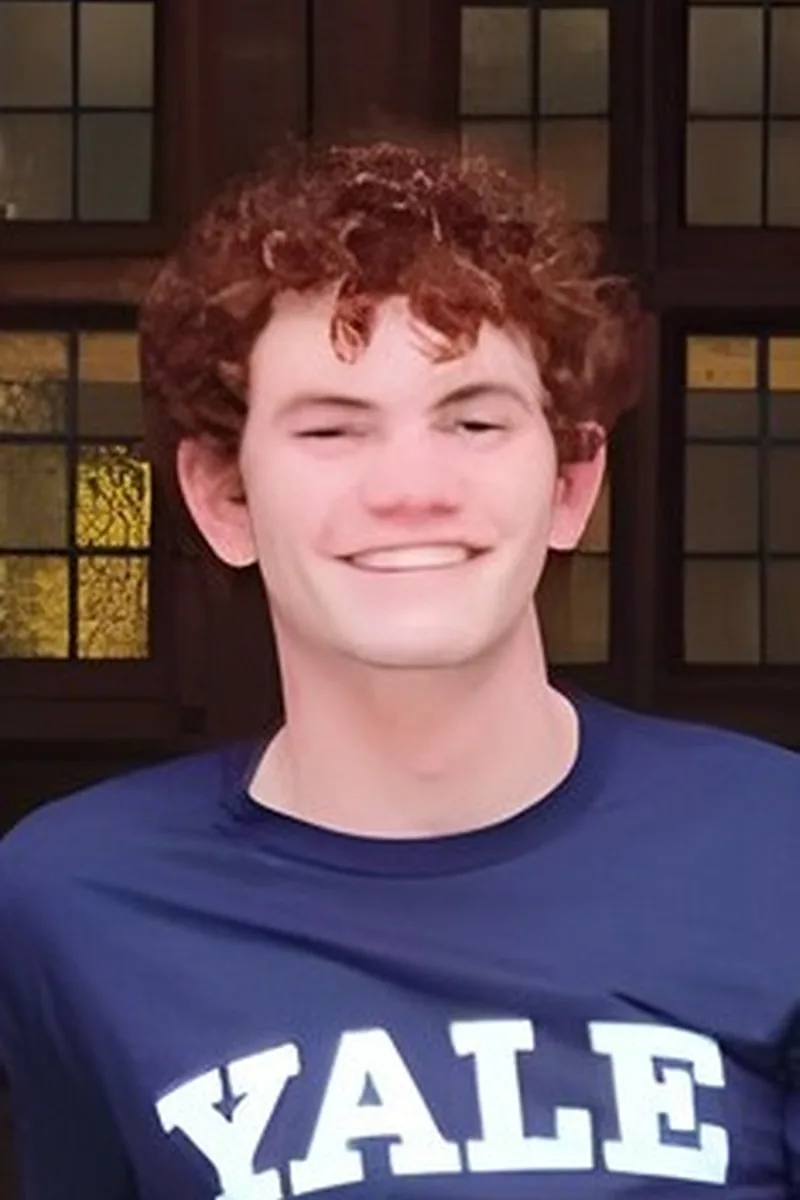
Earning a certificate of advanced language in Spanish at Yale means Maxwell doesn't just know the grammar rules — he uses the language daily in academic and social contexts. He breaks down tricky concepts like subjunctive mood triggers and ser vs. estar distinctions by connecting them to how native speakers actually think about meaning. Rated 5.0 by students.

James teaches Spanish at multiple levels, from foundational vocabulary and verb conjugations through more advanced work with subjunctive mood and reading comprehension. His background in multiple languages — including Latin and French — gives him a knack for explaining how Spanish grammar patterns connect to broader Romance language structures, which makes tricky concepts like ser vs. estar or preterite vs. imperfect click faster.
Growing up as a native Spanish speaker gives Stephanie an intuitive grasp of the grammar patterns — subjunctive triggers, ser vs. estar, preterite vs. imperfect — that trip up most learners. She breaks down these concepts by connecting them to how the language actually sounds and feels in conversation, making rules easier to internalize than to memorize from a chart.
Tessa's double major in Mathematics and History at Yale might seem unrelated to Spanish, but both disciplines trained her to decode unfamiliar systems — whether it's parsing a proof or reconstructing an argument from a primary source in another language. She applies that same analytical instinct to Spanish grammar, breaking down structures like ser versus estar or subjunctive triggers into logical rules rather than exceptions to memorize.
Shana's Master's in Bilingual Elementary Education means she doesn't just teach Spanish vocabulary lists — she understands how language acquisition actually works, from verb conjugation patterns to building conversational fluency. Her bilingual training gives her concrete strategies for helping learners internalize grammar rules and start thinking in Spanish rather than translating word by word.
I am a current undergraduate student at Cornell University studying Electrical and Computer Engineering. I have a strong science and math background having taken many courses in Physics, Computer Programming, and various mathematics subjects ranging from Geometry, to Multivariable Calculus, to Differential Equations. I am also very passionate about English, Literature, Russian Studies, Spanish Language, and History. I believe that the key to success is having a well rounded education, so when I am not programming microcontrollers, one can either find me watching Russian news channels to polish up my vocabulary, reading textbooks on the history of the Middle East, or simply immersing myself in a Jane Austen novel. In my free time I also enjoy training for CrossFit, playing the viola, and traveling.
I'm Maddie, a senior at Yale University studying biology and Latin. I've been tutoring and advising students for the past five years and find that helping students understand and master a concept is immensely gratifying for me. My specialities include tutoring languages like Spanish and Latin and STEM fields (chemistry, biology, physics). I can also help with college test prep and essay writing, as well as general college advising. As a Classics major, I'm big into the Socratic method: leading students to the answer of a problem by asking questions at each step. More often than not, they knew the answer all along!
I'm a senior at Yale College where I study Economics. I'm originally from Millburn, NJ.
I am a rising senior at Wesleyan University pursuing a Bachelor of Arts degree in Government and Latin American Studies. I have extensive experience with Spanish-language coursework and tutoring: I spent a semester one-on-one tutoring a high school student in beginning Spanish, have taken countless university-level Spanish classes, have taken both the Language and Literature AP Spanish tests, and have traveled and lived abroad in Spanish-speaking countries.
Marco holds an advanced language certificate in Spanish from Yale, where he developed fluency through both academic study and real-world interpreting and translating work. He digs into the grammar structures — subjunctive mood, ser versus estar, preterite versus imperfect — that trip students up most, and connects each rule to how native speakers actually use the language.
Learning Spanish grammar isn't just about conjugation tables — it's understanding why the subjunctive appears after certain triggers, or how ser and estar change a sentence's entire meaning. Renee earned both a BA and a PhD centered on Spanish, giving her the kind of deep structural knowledge that lets her explain the 'why' behind tricky rules. She's taught Spanish at multiple levels, from private tutoring to formal academic settings.
Lucas teaches Spanish with an emphasis on building conversational confidence alongside grammatical structure — verb conjugations, pronoun placement, and sentence formation in real-world contexts. His experience with ESL learners gives him a sharp sense of how language acquisition actually works, which he applies in reverse when English speakers are tackling Spanish.
Emily pairs structured grammar instruction — verb conjugations, pronoun usage, subjunctive triggers — with reading and listening practice that reinforces vocabulary in context. Her analytical mindset from the sciences translates well to language learning, where pattern recognition in tense structures and sentence construction can accelerate progress quickly.
Natalie minors in Spanish at Penn and has studied through advanced-level coursework, giving her a strong command of grammar, verb tenses, and conversational fluency. She tackles tricky concepts like the subjunctive mood and ser-versus-estar distinctions by connecting them to patterns students already recognize in English. Her approach keeps vocabulary and grammar practice grounded in real usage rather than rote conjugation charts.
Teaching Spanish through all four levels — from introductory grammar through advanced conversation — gives Charles a clear picture of where students typically get stuck, whether it's ser versus estar, subjunctive mood triggers, or building spoken fluency. He keeps lessons practical, connecting conjugation drills and vocabulary to real conversational scenarios so the language feels usable, not abstract.
Kate teaches Spanish at multiple levels, from verb conjugation fundamentals in Spanish 2 through the subjunctive mood and complex sentence structures in Spanish 4. Her engineering background gives her a systematic way of breaking down grammar rules that clicks for students who think analytically.
Cassandra teaches Spanish at the introductory and intermediate levels, covering verb conjugation, pronoun usage, and sentence construction. Her background in comparative literature and Latin gives her a structural understanding of how Romance languages work, which makes explaining concepts like the subjunctive or ser-versus-estar distinctions more intuitive for students.
Learning Spanish as a cognitive science student gave Adam an unusual advantage: he understands how the brain acquires a second language and uses that knowledge to make vocabulary and grammar stick faster. His Spanish minor at Rice covered everything from verb conjugation patterns to conversational fluency. Whether a student is wrestling with the subjunctive mood or building everyday speaking confidence, Adam tailors the approach to how they learn best.
Teaching elementary school in diverse classrooms gave Victoria daily practice communicating in Spanish with students and families, and she carries that real-world fluency into her tutoring. She covers verb conjugations, reading comprehension, and written composition across Spanish 1 through 4, adjusting complexity to wherever a student currently sits in the sequence.
Studying both German and Spanish at Carleton while majoring in psychology gives Amanda a multilingual perspective that sharpens how she teaches language — she understands firsthand where English speakers get tripped up by gendered nouns or unfamiliar verb forms because she's wrestling with those same structures across two foreign languages simultaneously. Her conversational Spanish background means sessions stay practical, connecting grammar concepts like ser versus estar to real dialogue instead of isolated worksheets.
Diana's TESOL training gave her deep expertise in how languages are structured and acquired, which she applies directly to Spanish instruction. She breaks down verb conjugation patterns, pronoun placement, and sentence-building in ways that make the grammar feel logical rather than arbitrary. Students in Spanish 1 or 2 especially benefit from her ability to explain why the language works the way it does.
Learning Spanish means internalizing patterns — verb conjugation systems, pronoun placement, the subjunctive triggers that trip up English speakers. David has taught every level from Spanish 1 through AP and knows exactly where students tend to stall out, whether it's ser vs. estar or navigating preterite and imperfect in the same paragraph.
Testimonials
Because the right Spanish tutor makes all the difference.
Average Session Rating – Based on 3.4M Learner Ratings
Nearby Spanish Tutors
Other Hartford Tutors
Related Languages Tutors in Hartford
Frequently Asked Questions
In a typical Hartford classroom with a 14.3:1 student-teacher ratio, students get limited time to practice speaking. With personalized 1-on-1 instruction, you get dedicated conversation practice every session—a tutor who listens, corrects pronunciation in real-time, and helps you build confidence speaking naturally. This focused speaking time is one of the biggest advantages of personalized tutoring for developing fluency.
Verb conjugation is one of the most common challenges for Spanish learners, but it becomes much easier with consistent, targeted practice. A tutor can identify which tenses trip you up most, create personalized drills, and show you patterns that make conjugation more logical than memorization. Rather than drilling endless charts, expert tutors help you see conjugation as a system—and that understanding sticks.
Random vocabulary lists don't work—but spaced repetition and retrieval practice do. Tutors use strategies like context-based learning (learning words through conversations and real situations), connecting new vocabulary to words you already know, and mixing review into every session so words stay in your long-term memory. This approach is far more effective than cramming before a test.
Yes—this is one area where personalized tutoring really shines. A tutor can hear exactly where your pronunciation differs from native Spanish, show you how to position your mouth and tongue for specific sounds (like the rolled 'r' or the Spanish 'j'), and give you immediate feedback as you practice. Over time, consistent correction and modeling builds natural pronunciation habits.
The best approach combines both. Understanding grammar rules gives you a foundation and helps you self-correct, but learning Spanish naturally through conversation and real contexts is what makes it stick and helps you actually use it. Expert tutors balance explicit grammar instruction with plenty of natural conversation practice, so you understand the 'why' and can speak confidently.
Language and culture are inseparable—learning about Spanish-speaking cultures, idioms, and regional differences makes the language feel more real and memorable. Tutors often weave in cultural context, news, music, or literature that interests you, which makes learning more engaging and helps you understand not just what to say, but when and why native speakers say it.
Your first session is about getting to know each other and understanding your goals. A tutor will assess your current level (reading, writing, speaking, listening), find out what you're working toward—whether that's passing a class, preparing for the AP exam, or conversing confidently—and create a personalized plan. You'll leave with a clear sense of how tutoring will help you.
Yes. With 60 schools across 10 districts in Hartford, students follow different curricula and pacing. Varsity Tutors connects you with tutors who understand these variations and can adapt to your specific school's approach—whether you're in a traditional Spanish I-IV sequence, an immersion program, or working toward AP Spanish Language or AP Spanish Literature.
Let’s find your perfect tutor
Answer a few quick questions. We’ll recommend the right plan and match you with a top 5% tutor.