Award-Winning PSAT Tutors
serving Tucson, AZ
Award-Winning
PSAT
Tutors in Tucson
Private 1-on-1 tutoring, weekly live classes for academic support, test prep & enrichment, practice tests and diagnostics, and more to elevate grades and test scores.
Based on 3.4M Learner Ratings
UniversitiesSchools & Universities
DeliveredHours Delivered
ProficiencyGrowth in Proficiency
Who needs tutoring?
No obligation. Takes ~1 minute.
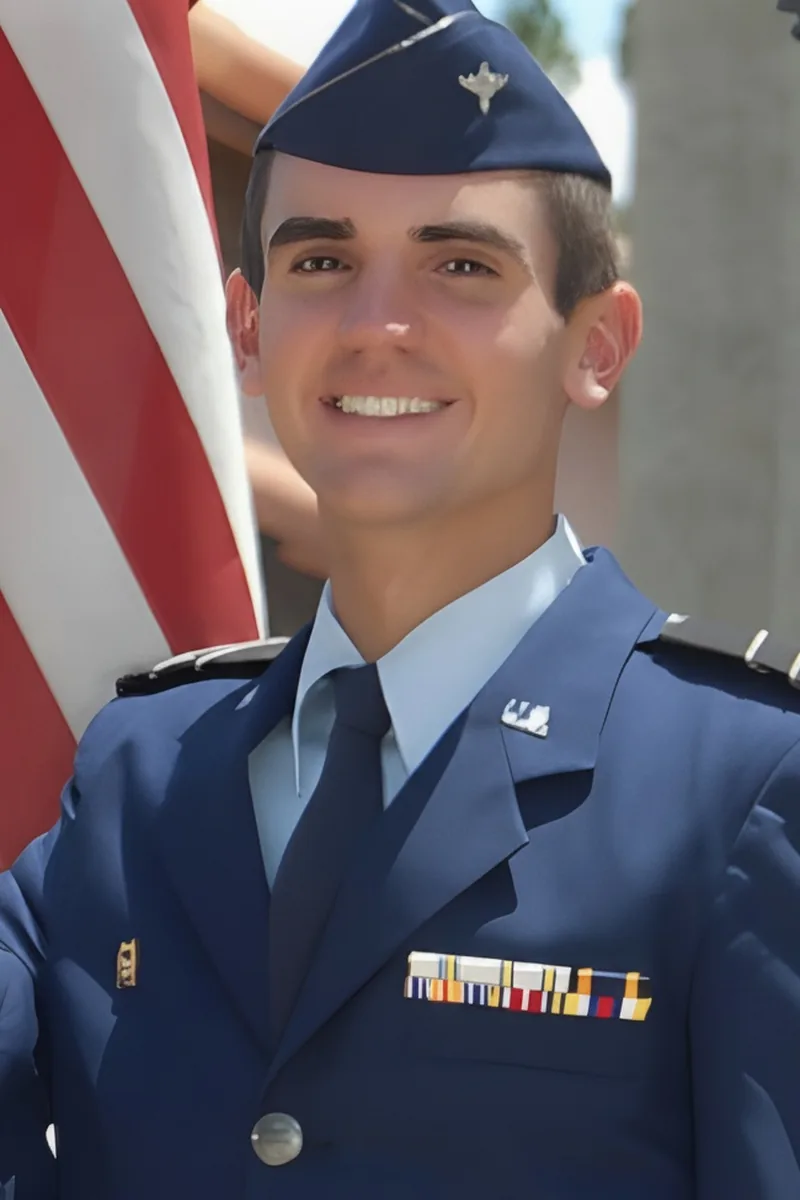
I am here because I thoroughly enjoy working with students and watching them succeed in their academic studies. As a Mathematics major at the University of Arizona (currently a junior), I have extensive experience teaching and tutoring: I have been a teacher's assistant for a Calculus II section at my university and have spent a great deal of time assisting students with non-math related subjects as well such as English and essay-writing, time management and study skills techniques, and standardized test prep (SAT).
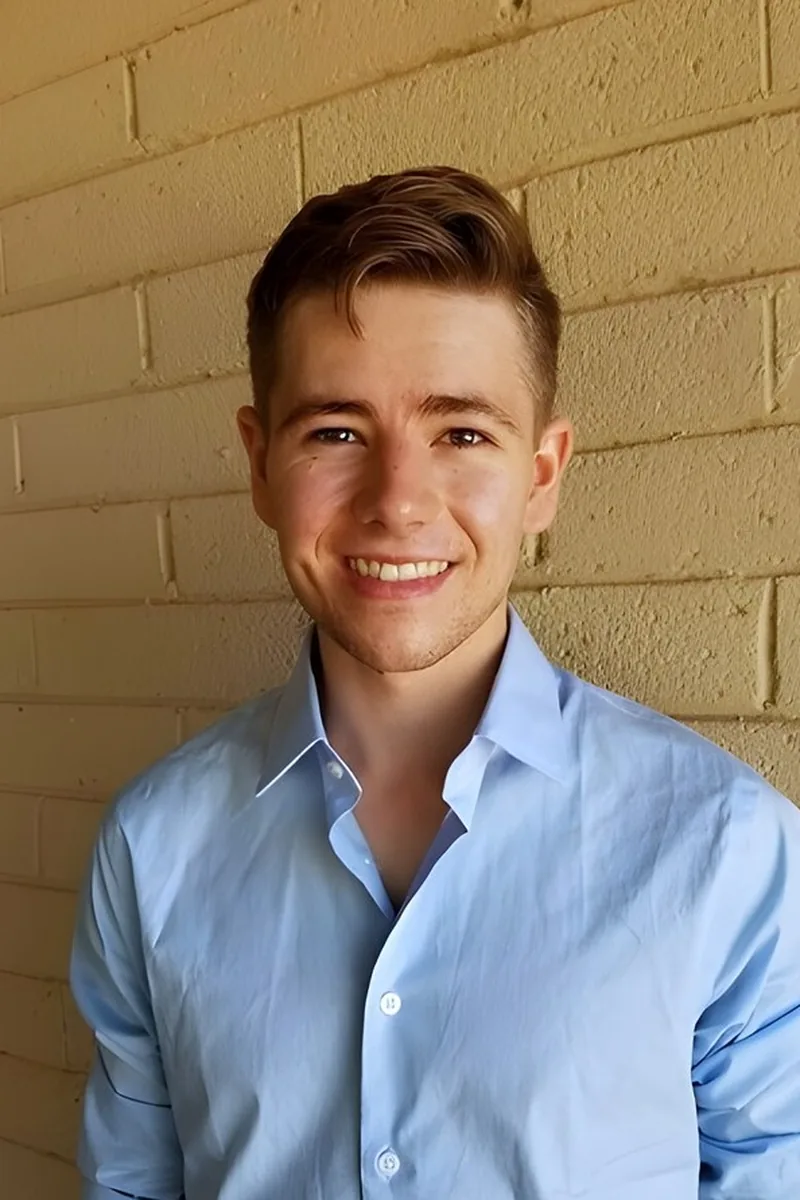
Philosophy trained Galen to do one thing relentlessly: find the precise answer that survives scrutiny — which is exactly what the PSAT's command-of-evidence questions demand when students must choose the passage citation that actually supports their previous answer. His 1480 SAT and 34 ACT mean he's navigated both major test architectures, and he uses that dual perspective to teach the reading and writing sections as exercises in logical elimination rather than gut feeling. Rated 5.0 by students.
The best part of tutoring is promoting students' long-term success through mastery of reading, writing, math, study skills, organization, and critical thinking. In particular, I enjoy helping students build test-taking strategies and core skills for the ACT, SAT, and other admissions tests. I also support pre-K and K-12 students learning math and ELA. Before joining Varsity, I tutored in a Reading and Writing Lab for university students with learning disabilities where I earned a College Reading and Learning Association (CRLA) certification. Since joining Varsity, I have completed continuing education through the Lastinger Center for Learning. I graduated from the University of Arizona in 2021 with a BA in Cultural Anthropology. In addition to tutoring, I have worked as an instructional aide for an art program, an applied anthropology researcher, and a nonprofit program coordinator. Out of all these experiences, I enjoy tutoring the most. I look forward to working with you!
I am no longer eligible to be a tutor, I have been looking for a way to keep doing what I love!
I am a great tutor because I am young and enthusiastic. I can relate to the kids I tutor because I recently experienced the classes and standardized tests that they are taking. I use an informal style so that the student can feel comfortable asking questions. I try to connect personally to the students so that they have fun and look forward to tutoring. I tutor standardized tests and most high school classes. I have two years of experience tutoring and I spent both this summer and last summer teaching full-time.
I am currently a student at the University of Arizona studying Spanish Translation and Interpretation and minoring in Creative Writing. My favorite subjects to tutor are geometry and writing, as well as the SAT. I like to tutor geometry because I understand that while it comes naturally to me but algebra took a while for me to fully grasp, many people are the exact opposite. I greatly enjoy helping people along the road to that understanding in geometry. My love for writing comes from a similar place, though from the opposite side. I was a terrible writer in middle school, but one writing skills class in high school changed me from a D level writer to a B+/A- level writer and the IB program only made me better. I love tutoring writing skills because I want to help others as much as that class helped me. The SAT is a stressful experience for a lot of kids, but it doesn't need to be. Knowing and practicing the material is important, but there are many other things students can do to prepare as well. In my spare time, I love to play volleyball with friends, read (especially a good fantasy novel) and play a wide variety of card games.
Chemical engineering at Washington and Lee drilled the kind of systematic problem-solving that makes the PSAT's no-calculator math section click — setting up equations from word problems, manipulating expressions without reaching for a graphing calculator, and catching algebraic traps before they cost points. Alex pairs that quantitative strength with sharp reading and writing skills honed through an anthropology double major, which means the evidence-based passages and grammar-in-context questions get the same rigorous attention. His 1590 SAT and 36 ACT confirm he's mastered the full test architecture the PSAT is built from.
Chemical engineering coursework at ASU Barrett means Alex solves algebra-heavy problems without a calculator every day — which is essentially what the PSAT's no-calculator math section asks students to do under time pressure. His 1560 SAT confirms he's already navigated the full test architecture, and he uses that engineering instinct for systematic problem-solving to teach pacing and elimination strategies across both the math and writing sections. Rated 5.0 by students.
I am a graduate student at Arizona State University studying Human and Social Dimensions of Science and Technology, and am passionate about the value of education at all levels. Previously I worked at the US Department of Energy on energy technology in Washington, DC. I have enjoyed setting up roots in Phoenix over the past few years, and am excited about sharing my knowledge and passion for learning with others in the area.I have a knack for explaining complicated ideas to people in simple terms, enjoy deepening people's understandings of issues, and value education highly. All of these characteristics make me an ideal tutor for Varsity Tutors, and I look forward to the opportunity to share my academic experiences and skills with tutees. In addition, I can give an expert's perspective on a wide range of topics including political science, public policy, various topics in science and technology, as well as an academic success-oriented mindset.
Amanda's dual background in anthropology and biology means she's spent years toggling between dense scientific literature and argument-driven social science writing — the exact mix the PSAT throws at students across its Evidence-Based Reading passages. Her 1550 SAT confirms she knows the test architecture inside out, and she uses that cross-disciplinary fluency to teach students how to handle the science-themed passages and data interpretation questions that often catch humanities-focused prep off guard. Rated 4.9 by students.
Jake's 1580 SAT means he's already dominated the test the PSAT is built from, but what sets him apart is the range — he teaches AP Calculus, AP Chemistry, AP English, and Spanish, so he can connect PSAT content to the actual coursework behind it instead of treating it as an isolated exam. When a student struggles with a data-analysis question, he can explain the underlying statistics; when a writing prompt tests argument structure, he draws on the same skills he uses for essay editing and college essays. Rated 4.9 by students.
I am a recent graduate of the University of Arizona, with a BS in Biology and minors in Mathematics and Biochemistry. I am currently working on computer coding and enjoy tutoring students, specializing in test preparation for the ACT, SAT, and GRE.
Ajay's electrical engineering background means he thinks in systems — and the PSAT is a system, with predictable algebra patterns on the math side and repeatable logic in the evidence-based reading and writing sections. His 1590 SAT shows he's already cracked the test architecture the PSAT is built from, and his coding experience gives him an unusual knack for teaching students to eliminate wrong answers methodically rather than relying on gut instinct.
I am a senior at Smith College, where I study mathematics. My past mathematical research has included work with Markov chains, random walks, and combinatorial optimization.
Scoring a 1570 on the SAT means Yurok already knows the test family inside and out — and the PSAT is built on the same blueprint with slightly different scaling. He breaks down the math sections by targeting the specific algebra and data analysis patterns that National Merit semifinalists need to nail, while drilling the evidence-based reading strategies that shave minutes off passage work. Rated 4.9 by students, he brings a dual physics-and-math lens that's especially useful for the quantitative reasoning questions most students rush through.
I'm Annelisa, originally from Phoenix, Arizona. I recently graduated from Yale University, where I studied art and its interactions with political journalism and science. I'm happy to tutor on a wide range of subjects, especially writing, college application, and the SAT!
Elizabeth's master's work in Chinese politics meant reading dense, argument-heavy texts and synthesizing evidence under pressure — the same core skill the PSAT's Evidence-Based Reading section tests with its paired passages and command-of-evidence questions. Her 1500 SAT confirms she knows the test architecture the PSAT mirrors, and her background in government sharpens her approach to the Writing and Language section, where recognizing how authors structure claims matters more than memorizing comma rules. Rated 5.0 by students.
Scoring a 1550 on the SAT means Anita already crushed the skills the PSAT is testing — evidence-based reading, command of evidence questions, and the no-calculator math traps that trip up most sophomores and juniors. She breaks each section into repeatable strategies, especially for the grammar and writing conventions questions where small pattern-recognition tricks translate directly into National Merit qualifying scores. Rated 5.0 by students.
I'm currently finishing my final year at ASU's Honors College with a major in Creative Writing. I've worked in teaching and tutoring positions with everyone from first graders to college students. I just returned from spending my last semester studying in Prague, Czech Republic, travelling extensively and broadening my perspective. I also received the Flinn Scholarship, a prestigious full-ride award given to 20 of the best and brightest students in Arizona out of a pool of nearly 600.
I am Arizona born and raised, my education includes an NYC law school degree with an undergraduate BS degree from University of Miami. In college I majored in Health Sciences with minors in Psychology and Public Health while in law school I leaned into corporate law and finance. Between law school and college I've pretty much covered every topic under the sun! In my spare time, I enjoy reading (especially mystery novels), pretending I'm a chef, and meditating.
Because the PSAT mirrors the SAT in structure but rewards efficiency under tighter time constraints, Gordon teaches students to triage — spending the right amount of time on medium-difficulty questions and knowing when to move on. His background tutoring K-12 students through Teach for America gave him a sharp sense of how to make test strategy click for younger high schoolers encountering this format for the first time.
I am a first-year student pursuing a Bachelor of Science in Computer Science at Harvey Mudd College. Throughout all four years of high school, I tutored my peers in subjects such as chemistry, algebra, geometry, calculus, and statistics. Passionate about sharing my learning with younger students in the community, I was also a primary instructor for the Kumon Math and Reading Center, where I spent three years teaching math and reading to students who ranged from pre-K to 12th grade. Additionally, as an assistant instructor for the Arizona Science Center's Camp Innovation, I empowered youth by delivering science programming to children between the ages of four and seven. Through such experiences, I've realized the impact that I can have as a tutor.
I am not studying or performing research, I enjoy playing video games, card games, or role-playing games with my friends. I also am an amateur engineer, participating in the online community of laser enthusiasts. Together, we construct circuitry, design housings, and align lenses to create not laser pens for pets, but high-powered, scientific lab lasers.
I'm a 24-year old teacher/tutor. I am a very personable, outgoing person and I enjoy making connections with others- especially when I can make people feel comfortable no matter what the setting- and I find that those who have less to say usually have the most important things to say! Tutoring provides me with a platform in which I am able to help others gain confidence in their work and watch them discover abilities they may not have known that they have. Above all, this is what I most love about tutoring and teaching.
I'm a rising sophomore at Georgia Institute of Technology. I love teaching and got a lot of practice from tutoring my brother. Physics is probably my favorite subject to teach.
I am not teaching, I am engaged in the domestic arts while singing or watching my nieces and nephew grow up.
I am currently in the process of applying to Law School. I have tutored middle school and high school students in subjects ranging from 5th grade reading to geometry to the SAT. While I am happy and able to tutor a number of subjects, I am most passionate about Test Prep because these scores are very important to students, and I enjoy helping them to conquer the test and succeed. My teaching philosophy can be described as a coaching style in which, like athletics, I believe learning the subject matter, good techniques, and constant practice are the best ways to achieving better scores.
I'm passionate and interested about the subjects I teach and tutor, and I believe strongly in showing my students how interesting those subjects can be and how enjoyable it is to learn. I've been tutoring my friends, peers, and neighbors since I was in high school all the way until I graduated from ASU this year with a bachelor in Conservation Biology. I'm most comfortable teaching biology, chemistry, physics, math, and history, and I believe that the purpose of a tutor is not to do the student's homework, but to teach them to do it themselves.
Bridget scored a 1460 on the SAT and knows the PSAT inside out — from the tricky no-calculator math questions to the evidence-based reading pairs that trip up even strong students. She's currently teaching high school math and social studies while finishing her Master's at Notre Dame, so she's immersed daily in the exact content the PSAT tests. Her 4.7 rating speaks to a knack for breaking down timing strategies and question patterns that move scores into National Merit range.
I am working towards a Bachelor's in English at ASU after two years at Mesa Community College. I am passionate about English and have a year's experience tutoring Algebra. I aim to provide individualized online instruction to high school students that is centered around their needs and capabilities. My experiences dealing with ADHD allow me to relate to students experiencing similar difficulties and to be a better tutor for them. I believe education is important and that every student is capable of success with a little help. In my free time I enjoy reading nonfiction, experimenting with drawing styles, and sewing.
I am one of a rare breed of native Arizonans born and raised in Tucson, Arizona. I graduated from the University of Arizona with a bachelor's degree in Astrophysics and a Master's degree in Teaching and Teacher Education. Before getting the master's degree in education I worked for NASA as an entry-level scientist/analyst, which essentially means I did A LOT of computer programming. I worked on the following projects: Galileo, Cassini, IRAF, UBV White-Dwarf Sky Survey, and NICMOS on the HST. However, while working on those projects I quickly discovered that my lifelong dream of being an astronaut was not really what I wanted to do. I had always had a passion for music, and was a good trumpet player, and with a little nudging from my College Band Director, well, the road definitely took a right turn.
I'm enjoying my time at home and getting to explore questions of interest to me.
I am looking at their work 'from the outside' and can therefore see where they have improved whereas the student might see their struggles more clearly than their progress. I also believe and emphasize that learning is an ongoing process, and academic skills don't come naturally to most people - they are skills which require practice over time. With a subject like Spanish, I try to relate to the student's struggles by talking about issues that I found difficult as well.
I am a mechanical engineering student at Arizona State University. I tutor algebra, calculus, and physics.
I am a Computer Science major currently enrolled in the Barrett Honor's College at ASU. I went to high school at Brophy College Preparatory in Phoenix, AZ. I specialize in most subjects related to math... subjects such as: Algebra (1 & and 2), Honors Pre-Calc, AP Calculus AB, PSAT Mathematics, and SAT Mathematics.
Scoring a 1440 on the SAT means Lintton already conquered the same question types and timing pressures that define the PSAT — especially the tricky Evidence-Based Reading pairs and no-calculator math traps. His computer science background gives him a systematic, pattern-based approach to breaking down word problems and data interpretation questions. Rated 5.0 by students.
I am passionate about learning and helping others learn.
I am a graduate from Arizona State University, The Honors College, with a degree in Biochemistry and a minor in Global Health. I was awarded the Moeur award as I was able to complete university with a 4.0 GPA.
I'm currently the co-founder of a software-as-a-service company based in NYC. I left law to pursue my passion for technology and I've learned a tremendous amount by working in the tech startup space.
I am a rising senior at Emory University majoring in Biology, B.S. on a pre-med track in the Biology Honors Program. In my sophomore year, I was a math and literacy tutor at Emory Reads where I worked with students at Ivy Prep Academy, Atlanta GA. Now, I lead review sessions for my fellow classmates in organic chemistry and biology to prepare for upcoming exams. In my past tutoring experiences and review sessions, I always used different colors and incorporated diagrams to improve conceptual understanding because I firmly believe every problem can be solved; if we have a solid foundation and truly understand a concept, we can apply it to any given scenario and figure out the solution. In order to make sure of this, I always encourage students to ask questions until all doubts have been cleared before moving on to decrease gaps in understanding. I can help with math, english, biology, chemistry, and physics although I think my favorite subjects to tutor would have to be Organic Chemistry and Human Physiology! I sincerely enjoy teaching these subjects and hope to show the students just how fascinating they can really be.
Testimonials
Because the right PSAT tutor makes all the difference.
Average Session Rating – Based on 3.4M Learner Ratings
Practice PSAT
Free practice tests, flashcards, and AI tutoring for PSAT
Other Tucson Tutors
Related Test Prep Tutors in Tucson
Frequently Asked Questions
The PSAT is a standardized test that measures reading, writing, and math skills—essentially a practice run for the SAT. For students in Tucson, taking the PSAT in sophomore or junior year helps identify academic strengths and weaknesses, provides a benchmark for college readiness, and gives juniors a chance to qualify for National Merit recognition, which can open doors to scholarships and college opportunities.
Score improvements depend on starting point and effort, but focused tutoring typically helps students gain 50-100+ points by addressing specific weak areas and teaching test-taking strategies. Many students see the biggest gains in sections where they struggled most—whether that's reading comprehension, grammar, or math problem-solving—because personalized instruction targets those exact gaps rather than generic test prep.
Pacing challenges often come from spending too long on difficult questions or not recognizing when to skip and return later. Tutors help by teaching strategic approaches like identifying question difficulty levels, practicing with timed sections to build speed without sacrificing accuracy, and developing a personalized rhythm that works for your strengths. Working through practice tests under timed conditions is key—it trains your brain to manage 2 hours and 45 minutes effectively.
Start by taking a full practice test under timed conditions and reviewing your results by section: Reading & Writing, Math, and overall score. Look for patterns—do you miss more questions about vocabulary in context, algebraic reasoning, or data analysis? Connecting with a tutor helps you dig deeper into why you're missing questions, whether it's a knowledge gap, careless mistakes, or misunderstanding the question format, so you can focus your study time where it matters most.
Your first session typically includes a diagnostic assessment—either reviewing your recent PSAT or practice test scores, or taking a full practice test to establish a baseline. The tutor will identify your strongest and weakest areas, discuss your goals (like reaching a specific score or qualifying for National Merit), and create a personalized study plan that focuses on high-impact improvements. This foundation ensures every session after that is targeted and efficient.
Test anxiety often stems from unfamiliarity with the format and uncertainty about strategies. Tutoring reduces anxiety by demystifying the test through repeated practice with real PSAT questions, teaching proven techniques that give you a concrete plan to follow, and building confidence through small wins as you see score improvements. When you know exactly what to expect and have strategies ready, test day feels less overwhelming.
Most students benefit from 4-12 weeks of focused prep, depending on their starting level and target score. A typical schedule might include 1-2 tutoring sessions per week plus independent practice—working through practice tests, drilling weak sections, and reviewing mistakes. Consistency matters more than intensity; studying 5-7 hours per week spread across multiple days is more effective than cramming, and tutors can help you build a schedule that fits your life and keeps momentum going.
Varsity Tutors connects you with expert tutors who specialize in PSAT prep and understand the test's unique format and strategies. When you get matched with a tutor, you can discuss your specific goals, learning style, and schedule to ensure it's a good fit. Many tutors offer flexibility with timing and can focus on your particular challenge areas—whether that's reading comprehension, grammar rules, or math problem types—so you get personalized instruction tailored to your needs.
Let’s find your perfect tutor
Answer a few quick questions. We’ll recommend the right plan and match you with a top 5% tutor.