Award-Winning Science Tutors
serving Madison, WI
Science
Tutors in Madison
Private 1-on-1 tutoring, weekly live classes for academic support, test prep & enrichment, practice tests and diagnostics, and more to elevate grades and test scores.
Based on 3.4M Learner Ratings
UniversitiesSchools & Universities
DeliveredHours Delivered
ProficiencyGrowth in Proficiency
Who needs tutoring?
No obligation. Takes ~1 minute.

Amber teaches across chemistry and physics — from balancing redox equations to breaking down kinematics problems — and her 35 ACT confirms she can tackle science content at a high level. Her approach connects scientific reasoning to real-world examples, making abstract concepts like energy conservation or stoichiometry click. Rated 5.0 by students.
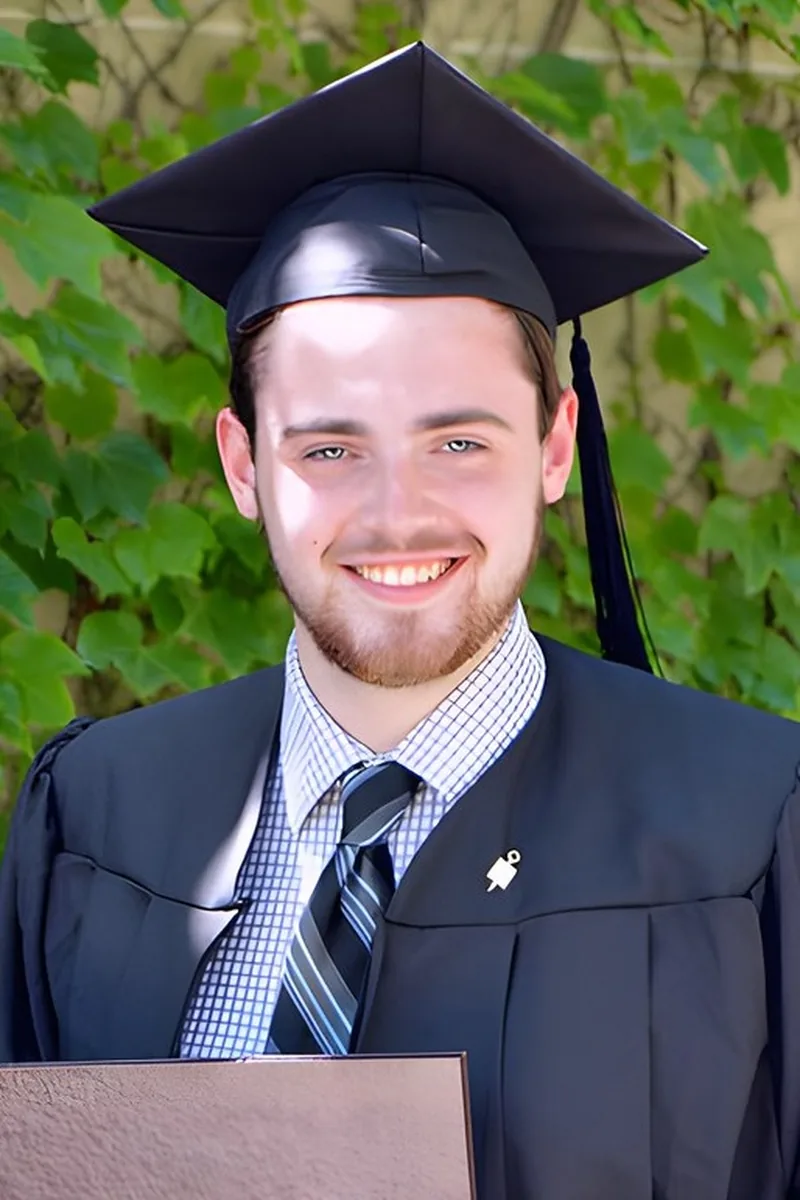
Patrick's dual degrees in English Literature and Linguistics from the University of Chicago might not scream science, but linguistics is fundamentally a science — building hypotheses about language structure, testing them against data, and revising models when the evidence doesn't fit. That same cycle of observation, prediction, and analysis is exactly what students need when tackling the scientific method, classifying phenomena, or interpreting experimental results. His 35 ACT confirms he can handle the quantitative and data-reading demands that science coursework throws at students.
The quantitative rigor of Sophie's Applied Math degree at Brown translates directly to science tutoring, especially when students hit calculation-heavy topics like stoichiometry, kinematics, or data interpretation. She walks through the underlying math step by step, so students stop second-guessing their setup and start trusting their problem-solving process.
Currently pursuing a doctorate studying tiger ecology at UW-Madison, Karann lives science daily — building population models, analyzing field data, and connecting biology to physics and chemistry in ways textbooks rarely capture. Whether a student is wrestling with the scientific method, energy transfer, or ecosystems, she teaches them to think like a working scientist rather than just memorize vocabulary.
Two physics degrees and a master's in atmospheric and space sciences mean Richard can teach science as a unified way of thinking — observation, hypothesis, quantitative reasoning — rather than a collection of disconnected facts. Whether a student needs to understand energy conservation, wave behavior, or thermodynamic processes, he connects each concept back to real physical phenomena.
Having taught comparative religion and communications at UW-Madison, Sarah knows how to take dense, unfamiliar material and make it accessible — a skill that carries over when students need to grasp scientific classification systems, trace cause-and-effect in natural processes, or make sense of technical vocabulary built from Latin and Greek roots. Her graduate work in Asian languages and cultures required rigorous research methods, and she brings that same emphasis on careful observation and evidence-based reasoning to science topics.
At LearningRx, James taught cognitive skills alongside academic content — which means he's used to showing students how to actually process and retain scientific information, not just re-read it before a test. His economic policy minor involved interpreting data sets and understanding cause-and-effect relationships, skills he now applies to teaching topics like graphing experimental results and tracing how variables interact. Holds a 5.0 rating.
Running experiments in a business program means Maddy knows her way around hypothesis testing, data collection, and drawing conclusions from numbers — the same core skills science courses assess when students have to interpret graphs or explain experimental outcomes. Her ACT score of 33 confirms she can handle the analytical reading and quantitative reasoning that science material demands, and her 5.0 rating suggests she makes those connections stick.
A microbiology PhD student who's spent years at the lab bench, Madeline explains scientific concepts by grounding them in real experiments — how cells actually divide, what happens when you culture bacteria, why ecosystems respond to change the way they do. She makes the scientific method feel like a natural way of asking questions rather than a list of steps to memorize.
Jacob's Communication master's program at Illinois State involves research design, survey methodology, and statistical analysis — skills that overlap heavily with the scientific method students are expected to master in general science courses. He teaches the logic behind hypothesis formation and data interpretation by drawing on his own experience running studies, which makes abstract concepts like variables and controls feel concrete. His 33 ACT and 4.9 rating speak to both his analytical ability and his clarity as a tutor.
A physics degree covers an enormous swath of science — mechanics, thermodynamics, electromagnetism, wave behavior, atomic structure — and Michael uses that breadth to tackle general science topics with real depth. He explains concepts by building them from first principles, so students understand *why* a formula works before they ever plug in numbers.
Shona's applied math background gives her a quantitative lens that translates naturally into science — interpreting data tables, setting up unit conversions, and reasoning through experimental design all draw on skills she uses daily. She's especially effective at bridging the gap when students understand a science concept verbally but freeze when the problem involves equations or graph analysis.
Jonas approaches science the way he approaches a difficult text: by slowing down, identifying the key variables, and building an argument from evidence. His background in Classical Greek — a discipline rooted in early scientific and philosophical inquiry — gives him a unique lens for teaching students how to think systematically about hypotheses and experimental design.
Running a K-8 tutoring program meant Dylan had to explain everything from simple machines to the water cycle to students at wildly different levels — which forced him to get creative with analogies and build explanations from scratch rather than defaulting to textbook language. His political science coursework at UW-Madison also sharpened his ability to evaluate evidence and construct arguments, skills that translate well when students need to interpret data tables or explain experimental outcomes in their own words.
Studying biology at UW-Madison means Miriam lives in the details of scientific thinking every day — designing experiments, interpreting data, and connecting concepts across chemistry and life sciences. She teaches students to approach science the same way a researcher would: ask what's actually happening, break it into manageable parts, and build understanding from there.
Studying Materials Science & Engineering at UW-Madison, Adam tackles science from a hands-on, applied perspective — understanding how chemical reactions, physical forces, and energy concepts show up in real-world materials and systems. He's strong at connecting abstract scientific principles to concrete examples that make them easier to remember.
While science isn't Julia's primary discipline, her experience tutoring across a wide range of subjects means she can support students working through general science concepts and assignments. She's particularly strong at breaking down reading-heavy science material — interpreting data tables, understanding experimental design, and writing lab reports clearly.
A PhD mathematician who also teaches physics and astronomy, Aaron approaches science by emphasizing the quantitative reasoning underneath the concepts — unit analysis, graph interpretation, and building equations from physical intuition. He's particularly effective at bridging the gap when a student understands the science conceptually but freezes at the math embedded in it.
Connor's applied math background at UW-Madison gives him a quantitative edge when tackling science topics like data interpretation, unit conversions, and experimental design — the same skills that earned him a 33 ACT composite. He breaks down scientific reasoning into logical steps, making it easier to connect hypotheses to evidence in biology, chemistry, and physics problems alike.
A zoology degree means Eitan spent years moving between biology, chemistry, organic chemistry, and ecology — not as isolated classes but as interconnected systems. That cross-disciplinary training lets him explain why a concept like pH matters in both a chemistry beaker and a living cell, or how thermodynamics governs everything from enzyme kinetics to weather patterns. Students working with him get someone who treats science as one coherent story rather than a set of disconnected facts.
Professional journalism requires exactly the kind of rapid research and synthesis that science demands — Olivia regularly dives into unfamiliar technical fields, decodes specialized terminology, and explains complex processes in clear language on deadline. That skill translates well when students need to parse dense textbook passages, make sense of diagrams, or write up lab results in plain English. Her 1580 SAT confirms she handles data and evidence-based reasoning with precision.
I'm fluent in R, Python, SQL, and M (MUMPS). This September I will be pursuing a Master's degree in data science. I'm available to tutor GRE, ACT, and SAT math as well as other math, statistics, and economics subjects. Although I am most passionate about math, I'm also happy to help students with general testing strategies and preparation for the other parts of the standardized exams.
Teaching kindergartners in South Korea meant Chloe had to make abstract ideas concrete every single day — explaining how plants grow, why ice melts, or what happens when you mix colors — using simple language and hands-on demonstrations. That instinct for translating complex processes into clear, step-by-step explanations carries over to science tutoring, where she zeroes in on helping students read diagrams, understand cause-and-effect relationships, and put scientific observations into their own words.
Breanna's Master's in Education and background in human development give her a practical read on how students actually learn scientific concepts — not just what's in the textbook, but which misconceptions are getting in the way. She zeroes in on skills like interpreting diagrams, understanding cause-and-effect relationships, and connecting vocabulary to real phenomena, adjusting her approach based on each student's developmental level. Her ACT score of 32 confirms she can handle the content across earth science, life science, and physical science.
Zach is a biochemistry major at UW-Madison who has already completed physics, biology, intro chemistry, and organic chemistry — so he's not teaching from a textbook summary but from recent, hands-on experience. He unpacks tough concepts like reaction mechanisms, cellular respiration, or kinematics by connecting them to real examples that make the logic click.
Between her genetics and microbiology coursework, hands-on lab research, and experience co-teaching a microbiology lab at UW-Madison, Samantha covers science from the molecular level up to whole-organism physiology. She unpacks difficult concepts — like gene expression, cellular respiration, or chemical bonding — by tying them to real experimental scenarios students can visualize. Rated 5.0 by students.
Wolly's graduate work in Marriage and Family Therapy draws heavily on research methods, behavioral science, and interpreting clinical studies — skills that map directly onto understanding experimental design, variables, and evidence-based reasoning in general science coursework. His communications background also means he's sharp at breaking down dense scientific vocabulary and helping students articulate what they're observing in labs and readings.
A computer science major with a math emphasis, Sarah is trained in the systematic, evidence-driven thinking that underpins all scientific reasoning — forming hypotheses, isolating variables, and interpreting quantitative results. She's especially comfortable with the math-heavy side of science, whether that's calculating rates, converting units, or reading data off a graph and explaining what it actually means. Rated 4.9 by students.
Four years in a STEM-focused high school academy gave Almira daily immersion in scientific reasoning — designing experiments, interpreting data, and connecting observations back to underlying principles. She's especially strong at teaching students how to read graphs, set up calculations with proper units, and write lab conclusions that demonstrate real understanding.
Studying Biology at UW–Madison means Halle is immersed in science every day, from cellular respiration pathways to experimental design and data analysis. She unpacks scientific concepts by stripping away jargon and rebuilding ideas in plain language, making sure students can explain the "why" behind a process rather than just labeling a diagram. Her 5.0 student rating backs up that approach.
A math degree from UW-Madison means Joseph spent years immersed in the quantitative backbone of science — unit analysis, modeling rates of change, interpreting graphs of experimental data — and he brings that fluency to the measurement and calculation-heavy parts of science coursework. He's especially useful when students hit the physics or chemistry topics where the math suddenly feels like the real obstacle, since he can untangle the formulas and show students what each variable actually represents. Rated 5.0 by students.
India's math-and-science emphasis within her Liberal Arts program means she's actively working through the same quantitative and lab-based material her students encounter — balancing equations, interpreting data tables, and connecting abstract concepts to observable results. That proximity to the coursework keeps her explanations grounded in the specific sticking points students actually hit. Rated 4.8 by students.
A math major might seem like an unusual pick for science, but Mingxi's quantitative training at UW-Madison is exactly what makes her effective at breaking down formulas, unit conversions, and data interpretation — the skills that trip up most science students. She approaches science problems the same way she approaches math: by teaching the reasoning behind each step rather than handing over an answer.
Cole's industrial engineering background required deep dives into physics, chemistry, and data-driven problem solving, giving him a toolkit that spans multiple science disciplines. He teaches students to connect equations to real phenomena — understanding *why* a ball decelerates or *how* molecular bonds store energy — so the science actually clicks instead of feeling like disconnected formulas.
I am a Senior undergraduate student at the University of Wisconsin-Madison. I major in Computer Science and Data Science, while minoring in Mathematics and Leadership. I have experience teaching complex computer science concepts to others and specialize in teaching Python and Java. My experience in this topic also extends to making websites, applications, and AI models for personal use. Therefore, I am confident in teaching hard-to-understand cs topics in an easily consumable way, As for standardized tests, I have experience getting a 34 on the ACT (with and without super score) and a 1550 on the SAT (with super score). For both tests I have took them multiple times for the score (especially the ACT, which I started with a test score of 28 during my Sophomore year), meaning that I understand the struggles of students trying to increase their standardized test scores.
Biology was Joseph's undergraduate focus at UCLA, and his public health master's at Yale keeps him immersed in how scientific concepts apply to real problems like disease transmission and environmental health. He unpacks topics like the scientific method, cell structure, and ecosystems by connecting them to questions students encounter outside the classroom.
Competition math sharpened Tracy's ability to think quantitatively under pressure, and that same skill set — reading data, spotting patterns, testing whether an answer actually makes sense — is exactly what science coursework asks students to do with experiments and observations. Her economics training adds a layer of comfort with graphs, variables, and interpreting what numbers mean in context, which covers the analytical side of science that pure memorization misses. Rated 4.9 by students.
Quinn's political science background means he spent years evaluating polling data, dissecting research methodologies, and building evidence-based arguments — skills that overlap heavily with how science asks students to interpret experiments and draw conclusions from data. His 35 ACT confirms he can handle the quantitative and analytical demands of science material, and his 5.0 rating from students suggests he makes those connections stick.
A computer science degree from Stanford means Elyse spends her days doing science in practice — forming hypotheses about why code breaks, isolating variables through systematic debugging, and testing solutions against expected outputs. That same experimental loop translates naturally when she teaches students to design controlled experiments, interpret data sets, or trace cause-and-effect in biology and physical science. Her 35 ACT and 5.0 rating confirm she delivers on the quantitative and analytical sides alike.
A statistics degree from the University of Chicago means Samuel spent years doing exactly what science courses ask students to do — designing studies, interpreting data, and distinguishing meaningful results from noise. He brings that quantitative backbone to topics like experimental design and graphing, while his 35 ACT confirms he can handle the reading-heavy side of science just as comfortably.
Testimonials
Because the right Science tutor makes all the difference.
Average Session Rating – Based on 3.4M Learner Ratings
Practice Science
Free practice tests, flashcards, and AI tutoring for Science
Nearby Science Tutors
Other Madison Tutors
Related Science Tutors in Madison
Frequently Asked Questions
Your first session is an opportunity for a tutor to understand your current level, learning style, and specific goals—whether that's improving lab skills, mastering difficult concepts like stoichiometry or photosynthesis, or preparing for an exam. The tutor will ask diagnostic questions, review any recent assignments or test results, and create a personalized plan tailored to your needs. This foundation helps ensure every session that follows builds on your strengths and addresses your gaps.
In a classroom with an average student-teacher ratio of 11.7:1 in Madison, it's difficult for teachers to address each student's unique learning pace or misconceptions. Personalized 1-on-1 instruction allows a tutor to slow down on challenging topics like cellular respiration or atomic structure, use multiple explanations until concepts click, and skip material you've already mastered. This targeted approach typically leads to faster understanding and stronger retention than classroom learning alone.
Many students struggle with abstract concepts they can't see directly—like molecular interactions, energy transfer, or quantum mechanics—and with the math embedded in physics and chemistry. Others find it hard to connect lab work to theory or to organize information across multiple units. A tutor can break down abstract ideas with visual models, work through calculations step-by-step, and help you build a coherent mental framework so concepts stick.
Yes. Varsity Tutors connects you with tutors who understand Wisconsin state science standards and the specific curricula used across Madison's 6 school districts. Whether you're in middle school life science, high school biology, chemistry, physics, or AP-level courses, your tutor will align instruction with what you're learning in class and help you excel on district assessments and standardized tests.
Absolutely. Beyond explaining concepts, tutors can help you understand the purpose behind lab procedures, interpret data correctly, write strong lab reports, and troubleshoot when experiments don't go as planned. This hands-on guidance builds confidence in the lab and deepens your understanding of how science actually works—skills that matter for success in advanced courses and science-focused careers.
A tutor can identify which topics are your weakest areas, create a focused study plan, teach test-taking strategies specific to science (like process-of-elimination for multiple choice), and have you practice with past exams or similar problems. Regular practice combined with immediate feedback helps you build confidence and improve scores on unit tests, AP exams, ACT science, or other assessments you're targeting.
Varsity Tutors connects you with tutors who have strong backgrounds in science—often with degrees in biology, chemistry, physics, or related fields, and proven experience teaching or tutoring. Each tutor is vetted for subject expertise and teaching ability, so you can trust they understand the material deeply and know how to explain it clearly at your level.
Contact Varsity Tutors and tell us your grade level, the science subject you need help with, and your goals. We'll match you with an expert tutor who fits your schedule and learning needs. Your first session is a chance to build rapport and confirm the fit, so you can start making progress right away.
Let’s find your perfect tutor
Answer a few quick questions. We’ll recommend the right plan and match you with a top 5% tutor.