Award-Winning Algebra 2 Tutors
serving Madison, WI
Algebra 2
Tutors in Madison
Private 1-on-1 tutoring, weekly live classes for academic support, test prep & enrichment, practice tests and diagnostics, and more to elevate grades and test scores.
Based on 3.4M Learner Ratings
UniversitiesSchools & Universities
DeliveredHours Delivered
ProficiencyGrowth in Proficiency
Who needs tutoring?
No obligation. Takes ~1 minute.
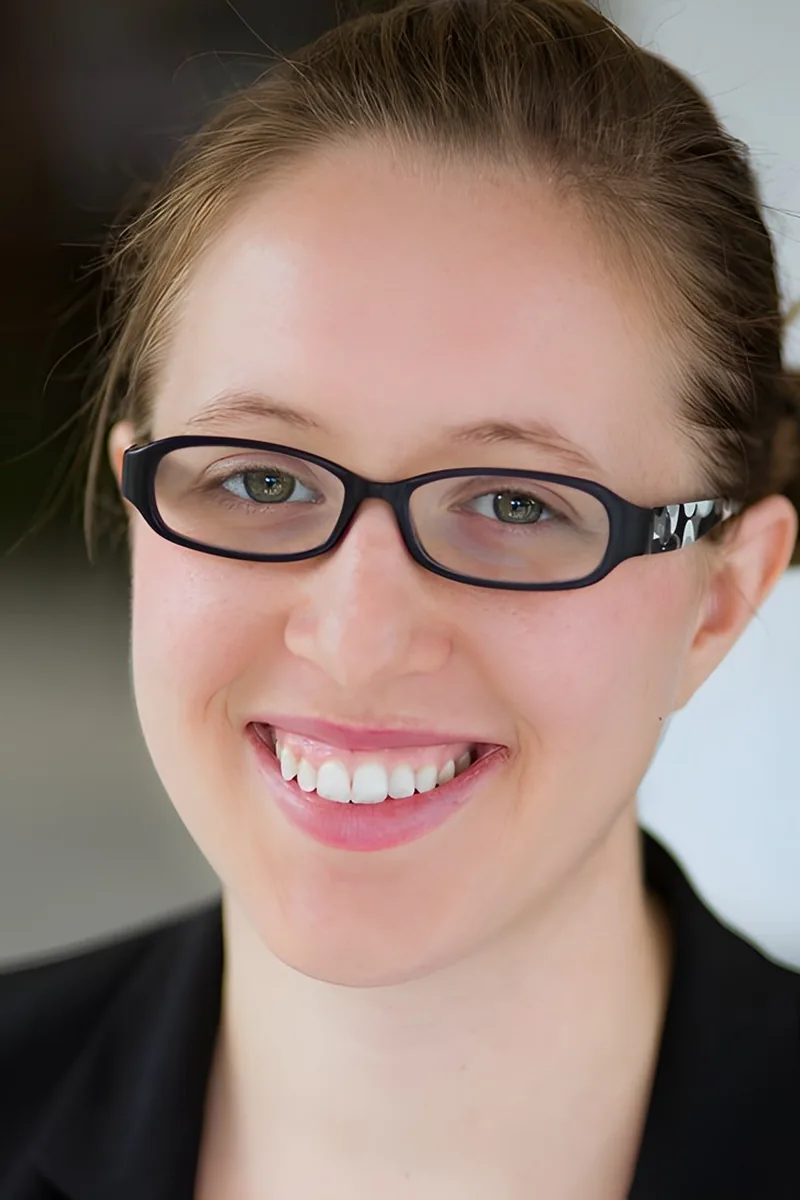
The jump to Algebra 2 is where many students lose their footing, especially once logarithmic and rational functions enter the picture. Amber's experience teaching math from elementary through college-level calculus means she can trace a concept like exponential growth all the way back to the arithmetic a student already knows, building genuine understanding rather than rote steps. She holds a 5.0 client rating.

Logarithmic functions, polynomial division, and systems of equations stop feeling arbitrary when a student sees how they actually get used — and Karann uses them constantly in her doctoral research modeling predator-prey dynamics. She unpacks each Algebra 2 concept by tying abstract notation back to the reasoning behind it, so students can problem-solve flexibly instead of relying on memorized steps.
Logarithms, polynomial division, conic sections — Algebra 2 is where math shifts from procedural to conceptual, and a lot of students feel the ground move under them. Richard's dual degrees in math and physics mean he can trace each new abstraction back to something concrete, showing students not just how to solve but why the method works.
Having taught everything from pre-algebra through calculus 3 and quantum mechanics, Michael knows exactly which Algebra 2 concepts — like rational expressions or logarithmic equations — become load-bearing walls for the math that comes next. His physics degree means he's spent years relying on that algebraic toolkit in applied settings, so he can pinpoint the exact step where a student's reasoning breaks down and rebuild it with concrete examples that make the abstraction feel earned.
Running tutoring programs at a K-8 school gave Dylan a clear picture of how early math habits — especially around exponent rules and equation-solving shortcuts — either support or sabotage students once Algebra 2 ramps up the abstraction. He zeroes in on those gaps, rebuilding the reasoning behind topics like polynomial operations or function behavior so that new material stops feeling like a foreign language. His 1450 SAT and ongoing math tutoring across multiple levels keep those skills sharp.
The jump to Algebra 2 is where many students lose their footing — logarithms, polynomial division, and rational functions all demand a new level of abstract thinking. Miriam's approach is to strip each new concept down to its core logic before layering on complexity, a skill she's sharpened through her STEM coursework at UW-Madison. Rated 4.9 by students.
A PhD in math means Aaron has spent years thinking about algebra not as a set of procedures but as a language with its own internal logic — and Algebra 2 is where that language starts demanding real fluency, especially around inverse problems and the interplay between exponential and logarithmic thinking. He approaches each new concept by grounding it in something the student already knows cold, building confidence before releasing the surprise of how far that foundation actually reaches. Holds a 5.0 rating from his students.
Zoology might not scream Algebra 2, but Eitan's biology coursework — modeling population growth curves, analyzing exponential decay in ecosystems — gave him daily practice with exactly the logarithmic and exponential reasoning that trips students up in this course. He scored a 33 ACT and approaches each problem by grounding the algebra in something tangible, so a formula for geometric sequences or function transformations stops feeling like abstract symbol-shuffling. Rated 5.0 by his students.
Double-majoring in Applied Math and Finance at Wisconsin-Madison, Connor regularly uses the polynomial, logarithmic, and sequence-based reasoning that Algebra 2 covers — whether he's pricing options models or working through proof-based coursework. That dual perspective lets him answer the 'why does this matter' question with specifics, especially when topics like exponential growth or systems of equations start feeling disconnected from anything real. Rated 5.0 by his students.
Having already completed organic chemistry and calculus at UW-Madison, Zach knows exactly which Algebra 2 skills — like manipulating exponential expressions and working fluently with function notation — become non-negotiable later on, and he teaches them with that urgency. He's particularly good at untangling the moments where familiar rules from Algebra 1 suddenly break down, like when students try to apply linear thinking to logarithmic or polynomial behavior. Holds a 5.0 rating and a 33 ACT.
The jump to Algebra 2 is where many students first encounter logarithms, polynomial division, and sequences that feel disconnected from anything they've seen before. Samantha tackles these topics by linking abstract formulas back to concrete patterns, drawing on the same analytical thinking she uses daily in her genetics and microbiology coursework at UW-Madison.
Danny's graduate work in urban planning at UW-Madison involves modeling land use patterns and population growth — calculations that lean heavily on the polynomial and exponential reasoning at the heart of Algebra 2. He takes a hands-on approach first, working through a new concept alongside a student, then steps back and lets them wrestle with it independently so the understanding becomes theirs. That balance between demonstration and exploration is especially useful when topics like logarithms or sequences demand both procedural skill and genuine comprehension.
Coming through a STEM academy in high school and testing out of college math entirely, Almira built the kind of algebraic fluency where topics like polynomial operations and rational expressions feel like second nature. Her psychology major adds an unexpected edge — she's trained to notice how people process new information, which means she picks up on exactly where a student's understanding breaks down and adjusts her explanations on the spot.
Sarah's CS degree with a math emphasis means she writes code that depends on the exact algebraic structures Algebra 2 covers — recursive sequences, function composition, logarithmic scaling — so she can show students how each concept works as both math and logic. She's especially effective at the transition point where Algebra 1 intuition breaks down, like when students first encounter rational expressions or piecewise definitions and need to rebuild their problem-solving approach. Rated 4.9 by her students.
My name is Mika and I recently graduated from Case Western Reserve University in Cleveland where I studied Economics, Math, and Spanish. I want to help you get the best grades, knowledge, and love of learning possible!
I am a tutor in math and computer science subjects. I think that every student has the potential to be good at math, but many have lost confidence somewhere along the way. My goal is to help students find that confidence again. I have a Master's degree in Math and a Bachelor's degree in Math and Computer Science. I have tutored for several years at the college level in both math and CS, with some classroom experience as well. I have also done some tutoring with middle - high school aged students. I work best one-on-one, and I really enjoy working in algebra, calculus, and pre-calculus. But mostly I enjoy helping students gain math and CS confidence!
Joseph calls the transition into Algebra 2 the moment students have to stop relying on memorized steps and start thinking flexibly — what he dubs 'mathematical freestyling.' His math degree from UW-Madison means he can trace exactly how a topic like logarithms or rational functions grows out of the algebra a student already knows, turning the leap in abstraction into something that feels earned. Rated 5.0 by his students.
Four years of coaching soccer taught Eric how to read when someone's lost and adjust on the fly — a skill that translates directly to the moment an Algebra 2 student's confidence drops mid-problem on, say, a complex rational expression or an unfamiliar logarithmic equation. His physics and calculus coursework at Florida State means he regularly leans on Algebra 2 tools in applied settings, so he can show students exactly how mastering function transformations or systems of equations pays off in the courses ahead.
Industrial engineering coursework at UW-Madison meant Cole was constantly building and solving systems of equations, working with matrices, and applying exponential models — all core Algebra 2 territory. He uses that applied perspective to show students why techniques like function transformations or logarithmic rules behave the way they do, rather than presenting them as isolated procedures to memorize. Rated 4.9 by his students.
Having tutored thirteen different college math courses at UW-Madison, Mingxi has seen exactly where Algebra 2 concepts like logarithms and polynomial operations trip students up — and more importantly, which gaps from earlier algebra are usually the real culprit. His math degree means he can unpack why a rule works, not just demonstrate the procedure, turning shaky pattern-matching into genuine understanding. Rated 4.7 by his students.
A biology double-major at UCLA who went on to Yale's public health program, Joseph has spent years working with exponential growth models, decay rates, and data analysis — all grounded in the algebraic tools Algebra 2 introduces. He's particularly good at showing how concepts like logarithmic and exponential functions describe real phenomena, from disease spread to population dynamics, which gives the math a concrete purpose. Rated 4.9 by his students.
Competition math throughout high school taught Tracy to see Algebra 2 topics like systems of equations and polynomial identities from multiple angles — not just the textbook method, but the cleverer path that reveals what's actually going on. Her economics training reinforced that algebraic versatility, since modeling real markets means manipulating the same exponential and logarithmic relationships students meet here for the first time. A 36 ACT and 4.9 student rating speak to the precision she brings to each session.
Medical school at the Medical College of Wisconsin means Abrahim still encounters the exponential and logarithmic reasoning from Algebra 2 regularly — drug half-life calculations, growth models, dose-response curves — so he can answer the 'why does this matter' question with specifics. His approach zeroes in on the exact knowledge gap causing confusion, whether that's shaky exponent rules undermining a logarithm lesson or weak function notation making piecewise definitions feel impossible. Holds a 5.0 rating and a 34 ACT.
Matt's mechanical engineering degree required him to live inside the algebra that most students are just meeting — solving systems with multiple unknowns, manipulating rational expressions, and using logarithmic relationships to model real physical behavior. That daily fluency, plus minors in both math and economics, means he can teach Algebra 2 concepts from the angle of someone who's actually built things with them. His 5.0 rating and years volunteering with math learners at every level show that technical depth translates into clear explanations.
Seven years teaching high school math in San Francisco means Elizabeth has watched hundreds of students hit the specific walls Algebra 2 puts up — the shift from linear thinking to juggling logarithms, rational expressions, and piecewise definitions that don't behave like anything from Algebra 1. Her math degree from Johns Hopkins gave her the theoretical depth to explain where these concepts come from, and her teaching experience taught her how to spot the exact moment a student's old habits need upgrading.
Physics at Cornell means Joel is constantly wielding the algebraic machinery that Algebra 2 introduces — manipulating logarithmic relationships in thermodynamics, solving systems that model wave behavior, graphing functions that describe real physical phenomena. That daily applied use gives him a sharp sense for where students lose the thread, especially when topics like rational expressions or exponential equations jump from mechanical steps to conceptual reasoning. His 35 ACT confirms the mathematical fluency backing up that instinct.
The jump from Algebra 1 to Algebra 2 is where many students lose their footing — suddenly they're dealing with logarithmic functions, complex numbers, and polynomial long division all at once. Thomas, who scored a 36 on the ACT and is pursuing a math degree at Carleton College, treats each of these topics as a logical extension of concepts students already know rather than something brand new to memorize. That connective approach turns overwhelming material into a series of manageable steps.
Alexander scored a 35 ACT and 1570 SAT, which means the algebraic reasoning underneath Algebra 2 — manipulating rational expressions, working through logarithmic equations, analyzing complex function behavior — is second nature to him. His triple-major arts background gives him an unusual ability to explain abstract mathematical ideas in clear, intuitive language, turning topics that feel opaque into something a student can actually talk through and own.
The jump from Algebra 1 to Algebra 2 is where many students lose their footing — logarithmic functions, polynomial division, and conic sections all arrive at once. Abhinav earned a 34 ACT and has tutored math from elementary through high school levels, so he knows how to connect new Algebra 2 concepts back to the foundational skills students already have. He's especially sharp at untangling the logic behind multi-step problems so the process makes sense on the next attempt.
Logarithms, rational functions, and conic sections all click faster when a student understands the underlying logic instead of memorizing disconnected procedures. Philip unpacks each Algebra 2 topic by grounding it in intuitive situations first — showing, for example, how exponential growth models a real process before introducing log rules as the natural way to reverse it. Rated 4.6 by students.
Working daily with English language learners has given Mary a sharp eye for the exact moment a student's understanding breaks down — a skill that translates directly to Algebra 2, where a shaky grasp of earlier concepts like exponent rules or function notation can silently derail everything from logarithms to polynomial division. She teaches specific strategies for untangling multi-step problems so students can self-correct rather than freeze up, and her 34 ACT confirms the mathematical fluency behind that approach.
Teaching at a math-intensive school means Justin runs Algebra 2 interventions daily — catching the exact moment a student's understanding breaks down on topics like logarithmic equations or rational expressions and rebuilding from there. His special education training gives him a diagnostic eye that most math tutors don't have: he reads how a student processes a problem, not just whether they get the right answer.
The jump from Algebra 1 to Algebra 2 is where many students lose their footing — suddenly they're dealing with logarithms, complex numbers, and polynomial division all at once. Jeffry's background in biostatistics and calculus means he understands exactly where these concepts lead, so he can explain not just the procedure but the reasoning that makes each topic stick.
Logarithms, rational functions, and conic sections tend to be the topics where Algebra 2 students first feel genuinely lost. Ian unpacks each new function type by linking it to what students already understand from Algebra 1 — showing, for instance, how logarithms are just the inverse question exponentials were already answering — so the abstraction feels like a natural next step.
An actuarial science background means Josh spent years working with exponential models, sequences, and function behavior — the exact machinery that makes Algebra 2 feel like a sudden leap for most students. He walks through topics like exponential and logarithmic relationships by tying them to financial and probability contexts where those functions do real work, making the abstraction feel grounded. His 34 ACT speaks to the kind of quantitative precision he brings to every session.
Math is Sarah's favorite subject to tutor precisely because it rewards logical thinking over guesswork — and Algebra 2 is where that payoff gets interesting, as students move from straightforward equations into territory like logarithms and polynomial behavior that demands real reasoning. Her 32 ACT and experience tutoring across the full math sequence from pre-algebra through calculus mean she can quickly identify which foundational skill from Algebra 1 needs shoring up before a new concept will stick.
Logarithmic functions, complex numbers, and polynomial division are exactly the kind of Algebra 2 topics that trip students up when they try to memorize steps without understanding the underlying patterns. Casey's computer science training at UW-Milwaukee means he uses these algebraic concepts daily, and he walks through each one by connecting the abstract notation to concrete, logical reasoning.
Engineering work — designing automation systems, debugging control logic, troubleshooting field equipment — forced Wei to internalize the algebraic reasoning that Algebra 2 introduces, from manipulating exponential relationships to solving complex systems of equations under real constraints. He teaches those topics by grounding them in the practical problems where they actually show up, so students see the structure behind each technique instead of treating it as another formula to memorize. Rated 5.0 by his students.
Mechanical engineering at Marquette has Brendan solving systems of equations and manipulating complex expressions daily — the same algebraic toolkit that Algebra 2 is building from scratch. He's especially effective at demystifying the transition from concrete arithmetic to abstract reasoning, like when students first encounter function composition or need to make sense of why exponent rules suddenly expand to handle rational cases. Rated 5.0 by his students.
One of the most important things in tutoring math is to make sure students understand why a mathematical procedure works, not just how to do it. When student know how to do the procedure, but don't understand why it works, they will forget the procedure or misapply it, or worse, they may begin to hate math, not because they can't do it, but because they don't understand its relevance.
Testimonials
Because the right Algebra 2 tutor makes all the difference.
Average Session Rating – Based on 3.4M Learner Ratings
Practice Algebra 2
Free practice tests, flashcards, and AI tutoring for Algebra 2
Nearby Algebra 2 Tutors
Other Madison Tutors
Related Math Tutors in Madison
Frequently Asked Questions
Algebra 2 shifts from solving basic equations to understanding deeper patterns and relationships. You'll work with more complex functions, exponential and logarithmic equations, sequences, and systems—and the focus moves from "just getting the answer" to understanding *why* methods work. This conceptual jump can feel steep, which is why many students benefit from personalized instruction to bridge the gap between procedural steps and real understanding.
Word problems, multi-step equations, graphing functions, and working with rational and radical expressions trip up most students. Many also struggle with proofs and understanding when to apply different strategies. A tutor can help you see the connections between these topics and develop problem-solving strategies tailored to how you think, rather than just memorizing steps.
Showing work isn't just about getting points—it reveals your thinking process and helps teachers (and tutors) identify exactly where misconceptions happen. In Algebra 2, the work itself is often more important than the final answer because it shows you understand the concepts, not just the mechanics. A tutor can teach you how to write clear, organized solutions that demonstrate your reasoning.
Absolutely. Math anxiety often comes from feeling lost or falling behind, and personalized 1-on-1 instruction addresses both. Working with a tutor at your own pace, asking questions without judgment, and building success one concept at a time rebuilds confidence. Many students discover they're actually good at math once they understand the material—not just memorize it.
Varsity Tutors connects you with tutors who understand Algebra 2 deeply across different textbooks and teaching approaches used in the Madison area. Whether your school uses a traditional or integrated curriculum, a tutor can align their instruction to match your course and help you succeed on your specific assignments and assessments.
Your first session is about understanding where you are and what you need. A tutor will review your current material, identify specific gaps or misconceptions, and listen to what's frustrating you most. From there, they'll create a personalized plan focused on your goals—whether that's mastering a tough unit, preparing for a test, or building overall confidence in Algebra 2.
Algebra 2 is really about recognizing patterns—in functions, sequences, transformations, and problem types. A tutor helps you move beyond isolated topics by showing how graphing connects to solving equations, how exponential functions relate to logarithms, and how different problem types use similar strategies. This "big picture" thinking makes Algebra 2 feel less overwhelming and more like a connected system.
Yes. A tutor can review the full course, identify your weak spots, and focus on high-impact topics and problem types. They'll teach you test-taking strategies, help you manage time on complex problems, and build the confidence you need to perform well. Whether you're preparing for a school final or a standardized test, personalized instruction gives you a targeted advantage.
Let’s find your perfect tutor
Answer a few quick questions. We’ll recommend the right plan and match you with a top 5% tutor.