Award-Winning Writing Tutors
serving Austin, TX
Writing
Tutors in Austin
Private 1-on-1 tutoring, weekly live classes for academic support, test prep & enrichment, practice tests and diagnostics, and more to elevate grades and test scores.
Based on 3.4M Learner Ratings
UniversitiesSchools & Universities
DeliveredHours Delivered
ProficiencyGrowth in Proficiency
Who needs tutoring?
No obligation. Takes ~1 minute.

Before starting law school at UT, Paul spent years building arguments on paper — from economics research to personal statements — and knows that good writing starts with a clear claim and a logical structure to support it. He digs into the specific mechanics that elevate a draft: transitions that actually connect ideas, topic sentences that do real work, and evidence that's analyzed rather than just dropped in.
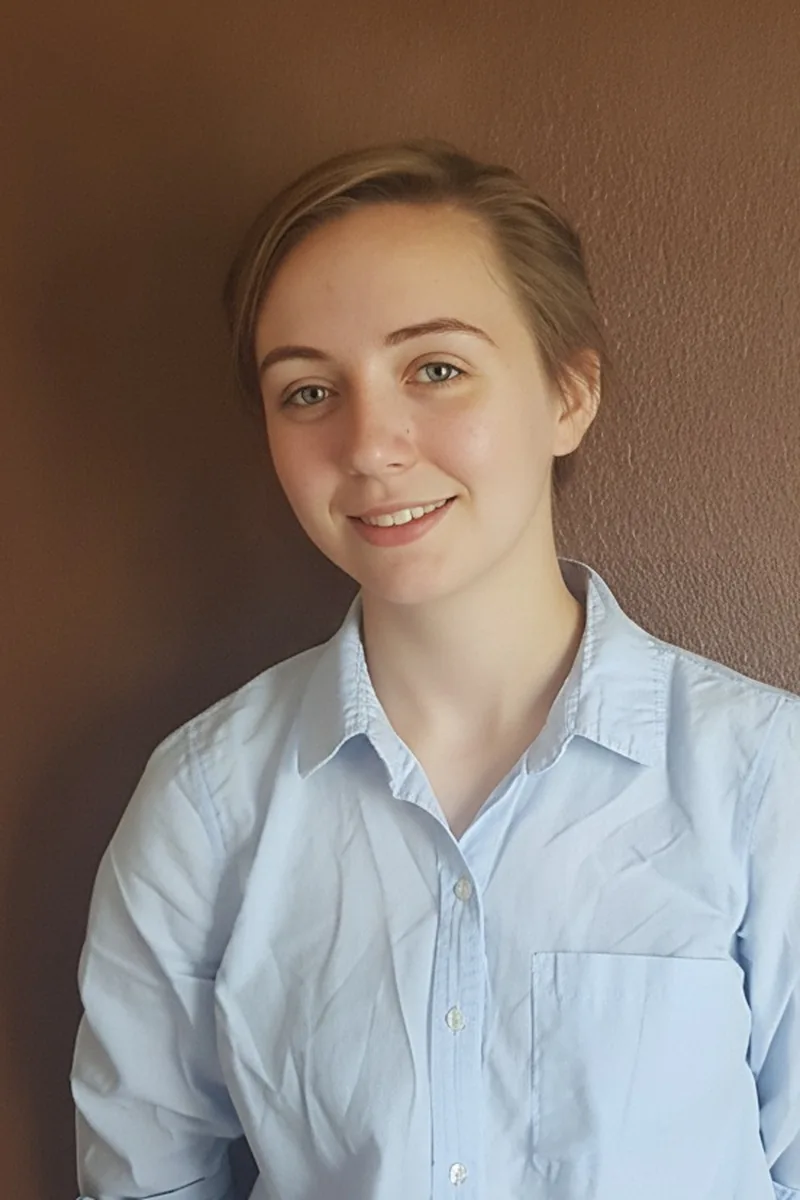
Strong writing starts before the first sentence — with brainstorming, outlining, and figuring out what you actually want to argue. Meagen treats writing as a process rather than a product, breaking down everything from thesis construction to paragraph transitions to finding a voice that sounds like the student, not a template. Her 5.0 rating speaks to how well that approach clicks.
Strong writing starts with knowing what you actually want to say, which is often the hardest part. Lisanne tackles that problem first — outlining an argument or narrative arc before a student writes a single sentence — then moves into paragraph structure, transitions, and word choice. Her background producing doctoral-level research at Harvard means she's revised thousands of her own pages and knows exactly where most writers lose momentum.
Constructing a strong paragraph is a lot like staging a scene: every element needs to earn its place. John's dual training in English and drama means he approaches writing instruction through structure and voice, teaching students how to organize claims, integrate evidence, and develop a style that sounds like them rather than a thesaurus.
Teaching ethics at St. Edward's University means Jessalyn reads and critiques argumentative writing every week — spotting where a student's reasoning goes fuzzy, where evidence is thin, and where structure falls apart. She brings that same eye to tutoring, working through drafts with a focus on making each paragraph earn its place in the larger argument. Rated 5.0 by students.
Getting ideas out of your head and onto the page in a way that actually communicates — that's the hard part. Natalie breaks the writing process into concrete steps: brainstorming with structure, drafting without perfectionism, and revising with a sharp eye for clarity and voice. Her dual English and Film background at Cornell sharpened her instinct for how narrative and argument work across forms.
Every writing project — whether it's a research paper, personal narrative, or argument essay — starts with organizing messy ideas into a clear structure. Lillian approaches writing as a process of thinking on the page, teaching students how to outline, draft, and revise with intention rather than staring at a blank screen. Her own writing practice across academic and creative contexts keeps her advice grounded and practical.
Strong writing comes from learning to deconstruct your own thinking and rebuild it on the page in a sequence that makes sense to someone else. Jordan treats writing like a problem-solving exercise: outline the argument, identify gaps in logic, then revise until every paragraph earns its place. His 5.0 rating speaks to how well that structured approach clicks with students.
Most writing struggles aren't about talent — they're about process. Leah currently teaches a themed writing course at UT Austin called "Americans Abroad," and she brings that same structured, workshop-style approach to her tutoring: outlining an argument before drafting, revising for cohesion, and learning to cut what doesn't serve the thesis. Her Ph.D. training in American Studies means she's written extensively across academic, analytical, and narrative genres.
Kathleen treats writing as a process of thinking — not just putting words on a page. She teaches students how to build an argument from a thesis outward, revise for clarity and structure, and develop a voice that sounds like theirs rather than a formula. Her English degree from Hamilton College and current graduate work in Education inform every session.
Engineering coursework demands precise, structured writing — lab reports, technical summaries, and research proposals all require clarity under tight constraints. Howard applies that same discipline to teaching essay structure, thesis development, and revision strategies, breaking down the writing process into concrete, repeatable steps. Rated 5.0 by students.
Strong writing is really structured thinking made visible on the page, and that's exactly how China teaches it. Whether a student is drafting a persuasive essay or a research paper, she digs into the architecture — claim placement, counterargument handling, evidence selection — drawing on the analytical writing she does daily in her global policy master's program at UT Austin.
Strong writing starts before the first draft — with knowing what you actually want to say and who you're saying it to. Kristina digs into outlining and thesis development so that when students sit down to write, the blank page isn't paralyzing. From persuasive essays to research papers, she teaches the structural thinking that makes revision faster and final drafts sharper.
Anu approaches writing as a process that starts well before the first sentence — brainstorming, outlining, and identifying what a piece actually needs to argue. As a biology major who also studies philosophy at UT Austin, she's practiced at adapting her writing voice across analytical essays, research summaries, and persuasive pieces, and she teaches students to do the same.
Getting ideas onto the page is only half the challenge — organizing them into a clear, compelling structure is where most students get stuck. As a multilingual writer herself, Ehigbor understands how to move from brainstorming to outlining to drafting with purpose, whether the assignment is a personal narrative or a research paper.
From five-paragraph essays to research papers, Steve teaches writing as a process: brainstorming with purpose, building outlines that actually hold up, drafting with clarity, and revising with a critical eye. His English degree from the University of Colorado and Texas Language Arts certification give him the background to tackle everything from narrative voice to argumentative structure. Rated 4.5 by students.
Working at UT-Austin's University Writing Center, Kassidi has reviewed hundreds of student drafts — research papers, lab reports, persuasive essays, creative pieces — and learned to spot the exact moment a writer's thinking goes fuzzy on the page. Her approach is collaborative: instead of marking up a draft with corrections, she walks writers through how to untangle their own ideas and get them into a structure that holds. Her creative writing certificate and psychology background give her a sharp eye for both voice and logical coherence.
Every writing problem is really a thinking problem — a muddled thesis usually means the idea isn't clear yet, not that the grammar is wrong. Brooke digs into that underlying logic first, then teaches students to organize and express their ideas with confidence. Her own range as a fiction writer and academic researcher means she adapts easily to personal narratives, analytical essays, and everything in between.
A PhD student in English at UT Austin with an MFA and years of college-level teaching experience, Deb knows that strong writing starts with learning to build an argument before worrying about style. She walks students through the full process — brainstorming, outlining, drafting, and revising — so they internalize a method they can use on any assignment.
Getting an idea onto the page is only half the challenge — the other half is learning to revise with purpose, tightening thesis statements, restructuring paragraphs, and cutting what doesn't serve the argument. Jennifer's Education and Theatre dual major at Smith College means she approaches writing as both a craft and a communication act, teaching students to consider audience and clarity at every stage of drafting.
Strong writing starts with clear thinking, and that's where Rakhi's applied math training becomes an unexpected advantage — she's wired to spot when an argument's logic doesn't hold up. She walks students through outlining claims, selecting evidence, and building paragraphs that flow from one idea to the next without filler. Whether the assignment is a persuasive essay or a research paper, the goal is always a draft where every sentence has a job.
Teaching English abroad in Argentina gave Thomas a sharp eye for how writing actually communicates — not just whether it follows rules, but whether it moves a reader from point A to point B. He breaks the revision process into concrete steps: tightening thesis statements, cutting filler, and restructuring paragraphs so each one earns its place. Rated 4.9 by students.
Good writing isn't about following a formula — it's about learning to build an argument sentence by sentence, then revising until every word earns its place. William holds a master's in literature and draws on years of close reading to teach structure, thesis development, and revision techniques that sharpen both academic essays and creative pieces. Rated 4.9 by students.
I am a graduate of the University of Texas at Austin, where I majored in Anthropology with a focus on Archaeology as my field of choice. I have always had a great love for history and am currently trying to turn that passion into a career. While studying at UT Austin, I had the opportunity to tutor and work with children as part of a summer program at the University of Texas of the Permian Basin. Recently, I have been working for Berkeley2 Academy as a tutor and preparatory class instructor for subjects ranging from SAT and ACT Verbal skills to US AP History.
Strong writing is really rewriting, and Meg treats revision as the core skill rather than an afterthought. With an MFA in Creative Writing, she teaches students how to build a clear argument, vary sentence rhythm, and cut the filler that weakens a draft. Her feedback targets specific patterns in a student's prose so improvements carry over to the next assignment.
Through his work at 826 Michigan, Jared spent years teaching creative and academic writing to students at every skill level, from reluctant writers to ambitious ones. He tackles the part of writing most people skip — the messy process of generating ideas, organizing them, and figuring out what you're actually trying to say before worrying about polished sentences.
Most writing problems aren't really about grammar; they're about structure. Matt teaches students to outline an argument or narrative before drafting, then revise with fresh eyes — a discipline he developed through years of professional scriptwriting and production work. Whether the assignment is a persuasive essay or a personal narrative, he digs into thesis development, paragraph organization, and voice.
I am a recent graduate from Becker College in Worcester with a B.A. in Interactive Media Design. I have previous experience tutoring middle school students for a public school system, as well as, experience teaching game design to ages 10-17 at a computer camp this past summer. My favorite thing to teach is game design because that is what I am most passionate about but I also enjoy teaching in general. I find it very rewarding to teach and help students learn, especially, when it is a subject they are not comfortable with. This is due to many students thinking that they are just unable to learn a subject that they struggle with but I believe anyone can learn anything if they have the desire and the are committed to work at it. Outside of teaching I enjoy playing games of all types, such as video games and bowling, and spending time with friends and family.
Between academic papers in economics and personal writing in her free time, Sophie has logged serious hours across genres — persuasive essays, research papers, reflective narratives, and more. She tackles the part of writing most students dread: getting from a blank page to a working first draft, using outlining techniques that make the actual composing feel manageable.
Caroline treats writing as a process with distinct, teachable stages — invention, drafting, revision — rather than a single mysterious talent. Her English degree gave her deep experience with analytical and persuasive writing, while her graduate work in Instructional Design sharpened her ability to diagnose exactly where a student's process breaks down, whether that's generating a thesis, organizing paragraphs, or cutting clutter at the sentence level.
Most writing problems are really thinking problems — unclear sentences usually trace back to unclear ideas. Sandra teaches students to outline arguments before drafting, build paragraphs around single claims, and revise by testing whether each sentence actually advances the point. Her analytical mindset from computer science makes her especially effective at tightening structure and eliminating filler.
From five-paragraph essays to research papers to creative nonfiction, Stephanie teaches writing as a process — outlining, drafting, revising, and polishing — rather than treating a first draft as a final product. Her interdisciplinary background (design, architecture, business, and the humanities) means she's written in wildly different registers and can coach students through virtually any assignment type or tone.
Scientific writing — structuring an argument, supporting claims with evidence, revising for clarity — is something Sneha practices daily as a neuroscience major at UT Austin. She brings that same discipline to essays, research papers, and personal narratives, teaching students how to organize their ideas before worrying about polish. Rated 5.0 by students.
Clear scientific writing — the kind Riley practices daily as a biochemistry major at UT Austin — demands the same skills that make any writing effective: precise word choice, logical structure, and purposeful revision. She applies that analytical lens to essays, research papers, and creative pieces, breaking down each draft into thesis, evidence, and flow so students can see exactly where their argument strengthens or falls apart.
Good writing starts with a clear argument and a structure that earns the reader's trust sentence by sentence — something Jacob internalized through his editorial work and his cum laude history degree at Abilene Christian. He unpacks the mechanics of persuasive and expository writing, from crafting a thesis that does real intellectual work to building transitions that move an argument forward. Rated 4.9 by students.
Getting ideas onto the page is one challenge; organizing them into something compelling is another entirely. Frances teaches the mechanics of effective writing — thesis development, paragraph cohesion, voice — drawing on her English degree from the University of Alabama and years of close work with texts across genres.
Rachel's writing instruction starts with structure: what is the single claim this piece is making, and does every paragraph earn its place? From there she addresses transitions, evidence integration, and voice — the elements that separate a competent essay from a compelling one. Her political science training means she's especially sharp on argumentative and analytical writing.
Clear writing starts with clear thinking, and Jaxon treats every assignment — whether it's a lab report or a personal narrative — as an exercise in organizing ideas before polishing prose. He walks through outlining strategies, thesis construction, and paragraph-level cohesion, then moves into line-by-line revision so students can see exactly how each edit strengthens their argument. Rated 4.6 by students.
From composing an original full-scale musical to crafting a college essay about goat cheese that earned acceptances to Brown and UChicago, Samantha has spent years learning that strong writing starts with a distinctive voice. She tackles everything from thesis development and paragraph organization to word choice and tone, adapting her approach based on whether a student is writing a personal narrative, a research paper, or an analytical argument.
Good writing isn't about following a formula — it's about learning to organize thinking on the page so that every paragraph earns the reader's attention. Paige, who studied English at UT Austin's honors program and is entering a doctoral program at UNC Chapel Hill, teaches the revision process as a skill in itself: restructuring arguments, tightening sentences, and cutting what doesn't serve the piece. Rated 5.0 by students.
Testimonials
Because the right Writing tutor makes all the difference.
Average Session Rating – Based on 3.4M Learner Ratings
Nearby Writing Tutors
Other Austin Tutors
Related English Tutors in Austin
Frequently Asked Questions
In a classroom of 20+ students, teachers often can't provide detailed feedback on every essay. With personalized 1-on-1 instruction, tutors work directly with you on your specific writing challenges—whether that's developing a stronger thesis, organizing ideas clearly, or refining your voice. You get immediate, actionable feedback on your drafts rather than waiting weeks for graded papers.
Strong essays start with a clear thesis statement that answers your prompt, followed by body paragraphs that each support one main idea with evidence. A good structure flows logically from introduction through conclusion, with transitions that guide your reader. Tutors can help you map out your ideas before writing and then revise for clarity and organization once you have a draft.
Writer's block often happens when you're trying to write perfectly on the first try. Tutors recommend starting with brainstorming or freewriting to get ideas flowing without judgment, then organizing those ideas into an outline. Breaking the essay into smaller chunks—focusing on one paragraph at a time—makes the task feel less overwhelming and helps you build momentum.
Both matter, but at different stages. During drafting, focus on getting your ideas down; worrying too much about grammar slows you down. Once you have a complete draft, you can revise for clarity, sentence variety, and voice—then do a final pass for grammar and mechanics. Tutors help you balance these priorities so your writing is both polished and authentically yours.
Your teacher or assignment prompt will specify which citation style to use—MLA is common in high school English, APA in social sciences, and Chicago in history. Rather than memorizing all the rules, focus on understanding the basic format your assignment requires. Tutors can walk you through proper citation for your sources and help you avoid plagiarism by teaching you how to paraphrase and quote correctly.
Summarizing tells what happened in a text, while analyzing explains how and why the author created meaning—through word choice, imagery, structure, or character development. In literary analysis, you support your interpretation with specific evidence from the text. Tutors help you move beyond plot summary to develop insightful arguments about what a text means and how it achieves its effects.
Revision works best in layers: first tackle big-picture issues like organization and argument strength, then focus on sentence-level clarity and word choice, and finally check grammar and mechanics. Reading your work aloud helps you catch awkward phrasing. Tutors provide feedback at each stage and teach you revision strategies so you can improve your own work independently over time.
Your first session is about understanding your goals and challenges. You might discuss a specific essay you're working on, share writing samples, or talk about areas where you struggle—whether that's getting started, organizing ideas, or polishing your final draft. From there, tutors create a personalized plan to help you develop stronger writing skills that you can apply to any assignment.
Let’s find your perfect tutor
Answer a few quick questions. We’ll recommend the right plan and match you with a top 5% tutor.