Award-Winning Writing Tutors
serving El Paso, TX
Writing
Tutors in El Paso
Private 1-on-1 tutoring, weekly live classes for academic support, test prep & enrichment, practice tests and diagnostics, and more to elevate grades and test scores.
Based on 3.4M Learner Ratings
UniversitiesSchools & Universities
DeliveredHours Delivered
ProficiencyGrowth in Proficiency
Who needs tutoring?
No obligation. Takes ~1 minute.
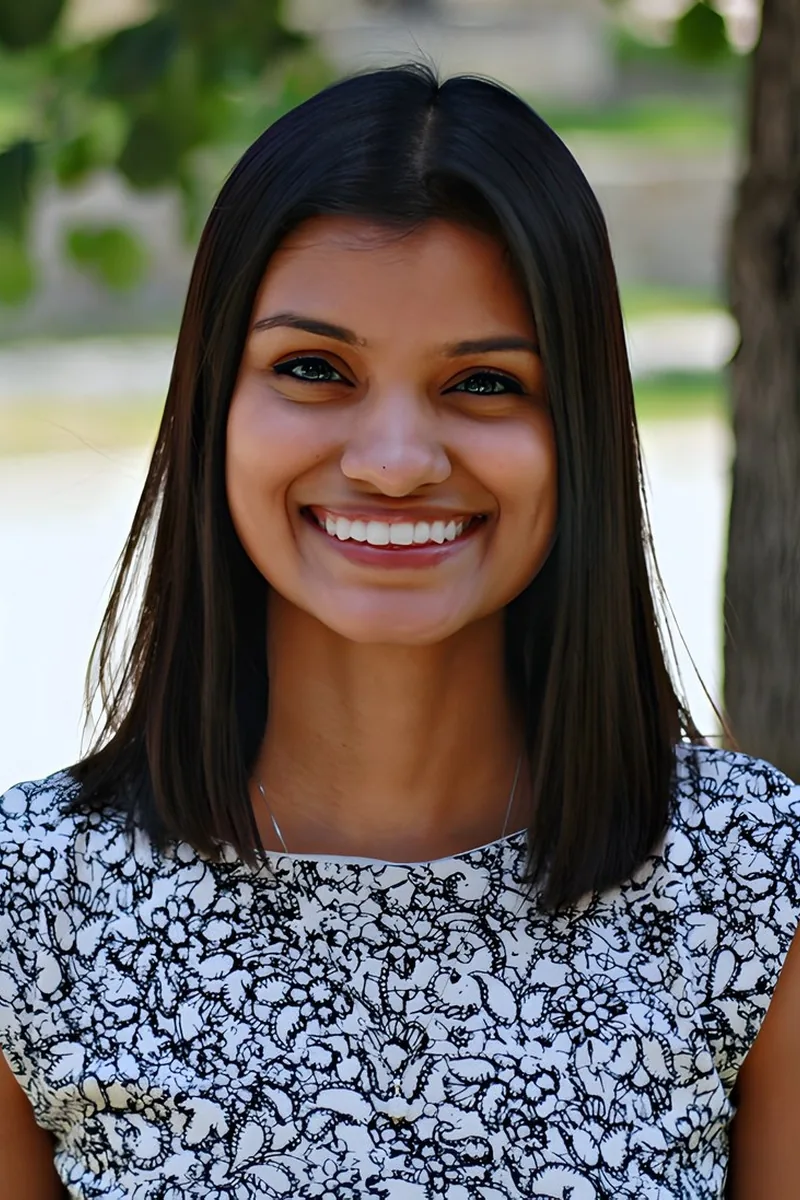
Years of editing medical school applications and serving on admissions committees at both Rice and Baylor College of Medicine taught Sugi exactly what distinguishes forgettable writing from prose that commands attention. She applies that eye to student drafts at every level — sharpening claims, cutting vague language, and reworking sentence-level rhythm until each paragraph earns the next. Rated 5.0 by students.

Leading tours for five-to-eighteen-year-olds at the Metropolitan Museum of Art's Cloisters taught Elena something crucial about writing: if you can't organize your thinking clearly enough to explain Byzantine mosaics to a ten-year-old, your prose isn't working yet. She applies that same principle to student drafts, breaking down how each paragraph's structure either carries or buries the writer's actual point. Her art history and history training means she's especially sharp on evidence-driven writing — building claims around specific details rather than vague generalizations.
Before starting law school at UT, Paul spent years building arguments on paper — from economics research to personal statements — and knows that good writing starts with a clear claim and a logical structure to support it. He digs into the specific mechanics that elevate a draft: transitions that actually connect ideas, topic sentences that do real work, and evidence that's analyzed rather than just dropped in.
Strong writing starts with knowing what you're actually trying to argue — and Sajel's training in social policy analysis at Rice means she spends her days constructing evidence-based arguments across disciplines. She breaks the writing process into concrete steps: brainstorming a defensible thesis, organizing supporting evidence, and revising for precision. Students walk away with a repeatable method they can apply to any prompt or assignment.
Strong writing starts before the first sentence — with brainstorming, outlining, and figuring out what you actually want to argue. Meagen treats writing as a process rather than a product, breaking down everything from thesis construction to paragraph transitions to finding a voice that sounds like the student, not a template. Her 5.0 rating speaks to how well that approach clicks.
Getting ideas onto the page is one challenge; organizing them into something a reader can follow is another entirely. Chloe's background in linguistics and comparative literature gives her a sharp eye for how sentence-level choices — syntax, diction, rhythm — shape a reader's experience. She breaks the writing process into concrete, repeatable steps so students stop staring at blank screens.
Clear writing starts with clear thinking, and Patricia spends real time on the pre-writing stage — outlining arguments, identifying the strongest evidence, and deciding on a logical sequence before a single sentence gets drafted. From there, she digs into craft-level skills like varying sentence structure, eliminating passive voice, and writing transitions that actually advance an argument. Writing and essay revision are among her favorite subjects to teach, and that enthusiasm shows in her sessions.
Turning a blank page into a coherent argument is one of the hardest skills to teach, which is why Aditi breaks the writing process into concrete steps: narrowing a topic, building an outline with real claims, and drafting paragraphs that each do specific work. Her psychology background at Rice also gives her a sharp sense of how to write persuasively for different audiences.
Strong writing starts with knowing what you actually want to say, which sounds obvious but trips up most students somewhere between the outline and the final draft. Adam breaks the writing process into concrete stages — claim development, paragraph architecture, transitions — so each piece builds toward a clear purpose. His cognitive science training at Rice gave him a precise, argument-driven writing style he now teaches others to develop.
Strong writing starts with having something specific to say and knowing how to organize it. Jessy tackles everything from thesis construction and paragraph development to voice and transitions, adapting her approach depending on whether a student is writing a persuasive essay, a research paper, or a creative piece. Her 5.0 rating speaks to how well that flexibility works.
Most writing struggles come down to one problem: not knowing what a draft is for. Iselee separates the writing process into distinct stages — freewriting for ideas, outlining for structure, drafting for momentum, revising for precision — so students stop trying to produce a polished paragraph on the first attempt. Her Spanish and digital communication studies give her a cross-disciplinary perspective on how clear writing actually works.
Clear writing is clear thinking put on paper, and Zhengdong treats it that way. He teaches students to outline an argument before drafting, tighten sentences by eliminating filler, and revise with purpose — skills he refined through two doctoral programs that demanded precise, structured communication across very different disciplines.
Clear, structured writing is a skill Emmanuel honed through years of scientific research — drafting lab reports at Johns Hopkins, composing research abstracts, and building arguments from evidence. He breaks the writing process into concrete steps: developing a thesis, organizing supporting claims, and revising for clarity and flow. Rated 5.0 by students.
Timed essays used to be a real challenge for Kendall, so she developed a systematic method for outlining under pressure that she now teaches to other writers — how to generate a thesis quickly, organize evidence on the fly, and write a conclusion that doesn't just repeat the introduction. Beyond timed writing, she also coaches students through longer research papers and personal narratives, breaking the drafting process into stages that feel manageable rather than overwhelming.
I am most passionate about biology and chemistry. I am a firm proponent of education, believing it to be absolutely necessary for an improved quality of life, and I try to impart this appreciation to all of my students.
Strong writing starts before the first draft, in the messy stage where ideas need organizing and a thesis needs sharpening. Molly tackles that pre-writing chaos head-on, teaching outlining and claim-building strategies drawn from her communications coursework and newsroom editing experience so that by the time students sit down to write, the hard thinking is already done.
Strong writing comes from learning to think on paper — organizing an argument, choosing precise language, and revising ruthlessly. Craig earned his doctorate in English and has taught writing across every level from high school to graduate seminars, which means he adjusts his feedback to match whether a student is drafting a first five-paragraph essay or polishing a thesis chapter.
Getting ideas onto the page is one challenge; organizing them into clear, purposeful prose is another. Emily teaches concrete techniques — outlining by claim rather than topic, varying sentence structure for rhythm, and choosing evidence that actually advances an argument. Her background in creative writing and competitive coaching means she's equally comfortable with analytical essays and short fiction.
Whether it's a persuasive essay, a research paper, or a personal narrative, Brett teaches writing as a process of making deliberate choices about structure, evidence, and voice. His neuroscience training at Rice sharpened his ability to organize complex ideas into clear, logical prose — a skill he now applies to everything from five-paragraph essays to longer analytical pieces. He's rated 5.0 across his students.
Clear writing starts with clear thinking, and that's where Misael spends most of his time with students — organizing ideas before worrying about polish. He unpacks thesis construction, paragraph architecture, and evidence integration in a way that transfers across assignments, from argumentative essays to research papers. Three degrees' worth of academic writing gave him a deep toolkit for different genres and expectations.
Strong writing starts with knowing what you actually want to say, which is often the hardest part. Lisanne tackles that problem first — outlining an argument or narrative arc before a student writes a single sentence — then moves into paragraph structure, transitions, and word choice. Her background producing doctoral-level research at Harvard means she's revised thousands of her own pages and knows exactly where most writers lose momentum.
Constructing a strong paragraph is a lot like staging a scene: every element needs to earn its place. John's dual training in English and drama means he approaches writing instruction through structure and voice, teaching students how to organize claims, integrate evidence, and develop a style that sounds like them rather than a thesaurus.
Good writing starts with having something specific to say and knowing who you're saying it to. Madison's communication degree from Texas A&M trained her to analyze audience, purpose, and structure across genres — skills she now applies whether a student is drafting a research paper, a reflective essay, or a creative piece. She tackles revision as a skill in itself, teaching students to diagnose their own weak spots rather than waiting for someone else to mark them.
Clear writing starts with clear thinking, and Caio's sociology coursework at Rice demands both constantly — constructing thesis-driven arguments, integrating evidence, and revising for precision. He applies that same discipline when teaching writing, whether a student is struggling with paragraph organization, transitions, or how to move from a rough idea to a polished draft.
Cognitive neuroscience taught Giovanna how to think precisely about complex ideas — but it was her work at the Penn Tutoring Center that taught her how to get those ideas onto a page in a way someone else can actually follow. She zeroes in on the mechanics of turning scattered thoughts into structured prose, from building a thesis that holds weight to revising sentences until they say exactly what the writer means. Rated 4.9 by students.
Getting ideas onto the page is one challenge; organizing them into a coherent argument is another entirely. Kim teaches students to outline before they draft, build thesis statements that actually make claims, and revise with purpose — skills she sharpened through her own graduate-level writing across anthropology and business. She holds a 5.0 rating.
Strong writing is really strong thinking made visible on the page, and Andria approaches it that way — outlining an argument's logic before worrying about word choice or transitions. Her background spans academic writing at Duke, professional communications at a global pharmaceutical company, and literary analysis, so she adapts her coaching to whatever genre a student is tackling.
Strong writing starts with having something specific to say and then organizing it so a reader can follow every step. Malcolm teaches the full arc of the writing process — brainstorming, outlining, drafting, and revising — with particular attention to building clear thesis statements and supporting them with concrete evidence. His background spans both scientific and creative writing, so he adapts easily whether the assignment is a lab report or a personal narrative.
Good writing is really good thinking made visible, and Kenneth's dual background in political science and law means he's spent years turning complex ideas into clear, structured prose. Whether a student is drafting a research paper or a personal narrative, he zeroes in on thesis development, paragraph architecture, and the specific word choices that make sentences land.
Strong writing requires more than correct grammar; it demands a clear argument and evidence that actually supports it. Brian's career as a professor and published researcher means he's spent decades crafting precise, structured prose — skills he now breaks down for students working on everything from persuasive essays to research papers.
Strong writing is really about revision — learning to see your own draft the way a reader encounters it for the first time. Toni's background teaching college English means she digs into the architecture of a piece: how to build an argument that escalates, how to transition without losing momentum, and how to cut the filler that dilutes a writer's voice. She holds a 4.9 rating from students.
Studying art history at Vanderbilt trained Sarah to do something most people overlook in writing: build an argument around visual and textual evidence, then communicate it precisely to readers who may not share your perspective. She applies that same analytical clarity to student drafts, digging into how each paragraph supports a central claim and where the logic drifts. Her communications master's from the American University of Paris added a second layer — learning to write persuasively across cultural and stylistic expectations.
Strong writing starts with having something specific to say and then organizing it so a reader can follow. Casey teaches outlining, thesis development, and revision techniques across genres — from argumentative essays to lab reports — drawing on her experience producing both scientific and creative writing throughout her bioengineering program.
Briana treats writing as a craft that improves through deliberate revision, not inspiration. Whether a student is working on a five-paragraph essay or a research paper, she zeroes in on the specific skill holding the draft back — unclear thesis construction, weak paragraph transitions, or evidence that doesn't connect to the claim — and tackles that skill until the student owns it.
Strong writing starts with a clear argument, not a perfect first sentence. Rachel tackles the full process — from outlining a thesis to selecting evidence to tightening prose in final drafts — so students build a repeatable method they can use independently. Her economics coursework at Vanderbilt means she's equally comfortable coaching analytical essays and narrative pieces.
Good writing isn't about following a formula — it's about learning to hear your own argument take shape across a draft. Jocelyn digs into the revision process with students, teaching them how to tighten thesis statements, cut filler, and build paragraphs that actually move a reader forward. Her background in both History and French Studies means she's spent years writing across disciplines and knows how to adapt tone for any assignment.
Most writing problems aren't really about writing — they're about thinking. Joyce starts by teaching students to organize their ideas into a clear claim and supporting structure before they type a single word. Her English background and multi-grade teaching experience mean she can adapt that process whether someone is drafting a personal narrative or a research-based argument.
Clear writing starts with organizing ideas before putting them on paper — outlining an argument, choosing precise language, and revising for structure rather than just fixing typos. Frances brings the analytical rigor of her Rice University economics training to the writing process, teaching students how to build paragraphs that develop a single claim with real evidence. Rated 5.0 by students.
Getting ideas out of your head and onto the page in a way that actually communicates — that's the hard part. Natalie breaks the writing process into concrete steps: brainstorming with structure, drafting without perfectionism, and revising with a sharp eye for clarity and voice. Her dual English and Film background at Cornell sharpened her instinct for how narrative and argument work across forms.
Good writing starts with having something specific to say and then organizing it so a reader can follow without backtracking. Adi tackles the structural side first — thesis placement, paragraph transitions, evidence integration — before moving into sentence-level revision. An avid reader and writer himself, he brings a genuine feel for voice and rhythm that makes revision sessions productive rather than tedious.
Testimonials
Because the right Writing tutor makes all the difference.
Average Session Rating – Based on 3.4M Learner Ratings
Nearby Writing Tutors
Other El Paso Tutors
Related English Tutors in El Paso
Frequently Asked Questions
Your first session is about understanding your writing goals and challenges. A tutor will review samples of your work, discuss what you're struggling with—whether that's essay organization, thesis development, or grammar—and create a personalized plan. This helps establish a foundation for targeted feedback and improvement in future sessions.
Tutors work with you on the fundamentals of essay structure: crafting a strong thesis, building logical paragraph organization, and creating smooth transitions between ideas. Rather than just pointing out problems, they guide you through the writing process itself, helping you develop outlining strategies and revision techniques you can apply to any assignment.
You'll receive personalized, detailed feedback that goes beyond grammar corrections. Tutors address both mechanics and style—helping you strengthen your voice, clarify arguments, and develop more persuasive writing. This one-on-one approach means feedback is tailored to your specific weaknesses and learning style, not generic.
Writer's block often stems from unclear thinking or fear of imperfection. Tutors help you brainstorm ideas, ask clarifying questions about your assignment, and break the writing process into manageable steps. They'll work with you on prewriting strategies like freewriting and outlining, so you move past the blank page and into productive drafting.
Yes. Tutors can teach you proper citation formatting, help you understand when and why citations are needed, and review your work to catch errors. Rather than just correcting citations, they explain the reasoning behind different formats so you understand how to apply them across different assignments and subjects.
Absolutely. Strong writing about literature starts with careful reading and analysis. Tutors help you develop critical reading skills, understand how to identify themes and literary devices, and translate those observations into well-supported analytical essays. This foundation strengthens both your comprehension and your ability to write persuasively about texts.
Varsity Tutors connects you with expert tutors who understand the writing curriculum and challenges for El Paso students. You can share your specific needs—whether you need help with high school essays, college application writing, or test prep—and get matched with a tutor who fits your goals and schedule.
Many students notice improvements in clarity and organization within a few sessions, especially when they apply feedback consistently. More significant changes in voice, argumentation, and overall writing quality typically develop over weeks of regular practice and personalized guidance. The key is applying what you learn in tutoring to your own writing assignments.
Let’s find your perfect tutor
Answer a few quick questions. We’ll recommend the right plan and match you with a top 5% tutor.