Award-Winning Spanish Tutors
serving Greenville, SC
Spanish
Tutors in Greenville
Private 1-on-1 tutoring, weekly live classes for academic support, test prep & enrichment, practice tests and diagnostics, and more to elevate grades and test scores.
Based on 3.4M Learner Ratings
UniversitiesSchools & Universities
DeliveredHours Delivered
ProficiencyGrowth in Proficiency
Who needs tutoring?
No obligation. Takes ~1 minute.
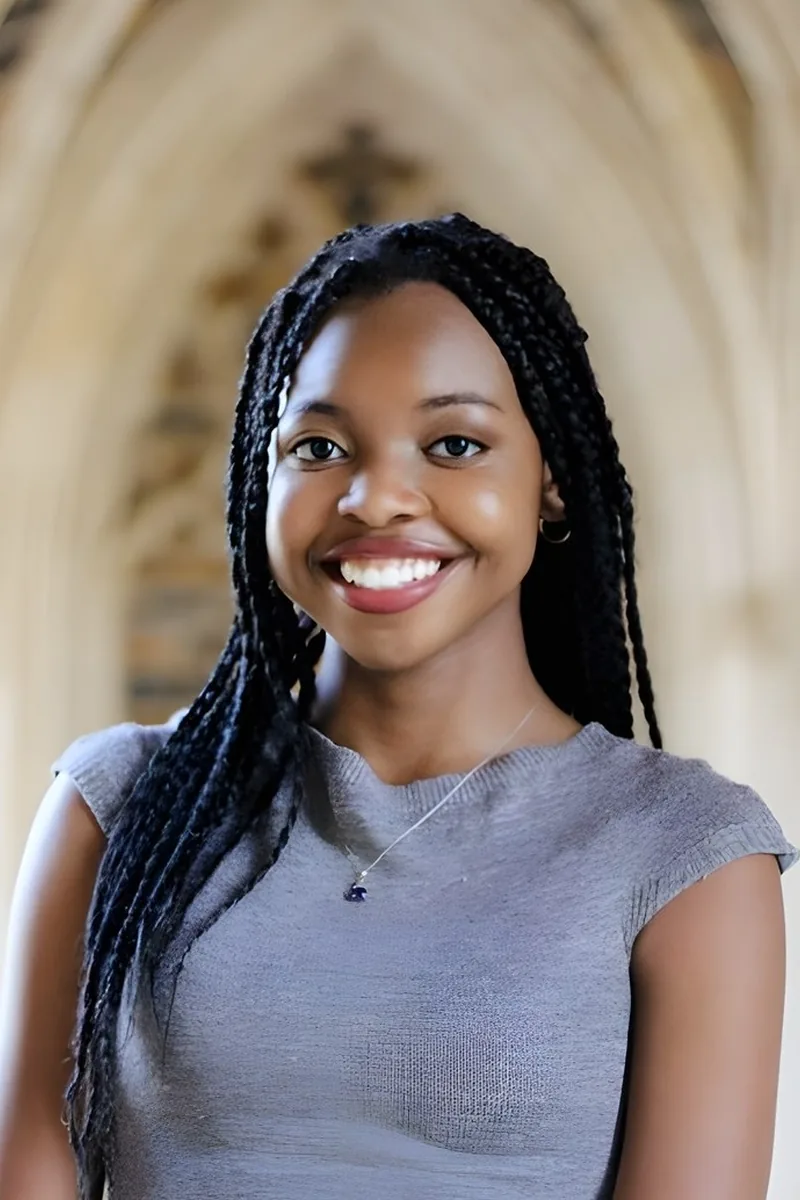
Beginner Spanish — verb conjugations, gendered nouns, building basic conversational sentences — is where Lenique thrives in this subject. Growing up in a large Caribbean family gave her genuine cultural context for the language, which she uses to make vocabulary and grammar practice feel connected to real life rather than abstract drills.

Katheryn minored in Spanish at the University of Georgia, giving her a depth that goes well beyond introductory vocabulary and verb conjugations. She tackles tricky grammar concepts like the subjunctive mood, ser versus estar, and preterite-versus-imperfect distinctions by connecting them to how native speakers actually think about time and certainty. Students working through Spanish 1, 2, or 3 get someone who can explain the why behind the rules.
I am currently pursuing a degree in Chemical Engineering and Spanish at Virginia Tech. I have a strong academic record in my fields. I enjoy sharing knowledge and helping others overcome learning challenges. Through previous tutoring, I have developed excellent communication, organization, and problem-solving skills. I am comfortable using online learning technologies and am committed to providing engaging, supportive lessons that help students reach their full potential.
Emily pairs structured grammar instruction — verb conjugations, pronoun usage, subjunctive triggers — with reading and listening practice that reinforces vocabulary in context. Her analytical mindset from the sciences translates well to language learning, where pattern recognition in tense structures and sentence construction can accelerate progress quickly.
Four months living in Spain plus an ongoing stay in Costa Rica mean Nicolette's Spanish grammar is something she's tested daily in real conversations, not just classroom exercises. She unpacks verb conjugations, subjunctive triggers, and pronoun placement with a level of fluency that comes from actually needing the language to navigate daily life.
Studying both German and Spanish at Carleton while majoring in psychology gives Amanda a multilingual perspective that sharpens how she teaches language — she understands firsthand where English speakers get tripped up by gendered nouns or unfamiliar verb forms because she's wrestling with those same structures across two foreign languages simultaneously. Her conversational Spanish background means sessions stay practical, connecting grammar concepts like ser versus estar to real dialogue instead of isolated worksheets.
Moriah teaches Spanish at the intermediate and advanced levels, tackling tricky areas like subjunctive mood, preterite-vs-imperfect distinctions, and complex sentence construction. Her analytical approach — developed through a Cornell education and years of teaching — translates well to breaking down grammar rules that often feel arbitrary to English speakers. She connects new structures to patterns students already recognize, making conjugation tables and vocabulary retention far less painful.
Though French is Daniel's primary language specialty, his experience with Romance language grammar gives him a practical framework for teaching Spanish fundamentals like ser vs. estar, preterite vs. imperfect, and pronoun placement. He approaches Spanish 1-level concepts by drawing parallels between the two languages, which accelerates pattern recognition for students.
Tutoring at a bilingual orphanage in Peru gave Priscilla hands-on experience teaching in Spanish outside a classroom setting, where clear communication mattered more than perfect textbook answers. She channels that practical exposure into building students' confidence with vocabulary, reading comprehension, and everyday conversation skills.
Having taught across four levels of Spanish, Ivan knows exactly where students tend to stall — usually around the subjunctive mood and the difference between preterite and imperfect tense. He breaks down verb conjugation patterns systematically and builds reading comprehension through context rather than word-for-word translation.
Medical school at Baylor means Sugi regularly encounters Spanish-speaking patients and medical terminology rooted in Latin — a context that sharpens her ear for vocabulary patterns and grammatical structures in ways a standard classroom can't replicate. Her cognitive science background from Rice also gives her a research-backed understanding of how the brain acquires new languages, so she tailors practice around the memorization and retrieval techniques that actually stick. Rated 5.0 by students.
Learning Spanish verb conjugations in isolation rarely sticks — Gabriel instead anchors grammar concepts like the subjunctive and preterite/imperfect distinction in real reading passages and conversation so students see how the language actually works. His background spans Spanish 2 through AP-level coursework, and his humanities PhD at the University of Chicago keeps him immersed in multilingual scholarship.
Studying at the Horace Mann School in New York City meant Ethan took Spanish alongside a rigorous academic curriculum, and his current economics and public policy coursework at UChicago keeps him reading and analyzing across disciplines — skills that transfer directly to parsing Spanish texts and constructing grammatically sound written responses. He's particularly sharp at breaking down the logic behind ser versus estar or preterite versus imperfect, treating tricky distinctions as puzzles with clear rules rather than exceptions to memorize.
Pre-law coursework at Vanderbilt means Kit spends most of his time building arguments, analyzing texts, and writing persuasively — skills that transfer surprisingly well to learning a second language, where reading comprehension and grammatical precision matter just as much. He tackles Spanish grammar and vocabulary with the same structured, detail-oriented approach he applies to political science, breaking down sentence construction and verb forms into clear, logical steps.
Aditi teaches Spanish with an emphasis on building grammar systematically — verb conjugations, pronoun usage, sentence structure — so students can construct their own sentences instead of relying on memorized phrases. She covers beginner through intermediate levels and connects vocabulary to real-world contexts that make retention easier.
Testimonials
Because the right Spanish tutor makes all the difference.
Average Session Rating – Based on 3.4M Learner Ratings
Nearby Spanish Tutors
Other Greenville Tutors
Related Languages Tutors in Greenville
Frequently Asked Questions
Speaking practice is one of the biggest challenges in traditional classrooms, where students often get limited opportunities to speak one-on-one. With personalized tutoring, you get dedicated conversation practice tailored to your level—whether you're building confidence with basic phrases or refining your accent and fluency. Tutors can focus on your specific pronunciation challenges and provide real-time feedback that helps you develop natural speaking patterns.
Verb conjugation is one of the most common pain points for Spanish learners, but it becomes much more manageable with targeted instruction. Expert tutors break down conjugation patterns into logical groups and connect them to real conversation, so you understand not just the rules but when and why to use them. Rather than memorizing endless charts, you'll practice conjugations in context through dialogues and writing exercises that reinforce patterns naturally.
Vocabulary retention improves dramatically when words are learned in context and practiced repeatedly over time—a principle called spaced repetition. Tutors help you learn new words through conversations, reading, and writing activities rather than isolated lists, and they strategically revisit vocabulary across multiple sessions so it moves into long-term memory. This approach is far more effective than cramming and helps you retain words you'll actually use.
Yes. Personalized tutoring addresses all four skills in a balanced way, which is essential for true fluency. You'll practice listening through conversations and audio materials, speaking through dialogue and discussion, reading through authentic texts and literature, and writing through composition and grammar exercises. This comprehensive approach ensures you develop well-rounded proficiency rather than excelling in one area while struggling in another.
Language and culture are inseparable—understanding Spanish-speaking cultures helps you use the language authentically and stay motivated. Tutors often incorporate cultural elements like literature, current events, music, and traditions into lessons, so you're not just learning grammar but also gaining insight into how Spanish speakers think and communicate. This immersion-style approach makes learning more engaging and helps you develop cultural competency alongside language skills.
Greenville's school districts have established Spanish programs across their 80 schools, and expert tutors are familiar with the standards and pacing used locally. Whether you need support with your current coursework, preparation for AP Spanish, or supplemental practice, tutors can align instruction with what you're learning in class while also filling gaps and accelerating your progress. This localized knowledge ensures tutoring complements your school experience seamlessly.
Absolutely. Pronunciation and accent work are areas where 1-on-1 instruction makes a real difference, since you need personalized feedback to identify and correct your specific patterns. Tutors can help you master Spanish phonetics, stress patterns, and intonation through guided practice and modeling. With consistent attention to these details, you'll develop a more authentic accent and gain confidence in your spoken Spanish.
Your first session is focused on getting to know you and understanding your goals, current level, and learning style. The tutor will assess your strengths and challenges across reading, writing, speaking, and listening, then work with you to create a personalized learning plan. This foundation helps ensure that every future session is targeted and efficient, addressing exactly what you need to succeed in Spanish.
Let’s find your perfect tutor
Answer a few quick questions. We’ll recommend the right plan and match you with a top 5% tutor.