Award-Winning Chemistry Tutors
serving Pittsburgh, PA
Award-Winning
Chemistry
Tutors in Pittsburgh
Private 1-on-1 tutoring, weekly live classes for academic support, test prep & enrichment, practice tests and diagnostics, and more to elevate grades and test scores.
Based on 3.4M Learner Ratings
UniversitiesSchools & Universities
DeliveredHours Delivered
ProficiencyGrowth in Proficiency
Who needs tutoring?
No obligation. Takes ~1 minute.
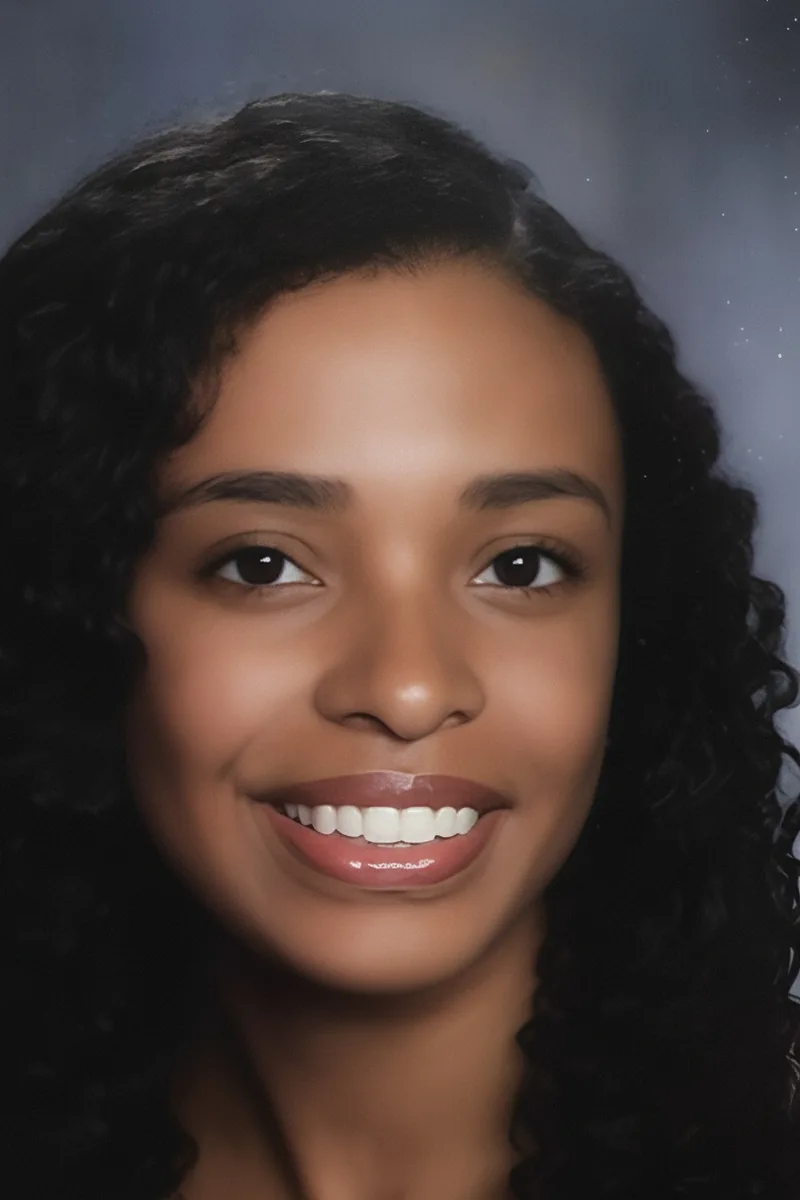
Chemical engineering coursework is essentially applied chemistry on an industrial scale — reaction kinetics, thermodynamics, mass balances — so Olivia spent four years at Pitt solving problems that required deep fluency in stoichiometry, equilibrium, and energy transfer. She carries that fluency into tutoring by walking through the why behind each setup, whether it's balancing redox reactions or predicting how Le Chatelier's principle shifts a system. Rated 4.9 by students.

A PhD in materials science means Cathy has spent years working at the intersection of chemistry and physics — bonding theory, thermodynamics, phase diagrams, and crystallography were daily territory. She teaches chemistry by connecting molecular-level behavior to observable properties, making topics like stoichiometry, equilibrium, and electrochemistry feel grounded rather than abstract. Rated 5.0 by her students.
Stoichiometry, equilibrium, and reaction kinetics aren't just textbook topics for Tiasha — they were the foundation of her chemical engineering coursework at both the undergraduate and graduate level. She teaches chemistry by walking through the logic of each problem type, so students learn to predict what a balanced equation or Le Chatelier shift should look like before they calculate it.
Balancing equations and memorizing periodic trends is one thing; understanding why a reaction proceeds or how molecular geometry shapes chemical properties is another. Danielle earned her biology degree at Tufts, where general and organic chemistry were core requirements for her pre-med track, so she teaches chemistry with an eye toward how it actually applies in biological and medical contexts. She's rated 5.0 by her students.
As an Undergraduate Teaching Assistant in Pitt's Chemistry department, Mary has spent extensive time breaking down concepts like stoichiometry, equilibrium, and thermodynamics for students one-on-one and in small groups. Her neuroscience and chemistry background means she can connect abstract ideas — like electron orbitals or acid-base reactions — to real applications in medicine and biology. Rated 4.8 by students.
Balancing equations, understanding mole ratios, and predicting reaction products all require a kind of bookkeeping that feels foreign at first. Golda's engineering training at Georgia Tech gave her deep fluency with stoichiometry and thermochemistry, and she walks students through each problem type step by step until the logic becomes second nature.
Biology majors often have a sharper handle on chemistry than they get credit for — Lawrence spent his time at Oberlin working through organic structures, cellular energetics, and the molecular logic that underpins everything from enzyme function to neurotransmitter pathways. That life-sciences grounding means he teaches concepts like molecular polarity, acid-base reactions, and functional groups by anchoring them in biological contexts students can picture. Rated 4.8 by students.
Balancing equations and stoichiometry are mechanical, but understanding why reactions happen — electronegativity trends, molecular geometry, thermodynamic favorability — requires a different kind of thinking. Pooja's chemistry minor at Pitt gives her the depth to explain the reasoning behind the rules, not just the procedures.
Studying chemistry at the college level means Amina is neck-deep in the same periodic trends, stoichiometry, and thermodynamics concepts she teaches — which keeps her explanations current and detailed. She tends to anchor tricky topics like mole conversions or equilibrium in concrete, visual examples before introducing the math. That combination of recent experience and real-world grounding makes tough problem sets feel more approachable.
Eric earned his bachelor's in chemistry with a biochemistry minor, which means he can teach everything from stoichiometry and thermodynamics to organic reaction mechanisms and molecular orbital theory. He approaches each topic by building the reasoning behind it first, so students can solve unfamiliar problems instead of relying on memorized shortcuts.
I am an undergraduate student at the University of Pennsylvania. I have been tutoring for over 6 years now, and I have found it to be an extremely rewarding and enjoyable experience. I specialize in mathematics, particularly at the high school level, and I also have experience tutoring other subjects. I also have done SAT prep for the mathematics section of the New SAT and am very familiar with the recent changes to the exam. My belief is that everyone is capable of learning with enough time, explanation, and practice, and I hope to pass this on to all the students I work with. For this reason, I believe in teaching students how to think and problem solve, rather than just having them memorize patterns or facts.
I am confident I can teach / tutor to make any concept easily understandable and provide individualized lessons to suit the specific learning style of every student. I have been successful in helping students bring up their grade. I am an adjunct faculty at a reputed university and I am also a teacher at a reputed high school ! I have worked as SAT/ACT coach. My enthusiasm, good sense of humor and passion for teaching will instantly motivate every student and I will make learning fun!
I am very big on allowing my students to actively learn. I believe that this is the best way for my students to learn because it helps them pick up on new information and skills quickly.
Testimonials
Because the right Chemistry tutor makes all the difference.
Average Session Rating – Based on 3.4M Learner Ratings
Practice Chemistry
Free practice tests, flashcards, and AI tutoring for Chemistry
Other Pittsburgh Tutors
Related Science Tutors in Pittsburgh
Frequently Asked Questions
Your first session is all about understanding where you are and where you want to go. A tutor will assess your current understanding of chemistry concepts, identify specific challenges (like balancing equations or stoichiometry), and learn about your goals—whether that's improving your grade, preparing for the AP Chemistry exam, or building confidence in lab work. From there, they'll create a personalized plan tailored to your learning style and pace.
Balancing equations trips up many students because it requires both pattern recognition and logical thinking. A tutor breaks down the process step-by-step, helping you see why atoms must be equal on both sides and teaching you systematic strategies to find coefficients. Rather than memorizing rules, you'll develop the reasoning skills to tackle any equation—which builds real confidence and transfers to more complex chemistry problems.
Absolutely. Tutors can help you understand the science behind lab procedures, prepare for experiments by walking through the methodology, and process what you observed after the lab. They'll help you connect theoretical concepts to what's actually happening in the beaker—like why a reaction produces heat or how pH changes affect your results. This bridges the gap between classroom chemistry and hands-on scientific thinking.
Not at all—and that's actually why many students struggle when they try to memorize their way through chemistry. Real chemistry is about understanding how atoms interact, why reactions happen, and how to apply concepts to new problems. A tutor focuses on building conceptual understanding first, so formulas and facts make sense and stick naturally. This approach helps you tackle unfamiliar problems on tests rather than just recalling what you've seen before.
Unit conversions and stoichiometry require you to juggle multiple concepts at once—molar mass, mole ratios, dimensional analysis—which overwhelms many students. A tutor breaks these into manageable pieces, helping you see the logic behind each step and practice with scaffolded problems. Once you understand the underlying reasoning, conversions become a reliable tool rather than a source of anxiety.
Chemistry deals with things too small to see, which makes it inherently abstract. Tutors use multiple strategies to make this concrete: drawing molecular structures, using physical models, connecting concepts to real-world examples (like how batteries work or why water dissolves salt), and explaining what's happening at the atomic level. When you can visualize and connect concepts, chemistry shifts from mysterious to logical.
Beyond teaching chemistry content, tutoring develops critical scientific skills: forming hypotheses, analyzing experimental data, troubleshooting when results don't match predictions, and reasoning through multi-step problems. These skills transfer to other sciences and even to how you approach problem-solving generally. For Pittsburgh students taking rigorous chemistry courses across our 32 school districts, building these thinking skills pays dividends across your science education.
Varsity Tutors connects you with expert tutors who specialize in chemistry and understand how to teach it effectively. You can discuss your specific challenges—whether it's AP Chemistry, general chemistry, or lab skills—and get matched with someone whose teaching style fits how you learn best. The right tutor makes chemistry click by explaining concepts in ways that actually make sense to you.
Let’s find your perfect tutor
Answer a few quick questions. We’ll recommend the right plan and match you with a top 5% tutor.