Award-Winning AP World History Tutors
serving Bronx, NY
AP World History
Tutors in Bronx
Private 1-on-1 tutoring, weekly live classes for academic support, test prep & enrichment, practice tests and diagnostics, and more to elevate grades and test scores.
Based on 3.4M Learner Ratings
UniversitiesSchools & Universities
DeliveredHours Delivered
ProficiencyGrowth in Proficiency
Who needs tutoring?
No obligation. Takes ~1 minute.
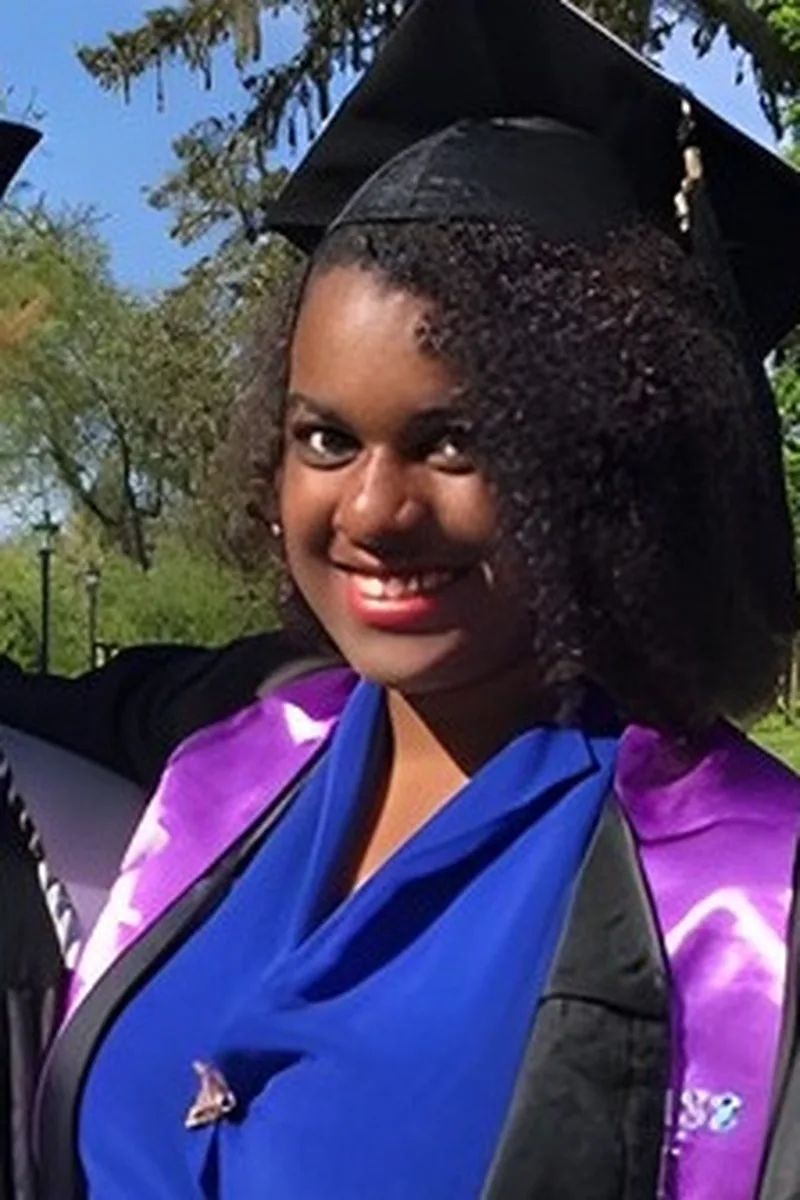
Economics trains you to think about how incentives, trade networks, and resource scarcity shape human decisions — which is essentially what AP World History asks students to analyze across nine periods, from early agricultural societies to globalization. Vicquaja's economics coursework at Allegheny College gives her a framework for tackling the exam's continuity-and-change and causation essays, where explaining *why* civilizations rose, traded, or collapsed matters more than memorizing dates. Rated 4.7 by students.

An English major with a 1540 SAT and a 5.0 tutoring rating, Ayako treats AP World History's essay sections as writing problems first — teaching students to craft tight thesis statements and weave document evidence into arguments that actually persuade, not just summarize. Her literature training at Trinity College Dublin means she's practiced at close reading unfamiliar texts under pressure, which is exactly what the DBQ throws at students. She's especially effective for those who grasp the historical content but struggle to translate it into structured, rubric-hitting prose.
Penn's political science program drills students in analyzing how institutions form, consolidate power, and collapse — which is essentially what AP World History asks on every LEQ and DBQ from early empires through decolonization. Noah leans into that political lens when teaching students to build arguments about state-building, revolutions, and shifts in governance across all nine periods. Rated 5.0 by students, with a 34 ACT backing up the timed writing and analytical reading the exam demands.
Years working as an educator at the Rubin Museum of Art — a collection centered on Himalayan and South Asian civilizations — gave Harry a tactile, artifact-driven way of teaching the cross-cultural encounters that AP World History's DBQ and LEQ prompts demand. His ongoing independent research trips to India studying Tibetan language and culture mean he can unpack topics like the spread of Buddhism along trade networks or Mughal-era cultural syncretism with firsthand context most tutors simply can't offer. That combination of museum pedagogy and regional immersion is especially useful for students who need to move beyond memorizing timelines and start building source-driven arguments.
Having taught and tutored across Colombia, Mexico, Germany, Canada, and the United States, Esteban brings an anthropologist's instinct for reading how cultures interact — the exact skill AP World History's DBQ and comparative essays test when students must explain why civilizations borrowed, resisted, or transformed each other's practices. His anthropology training means he teaches cultural diffusion and state formation not as textbook vocabulary but as lived human patterns, connecting concepts like syncretism or tributary systems to real-world examples he's encountered firsthand. Rated 4.9 by students.
Anthropology is essentially world history with the volume turned up on culture — and Jorge's Harvard degree in Social Anthropology means he reads AP World History's units on cultural diffusion, belief systems, and social hierarchies the way they were meant to be read, as interconnected human patterns rather than isolated facts to memorize. His Columbia MA in Human Rights adds a sharp lens for the exam's questions about empire, resistance, and power, especially in the post-1750 periods where human rights movements reshape the political landscape. He also tutors AP Human Geography and AP Comparative Government, so he naturally connects the geographic and political threads that earn top scores on cross-regional comparison essays.
Christopher's double major in Economics and History at UCLA means he naturally reads AP World History through the lens of trade systems, labor patterns, and resource competition — the economic engines behind empire-building, colonialism, and globalization that thread through nearly every period on the exam. That background is especially useful on LEQ and DBQ prompts where students need to explain *why* civilizations rose or fell, not just narrate the sequence. Rated 4.7 by students.
The AP World History exam covers thousands of years across every continent, which means students need frameworks, not just facts. Reid tackles this by teaching comparative analysis — showing how trade networks, state-building, and cultural exchange follow recognizable patterns from the Silk Roads to the Columbian Exchange. His political science background makes him especially sharp on empire, governance, and power dynamics.
The sheer scope of AP World History — from river valley civilizations to globalization — overwhelms students who try to memorize everything. Varun tackles it thematically, teaching students to trace continuities and changes across regions using the comparison and causation skills the exam actually tests. His CLEP Western Civilization coursework gives him particular depth in cross-cultural encounters and empire-building from antiquity through the modern era.
Covering ten thousand years of human history means AP World History students need a framework, not just a timeline. Taylor breaks the course into recurring themes — trade networks, empire-building, cultural diffusion — so students can tackle comparison and continuity-and-change essays with real analytical depth. Her humanities training at NYU gives her the cross-cultural perspective the exam demands, especially for periods and regions that textbooks tend to rush through.
Fluency in multiple languages — Latin, Spanish, Italian, German — gives Jamie a concrete feel for how cultures borrow, collide, and reshape each other, which is the engine behind AP World History's toughest essay prompts on cultural diffusion and cross-regional exchange. A master's in education sharpens that into practical exam prep, particularly on DBQ sourcing where students need to read an unfamiliar document and quickly identify its cultural context and point of view.
Having studied both history and Spanish as undergraduate majors, Adam reads AP World History's cross-cultural content — Islamic Spain, the Columbian Exchange, Latin American independence movements — with the kind of bilingual, dual-perspective lens that makes primary source analysis richer than a single-language approach allows. He digs into the document-based questions by teaching students to interrogate authorship and purpose before summarizing content, a skill honed through his library science graduate work in evaluating sources. His 1500 SAT speaks to the timed analytical reading the exam's free-response sections demand.
I'm a graduate of Columbia University with a B.A. in History. I'm passionate about history and English, but I'm a competent math tutor as well. I have received outstanding scores on my SAT and AP tests, and am confident in my ability to pass on these skills to the next generation.
I am most passionate about helping people learn history, social sciences, and mathematics. I also assist with standardized test prep, primarily with the Reading and Writing sections of the exams. In my spare time, I enjoy photography, hiking and other outdoor activities, and reading about philosophy, evolutionary biology, and human history.
Keeping six thousand years of civilizations straight requires more than flashcards — it requires a framework for comparison. Deana teaches AP World History students to think in terms of continuity and change over time, causation, and cross-cultural comparison, which are the exact reasoning skills the exam rewards. She's especially effective at showing students how to attack stimulus-based multiple choice questions efficiently.
As a former high school world history teacher with New York State certification and a Columbia master's in Social Studies Education, Emmaline knows exactly what the AP World History exam demands. She teaches students to write document-based questions that earn full marks by connecting specific evidence to broader historical reasoning skills like causation, continuity, and comparison across time periods.
Having lived in the US, UK, Austria, Japan, Iceland, France, and Turkey, Jacquelyn doesn't just teach about cross-cultural contact zones — she's navigated them firsthand, which gives her a concrete feel for the cultural diffusion and exchange networks that dominate AP World History's essay prompts. Her Columbia master's in Germanic Languages involved tracing how languages, ideas, and institutions migrated across medieval and early modern Europe, the same kind of regional-connectivity analysis the DBQ and LEQ reward. Rated 4.9 by students, she's particularly sharp on the periods where European, Islamic, and Central Asian civilizations intersect.
Brooklyn Tech's rigorous science-and-engineering curriculum might seem far from AP World History, but it drilled into Amena the same skill the exam's DBQ demands: synthesizing unfamiliar information quickly and building a structured argument under pressure. Her pre-med biology coursework also gives her a concrete handle on topics like the Neolithic Revolution, disease exchange, and how ecological factors drove civilizational change — content areas where many students struggle to move beyond surface-level memorization. Rated 5.0 by students.
Frank's triple major in English, History, and Jewish Studies means he can unpack AP World History's trickiest content overlaps — moments where religious expansion, literary culture, and political power collide, from the spread of monotheistic traditions across the Mediterranean to the intellectual exchanges of the Islamic Golden Age. His 1500 SAT backs up the timed analytical writing the DBQ and LEQ demand, and his deep comfort with primary texts makes document sourcing and contextualization feel less like guesswork and more like close reading.
The sheer scope of AP World History — from river valley civilizations to globalization — overwhelms most students until they learn to think in patterns. Adam teaches the comparative and continuity-and-change frameworks that turn six thousand years of content into manageable analytical categories, drawing on his history degree and his particular love for connecting events across eras and regions.
Covering thousands of years of global history means AP World students need a framework, not just a timeline. Meghna tackles the course through its recurring themes — trade networks, empire-building, cultural diffusion — and teaches students to write comparison and continuity-and-change essays that examiners actually want to read.
Psychology trains you to ask why people behave the way they do — and Nayaab applies that same question to civilizations, making AP World History's comparative and causation essays click for students who can memorize events but struggle to explain the human motivations driving them. Her minors in molecular cell biology, chemistry, and physics reinforce the kind of systems thinking the exam rewards when tracing how, say, the spread of disease or agricultural innovation reshaped entire societies. Rated 5.0 by students.
Kay's neuroscience background trained her to think about how societies process information, adapt, and change — the same analytical thread that runs through AP World History's continuity-and-change essays, where students must explain how belief systems or trade networks transformed across centuries rather than just listing events. Now pursuing a Master of Arts in Teaching, she brings structured lesson design to document-based question prep, teaching students to dissect unfamiliar primary sources and build arguments quickly. Rated 4.9 by students.
Medieval and Renaissance Studies at Fordham gave Grace deep familiarity with the pre-1450 periods that many AP World History students rush through — the formation of empires, the spread of belief systems along trade networks, and the cross-cultural encounters that set the stage for everything after. She pairs that with an anthropology background that sharpens her teaching on cultural comparison prompts, where students need to explain how societies developed differently under similar pressures rather than just listing facts. Rated 4.9 by students, with a 34 ACT composite.
The sheer scope of AP World History — from river valley civilizations to globalization — overwhelms most students before they even sit down to write a comparative essay. Nicholas tackles this by teaching students to identify recurring patterns like state-building, trade networks, and cultural diffusion across regions. His background spans European, Latin American, African, and Middle Eastern history, which maps directly onto the course's cross-regional framework.
Scoring a 1590 on the SAT while pursuing a liberal arts degree gave Alexander the exact combination AP World History demands: sharp timed writing under pressure and broad fluency across disciplines from economics to cultural studies. He digs into the comparison essays where students need to draw structural parallels — how, for instance, labor systems in the Atlantic world mirrored or diverged from those in the Indian Ocean — rather than just listing facts from each region. Rated 5.0 by students.
Most AP World History struggles come down to scale: how do you compare entire civilizations without drowning in details? Layan tackles this by teaching students to think in terms of systems — trade networks, belief structures, labor patterns — which maps directly onto the comparative and continuity-and-change essay formats the exam demands. Her own study of sustainable development across cultures gives her a natural fluency with global-scale thinking.
As a math major at Columbia, Gi brings a quantitative edge to AP World History that's especially useful for the comparison and causation essays — she teaches students to think in terms of variables and outcomes, tracing how shifts in trade volume, population, or agricultural output drove political transformations across periods. Her 1520 SAT reflects the timed analytical reading and writing skills the DBQ demands, and she's particularly sharp at helping students structure arguments around economic data and demographic patterns rather than relying on narrative alone.
Psychology's core method — asking why people in different societies made the choices they did given their constraints — is exactly the analytical move AP World History's essay prompts reward, and Hannah's summa cum laude psych degree from South Carolina means that kind of thinking is second nature. She's particularly sharp on the cultural and social dimensions of the exam: how belief systems spread, why revolutionary movements gain traction, and what drives societies to resist or adopt change. Rated 4.7 by students.
Tackling AP World History means covering thousands of years of cross-cultural interaction, and the biggest challenge is usually connecting disparate civilizations through shared themes like trade networks, empire-building, and religious diffusion. Marianna's history minor gives her a strong command of these comparative frameworks, and she teaches students to write the kind of comparative and causation essays the exam demands.
I am a graduate of Fordham University where I earned a Bachelor's degree with a major in History. In particular, I focused my energies on the study of American History. I have tutored as a part of the National Honor Society on topics such as AP Literature, AP American History, AP American Government, and the SAT. I am incredibly passionate about History and Literature and could easily discuss these topics for hours on end. I truly believe that history is fascinating, interesting, and wholly deserving of our attention. I hope I can share this passion and create tutoring sessions that are as engaging as they are informative. With my free time I enjoy reading, especially science fiction, and also exercise regularly, but admit a certain weakness for video games and good TV.
I was born in a small town, went to college in the big city, and now live in a medium-sized Rust Belt city. I enjoy learning and teaching, playing music, and casual bike riding, among other things. I hold a bachelor's degree in Politics with a minor in History from New York University. While I enjoy discussing a variety of subjects, tutoring math, history, and political science are perhaps most appealing to me. I find that the act of explaining something to someone else helps me to understand it on an even deeper level, and I find that almost as gratifying as helping someone discover something new. The best thing about tutoring is helping someone to discover, or rediscover, the joy of discovery in themselves.
Covering ten thousand years of human civilization in one course means AP World History rewards students who think in patterns — trade network effects, empire consolidation, cross-cultural exchange. Isabel's major in International Developmental Relations at McGill maps directly onto these themes, giving her a framework for teaching comparative analysis across regions and time periods. She walks students through the continuity-and-change-over-time essays that tend to be the biggest score differentiators.
As a passionate educator with a Bachelor's in History from Princeton University and a Master's in Music from Yale University, I have over 2 years of tutoring experience in subjects, with particular specialization in history, academic writing, and politics. My teaching philosophy centers on breaking down difficult concepts into more accessible and digestible forms of knowledge. I believe in tailoring my approach to meet each student's unique needs, utilizing creative methods to enhance understanding and retention. My dedication to helping students succeed is reflected in their improved confidence and performance. Outside of tutoring, I enjoy exploring different cultures through music and language, which enriches my teaching and connects me with my students on a personal level.
Covering ten thousand years of global history means students need frameworks, not just flashcards. Todd teaches AP World History through the recurring themes the exam actually tests — trade networks, empire-building, cultural diffusion — so students can analyze unfamiliar documents by connecting them to patterns they already understand. His University of Chicago training sharpened the kind of comparative thinking this course demands.
Covering thousands of years across every continent, AP World History overwhelms students who try to memorize everything. Maxwell zeroes in on the comparative and continuity-and-change-over-time frameworks the exam actually tests, teaching students to spot patterns — like how trade networks reshape cultures — across regions and eras. That analytical lens turns an impossibly broad course into something manageable.
Iliana studied government and political philosophy at Dartmouth with a focus on Western colonialism and indigenous political movements — exactly the kind of cross-cultural power dynamics that run through the AP World History curriculum. She brings that lens to topics like imperialism, decolonization, and the political structures that shaped colonial and post-colonial societies, giving students a richer read on the exam's modern period content.
Bethany's Master's in Religious Studies from Duke pairs unusually well with AP World History — she spent years tracing how belief systems like Christianity, Islam, and Buddhism didn't just spread but reshaped governance, trade, and social hierarchies across entire regions. That background makes her especially sharp on the cultural diffusion and cross-cultural interaction themes that dominate the exam's essay prompts, where students need to explain *why* ideas spread rather than just *that* they did. Rated 5.0 by students.
Elena's dual undergraduate majors in Art History & Archaeology and History — with a focus on medieval civilizations — gave her deep practice in the kind of cross-regional, cross-temporal analysis that AP World History demands. She teaches students to read primary sources the way an art historian reads an artifact: pulling context, audience, and purpose out of a single document, which is exactly what the DBQ requires. Rated 4.7 by students.
Felix's Classical, Ancient Mediterranean, and Near Eastern Studies degree at Brown means he's spent serious time with the pre-1200 CE civilizations that many AP World History students rush past — Mesopotamian state-building, Greco-Roman political models, and the trade networks connecting the Mediterranean to Central and South Asia. That deep familiarity with early periods gives him a real edge when teaching students to tackle periodization questions and trace how foundational developments in governance and belief systems ripple forward through the entire course timeline. His 1540 SAT and fluency in Japanese add particular strength on comparative prompts involving East Asian content.
Testimonials
Because the right AP World History tutor makes all the difference.
Average Session Rating – Based on 3.4M Learner Ratings
Practice AP World History
Free practice tests, flashcards, and AI tutoring for AP World History
Nearby AP World History Tutors
Other Bronx Tutors
Related Social Studies Tutors in Bronx
Frequently Asked Questions
AP World History spans from 1200 CE to the present, organized into four major time periods. The course emphasizes global interconnections, major historical developments, and thematic learning across regions—including trade networks, cultural exchanges, political revolutions, industrialization, imperialism, and modern global conflicts. You'll develop skills in analyzing primary sources, constructing arguments, and understanding historical causation rather than memorizing isolated facts.
The exam has two sections: multiple-choice and free-response. The multiple-choice section (55 questions, 55 minutes) tests your ability to analyze sources and historical concepts. The free-response section includes a document-based question (DBQ), a long essay question, and a short-answer question—all requiring you to construct historical arguments with supporting evidence. Understanding the specific format and time management for each section is crucial for success.
Many students struggle with the breadth of content—covering centuries and multiple continents makes it easy to feel overwhelmed. Others find it difficult to move beyond memorization and develop the analytical skills the exam requires, such as comparing civilizations, identifying historical causation, and synthesizing evidence. Time management on the free-response section is another frequent challenge, especially the DBQ, which requires careful document analysis and essay construction under pressure.
A tutor can help you organize the vast curriculum into manageable themes, identify your specific weak areas (whether it's a particular time period or skill like source analysis), and develop targeted strategies for each exam section. Personalized 1-on-1 instruction allows you to practice essay writing with feedback, work through challenging document-based questions, and build confidence in your historical reasoning—all at your own pace and schedule.
Score improvement depends on your starting point and how consistently you engage with tutoring and practice. Students who work with a tutor typically see gains by developing stronger analytical skills, learning effective test-taking strategies, and gaining familiarity with the exam format through practice tests. Most students benefit from starting tutoring several months before the exam to allow time for skill-building and content review.
Practice tests are essential—they help you understand the exam's pacing, identify weak content areas, and build test-taking stamina. Taking full-length practice exams under timed conditions reveals whether you're struggling with specific time periods, question types, or essay construction. A tutor can review your practice test performance, pinpoint patterns in your mistakes, and help you develop targeted strategies to address them before test day.
Varsity Tutors connects you with expert tutors who specialize in AP World History and understand the specific demands of the exam. You can get matched with a tutor who has experience helping students in the Bronx prepare for the test, and tutoring can be personalized to fit your schedule and learning style. The process is straightforward—just let us know your goals and availability, and we'll find the right fit.
Your first session is typically an assessment and planning meeting. The tutor will discuss your current understanding of the material, your target AP score, and any specific challenges you're facing. Together, you'll create a customized study plan that outlines which content areas to focus on, which skills to develop, and how to structure your preparation leading up to the exam. This foundation ensures your tutoring is targeted and efficient.
Let’s find your perfect tutor
Answer a few quick questions. We’ll recommend the right plan and match you with a top 5% tutor.