Award-Winning AP Music Theory Tutors
serving Bronx, NY
Who needs tutoring?
FEATURED BY


TUTORS FROM
- YaleUniversity
- PrincetonUniversity
- StanfordUniversity
- CornellUniversity
Award-Winning AP Music Theory Tutors serving Bronx, NY
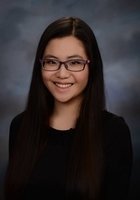
Certified Tutor
8+ years
Cynthia
As both a violinist and pianist, Cynthia brings hands-on musicianship to AP Music Theory concepts like four-part voice leading, sight-singing, and harmonic dictation. Playing multiple instruments means she can demonstrate how chord progressions and intervals actually sound in practice, not just on p...
Vanderbilt University
Current Undergrad Student, Public Policy Analysis

Certified Tutor
6+ years
Sarah
Sacred Music at the graduate level means Sarah spent years dissecting chorale harmonizations, counterpoint, and liturgical composition — skills that map directly onto AP Music Theory's part-writing and harmonic analysis questions. Her organ and piano training grounds abstract concepts like voice lea...
Yale University
Master of Arts, Sacred Music
Vassar College
Bachelor in Arts, Music

Certified Tutor
9+ years
Playing bass guitar and upright bass gave Kevin a musician's ear for harmony, voice leading, and chord function — exactly the skills AP Music Theory tests through its aural and written sections. He approaches topics like figured bass realization, part-writing rules, and sight-singing with the practi...
University of Pennsylvania
Bachelor in Arts

Certified Tutor
Tom's PhD in American Studies might not scream music theory, but his academic training in American History & Literature includes deep engagement with cultural production — and music sits right at the center of that. He's strongest as an analytical thinker who can break down the logic of Roman numera...
Boston University
PHD, American Studies
Harvard University
Bachelors

Certified Tutor
5+ years
Vivian
Training as a violinist at Juilliard means Vivian lives inside music theory every day — part-writing, harmonic analysis, sight-singing, and aural dictation are part of her daily practice, not just exam topics. She unpacks concepts like secondary dominants, modulation, and species counterpoint with t...
Yale University
Bachelor in Arts

Certified Tutor
6+ years
Naomi
As a violinist with a background in both music theory and composition, Naomi understands AP Music Theory from the performer's side — hearing intervals, recognizing chord progressions, and internalizing rhythm before translating them onto paper. She digs into the exam's trickiest areas, like part-wri...
Princeton University
Bachelor in Arts, Sociology
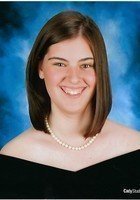
Certified Tutor
6+ years
Hailey
Hailey's double major in mathematics and psychology gives her an unusual angle on AP Music Theory — she's wired to see the structural patterns in chord progressions and voice leading rules the way a mathematician spots proofs, and she understands how memory and perception shape aural dictation perfo...
University of Georgia
Bachelor of Science, Psychology

Certified Tutor
Martha
Psychology research is essentially pattern recognition — identifying structures beneath surface-level noise — and Martha applies that same analytical lens to AP Music Theory concepts like harmonic progressions, non-chord tones, and Roman numeral analysis. Her 5.0 rating suggests she's effective at m...
Duke University
Bachelors, Psychology
Duke University
Current Grad Student, Global Health
Duke University
BS in psychology

Certified Tutor
6+ years
Charles
Charles holds a degree in Music Theory and Composition — meaning the harmonic analysis, part-writing, and compositional techniques on the AP exam aren't abstract concepts he learned secondhand but the core of his formal training. He also teaches drum, piano, conducting, and arrangement, giving him t...
Yale University
Bachelor in Arts, Music Theory and Composition
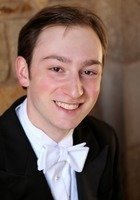
Certified Tutor
10+ years
Max
Max's years at the piano give him the kind of intuitive ear that AP Music Theory rewards — he doesn't just identify intervals and chord progressions on paper, he hears them. He tackles Roman numeral analysis and part-writing by grounding each rule in how it sounds at the keyboard, which makes the ex...
Yale University
Current Undergrad, Economics
Other Bronx Tutors
Related Music Tutors in Bronx
Frequently Asked Questions
The AP Music Theory exam tests your understanding of music fundamentals, ear training, and analytical skills across four main areas: part writing and voice leading, harmonic analysis, sight-singing, and listening identification. The exam includes multiple-choice questions, free-response sections where you'll write four-part chorale passages, and aural components that require you to identify intervals, chords, cadences, and melodic dictation by ear. Success requires both theoretical knowledge and practical listening skills developed through consistent practice.
Students often struggle most with ear training and sight-singing, which require translating what you hear into written notation and vice versa—skills that take dedicated practice to develop. Voice leading and four-part chorale writing also trip up many students because they require understanding multiple rules simultaneously (voice ranges, doubling conventions, smooth voice leading). Many students also find the time pressure challenging, as the exam requires you to work quickly and accurately across different question types. Personalized tutoring helps you target these specific weak areas and build confidence through guided practice.
Most students benefit from starting preparation 3-4 months before the exam if they're taking the course, though some begin earlier if they want to build a stronger foundation. Consistent weekly practice—ideally 5-7 hours spread across the week rather than cramming—helps develop both theoretical understanding and ear training skills, which improve gradually over time. If you're starting later or need to catch up, working with a tutor for 2-3 sessions per week can accelerate your progress by focusing your study time on your specific weak areas rather than reviewing material you've already mastered.
Score improvement depends on where you're starting and how consistently you practice. Students who work with tutors typically see the most gains by identifying and systematically addressing their weakest areas—whether that's ear training, voice leading, or test-taking strategy. Many students improve by 1-2 score points (on the 1-5 scale) over several months of focused work, though the exact improvement varies based on your starting point, the frequency of tutoring sessions, and your practice consistency between sessions. Your tutor will help you track progress through practice tests and targeted drills.
Your first session typically involves an assessment of your current skills across the four main exam areas—theory fundamentals, ear training, voice leading, and listening skills. The tutor will ask about your musical background, identify which topics feel strongest and weakest, and discuss your timeline and score goals. From there, they'll create a personalized study plan that prioritizes your biggest challenges and builds in regular practice tests to track your progress. This foundation helps ensure every session after that is focused and productive.
Ear training improves through consistent, focused practice—ideally daily 15-20 minute sessions rather than longer, infrequent ones. Start by mastering interval and chord identification, then progress to more complex listening tasks like cadence recognition and melodic dictation. Using apps and online tools for daily drills, combined with guidance from a tutor who can correct your mistakes and explain what you're hearing, accelerates improvement significantly. Many students find that pairing listening practice with keyboard or instrument work helps reinforce the connection between sound and notation.
Four-part voice leading requires understanding the rules (voice ranges, doubling, smooth voice leading) and then practicing them repeatedly until they become automatic. Start by analyzing existing chorales to see how professional composers handled voice leading, then write progressively more complex passages with immediate feedback. Working with a tutor is especially helpful here because they can spot errors in your writing, explain why certain voice leadings work or don't work, and give you targeted exercises that address your specific mistakes. Many students find that writing 2-3 chorales per week with feedback accelerates mastery.
Test anxiety often comes from uncertainty about what to expect or feeling unprepared for specific question types. Taking full-length practice tests under timed conditions helps normalize the exam format and builds confidence through repetition. Your tutor can help you develop a strategic approach to pacing (knowing which sections to tackle first, how much time to spend on each question type) and teach you breathing or grounding techniques to use if you feel anxious during the exam. Going into test day with a clear strategy and proven practice test scores typically reduces anxiety significantly.
Connect with AP Music Theory Tutors in Bronx
Get matched with local expert tutors