Award-Winning IB Mathematics: Analysis and Approaches Tutors
serving Albuquerque, NM
IB Mathematics: Analysis and Approaches
Tutors in Albuquerque
Private 1-on-1 tutoring, weekly live classes for academic support, test prep & enrichment, practice tests and diagnostics, and more to elevate grades and test scores.
Based on 3.4M Learner Ratings
UniversitiesSchools & Universities
DeliveredHours Delivered
ProficiencyGrowth in Proficiency
Who needs tutoring?
No obligation. Takes ~1 minute.

IB Analysis and Approaches is proof-heavy and conceptual in a way that surprises students used to procedural math classes — the exam expects real reasoning about functions, sequences, and differential calculus. Having navigated the IB system herself, Kaya knows how to prepare for both Paper 1's no-calculator rigor and Paper 2's applied problems. She also coaches students through the internal assessment from topic selection to final write-up.
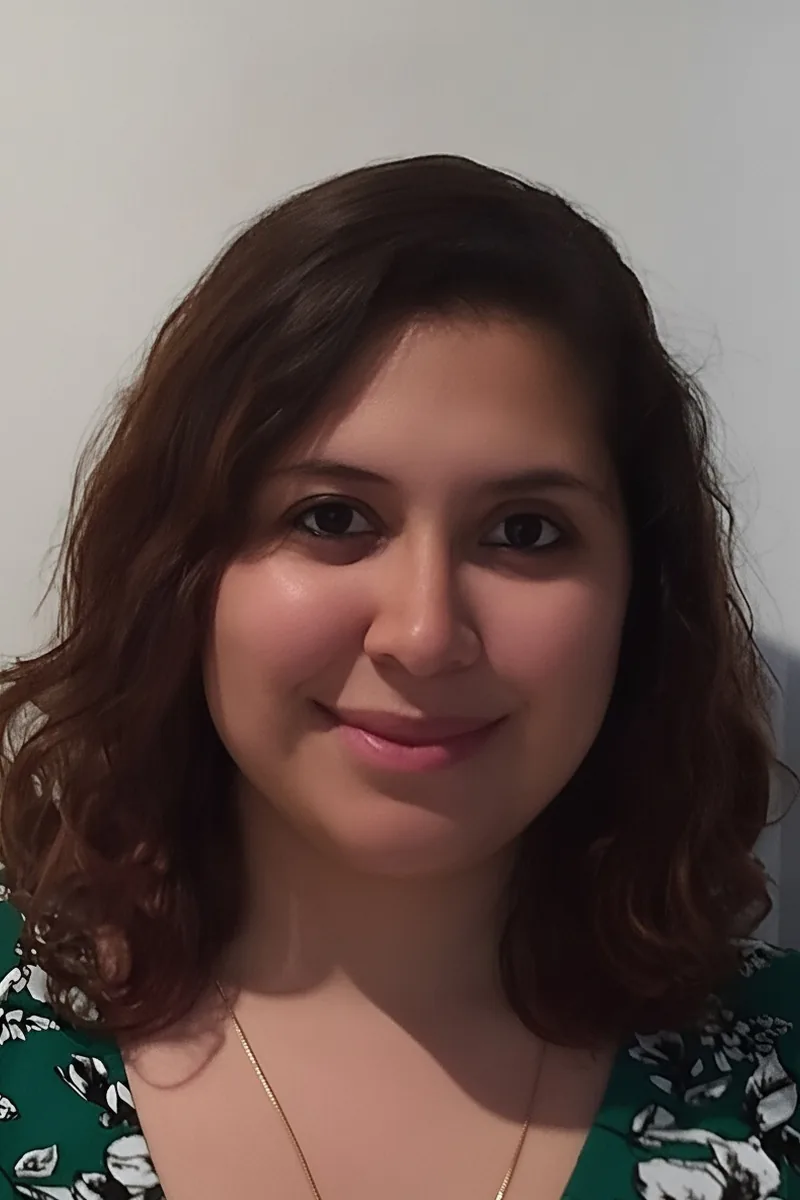
Analysis and Approaches leans heavily on pure mathematical reasoning — proof-style thinking, calculus concepts, and algebraic manipulation that many students haven't encountered at that intensity before. Adriana's biochemistry training at Rice meant working through differential equations and statistical models regularly, giving her a practical grip on the topics that dominate Paper 1 and Paper 2. She also knows how to coach students through the exploration component so it reads as genuine mathematical inquiry.
IB Analysis and Approaches leans heavily into proof, abstraction, and mathematical reasoning — territory Sabry navigates naturally after years of graduate-level applied mathematics. He digs into the trickier HL topics like complex numbers, differential equations, and series convergence with concrete examples drawn from physics and engineering, making the theoretical content feel grounded.
IB Analysis and Approaches demands comfort with proof-style thinking, from limits and continuity through differential equations. Rithi's neuroscience and biostatistics background means she's spent years applying calculus and probability in research contexts, so she can show students how HL-level concepts like Maclaurin series or hypothesis testing actually function outside the exam. Rated 4.9 by students.
IB Analysis and Approaches leans heavily on proof-style reasoning and abstract problem-solving, especially in the calculus and algebra units at Higher Level. Jane's physics degree gave her deep practice with exactly this kind of mathematical thinking — constructing arguments, working through multi-step derivations, and connecting results back to underlying principles. She breaks down Paper 1 and Paper 2 question styles so students know what examiners are actually looking for.
IB Analysis and Approaches demands more than computational skill — the exam expects students to construct proofs, interpret results in context, and navigate both paper 1's non-calculator constraints and paper 3's extended problems. Daniel's background in applied mathematics and computer science aligns closely with the course's emphasis on rigorous reasoning across calculus, algebra, and statistics. He knows how to prepare students for the style of questioning IB examiners actually use.
Having gone through the IB program herself and earned top marks in mathematics, Zofia knows exactly how Analysis and Approaches is structured — from the internal assessment expectations to the way Paper 2 weaves calculus and statistics into multi-part problems. She tackles proof-based questions and mathematical modeling with the rigor Brown's math program reinforced.
Analysis and Approaches is the IB's most proof- and theory-heavy math course, demanding fluency in topics from complex sequences and series to differential equations. John's Yale-trained analytical rigor and self-described love of problem-solving make him well-suited to a curriculum that prizes mathematical reasoning over calculator shortcuts. He's particularly strong at walking students through multi-step problems where choosing the right approach matters as much as executing it.
IB Analysis and Approaches demands comfort with proof-style reasoning and multi-step problems that weave together functions, sequences, and calculus. Caitlin's familiarity with the IB framework means she knows how the exam's long-form questions are structured and where students typically lose marks. She teaches the kind of precise mathematical communication the IB graders are looking for.
IB Analysis and Approaches leans heavily on mathematical reasoning — Paper 1's no-calculator section alone demands real comfort with algebraic manipulation, logarithmic properties, and derivative techniques. Ben's mathematics degree from Penn aligns closely with the course's emphasis on analytical thinking over rote computation. He's familiar with IB-specific expectations like exploration write-ups and the way exam questions layer multiple concepts into a single problem.
IB Analysis and Approaches demands comfort with proof-style reasoning and multi-step problems that blend calculus, algebra, and trigonometry in a single question. Carter's interdisciplinary training at Brown — spanning applied math, economics, and philosophy — maps naturally onto the kind of analytical thinking this course rewards. He's particularly effective at unpacking Paper 1 non-calculator questions where conceptual clarity matters most.
IB Analysis and Approaches leans hard into proof-style reasoning and abstract problem-solving, especially in the HL calculus and algebra units. Brian's Caltech math background maps directly onto this curriculum — he's comfortable walking through epsilon-delta arguments, complex number proofs, and the kind of multi-step problems that earn top marks on Paper 1.
Testimonials
Because the right IB Mathematics: Analysis and Approaches tutor makes all the difference.
Average Session Rating – Based on 3.4M Learner Ratings
Other Albuquerque Tutors
Related Math Tutors in Albuquerque
Frequently Asked Questions
IB Mathematics: Analysis and Approaches is a rigorous IB Diploma Programme course that emphasizes deep conceptual understanding over rote procedures. Unlike standard algebra or calculus courses, it combines pure mathematics with real-world applications, requiring students to justify their reasoning, prove theorems, and solve complex multi-step problems. The course focuses on building mathematical thinking skills that go beyond memorization—students learn to see patterns, make connections between topics, and apply analytical methods to unfamiliar situations.
Many students struggle with the shift from procedural math (following steps) to conceptual understanding (knowing why those steps work). Common pain points include rigorous proof-writing, multi-step word problems that require setting up equations from context, and connecting abstract concepts like limits and derivatives to real applications. Additionally, the course demands strong communication skills—students must show their reasoning clearly and justify their answers, which can be challenging even for students who understand the math conceptually.
Personalized 1-on-1 instruction allows tutors to identify exactly where conceptual gaps exist and address them directly, rather than moving through material at a class pace. A tutor can help you develop problem-solving strategies for unfamiliar questions, break down complex proofs into manageable steps, and build confidence in explaining your mathematical reasoning. This targeted approach helps you see the connections between topics and develop the deeper understanding that IB exams require.
Your first session will typically focus on understanding your current level, identifying specific challenges, and establishing goals. A tutor will likely review recent coursework or exams to see where you're strong and where you need support—whether that's proof-writing, word problem setup, graphing, or connecting concepts. From there, you'll work together to create a personalized plan that addresses your priorities, whether that's building foundational understanding, preparing for internal assessments, or getting ready for the final IB exam.
Word problems require translating real-world scenarios into mathematical equations—a skill that goes beyond calculation. A tutor can teach you a systematic approach: identifying what you know and what you're looking for, choosing the right mathematical tools, and setting up equations carefully. With practice and feedback, you'll develop the ability to recognize problem patterns and apply appropriate strategies, which builds both competence and confidence when facing unfamiliar questions on exams.
Proof-writing is central to IB Mathematics: Analysis and Approaches because it demonstrates deep understanding—you're not just finding an answer, you're explaining why it must be true. Many students find this challenging because it requires logical reasoning and clear communication, not just calculation. A tutor can help you learn the structure of valid proofs, practice organizing your thoughts logically, and develop the confidence to write clear, rigorous mathematical arguments that examiners expect.
Look for tutors with strong experience in IB curriculum specifically, ideally with knowledge of both SL and HL content. It's valuable to find someone who understands the IB assessment style—internal assessments, exploration papers, and exam formats—since these require different skills than traditional tests. Additionally, a tutor who can explain concepts clearly and help you develop problem-solving strategies (not just provide answers) will help you build the independent thinking skills that IB demands.
Varsity Tutors connects students in Albuquerque with expert tutors who understand the IB curriculum and can tailor instruction to your learning style. Whether you need help with specific topics, exam preparation, or building overall conceptual understanding, personalized tutoring allows you to work at your own pace and focus on areas where you need the most support. Many students find that combining tutoring with consistent practice and feedback leads to significant improvement in both understanding and exam performance.
Let’s find your perfect tutor
Answer a few quick questions. We’ll recommend the right plan and match you with a top 5% tutor.