Award-Winning AP Calculus BC Tutors
serving Albuquerque, NM
AP Calculus BC
Tutors in Albuquerque
Private 1-on-1 tutoring, weekly live classes for academic support, test prep & enrichment, practice tests and diagnostics, and more to elevate grades and test scores.
Based on 3.4M Learner Ratings
UniversitiesSchools & Universities
DeliveredHours Delivered
ProficiencyGrowth in Proficiency
Who needs tutoring?
No obligation. Takes ~1 minute.

Having taught calculus at the college level after completing his MS in Mathematics, Craig knows exactly where BC students stumble — the leap from straightforward AB integration into convergence tests, polar area integrals, and series that suddenly demand a different kind of reasoning. He walks through each new BC technique by rebuilding it from the underlying calculus, so a topic like constructing a Taylor series feels like a deliberate extension of derivatives rather than a mysterious new procedure. Rated 4.9 by students.
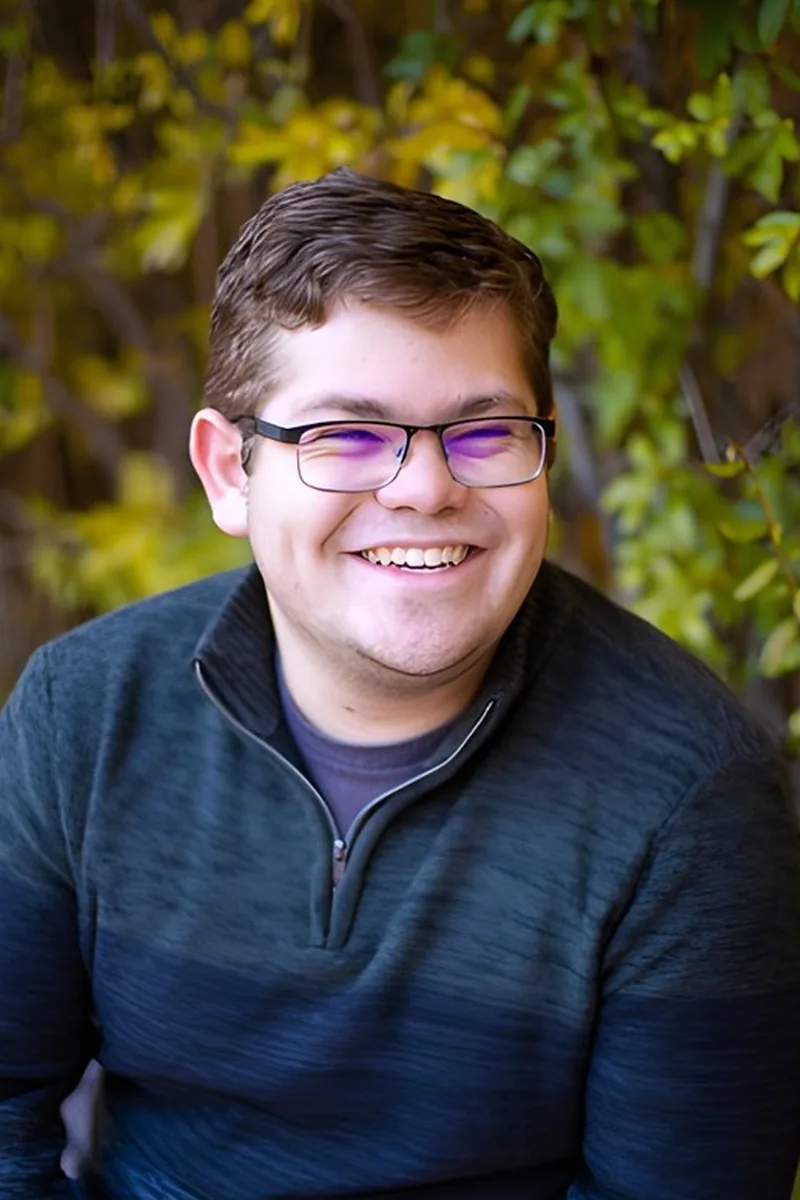
Tackling series convergence tests, parametric equations, and polar curves requires more than memorized formulas — it demands knowing which tool fits which problem. Matthew's deep math background through his Statistics degree at UNM means he can connect BC-level topics like Taylor series and integration techniques back to the underlying logic that makes them click.
Penn's economics program leans heavily on calculus-driven modeling, and Mandy is working through that curriculum right now — which means BC topics like series approximations and integration techniques show up in her coursework as tools for analyzing economic behavior, not just abstract exercises. She's especially clear at walking through the logic of convergence tests and connecting new BC material back to the AB foundations underneath it. Holds a 5.0 rating.
BC Calculus throws students into series convergence tests, parametric equations, and polar coordinates — topics that feel disconnected unless someone ties them back to the core ideas of AB. Dylan's physics major at Vanderbilt means he uses calculus daily and can show exactly how Taylor series or integration by parts behave visually, not just symbolically. He turns abstract series into something students can sketch, interpret, and reason through on exam day.
Most BC students can follow a convergence test step by step but freeze when asked to choose which test to apply — that decision-making is where Nima, a physics major heading to Duke on a full merit scholarship, spends most of his teaching energy. His physics training means he treats series and parametric equations as descriptions of real motion and real forces, which gives students an intuitive anchor when the abstraction piles up. A 1580 SAT and 4.7 rating back up his ability to make that AB-to-BC jump feel manageable.
Biomedical engineering at Yale means Jonathan lives in the calculus that comes after most students stop — modeling biological systems with differential equations, approximating nonlinear tissue behavior with series expansions, running convergence analysis on numerical simulations. That daily exposure makes him especially effective at teaching the logic behind the ratio and integral tests, because he's seen firsthand what happens when you pick the wrong one. Holds a 5.0 rating.
Managing an immunology research lab at Columbia means Matthew lives in the quantitative deep end — modeling biological systems, analyzing experimental data — and his physics degree built the calculus fluency that makes that possible. He's especially sharp on the BC topics that trip students up after AB: constructing Taylor series from scratch, navigating convergence tests systematically, and connecting parametric or polar problems back to the derivative logic underneath them.
Scoring a perfect 1600 on the SAT while studying computer science at MIT suggests Brice isn't just comfortable with calculus — he's fluent in it, and BC's extension into series, parametric equations, and advanced integration techniques sits squarely in his daily coursework. He breaks down topics like convergence tests by tracing each one back to the limit reasoning students already built in AB, turning what feels like a grab bag of rules into a coherent decision-making process. Rated 4.9 by students.
Series convergence tests, parametric equations, polar curves — BC Calculus piles on topics fast, and falling behind on even one unit can snowball. JF scored a perfect 1600 SAT and is studying mathematical and computational science at Stanford, where the calculus concepts from BC are the everyday language of coursework. That recent fluency means explanations stay intuitive rather than overly formal.
BC Calculus throws students into deep water fast — Taylor and Maclaurin series, parametric equations, and convergence tests all pile up in a single semester. Rahi's applied mathematics engineering background means he can unpack these topics by connecting them to the real-world modeling problems they were designed to solve. He builds each concept from its AB foundation so students see how the BC extensions actually work.
Having TA'd Calculus I and II at Rice while pursuing a graduate degree in computational and applied mathematics, Sakibul knows exactly where the AB-to-BC transition trips students up — particularly when series convergence and parametric differentiation demand a sharper kind of reasoning than anything before. He breaks down topics like interval of convergence arguments and integration techniques by rebuilding the logic from scratch rather than handing over shortcuts. His applied math background means he treats Taylor approximations and error bounds as precision tools, not abstract busywork.
Biomedical engineering at Johns Hopkins means Bidyut uses series approximations and differential equations to model biological systems — the same convergence tests and integration techniques that define the BC curriculum beyond AB. He's especially sharp at showing how a topic like Taylor polynomial error bounds connects back to the derivative reasoning students already trust, turning what feels like a wall of new material into a logical extension. Holds a 5.0 rating and a 36 ACT composite.
As a multivariable calculus teaching assistant at Harvard's Math Department, Kristi spent semesters watching exactly where students' BC foundations cracked under pressure — shaky series intuition, mechanical convergence testing, parametric reasoning that never quite solidified. Her astrophysics training means she learned these tools by necessity, using Taylor expansions to model orbital mechanics and integration techniques to analyze planetary data, so she teaches the logic driving each method rather than just the steps. Rated 5.0 by students.
Molecular biology might seem distant from BC Calculus, but Agustin's 1560 SAT and deep comfort with competition math mean he's built the kind of rigorous problem-solving instincts that make topics like convergence tests and parametric derivatives tractable rather than terrifying. He breaks down the logic behind each technique — why the ratio test actually tells you something, how polar area integrals connect back to Riemann sums — so the BC extension from AB feels like a natural next step. Rated 4.5 by students.
Testimonials
Because the right AP Calculus BC tutor makes all the difference.
Average Session Rating – Based on 3.4M Learner Ratings
Practice AP Calculus BC
Free practice tests, flashcards, and AI tutoring for AP Calculus BC
Other Albuquerque Tutors
Related Math Tutors in Albuquerque
Frequently Asked Questions
AP Calculus AB covers limits, derivatives, and basic integration, while AP Calculus BC includes all of AB plus additional topics like series, sequences, parametric equations, and polar coordinates. BC is the more comprehensive course and is typically taken by students with stronger math backgrounds. If you're deciding between the two, a tutor can assess your current skills and help you choose the right level for your goals.
Score improvement depends on your starting point and how consistently you work with a tutor. Most students see meaningful gains—typically 1-2 score points on the 1-5 scale—when they focus on weak areas like integration techniques, series convergence, or free-response problem setup. The key is identifying exactly where you're struggling and practicing those concepts repeatedly with expert guidance before test day.
Students often struggle most with integration techniques (u-substitution, integration by parts), series and convergence tests, and connecting multiple concepts in free-response questions. Many also find the transition from AB to BC material challenging because BC moves quickly through new topics. Working with a tutor on these specific areas—especially through practice problems and past AP exams—helps build confidence and mastery before May.
The exam has two sections: multiple choice (45 minutes) and free response (90 minutes). For multiple choice, aim to spend about 1.5-2 minutes per question, leaving time to review. For free response, spend 2-3 minutes reading and planning each problem before diving into calculations. A tutor can help you practice full-length exams under timed conditions so you develop a rhythm and learn to recognize which problems to tackle first based on difficulty.
Most students benefit from starting prep 3-4 months before the May exam, dedicating 5-7 hours per week to focused study. A solid plan includes reviewing AB fundamentals (if needed), mastering BC-specific topics, and taking full-length practice tests every 2-3 weeks to track progress. Varsity Tutors connects you with expert tutors who can create a personalized study schedule based on your current level, identify your weakest topics, and adjust the plan as you improve.
Free-response questions reward clear communication and proper notation, even if your final answer isn't perfect. Start by reading the entire question and identifying what's being asked, set up your work step-by-step, and show all reasoning. Common mistakes include skipping steps, using incorrect notation, or jumping to answers without justification. Tutors help you practice writing responses that earn partial credit and develop a systematic approach to tackling unfamiliar problem types.
Varsity Tutors connects you with expert tutors in Albuquerque who specialize in AP Calculus BC and understand the specific challenges students face. When you get matched with a tutor, you can discuss your current level, target score, and timeline so they can tailor instruction to your needs. Many students find it helpful to start tutoring 2-3 months before the exam for consistent, focused preparation.
Test anxiety often stems from feeling unprepared or uncertain about specific concepts. Regular practice with full-length exams under timed conditions builds familiarity and confidence, while working through challenging topics with a tutor transforms anxiety into competence. Many students also benefit from reviewing their mistakes, celebrating progress, and developing a pre-exam routine that keeps them calm and focused on what they've learned.
Let’s find your perfect tutor
Answer a few quick questions. We’ll recommend the right plan and match you with a top 5% tutor.