Award-Winning High School Chemistry Tutors
serving Omaha, NE
High School Chemistry
Tutors in Omaha
Private 1-on-1 tutoring, weekly live classes for academic support, test prep & enrichment, practice tests and diagnostics, and more to elevate grades and test scores.
Based on 3.4M Learner Ratings
UniversitiesSchools & Universities
DeliveredHours Delivered
ProficiencyGrowth in Proficiency
Who needs tutoring?
No obligation. Takes ~1 minute.

Oen's computer science background might seem unrelated to chemistry, but the algorithmic thinking he uses daily — breaking complex problems into logical, sequential steps — maps directly onto dimensional analysis, unit conversions, and stoichiometry calculations. He approaches these quantitative chemistry topics the way a programmer debugs code: isolating each step, checking the logic, and building toward the answer systematically. His 32 ACT composite speaks to the cross-subject rigor he brings to science coursework.
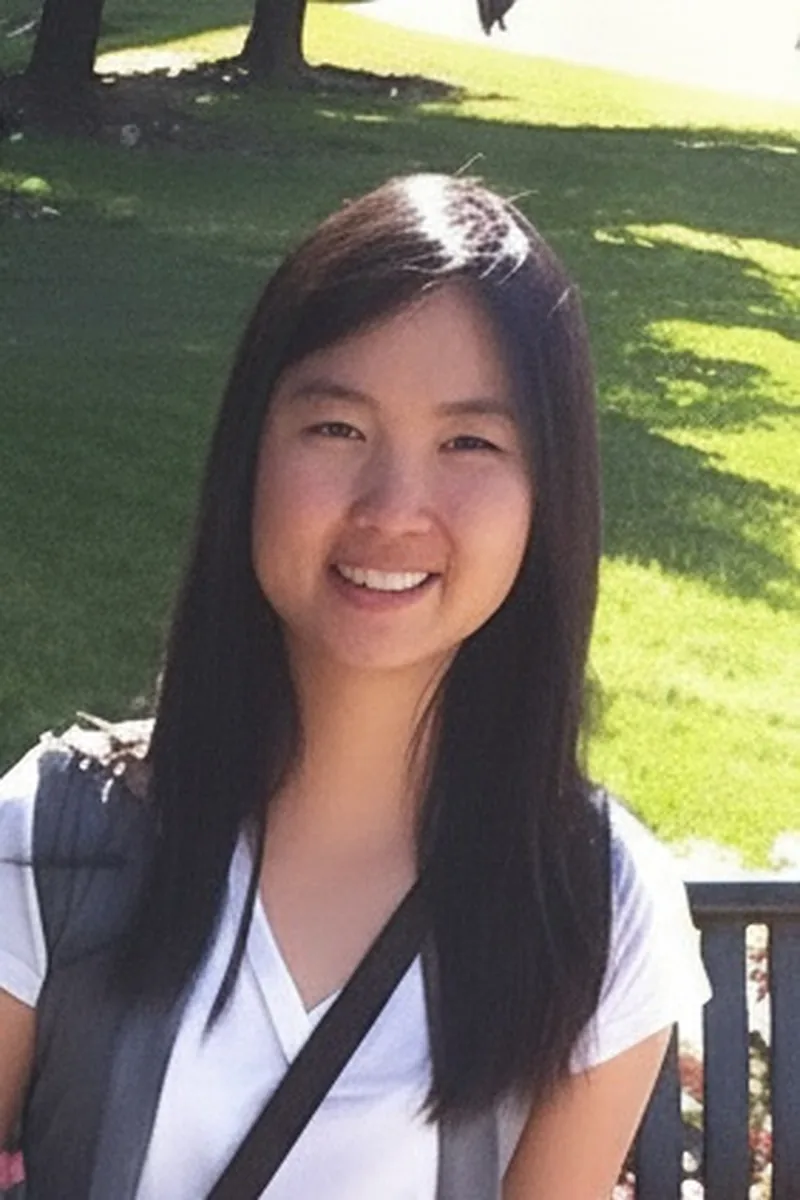
Stoichiometry clicks differently when your tutor earned a chemistry degree and is heading to medical school — Natalie doesn't just remember how to balance equations and convert moles, she understands the underlying logic well enough to explain why the math works the way it does. She's particularly sharp at connecting gas law problems and reaction predictions back to the periodic trends that make them solvable. Rated 4.8 by students.
Most high school Chemistry struggles come down to one thing: the periodic table is supposed to be a cheat sheet, but nobody taught students how to read it. Sharan connects trends like electronegativity and atomic radius to actual behavior in reactions, so predicting whether a bond is ionic or covalent stops being a guessing game. She's earned a 5.0 rating tutoring science subjects alongside her premed studies at Cornell.
Chemistry can feel like learning a new language — balancing equations, interpreting the mole concept, predicting reaction types — and Asta treats it that way, breaking each topic into its own vocabulary and logic. Her experience tutoring internationally in Hong Kong gave her practice explaining scientific concepts to students from varied academic backgrounds. Rated 5.0 by students.
Amber's path led to theater casting and producing in New York, but her 35 ACT and deep comfort with math and science mean she tackles chemistry topics like stoichiometry and gas laws with the same precision she brings to her strongest subjects. She teaches students to read chemical equations the way she reads a script — pulling apart what each piece is doing and why it's there, so nomenclature and reaction balancing start to follow a logic instead of feeling arbitrary. Rated 5.0 by students.
Neuroscience at Yale meant David didn't just take chemistry — he needed it to work, especially when tracing how ion channels, neurotransmitters, and cellular signaling depend on concepts like electronegativity, polarity, and equilibrium. That gives him a concrete answer when students ask why any of this matters, and it shapes how he teaches topics like chemical bonding and reaction energetics: rooted in what molecules actually do, not just what shows up on a worksheet.
Chemical engineering at Vanderbilt means Greg doesn't just know stoichiometry and equilibrium — he uses them daily in reactor design and thermodynamics coursework. That applied perspective lets him show students why balancing equations or calculating molarity actually matters beyond the textbook. Rated 5.0 by students.
Three-plus years of classroom instruction in advanced chemistry means Sugi has seen exactly where high school students get stuck — balancing redox equations, applying Le Chatelier's principle, or connecting molecular geometry to polarity. She teaches the underlying logic of each topic so students build real problem-solving skills, and her biochemistry training at Rice keeps the material grounded in real-world applications.
Devon's pre-med track at Vanderbilt means she's taken chemistry well beyond the high school level, and that deeper exposure sharpens how she explains topics like molecular geometry, intermolecular forces, and the logic behind predicting reaction products. She emphasizes understanding the patterns on the periodic table so students can reason through unfamiliar problems instead of treating each one as a brand-new challenge.
Stoichiometry and electron configurations tend to pile up fast in high school chemistry, and students who fall behind on one unit often struggle to catch up in the next. Paula's approach is to anchor each new concept — whether it's Lewis structures or acid-base equilibria — to the periodic table trends that tie the whole course together. She teaches the logic underneath the formulas so students aren't just memorizing steps.
Starting chemistry for the first time can feel like learning a new language — moles, electron configurations, Lewis structures — and Eric excels at translating that language into something intuitive. He holds a master's in chemistry and approaches introductory topics with patience and specificity, making sure students understand the 'why' behind each concept before moving to the next one.
When mole conversions and electron configurations feel like two completely unrelated subjects crammed into one class, that's usually a sign the underlying logic hasn't clicked yet. Aidan ties high school chemistry concepts together by starting from atomic structure and building outward — showing why periodic trends predict reactivity, how bonding explains molecular shape, and where the math fits in. His premed coursework at Notre Dame covered this material in depth.
Working at UPenn's Tutoring Center, Brittany spent semesters teaching General Chemistry I and II to both undergraduate and graduate students — so she's diagnosed the exact points where topics like stoichiometry, gas laws, and chemical equilibrium tend to fall apart for learners at different levels. That hands-on repetition with real students means she can spot whether a high schooler's confusion stems from the math, the conceptual model, or just shaky notation, and adjust accordingly.
Balancing redox equations, predicting products, and navigating stoichiometry all become more manageable when a student understands the 'why' behind each reaction type. Maggie's molecular and cellular biology degree gave her deep fluency in chemical principles, and she applies that knowledge to demystify everything from periodic trends to equilibrium calculations. She holds a 5.0 rating from students.
Testimonials
Because the right High School Chemistry tutor makes all the difference.
Average Session Rating – Based on 3.4M Learner Ratings
Nearby High School Chemistry Tutors
Other Omaha Tutors
Related Science Tutors in Omaha
Frequently Asked Questions
High school chemistry requires balancing abstract molecular concepts with practical problem-solving. Students often struggle with visualizing atomic structure and molecular bonding, mastering stoichiometry and unit conversions, and understanding how theoretical concepts apply to real-world reactions. Many also find it challenging to develop strong scientific reasoning skills needed to predict reaction outcomes and explain phenomena at the molecular level.
The first session focuses on understanding your current level, identifying specific challenges, and building a personalized plan. A tutor will assess your comfort with foundational concepts like atomic structure and bonding, discuss which topics are causing difficulty, and determine whether you need help with content understanding, problem-solving skills, or exam preparation. This foundation helps create a targeted approach that addresses your unique needs.
Balancing equations is a skill that improves with guided practice and clear explanation of the underlying logic. Tutors break down the process step-by-step, help you understand why coefficients matter, and work through increasingly complex equations with you. With personalized instruction, you'll develop the pattern recognition and systematic approach needed to balance equations confidently on tests and in lab work.
Yes. Tutors help you connect lab experiences to theoretical concepts, understand experimental design and the scientific method, and develop skills for analyzing data and drawing conclusions. Whether you're preparing for an upcoming lab, reviewing results, or struggling to see how a hands-on experiment relates to classroom concepts, personalized instruction bridges the gap between theory and application.
Chemistry is fundamentally about understanding concepts—memorization without understanding leads to confusion and poor performance. Effective tutoring focuses on helping you grasp why reactions occur, how molecular structure determines properties, and how to apply principles to new situations. When you truly understand the underlying concepts, you'll remember key facts naturally and be able to solve problems you've never seen before.
Unit conversions and stoichiometry are math-heavy topics that benefit greatly from step-by-step guided practice. Tutors teach you systematic approaches like dimensional analysis, help you identify what information you have and what you're solving for, and work through practice problems until the process becomes automatic. With personalized instruction, these skills shift from confusing to manageable.
Tutors use multiple strategies to make abstract concepts concrete—drawing molecular structures, using models to show bonding and electron behavior, and connecting microscopic phenomena to observable macroscopic changes. By explaining concepts from different angles and using visual aids, personalized instruction helps you build mental models of atoms, molecules, and reactions, making chemistry feel less abstract and more intuitive.
Varsity Tutors connects you with tutors who have strong chemistry expertise and experience teaching high school students. When you reach out, you'll be matched with someone whose qualifications and teaching style fit your needs, whether you're looking for help with a specific unit, exam preparation, or building stronger foundational understanding. The matching process ensures you get personalized instruction from someone equipped to help you succeed.
Let’s find your perfect tutor
Answer a few quick questions. We’ll recommend the right plan and match you with a top 5% tutor.