Award-Winning Korean Tutors
serving Kansas City, MO
Korean
Tutors in Kansas City
Private 1-on-1 tutoring, weekly live classes for academic support, test prep & enrichment, practice tests and diagnostics, and more to elevate grades and test scores.
Based on 3.4M Learner Ratings
UniversitiesSchools & Universities
DeliveredHours Delivered
ProficiencyGrowth in Proficiency
Who needs tutoring?
No obligation. Takes ~1 minute.
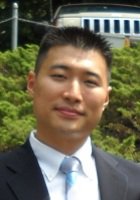
Learning Korean means tackling Hangul, honorific speech levels, and a sentence structure that puts the verb at the end — all of which can feel disorienting for English speakers. Kevin walks students through these building blocks systematically, connecting grammar patterns to real conversational contexts so the language starts to feel logical rather than foreign.
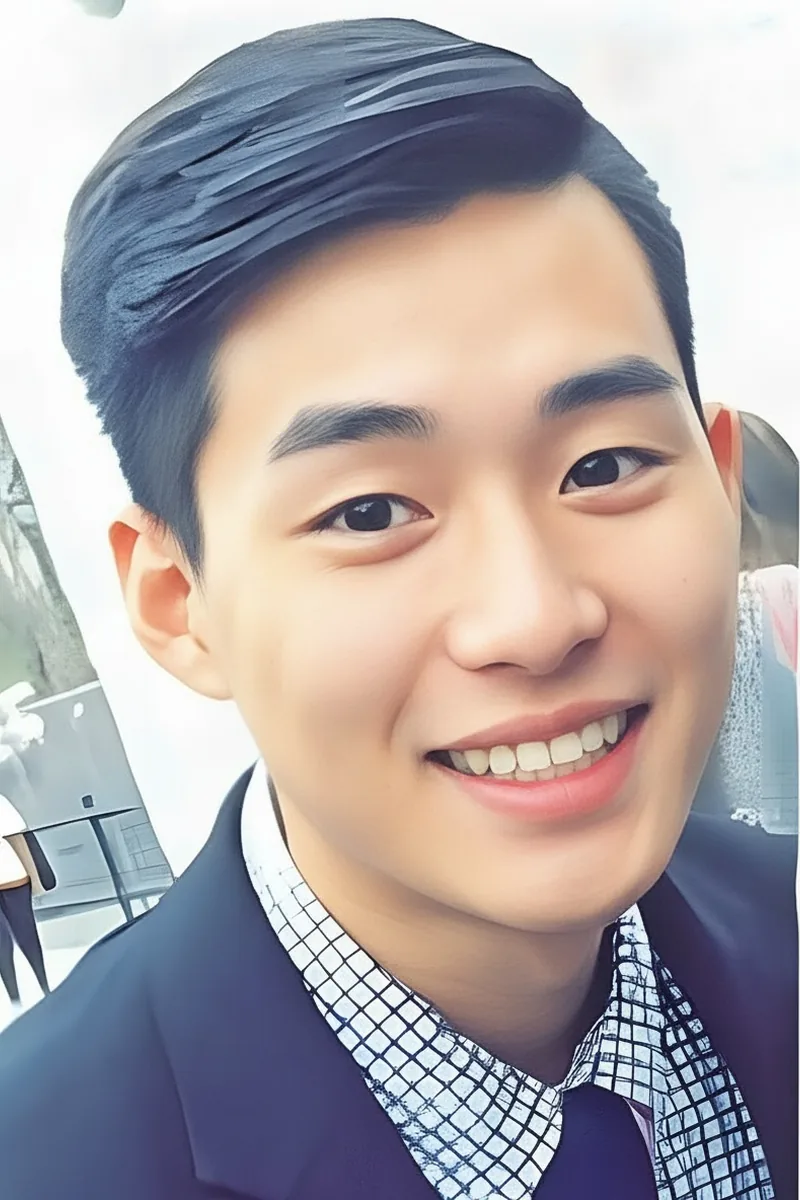
As a member of a Korean hip-hop dance group at Cornell, Andrew engages with Korean language and culture well beyond the classroom. He tackles tricky concepts like honorific levels, particle usage, and Hangul reading fluency by grounding them in real conversational contexts — music, media, and everyday dialogue — so students build practical skills alongside formal grammar.
I graduated from Mechatronics Engineering in University of Waterloo located in Canada, and am currently enrolled in Masters program, researching stochastic systems and computational neuroscience in University of Toronto. Currently, I am qualifed to teach computer programming, with a focus on Python language, but am able to transfer my skills to other languages. As someone that started programming later compared to my peers in university, I constantly remind myself on how difficult the initial learning curve was in programming, and aim to use this as an advantage to guide my future students into the world of programming in an interesting way, where they can enjoy the learning process and challenges, instead of being frustrated. Whether you want to learn for school, or just personal reasons, I believe that I can offer a tailored experience for teaching computer programming. I am also hoping to get qualified to teach mathematics, especially linear algebra. As an added bonus, I am also willing to share my knowledge in Machine Learning and Artificial Intelligence as it is the field that I have a lot of experience in. Teaching is not just a trasfer of knowledge, but aiding the students in making a concept their own, so that they have freedom to use it for different applications. I will try my absolute best to make what seems like a difficult topics, your own!
Hi, I'm Soo Young Lee, your Korean teacher. I have been teaching Korean for over five years, and I currently teach Korean to children in the United States. I also teach Korean in English online to students from various countries. I believe it is very important to help students learn Korean in a way that is easy, enjoyable, and practical. That is why I use a variety of learning tools, such as Quizlet and mobile quizzes, to make learning more effective and engaging. See you in class!
Hi, I'm Sojung, and I enjoy helping students learn in a clear, supportive, and encouraging way. I have teaching experience at the graduate level, and I always try to make lessons easy to understand and comfortable to follow. I like to tailor each lesson to a student's goals, interests, and learning style so that learning feels more meaningful and effective. Whether you want help with Korean for conversation, school, work, or personal interest, I'd be happy to support your progress.
Learning Korean means tackling Hangul, sentence-ending particles, and an honorific system that changes verb forms depending on who you're speaking to. AJ teaches the logic behind these structures so that grammar rules feel like a system to navigate rather than a list to memorize.
Sophia's pharmacy doctorate required years of dense scientific reading and precise technical communication — skills she now channels into teaching Korean at the beginner level, where careful attention to hangul syllable blocks and basic sentence patterns makes all the difference early on. She keeps lessons relaxed and conversational, building vocabulary and grammar fundamentals at a pace that doesn't overwhelm new learners.
Hello! Having spent decades in the heart of Seoul, I believe that language is far more than just grammar - it is a living culture. Without that cultural context, a language can feel "dead." My goal is to bring Korean to life for you. As a published author of two books on daily and corporate philosophy and a former CEO and COO in the entertainment industry, I bring a unique, multifaceted perspective to our lessons. Whether you are a fellow professional or a dedicated student, I tailor my approach to your specific pace and goals. My current students value my patience and my deep knowledge of both standard Korean and its vital cultural nuances. My MBA from Northwestern University and my career at global firms like Samsung, GE, and Time Warner taught me the value of clear, impactful communication - the same clarity I provide to every student. Let's start your journey. Choose me today for a Korean lesson that goes far beyond the textbook.
Lucy Je is a native-level Korean instructor with a TKSOL certification and over fifteen years of teaching the language. Whether a student is mastering Hangul for the first time or working through honorific speech levels and complex verb conjugations, she tailors each session to the learner's current proficiency and goals. Her academic degree in Korean adds depth to lessons on grammar, vocabulary, and cultural context.
Sean's mathematics and MBA background might seem unrelated to Korean, but his analytical mindset lends itself well to breaking down the language's logical grammar system — particularly how particles and verb conjugations follow consistent, rule-based patterns. He approaches Korean the way he'd approach a math problem: identify the structure, learn the rules, then apply them in increasingly complex contexts.
I was born in Seoul, Korea, and came to the US in 1994. I currently work as the Assistant Director of Simulation-Based Surgical Education and Training in the Division of Education of the American College of Surgeons (ACS) in Chicago, Illinois. I completed my undergraduate study in the Department of Biomedical Engineering at Yonsei University. I came to the US in 1994 to begin my graduate studies. I obtained a Ph.D. in Biomedical Engineering from Texas A&M University with my dissertation research in the biomechanical mechanism of secondary injury and became a Postdoctoral Research Associate in the Department of Kinesiology at Arizona State University. In a series of studies, I investigated the upper extremity control strategies employed by three discrete groups of subjects (young, elderly and Parkinson's patients). After my postdoctoral training, I joined the Department of Surgery at the University of Maryland School of Medicine. At the rank of Assistant Professor, I have served as Director of Surgical Ergonomics and Human Factors Research Program in the Maryland Advanced Simulation, Training, Research and Innovation (MASTRI) Center. Using biomechanical measurement systems, I identified ergonomic risk factors associated with the performance of laparoscopy and propose solutions for minimizing the ergonomic risks that laparoscopic surgeons encounter. Additionally I studied the characteristic patterns of upper-body movement and postural balance control exhibited by expert MIS surgeons. As a Faculty Instructor in the Department of Surgery at the Johns Hopkins University School of Medicine. I am serving as the Director of MIS and Robotic Training and Ergonomics Research in the Minimally Invasive Surgical Training and Innovation Center (MISTIC). The MISTIC research and education team, which I am leading, has developed the Johns Hopkins-MISTIC robotic surgery training curriculum for basic and intermediate level skill learning for trainees in various surgical specialties. Educational research focuses on the development of the more effective and efficient robotic surgery training program, objective and automated skill assessment, and ultimately robotic surgery skill teaching system. Additionally, surgical ergonomics research program in minimally invasive surgeries are taking place through collaboration with my research partners. As the Assistant Director of Simulation-Based Surgical Education and Training, I provide leadership for a broad range of innovative simulation-based education training and verification programs of the Division of Education. I am responsible for designing simulation-based programs, providing leadership for the simulation research and development activities, especially those of the Consortium of ACS Accredited Education Institutes, and building and strengthening collaborative relationships with national organizations and the federal government, including the Department of Defense. I would love to help any students who can use my skills and experience. Please feel free to reach out to me. Thanks.
Esther's Korean proficiency is strong enough to have prepared for the SAT Subject Test in Korean with Listening, which means she's comfortable with formal grammar structures, reading comprehension, and conversational nuance. She teaches vocabulary acquisition and sentence patterns in a way that builds toward real fluency rather than rote phrase memorization. Whether a student is connecting with heritage language or starting fresh, she adjusts her approach accordingly.
Testimonials
Because the right Korean tutor makes all the difference.
Average Session Rating – Based on 3.4M Learner Ratings
Nearby Korean Tutors
Other Kansas City Tutors
Related Languages Tutors in Kansas City
Frequently Asked Questions
Korean is a language with unique grammar structures and writing systems (Hangul) that differ significantly from English, making personalized instruction particularly valuable. A tutor can break down complex concepts like verb conjugation, particles, and formal/informal speech patterns at a pace tailored to each student's learning style—something that's difficult to achieve in a classroom setting with a 12.7:1 student-teacher ratio. Whether preparing for AP Korean exams, building conversational fluency, or exploring Korean culture, personalized tutoring accelerates progress and builds confidence.
During an initial session, a tutor will assess your current Korean proficiency level, discuss your specific goals (whether that's conversational fluency, test preparation, or academic coursework), and identify any particular challenges you're facing—such as pronunciation, listening comprehension, or writing in Hangul. This foundation allows the tutor to create a customized learning plan that builds on your strengths and addresses gaps, ensuring every subsequent session is focused and productive.
Many students struggle with Korean grammar, particularly the complex system of particles, verb endings, and formality levels that don't have direct English equivalents. Pronunciation and tonal distinctions, listening comprehension with native speakers, and the transition from learning Hangul to reading authentic materials are also frequent hurdles. A tutor can provide targeted practice and real-time feedback to overcome these obstacles, helping students move past plateaus that often occur in group settings.
According to the Foreign Service Institute, achieving professional-level proficiency in Korean requires approximately 2,200 hours of study—significantly more than many European languages due to the writing system and grammar complexity. However, conversational basics can develop much faster with consistent, personalized instruction; many students reach functional conversation skills within 6-12 months of regular tutoring sessions combined with self-study. The timeline depends on your starting point, frequency of tutoring, and how much you practice outside sessions.
Yes—personalized tutoring is highly effective for AP Korean preparation. A tutor can help you master all exam components: interpersonal speaking and writing, presentational speaking and writing, and interpretive listening and reading. They'll provide targeted practice with authentic materials, give detailed feedback on your speaking and writing samples, and help you develop strategies for time management and cultural context, all tailored to your current skill level and test timeline.
Hangul, the Korean alphabet, is actually one of the most logical writing systems to learn—but many students need structured guidance to move from recognition to fluent reading and writing. A tutor breaks down character formation, stroke order, and common letter combinations, then progresses to reading simple texts and writing sentences with proper spacing and punctuation. With personalized practice and immediate feedback, most students become comfortable with Hangul within a few weeks, allowing them to focus on vocabulary and grammar.
Look for tutors with native or near-native Korean fluency, ideally combined with teaching experience or formal training in Korean language instruction. Many qualified tutors hold degrees in Korean studies, linguistics, or education, and some have lived in Korea or studied at Korean universities. When you connect with Varsity Tutors, you'll be matched with experienced tutors whose qualifications align with your specific goals—whether that's casual conversation, academic coursework, or test preparation.
In a classroom, instruction follows a set curriculum and pace that may not match your learning speed or goals. Personalized tutoring adapts in real-time: if you're struggling with verb conjugation, you spend more time there; if you excel at listening, you can accelerate to more advanced material. A tutor also provides immediate, detailed feedback on your pronunciation and writing, corrects mistakes as they happen, and can focus on the specific contexts and vocabulary most relevant to your life—advantages that are difficult to replicate in group settings.
Let’s find your perfect tutor
Answer a few quick questions. We’ll recommend the right plan and match you with a top 5% tutor.