Award-Winning College Chemistry Tutors
serving Minneapolis, MN
College Chemistry
Tutors in Minneapolis
Private 1-on-1 tutoring, weekly live classes for academic support, test prep & enrichment, practice tests and diagnostics, and more to elevate grades and test scores.
Based on 3.4M Learner Ratings
UniversitiesSchools & Universities
DeliveredHours Delivered
ProficiencyGrowth in Proficiency
Who needs tutoring?
No obligation. Takes ~1 minute.
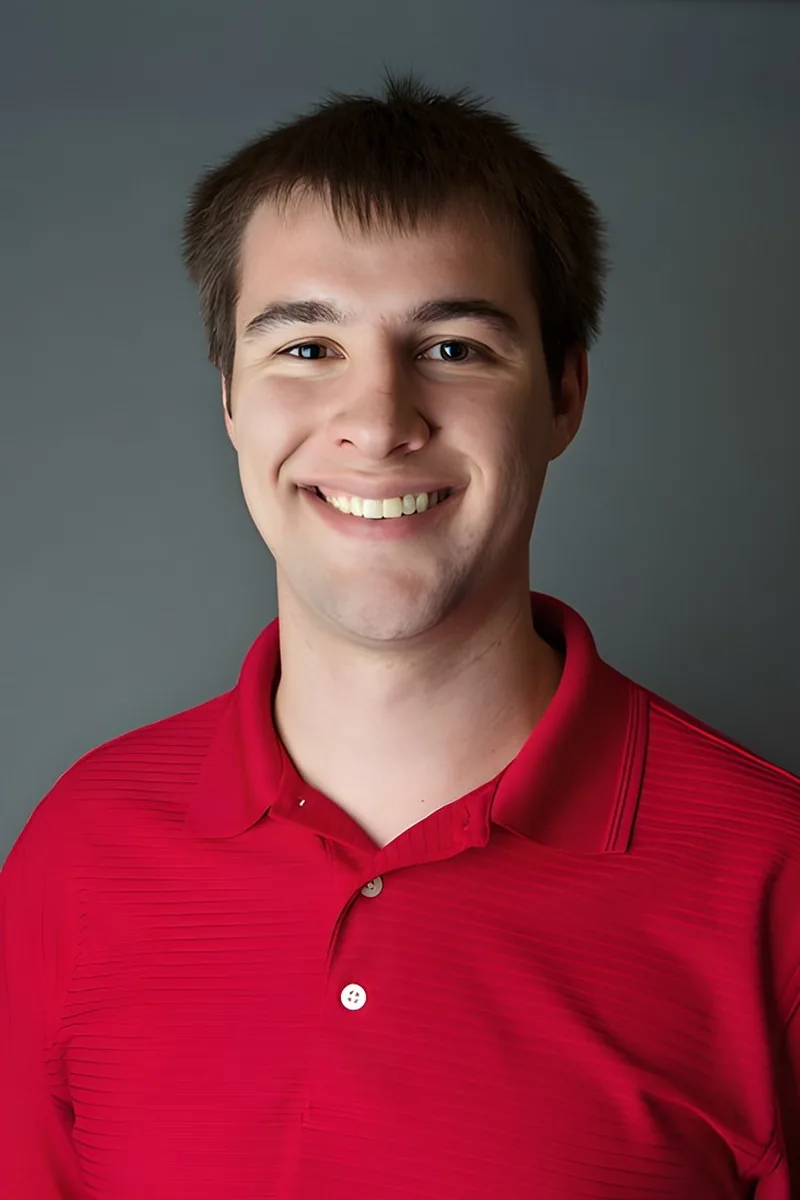
Thermochemistry, equilibrium constants, and reaction kinetics show up heavily in engineering coursework, so Joe has worked through these concepts under pressure and at depth. He unpacks the logic behind equations like the Nernst equation or Hess's law so students understand the derivations, not just the plug-and-chug.

MIT's general chemistry sequence is notoriously fast — Vania not only survived it but tutored other students through it via the university's Seminar XL and Tutorial Services Room programs, where she got fluent in the exact places students stall out on topics like thermochemistry, equilibrium, and electron configuration. Her mechanical engineering training means she thinks about chemistry problems quantitatively, tracing how molecular-level behavior connects to the math rather than treating equations and concepts as separate tasks. Rated 5.0 by students.
Working in a Yale research lab with tools like CRISPR-Cas9 means Matthew encounters gen chem principles — reaction kinetics, molecular interactions, buffer systems — in live experimental contexts, which sharpens how he explains them back at the introductory level. His biochemistry and molecular biology coursework built fluency with the bridge between general chemistry and its applications, so he can show students exactly why mastering something like equilibrium or thermochemistry pays off two courses down the road. Holds a 5.0 rating.
Pursuing a dual degree in biostatistics and public health at Brown, Joyce has worked through college chemistry with the quantitative rigor that comes from living in both the biology and statistics sides of STEM — so she's comfortable with the molarity calculations, reaction stoichiometry, and equilibrium expressions that overwhelm students who expected a purely conceptual course. She tackles problems by clarifying the chemical logic first, then showing how the math follows naturally from it.
Forty-plus students tutored in general and AP Chemistry, a bachelor's in chemistry, and a master's in environmental toxicology — Amy has seen college-level chemical concepts from the classroom side and the research side, where sloppy equilibrium reasoning or shaky thermodynamics understanding actually costs you results. She walks through problems like calorimetry, solution preparation, and reaction stoichiometry with an emphasis on dimensional analysis and unit tracking, which is where most gen chem mistakes quietly start. Rated 5.0 by students.
Studying chemistry at MIT means Max has tackled the same problem sets, lab reports, and conceptual leaps that trip up college chemistry students — quantum mechanical models, thermodynamic cycles, molecular orbital theory. He approaches each session by identifying the specific concept a student is stuck on and building understanding from the ground up, not just drilling practice problems. His 5.0 rating speaks to how well that method works at the college level.
Between a biochemistry degree and ongoing work in biochemical laboratories, Andrew has used gen chem concepts like reaction thermodynamics, molecular bonding, and acid-base chemistry as everyday tools — not just exam material he learned and forgot. He teaches college chemistry by grounding abstract ideas in the lab contexts where they actually behave, so topics like equilibrium constants and enthalpy changes carry physical meaning rather than just numerical answers. Rated 4.9 by students.
Engineering coursework at Harvard means Christopher regularly uses chemistry concepts like thermodynamics, equilibrium, and reaction kinetics in applied settings. He teaches college chemistry by connecting abstract ideas — say, Gibbs free energy or electrochemical cells — to tangible problems, making the material easier to internalize before exams.
Studying chemistry at Harvard while preparing for Columbia Medical School means James has taken college chemistry far past the introductory level — he knows which early concepts like electron configurations, VSEPR theory, and reaction stoichiometry quietly become load-bearing walls for everything from organic mechanisms to biochemical pathways. He teaches gen chem by flagging those high-stakes fundamentals early, so students aren't blindsided when later courses assume fluency. Rated 4.9 by students.
General chemistry at the college level demands more than balancing equations — it requires thinking in terms of energy, equilibrium, and molecular behavior. Jhonatan approaches topics like thermodynamics, acid-base chemistry, and kinetics by grounding abstract formulas in physical intuition, drawing on the quantitative rigor he developed through his biological sciences degree. His 5.0 rating speaks to how well that approach lands with students.
Tackling college-level chemistry means juggling thermodynamics, kinetics, and equilibrium all in the same problem set. Brittany was employed at the University of Pennsylvania's Tutoring Center specifically for General Chemistry I and II, where she worked with both undergraduates encountering the material for the first time and graduate students brushing up on fundamentals. That range sharpened her ability to adjust explanations to any level of preparation.
Though political science was her major at the University of Chicago, Asta's tutoring work across both chemistry and quantitative subjects means she's spent real time breaking down the conceptual hurdles in gen chem — balancing equations, working through mole conversions, and making sense of reaction types. Her 5.0 rating speaks to an approach that's honest about meeting the material on its own terms rather than pretending expertise she doesn't have, which students in a tough prerequisite course tend to trust more, not less.
Having served as an undergraduate teaching assistant at Cornell for introductory biochemistry, Josef has spent real time diagnosing where students get stuck on foundational chemistry — electron configurations bleeding into bonding theory, or mole concepts falling apart during stoichiometric conversions. He teaches college chemistry with a life sciences backbone, connecting topics like solution chemistry and reaction energetics to the biological applications his students will actually encounter next semester. Rated 5.0 by students.
Testimonials
Because the right College Chemistry tutor makes all the difference.
Average Session Rating – Based on 3.4M Learner Ratings
Nearby College Chemistry Tutors
Other Minneapolis Tutors
Related Science Tutors in Minneapolis
Frequently Asked Questions
College Chemistry usually covers atomic structure, bonding, stoichiometry, thermodynamics, equilibrium, acid-base chemistry, and redox reactions. Many courses also include laboratory components where you'll conduct experiments to reinforce theoretical concepts and develop hands-on scientific skills. The pace is faster than high school chemistry, so understanding foundational concepts deeply—rather than memorizing—becomes essential for success.
Balancing equations requires understanding both the underlying chemistry and systematic problem-solving skills. Many students struggle because they try to memorize patterns rather than grasping the conservation of mass principle. Personalized tutoring helps you develop a logical approach to balancing equations by breaking down the process step-by-step and connecting it to the chemistry concepts you're learning, making the skill stick long-term.
Yes. Tutors can help you understand the scientific method, prepare for lab sessions, interpret experimental results, and connect what you observe in the lab to the theoretical chemistry you're studying in class. This support strengthens both your experimental design skills and your ability to think like a scientist—skills that extend far beyond just getting the right answer.
Molecular visualization is a skill that improves with guided practice. Tutors can use molecular models, drawings, and 3D visualization tools to help you build mental models of how atoms bond and molecules behave. Once you can visualize these concepts, problem-solving becomes much more intuitive, and you'll find yourself understanding reactions rather than just memorizing them.
Unit conversions and stoichiometry are foundational skills that unlock success in College Chemistry. The key is understanding the logic behind dimensional analysis rather than treating it as a formula to memorize. Personalized tutoring breaks these concepts down systematically, gives you plenty of practice with feedback, and helps you recognize patterns across different problem types so you can apply these skills confidently.
Your first session focuses on understanding where you are right now. You'll discuss which topics feel solid and where you're struggling—whether that's conceptual understanding, problem-solving, or test preparation. The tutor will assess your learning style and goals, then create a personalized plan to address your specific challenges and help you build real mastery of College Chemistry.
College Chemistry rewards understanding over memorization. Tutors focus on building your conceptual foundation by connecting abstract ideas to real-world applications, working through problems together, and asking questions that deepen your thinking. This approach not only helps you perform better on exams—it also makes chemistry feel less overwhelming because you're building genuine understanding rather than trying to remember disconnected facts.
Varsity Tutors connects you with tutors who have deep expertise in College Chemistry and understand how to teach it effectively. You can share your specific needs—whether you need help with a particular unit, exam prep, or overall course support—and get matched with someone who's a great fit for your learning style and goals. The process is straightforward, and you can start personalized instruction quickly.
Let’s find your perfect tutor
Answer a few quick questions. We’ll recommend the right plan and match you with a top 5% tutor.