Award-Winning AP European History Tutors
serving Springfield, MA
AP European History
Tutors in Springfield
Private 1-on-1 tutoring, weekly live classes for academic support, test prep & enrichment, practice tests and diagnostics, and more to elevate grades and test scores.
Based on 3.4M Learner Ratings
UniversitiesSchools & Universities
DeliveredHours Delivered
ProficiencyGrowth in Proficiency
Who needs tutoring?
No obligation. Takes ~1 minute.

From the Renaissance papacy to the collapse of the Soviet bloc, AP European History demands that students trace causation across centuries — not just recall events but explain why the Congress of Vienna produced a different Europe than the Treaty of Versailles. Max's history degree and classroom teaching experience give him a deep command of the periodization and thematic reasoning the College Board tests. He spends particular time on the document-based question, teaching students to group sources and build arguments under time pressure.
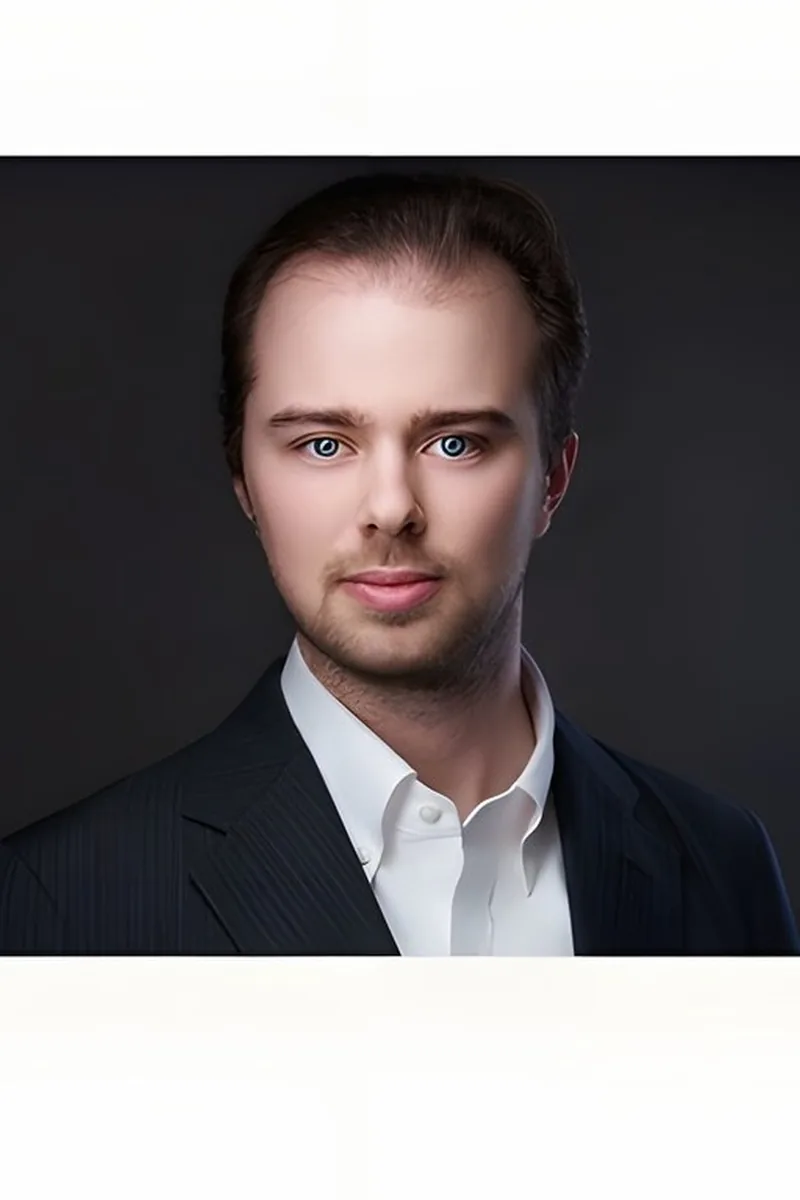
Arthur's economics degree gives him an unusual angle on AP European History — he naturally gravitates toward the economic engines behind major shifts, whether it's how the Commercial Revolution fueled state consolidation or how interwar hyperinflation destabilized Weimar Germany. That economic lens is especially useful for the LEQ, where students who can weave together political, social, and economic causation consistently outscore those who stick to a single thread. His 36 ACT speaks to the reading and analytical writing chops the exam's document-based questions demand.
From the Renaissance through the Cold War, AP European History demands that students track political, intellectual, and cultural developments simultaneously. Samantha unpacks how movements like the Enlightenment or industrialization reshaped entire societies, and she drills the document-analysis and essay-construction skills that separate a 3 from a 5.
From the Renaissance papacy to the Congress of Vienna to European integration, AP Euro covers an enormous sweep that overwhelms students who try to memorize everything. James teaches thematic throughlines — how power, religion, and economics interact across centuries — so students can tackle any free-response prompt by connecting specific evidence to broader patterns.
Meeghan earned a history degree and the James D. Linsley Award for service to her department, which included time as both a supplemental instructor and the dedicated history tutor at her college — so she's walked dozens of students through the kind of source analysis and long-form argumentation AP Euro demands. Her strength is on the writing side: breaking down how to structure a coherent thesis from a stack of documents when the clock is running. Rated 5.0 by students.
Three years in a biology research lab might not scream AP Euro, but Hussein's science training built the same analytical muscle the exam demands — tracing how one development causes the next, whether it's a cellular pathway or how the Scientific Revolution eroded traditional authority structures. His health science background gives him a natural entry point into topics like the Black Death's role in feudalism's collapse or how Enlightenment-era medical advances intersected with changing ideas about human progress. A 33 ACT reflects the reading and argumentative writing skills that pay off on the DBQ.
Olivia's International Relations degree at Tufts meant spending serious time with the diplomatic, ideological, and economic forces that shaped modern Europe — the same material AP Euro covers from the Treaty of Westphalia through EU integration. She's particularly sharp on teaching students how to contextualize events within broader geopolitical patterns, which is the kind of thinking that elevates a mediocre LEQ into one that actually scores well. Rated 5.0 by students.
Studying European history at Vanderbilt alongside her education degree means Jessica isn't just learning pedagogy — she's actively immersed in the content AP Euro covers, from absolutism and revolutionary movements to twentieth-century ideological conflict. That dual focus gives her a practical edge when it comes to breaking down how the exam's periodization works and what kinds of historical reasoning each question type actually rewards. Rated 4.5 by students.
The AP European History exam rewards students who can trace causation across centuries — linking, for instance, the Protestant Reformation to the Peace of Westphalia to the rise of the nation-state. Sanoja's political science training at Yale centered on exactly this kind of structural analysis, and her Fulbright year in Colombia deepened her understanding of how European colonialism reshaped global power dynamics. She teaches students to write DBQs that argue rather than narrate.
Alexander is finishing a European history degree at Vanderbilt, which means he's currently immersed in the same material AP Euro students are tackling — from the political fragmentation of the Reformation era to the ideological battles of the twentieth century. His 1510 SAT reflects strong analytical reading and writing skills, the same toolkit students need to dissect a DBQ prompt and construct a thesis under exam conditions. He's especially effective at teaching students how to move from knowing what happened to explaining why it mattered.
From the Renaissance patronage system to the ideological fractures of the Cold War, AP European History covers an enormous sweep that rewards students who can think thematically rather than chronologically. Laura's own deep reading in art, literature, and cultural history gives her a way into the material that connects political shifts to the cultural moments students can actually visualize and remember.
I am a 2009 graduate of the University of Chicago in Statistics and Political Science. I have been a tutor for test prep (including ACT, SAT, LSAT and AP testing), academic and creative writing, and general academic assistance for three years.
The AP European History exam asks students to do more than recall dates — it tests whether they can dissect a document set and construct an argument about, say, how Enlightenment thought reshaped political legitimacy. Brian approaches these document-based questions the way he approaches any analytical problem: identify the claim, weigh the evidence, and build a tight logical structure. His interdisciplinary background spanning economics and the humanities makes him especially effective at connecting Europe's intellectual, economic, and political threads.
From the Protestant Reformation to the Cold War, AP European History covers centuries of political upheaval, intellectual movements, and economic transformation — and the exam expects students to synthesize all of it into tight, evidence-driven essays. Katherine studied history at Denison University with a focus that sharpened her ability to trace cause-and-effect chains across eras. She breaks down DBQ and LEQ strategies so students know how to build an argument, not just recall dates.
From the Protestant Reformation to the Cold War, AP European History covers centuries of interconnected political, social, and intellectual movements that can blur together fast. Emerson breaks these into cause-and-effect chains that make long essay questions manageable, drawing on the rigorous historical training he received through IB History HL and at the University of Chicago.
**"BYE TO AI" DISCLAIMER: In an environment where tutors use AI to research, plan lessons, and even give students feedback, I have a zero tolerance policy for AI tools and materials, and I commit to NOT using them in our work together whatsoever.** ABOUT ME: Award-winning writer and classical soprano. Bachelor's degree from Vanderbilt University in history; second major in voice; minor in Italian; concentration in musicology. Master's degree from the University of Rochester. Professional editor (both journalistic and creative prose) experienced in the Chicago Manual of Style and AP Style Guide. Areas of specialty include classical music (bel canto vocal instruction, musicology, and music theory), 18th and 19th century American and European history and literature, research skills, creative writing, test prep, and college admissions. My instruction in college essay writing has enabled over 30 students to gain admissions to top schools.
Richard's government degree from Harvard built the kind of analytical muscle AP Euro rewards — tracing how political institutions, ideological movements, and power struggles shaped each other across centuries, from absolutist monarchies to modern democracies. His coursework in philosophy and politics gives him a natural feel for the intellectual history that dominates the exam, whether it's unpacking Montesquieu's influence on constitutional thought or the ideological fault lines behind 1848's revolutions. He scored a 1600 SAT and 36 ACT, signaling the reading comprehension and argumentative precision the DBQ demands.
Ethan's environmental science and public policy degree trained him to analyze how economic forces, ideological movements, and institutional decisions interact — the same kind of multi-causal thinking AP Euro rewards on every essay. He applies that analytical framework to periods like the Industrial Revolution's social upheaval or the political calculus behind European imperialism, showing students how to build arguments that weave together evidence rather than just list events. Rated 5.0 by students.
I am currently a senior at Northwestern University and I will be receiving a Bachelor of Arts in Political Science and Legal Studies this spring. In the fall, I will begin attending law school at Northwestern Law. For many years, I tutored a wide range of students in Spanish, English literature, and writing. I have also continued to help many high school seniors with college application essays. While I tutor a variety of subjects, I am very passionate about helping students improve their reading and writing skills, and I really enjoy helping students with Critical Reading and Writing portions of Standardized Tests. I love working with students and helping them realize their full academic potential. In my spare time, I enjoy traveling, exploring Chicago, reading, and cooking.
Testimonials
Because the right AP European History tutor makes all the difference.
Average Session Rating – Based on 3.4M Learner Ratings
Practice AP European History
Free practice tests, flashcards, and AI tutoring for AP European History
Nearby AP European History Tutors
Other Springfield Tutors
Related Social Studies Tutors in Springfield
Frequently Asked Questions
AP European History spans from 1450 to the present, organized around major themes like intellectual and cultural developments, state-building and diplomacy, individual and society, and technological innovation. The course emphasizes understanding historical causation, analyzing primary and secondary sources, and recognizing patterns across centuries—from the Renaissance through the Cold War to contemporary Europe. A tutor can help you master the specific time periods and thematic connections that appear most frequently on the exam.
The AP European History exam is 3 hours and 15 minutes long, consisting of a multiple-choice section (40% of your score), a short-answer section, and a free-response section with document-based and long essay questions (60% combined). Success requires both broad content knowledge and strong analytical skills—you'll need to synthesize information quickly and construct evidence-based arguments under time pressure. Working with a tutor can help you develop efficient strategies for each section and practice managing your time effectively.
Students often struggle with the sheer volume of content—spanning 500+ years of history across multiple regions—and distinguishing between major events and minor details. Many also find it challenging to move beyond memorization to develop the analytical skills the exam demands, particularly in constructing arguments that connect evidence to broader historical themes. Additionally, the document-based question requires quick analysis of unfamiliar primary sources under time constraints. Personalized tutoring helps you build a strategic study plan, identify your knowledge gaps, and practice the specific writing and analytical skills AP graders are looking for.
Score improvement depends on where you're starting and how consistently you engage with tutoring and practice. Students who work with a tutor typically see gains of 1-2 points on the 1-5 scale, though some improve more significantly with focused effort on weak areas. The key is combining expert guidance on content and strategy with regular practice tests and active review of your mistakes. Varsity Tutors connects you with tutors who can diagnose your specific weaknesses—whether that's timeline confusion, weak essay structure, or source analysis—and target those areas directly.
Most students benefit from starting serious AP European History prep 3-4 months before the exam, though this varies based on your baseline knowledge and comfort with the material. A typical study schedule includes regular content review, practice with document-based and essay questions, and full-length practice exams in the final weeks. Working with a tutor helps you create a personalized timeline that accounts for your specific gaps and ensures you're spending study time efficiently rather than reviewing material you already know well.
Practice tests serve two critical purposes: they help you identify content gaps and weak analytical skills, and they train you to manage the exam's time constraints and question formats. Taking full-length practice exams under timed conditions reveals whether you're struggling with specific historical periods, essay construction, or pacing—information that shapes your study plan. Many students find that reviewing their practice test mistakes with a tutor is more valuable than taking the test itself, since you learn not just what you got wrong, but why and how to avoid similar mistakes on test day.
Varsity Tutors connects you with expert tutors for students in Springfield who specialize in AP European History and understand the exam's unique demands. When you reach out, you can discuss your current level, specific challenges (like essay writing or document analysis), and your timeline before the exam. Tutors work with you to create a personalized study plan that targets your weaknesses while building confidence in your strengths, whether you need help with content mastery, test-taking strategy, or both.
Test anxiety in AP European History often stems from feeling unprepared for the breadth of content or uncertain about essay writing under pressure. Building confidence through repeated practice with timed essays and multiple-choice sections helps normalize the exam experience and reduces anxiety. A tutor can also teach you practical strategies like breaking down essay prompts into manageable steps, managing your time across sections, and reviewing your practice test performance to reinforce what you know. The more prepared and practiced you feel, the calmer you'll be on exam day.
Let’s find your perfect tutor
Answer a few quick questions. We’ll recommend the right plan and match you with a top 5% tutor.