Award-Winning Statistics Graduate Level Tutors
serving Tampa, FL
Statistics Graduate Level
Tutors in Tampa
Private 1-on-1 tutoring, weekly live classes for academic support, test prep & enrichment, practice tests and diagnostics, and more to elevate grades and test scores.
Based on 3.4M Learner Ratings
UniversitiesSchools & Universities
DeliveredHours Delivered
ProficiencyGrowth in Proficiency
Who needs tutoring?
No obligation. Takes ~1 minute.
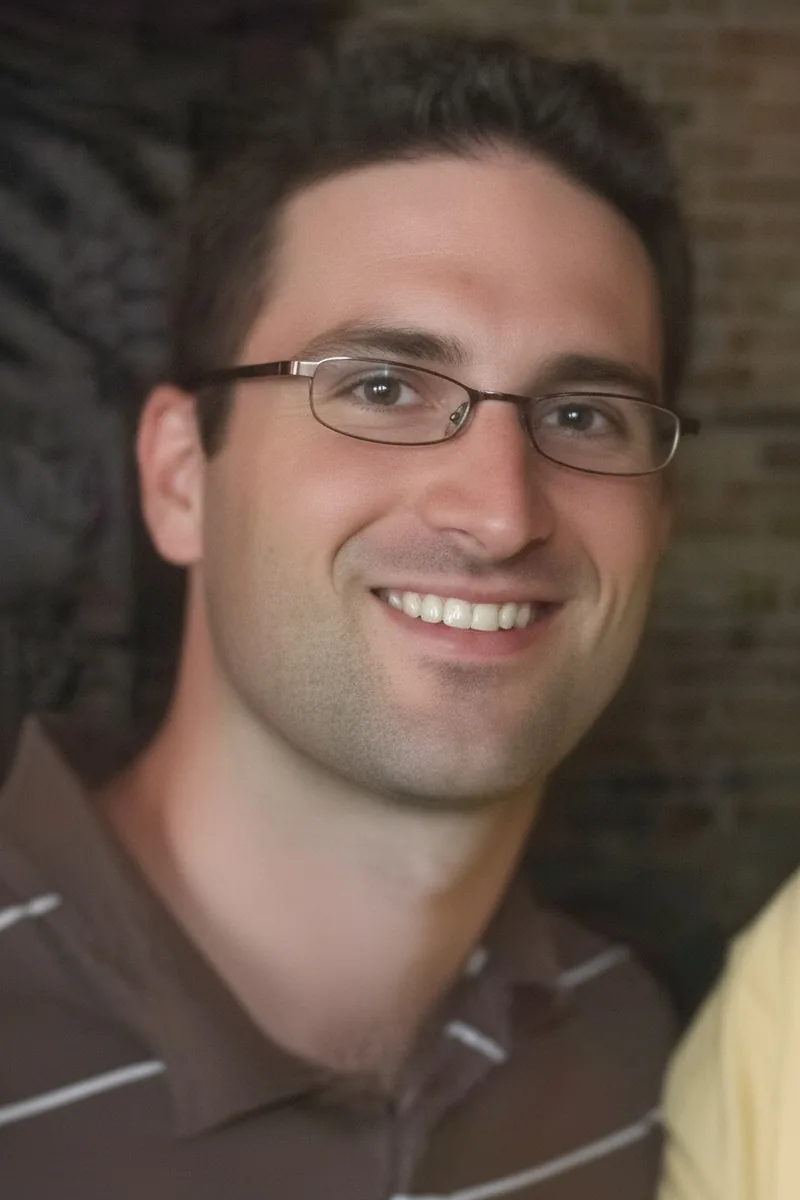
Graduate-level statistics is where Matthew lives professionally — his Master's in Educational Measurement and Statistics at the University of South Florida has him deep in topics like multivariate analysis, psychometrics, and inferential modeling on a daily basis. He's also served as a T.A. and instructor trainee for undergraduate statistics, so he knows how to unpack dense concepts like maximum likelihood estimation or ANOVA assumptions for students who are encountering them for the first time at the graduate level.
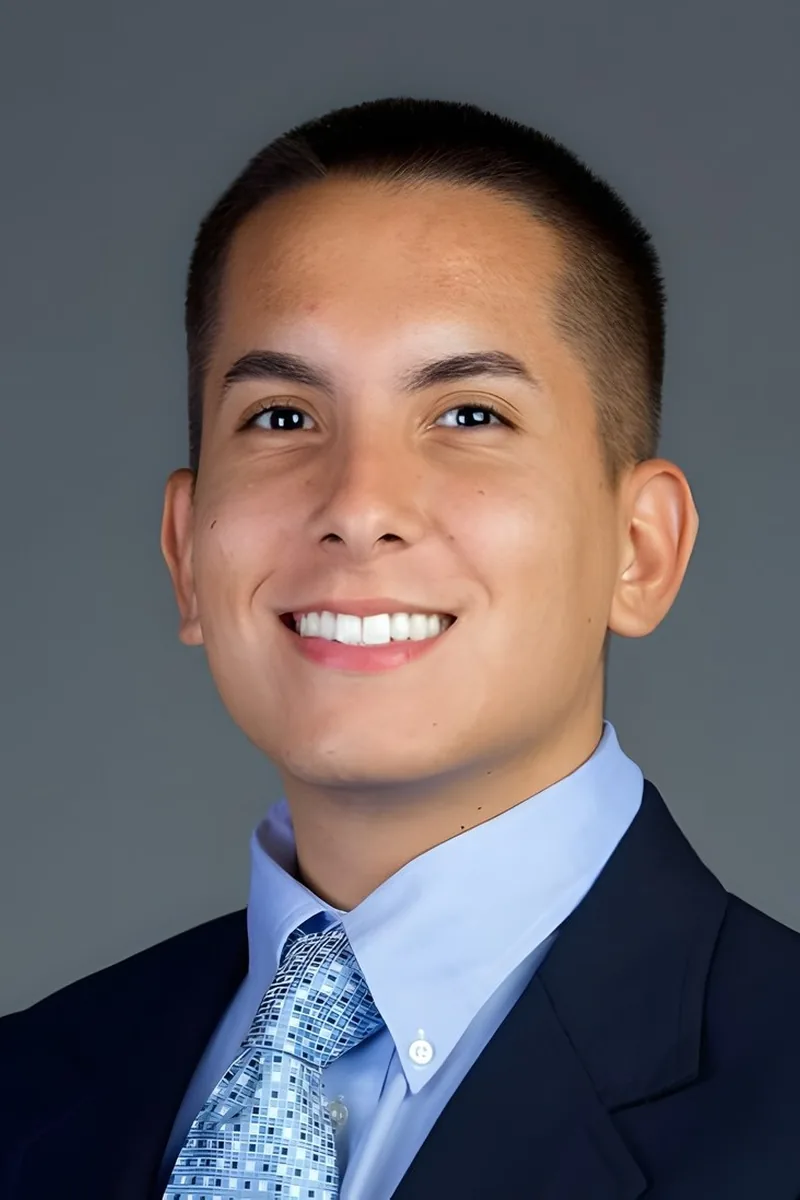
Graduate-level statistics moves quickly from probability theory into regression modeling, hypothesis testing frameworks, and ANOVA designs that require both mathematical rigor and software fluency. Juan is completing a statistics degree at the University of Florida alongside his engineering program, so he's immersed in these methods right now — from Bayesian inference to experimental design. His 4.9 rating speaks to how clearly he communicates dense material.
I am listening to and learning about him or her as an individual. I can also discover what motivates the student during this conversation and plan for how to frame future tutoring sessions in terms of what the student already knows and enjoys.
Graduate-level statistics demands fluency with concepts like maximum likelihood estimation, Bayesian inference, and multivariate analysis — not just running software but understanding the theory underneath. Michelle brings a quantitative biology perspective to these methods, having applied advanced statistical frameworks to biological data throughout her science training. Rated 4.9 by students.
Graduate-level statistics becomes far more intuitive when the examples come from real research — and Nicholas has applied multivariate analysis, mixed models, and hypothesis testing frameworks extensively throughout his genetics PhD work. He breaks down concepts like maximum likelihood estimation and ANOVA designs by tying them to the kinds of messy, real-world datasets students actually encounter in their own programs. Rated 4.8 by students.
Graduate-level statistics demands comfort with mathematical proofs and distribution theory that undergraduate courses barely touch — moment-generating functions, maximum likelihood estimation, Bayesian inference. Sabry's Ph.D. training in Chemical and Biomolecular Engineering required rigorous statistical modeling for experimental data, so he approaches these topics as tools with real stakes, not just textbook exercises. He's particularly effective at connecting abstract theory to applied research contexts.
Victor earned his B.S. in Economics with a statistics concentration from Purdue, where he tackled regression analysis, hypothesis testing, and probability distributions as core coursework. That quantitative foundation, combined with his time as a Supplemental Instruction Leader, means he can unpack dense concepts like multivariate analysis or ANOVA in ways that actually click. Rated 5.0 by students.
Hi! I'm Alexandre, I am a Machine Learning Engineer, so I write code to make AI do all sorts of stuff everyday. I have degrees in Applied Mathematics and Computer Science so if curious about how an area of math is useful in the real world I'd be happy to give a list of examples!
Graduate-level statistics demands more than plugging data into software — it requires understanding why you'd choose a Cox regression over a logistic model, or when maximum likelihood estimation breaks down. Naushaba's Master's in Epidemiology means she learned these methods by applying them to real research questions, from survival analysis to multivariate modeling. She teaches the reasoning behind each technique so students can defend their statistical choices in dissertations and publications.
Graduate-level statistics demands comfort with proofs, distributions, and inference methods that go well beyond intro courses. Dana's Master's in analytics from Georgia Tech and her current PhD research in economics give her deep fluency with topics like maximum likelihood estimation, hypothesis testing frameworks, and regression theory. Rated 4.8 by students, she brings both the mathematical rigor and the applied intuition this level requires.
Graduate-level statistics lives at the intersection of Laura's two degrees — her IT background covers the computational side (Python, data mining, regression modeling), while her MBA sharpened her ability to interpret results in a business context. She digs into topics like hypothesis testing, ANOVA, and multivariate analysis with an emphasis on knowing which test to run and why the output matters.
Graduate-level statistics demands fluency with proofs and derivations that introductory courses barely touch — moment-generating functions, maximum likelihood estimation, and the theory behind hypothesis testing. Victor's master's in Applied Mathematics gave him direct experience with these topics, and he brings that rigor to sessions while keeping notation and logic organized. He holds a 5.0 client rating.
Graduate-level statistics trips up many students at the transition from descriptive methods to inferential reasoning — hypothesis testing, regression analysis, ANOVA, and the assumptions underlying each technique. Jason teaches these concepts at a technical college in Pittsburgh, which means he's constantly translating statistical theory into applied, real-world problem solving. His math and education background lets him break down dense material into steps that actually make sense.
Graduate-level statistics demands fluency with concepts like maximum likelihood estimation, Bayesian inference, and multivariate distributions that go far beyond introductory coursework. Yuanxin's master's in financial engineering at USC required exactly this depth — she built and analyzed stochastic models where getting the statistics wrong meant getting the entire financial model wrong.
Graduate-level statistics demands fluency with techniques like regression modeling, ANOVA, and hypothesis testing frameworks that go well beyond introductory coursework. Scott applies these methods actively in his doctoral research at NYU, where he analyzes complex datasets on human development — so he can walk through both the theory and the practical decision-making behind choosing the right analysis for a given research question.
Duncan's master's degree in statistics makes him a natural fit for graduate-level coursework in regression analysis, hypothesis testing, ANOVA, and Bayesian methods. He approaches each topic by connecting the mathematical theory to the practical decisions students need to make — choosing the right model, interpreting output, and defending assumptions. His 5.0 client rating speaks to how clearly he breaks down even the most notation-heavy material.
Graduate-level statistics pushes well beyond t-tests into maximum likelihood estimation, Bayesian inference, and multivariate regression diagnostics — territory where intuition from introductory courses often breaks down. Kathleen's experience across biostatistics and bioinformatics means she can ground abstract theory in real analytical workflows. Rated 4.9 by students, she brings both mathematical rigor and applied perspective to advanced coursework.
Testimonials
Because the right Statistics Graduate Level tutor makes all the difference.
Average Session Rating – Based on 3.4M Learner Ratings
Nearby Statistics Graduate Level Tutors
Other Tampa Tutors
Related Math Tutors in Tampa
Frequently Asked Questions
Graduate statistics programs usually build on foundational probability and inference to include advanced topics like multivariate analysis, experimental design, Bayesian methods, time series analysis, and statistical computing. The specific curriculum can vary significantly depending on your program's focus—whether it emphasizes applied statistics, mathematical statistics, biostatistics, or data science. Personalized tutoring helps you navigate your particular program's requirements and connect theoretical concepts to your coursework.
Many graduate statistics students struggle with the shift from computational procedures to deeper mathematical reasoning, particularly when working with proofs, derivations, and theoretical foundations. Additionally, applying abstract statistical concepts to real-world problems, managing complex datasets, and programming in R or Python can feel overwhelming. Personalized 1-on-1 instruction helps you build conceptual understanding rather than just memorizing formulas, making it easier to tackle new problems independently.
Your first session is about establishing where you are and where you need to go. A tutor will ask about your current coursework, specific topics causing difficulty, and your learning goals—whether that's passing a challenging course, preparing for qualifying exams, or mastering a particular method like regression or hypothesis testing. From there, you'll work together to identify gaps in understanding and develop a personalized plan that fits your schedule and academic timeline.
Proofs and derivations require seeing the logical flow and reasoning behind each step—something that's hard to grasp from a textbook alone. A tutor can break down complex derivations into manageable pieces, explain the 'why' behind each step, and help you practice constructing your own proofs with feedback. Over time, you'll recognize common proof techniques and build the confidence to approach unfamiliar derivations on your own.
Yes. Many graduate statistics courses require coding in R, Python, or SAS to implement statistical methods and analyze real datasets. Tutors can help you write cleaner code, debug errors, understand what your output means, and connect the code back to the underlying statistical theory. This bridges the gap between understanding a method conceptually and applying it correctly in practice.
Tampa is home to several universities with strong graduate programs in statistics and related fields, including programs focused on biostatistics, data science, and applied statistics. Whether you're enrolled in a local program or studying remotely, Varsity Tutors connects you with tutors who understand graduate-level statistics curriculum and can support your specific coursework and research needs.
Absolutely. Qualifying and comprehensive exams require both deep conceptual understanding and the ability to solve problems under time pressure. A tutor can help you review core topics systematically, practice past exams with detailed feedback, identify weak areas, and develop test-taking strategies. Regular sessions leading up to your exam give you time to build confidence and address gaps before test day.
Personalized 1-on-1 instruction is tailored entirely to your pace, learning style, and specific struggles—whether that's understanding Bayesian inference, troubleshooting code, or mastering a particular topic your professor moves through quickly. Unlike study groups, you get undivided attention and can ask questions without feeling rushed. Unlike office hours, sessions are scheduled around your availability and can go as deep as you need into the exact concepts holding you back.
Let’s find your perfect tutor
Answer a few quick questions. We’ll recommend the right plan and match you with a top 5% tutor.