Award-Winning AP Calculus BC Tutors
serving Washington, DC
AP Calculus BC
Tutors in Washington
Private 1-on-1 tutoring, weekly live classes for academic support, test prep & enrichment, practice tests and diagnostics, and more to elevate grades and test scores.
Based on 3.4M Learner Ratings
UniversitiesSchools & Universities
DeliveredHours Delivered
ProficiencyGrowth in Proficiency
Who needs tutoring?
No obligation. Takes ~1 minute.

Notre Dame's Science-Computing program front-loads calculus-heavy coursework — Aidan moved through multivariable calc and differential equations while simultaneously applying integration techniques and series in his science courses, so BC topics like Taylor polynomials and convergence tests landed as tools he actually needed, not just exam hurdles. He's especially sharp at tracing where a BC struggle — say, setting up an integral in polar coordinates or choosing the right convergence test — traces back to an AB concept that needs reinforcing. His 35 ACT and premed science background keep explanations precise and grounded.
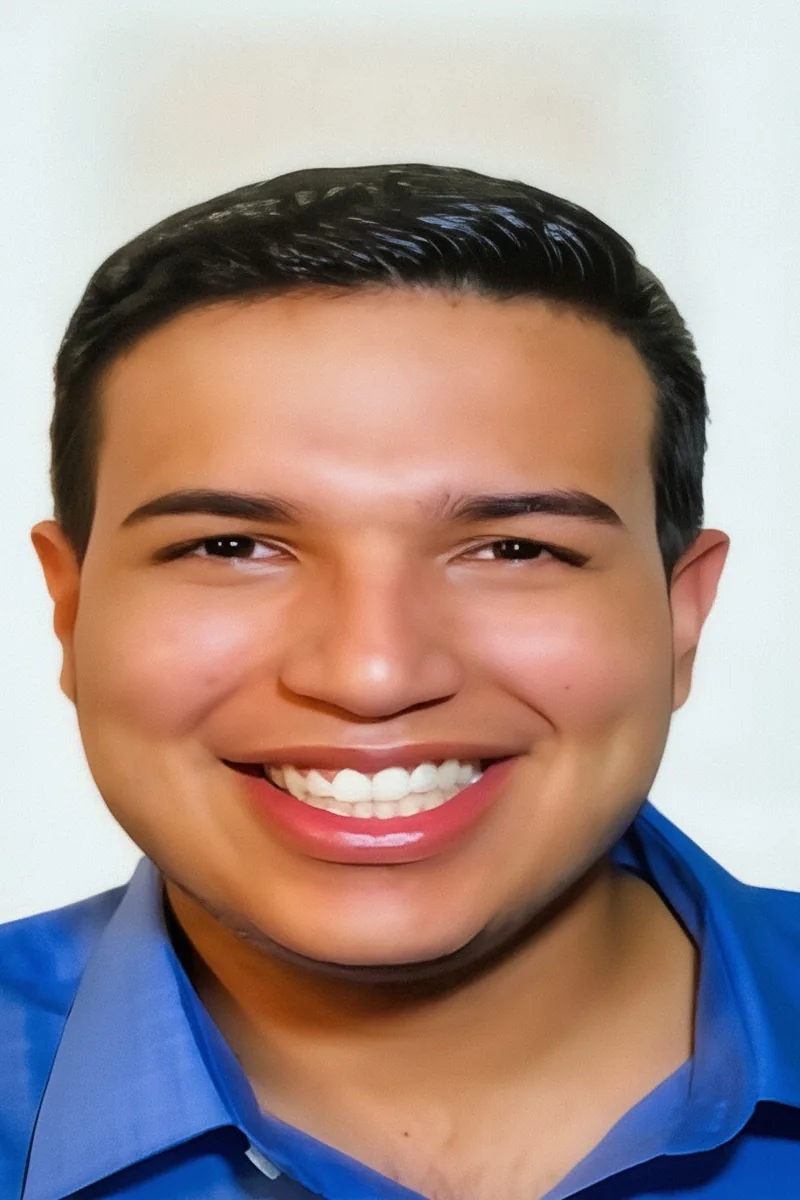
Derek scored a 5 on the AP Calculus BC exam and now studies applied mathematics at Harvard, which means series convergence tests, parametric equations, and polar area problems are still part of his daily toolkit. He breaks down intimidating topics like Taylor series error bounds and integration by parts into repeatable strategies that click on exam day. Rated 4.9 by students.
Two years teaching math at every level at Mathnasium gave Amy an unusual skill for BC Calculus: she can trace a student's confusion with, say, a convergence test or polar area setup back to the specific algebraic or AB-level gap causing the problem. Her biochemistry coursework at Notre Dame also means she's used series approximations and integration techniques in applied contexts like enzyme kinetics and thermodynamics. A 1570 SAT and 35 ACT speak to the across-the-board precision she brings to the trickiest parts of the BC curriculum.
Princeton's public policy program is surprisingly calculus-heavy — Gianna's coursework in economic modeling and quantitative analysis means she's applied integration techniques and series approximations to real policy questions, not just problem sets. She's especially sharp at walking through the logic of convergence tests and parametric curves, connecting each BC topic back to the AB reasoning that makes it click.
Most BC students can mechanically apply a ratio test or crank out a Taylor expansion — where they get stuck is understanding *when* each tool is the right one and *why* it works. Alexander, an applied math major at Rice with a 1580 SAT, approaches BC as a problem-solving course rather than a formula catalog, building each new concept from the reasoning students already developed in AB. That mindset is especially useful for the trickier BC territory — convergence arguments, error bounds, and parametric integration — where intuition matters more than memorization.
Scoring a 36 on the ACT while studying Human Biology at Cornell means Sharan lives at the intersection of rigorous quantitative thinking and applied science — exactly where BC Calculus sits when series approximations and integration techniques start modeling real biological systems. She breaks down the AB-to-BC jump by treating topics like Taylor polynomials and convergence tests as logical extensions of limits and derivatives, not a separate universe of formulas to memorize. Rated 5.0 by students.
BC Calculus covers a massive range — from parametric equations and polar curves to Taylor series and convergence tests — and Dennis's physics research at Princeton demanded fluency in all of it. He connects topics like integration techniques and differential equations to the physical problems they were invented to solve, which makes the logic behind each method click.
Biology majors at WashU don't just memorize — Laura's upper-level coursework in evolutionary modeling and physical chemistry means she's actively using integration techniques, differential equations, and series approximations to solve problems outside a math classroom. That cross-disciplinary fluency is especially useful for BC's trickiest conceptual leap: understanding what a Taylor polynomial actually approximates and why specific convergence tests apply in specific situations. Rated 5.0 by students.
A year as a course assistant in Harvard's math department teaching introductory calculus gave Richard a close-up view of exactly where students' AB foundations crack under the weight of BC material — particularly when series convergence and parametric functions demand a more flexible kind of reasoning. He breaks down topics like interval of convergence arguments and integration techniques by rebuilding the underlying logic rather than layering on new formulas. His perfect 1600 SAT and 36 ACT suggest the kind of precision he brings to each explanation.
Until age 16, Viktor saw math as blind formula memorization — then a series of teachers at the right moment revealed the deeper logic underneath, and he ended up majoring in math at UChicago, where rigorous proof-based coursework made concepts like convergence and infinite series feel inevitable rather than arbitrary. That shift from "memorize the ratio test" to "understand why it works" is exactly what he brings to BC Calculus, especially when students hit the wall where AB intuition stops and formal reasoning about Taylor polynomials and error bounds needs to take over. His 1600 SAT and current CS master's work at NYU keep that analytical edge sharp.
Studying both biomedical engineering and applied mathematics at Johns Hopkins, Nicholas lives in the world where BC Calculus concepts — series approximations, parametric modeling, advanced integration — are daily requirements rather than abstract exercises. He's especially good at breaking down the transition from AB to BC, showing how something like a convergence test or polar area calculation grows directly out of derivative and integral logic students already trust. His 35 ACT and 4.8 rating speak to the clarity he brings to those explanations.
Winning Duke's DT Stallings Award for sustained tutoring of local school students means Taariq has logged serious hours watching where calculus understanding actually breaks down — and BC's leap into series, parametric curves, and advanced integration is where breakdowns happen fastest. His math degree from Duke gives him the theoretical grounding to trace a student's confusion with, say, a ratio test or a polar area integral back to the specific AB concept that isn't solid yet. Rated 4.9 by students.
Testimonials
Because the right AP Calculus BC tutor makes all the difference.
Average Session Rating – Based on 3.4M Learner Ratings
Practice AP Calculus BC
Free practice tests, flashcards, and AI tutoring for AP Calculus BC
Other Washington Tutors
Related Math Tutors in Washington
Frequently Asked Questions
AP Calculus BC covers all of AP Calculus AB material plus additional topics including parametric equations, polar coordinates, and series/sequences. The course focuses on limits, derivatives, integrals, differential equations, and applications of calculus. For students in Washington, DC, understanding this expanded scope is important since BC is the more advanced option and requires mastery of both AB and BC-specific content to succeed on the exam.
Score improvement depends on your starting point and how consistently you apply feedback. Students who work with tutors on problem-solving strategies, practice test analysis, and weak topic areas typically see meaningful gains—often 1-2 points on the 1-5 scale. The key is identifying which specific topics (derivatives, integrals, series, etc.) are holding you back and targeting those systematically rather than reviewing everything at once.
Many students struggle with the conceptual jump from AB to BC content, particularly series and sequences, which feel abstract compared to earlier topics. Pacing is another challenge—the exam covers a lot of ground in 3 hours and 15 minutes, so students often run out of time. Additionally, distinguishing between when to use different techniques (integration by parts vs. substitution, for example) and managing multi-step problems with polar or parametric equations trip up many test-takers.
Start by taking full-length practice exams under timed conditions to identify which sections and topics need the most work. After scoring, review every problem you missed or found difficult—not just to see the right answer, but to understand why you made the mistake (conceptual gap, calculation error, or time management issue). Use this feedback to create a targeted study plan, then take another full practice test 1-2 weeks later to measure progress. Spacing out practice tests over several weeks is more effective than cramming multiple tests close together.
Ideally, start tutoring early in the school year if you're struggling with foundational concepts or want to build strong habits from the beginning. If you're preparing for the May exam, starting by January gives you solid time to work through weak areas and practice under test conditions. However, even a few weeks of focused tutoring in April can help with last-minute strategy and confidence-building, especially if you're targeting specific high-value topics like series or integration techniques.
Building confidence through repeated practice with full-length exams is the most effective way to reduce anxiety—familiarity with the format and timing makes the real test feel less intimidating. Tutors can also help you develop a pacing strategy so you're not rushing, and teach you techniques like skipping difficult problems early and returning to them later. On exam day itself, remember that AP Calculus BC is designed to be challenging, and you don't need a perfect score to earn a 5—focusing on accuracy on problems you can solve beats rushing through everything.
Varsity Tutors connects you with expert tutors who have deep experience with AP Calculus BC curriculum and exam strategies. When you get matched with a tutor, you can discuss your specific challenges—whether that's series, integration techniques, or test pacing—and they'll tailor sessions to address those gaps. Look for tutors who have successfully prepared students for the AP exam and can provide practice materials and strategy guidance alongside concept review.
Your first session is typically diagnostic—the tutor will assess your current understanding of key calculus concepts, review your recent test scores or homework, and identify which topics are causing the most trouble. Together, you'll create a focused study plan for the remaining weeks before the exam, set realistic goals, and discuss your preferred learning style. This foundation helps ensure that every subsequent session is targeted and productive rather than covering material you already know well.
Let’s find your perfect tutor
Answer a few quick questions. We’ll recommend the right plan and match you with a top 5% tutor.