Award-Winning AP Biology Tutors
serving Washington, DC
AP Biology
Tutors in Washington
Private 1-on-1 tutoring, weekly live classes for academic support, test prep & enrichment, practice tests and diagnostics, and more to elevate grades and test scores.
Based on 3.4M Learner Ratings
UniversitiesSchools & Universities
DeliveredHours Delivered
ProficiencyGrowth in Proficiency
Who needs tutoring?
No obligation. Takes ~1 minute.

Carl is a microbiology major at the University of Minnesota who lives the content tested on the AP Biology exam — cell signaling, gene expression, ecology, and evolution aren't just review topics for him but part of his weekly coursework. He breaks down the exam's grid-in and free-response questions by teaching students how to connect biological concepts across units, which is exactly what the AP rubrics reward. Rated 5.0 by students.
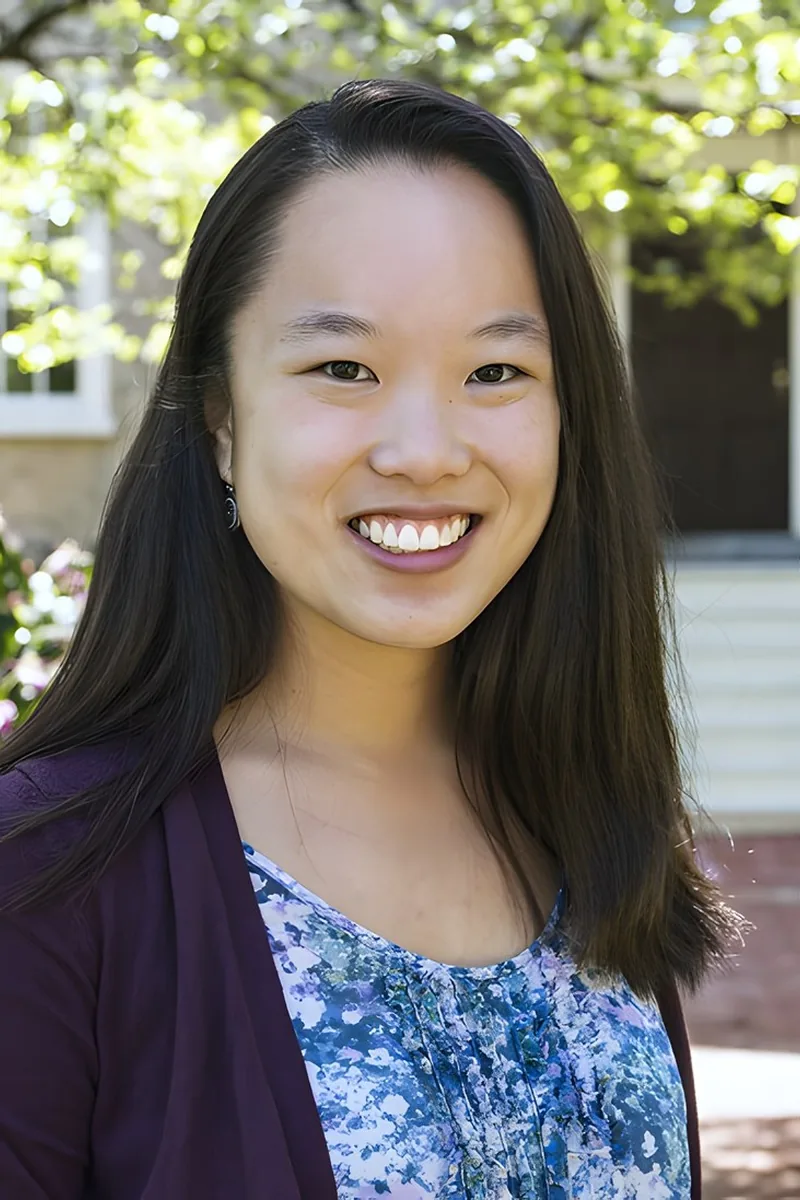
Teaching 10th-grade Biochemistry at a competitive Philadelphia magnet school means Kathleen lives in the overlap between biology and chemistry that defines the AP Bio exam. She digs into the molecular details — enzyme kinetics, cellular respiration energetics, gene expression regulation — with the depth the College Board expects on free-response questions. Rated 5.0 by students.
Studying biological engineering at MIT means Lainie encounters AP Bio's core content — gene regulation, cellular energetics, metabolic pathways — through the lens of designing and modeling biological systems, which gives her a more mechanistic understanding than a standard biology curriculum provides. She scored a 1580 SAT and has tutored students as young as four, so she's practiced at adjusting her explanations to match exactly how much detail a student can absorb. Rated 5.0 by students.
Succeeding on the AP Biology exam means going beyond memorizing cell structures and metabolic pathways — it means interpreting experimental data, constructing explanations, and reasoning across biological scales from molecules to ecosystems. Jake studies Human Biology at Stanford, where his coursework in genetics, physiology, and ecology maps directly onto the AP curriculum's four big ideas.
Between his neuroscience research at the Jungers Center and molecular biology work at the Oregon Stem Cell Center, Daniel has lived the content that shows up on the AP Biology exam — from cellular signaling pathways to gene expression and evolution. He teaches the free-response section by connecting big biological ideas to the experimental design skills the College Board actually tests for.
Studying neurobiology and behavior at Penn means Emily lives in the territory where AP Bio gets hardest — signal transduction, nervous system function, and the molecular machinery behind how cells communicate and respond to their environment. She's especially good at unpacking the genetics-to-phenotype pipeline, showing students how a mutation in one gene can ripple through protein folding, cell signaling, and ultimately organism-level behavior. Rated 5.0 by students.
As a biology major at Washington University in St. Louis who served as a teaching assistant for an upper-level biology course, Alexander knows AP Bio from both sides — the content and the exam. He digs into the trickiest units, like cell signaling pathways and gene regulation, by mapping out the logic visually rather than relying on rote memorization. His approach emphasizes the data-analysis and experimental-design questions that carry heavy weight on the AP exam.
Between her teaching assistant role for introductory biology at Cornell and her active cancer immunotherapy research on melanoma, Annie lives the material that AP Biology tests. She digs into the toughest units — cell signaling, gene expression and regulation, energy pathways — with the kind of mechanistic detail that earns 4s and 5s on the exam.
Running an immunology lab at Columbia Medical Center means Matthew doesn't just remember AP Biology content — he uses cellular signaling, gene expression, and immune system mechanics in active research. He teaches the course's trickiest units, like cell communication and ecology data analysis, by connecting textbook diagrams to what actually happens at the bench. That real-world grounding is especially useful for the AP exam's experimental-design and data-interpretation questions.
Studying biology at Washington University in St. Louis means Laura encounters AP Bio topics like cell signaling, gene regulation, and metabolic pathways in her own coursework every week — so she knows which details matter at the AP level and which are just noise. Her 35 ACT reflects the same kind of precise, analytical reading that the exam's data-interpretation and experimental-design questions demand. Rated 5.0 by students.
Few tutors bring a neuroscience specialization to AP Biology, which means Jhonatan can unpack signal transduction, membrane potentials, and nervous system physiology with a depth most students never get in the classroom. He also tackles the broader curriculum — from cellular respiration energetics to Hardy-Weinberg equilibrium — by tying each unit back to the four Big Ideas the exam is built around.
A molecular biology degree means Andrew has worked through the central dogma, cell division, and metabolic pathways at the bench level — exactly the content AP Bio's exam leans on hardest. His PhD training in law and management might seem unrelated, but it sharpened the argumentative writing skills that translate directly to constructing the multi-part explanations free-response questions demand. Rated 4.8 by students.
From signal transduction pathways to Hardy-Weinberg equilibrium, AP Biology demands comfort with both molecular detail and big-picture ecological thinking. Amanda earned her biology degree at the University of Alabama and later built on that foundation through medical school coursework in genetics, physiology, and cell biology. She breaks down dense topics like gene regulation and cellular respiration into visual, step-by-step logic that sticks on exam day.
Testimonials
Because the right AP Biology tutor makes all the difference.
Average Session Rating – Based on 3.4M Learner Ratings
Practice AP Biology
Free practice tests, flashcards, and AI tutoring for AP Biology
Other Washington Tutors
Related Science Tutors in Washington
Frequently Asked Questions
Score improvement depends on your starting point and commitment level. Students typically see the most significant gains by focusing on their weakest content areas—whether that's cellular respiration, genetics, or ecology—and practicing with released AP exam questions under timed conditions. Many students improve by 1-2 score points (from a 3 to a 4 or 4 to a 5) by working through exam-style problems regularly and building confidence in question interpretation. Personalized tutoring helps identify your specific gaps and creates a targeted study plan rather than general review.
The AP Biology exam gives you 225 minutes to complete 120 multiple-choice questions and 6 free-response questions—which means time management is critical. Many students struggle with spending too long on difficult multiple-choice questions early on, leaving insufficient time for the free-response section where you can earn significant points. The free-response questions especially require time to organize your thinking, cite evidence, and write clear explanations of biological concepts. Working with a tutor on pacing strategies, including which questions to tackle first and when to move on, can dramatically improve your performance.
Students consistently struggle with Unit 3 (Gene Expression and Regulation), Unit 5 (Heredity), and Unit 6 (Variation) because they require understanding abstract molecular processes and interpreting complex pedigree charts or genetic crosses. Cellular respiration and photosynthesis (Unit 3) also trip up many students due to the detailed biochemical pathways involved. The ecology units challenge students who find it difficult to make connections between population dynamics, community interactions, and ecosystem cycles. Varsity Tutors connects you with expert tutors who can break down these complex topics with visual models, practice problems, and real-world applications that make the concepts stick.
Free-response questions on the AP Biology exam require you to demonstrate deep understanding—not just memorization. They typically ask you to explain processes, analyze data, design experiments, or apply concepts to new scenarios. The best preparation involves practicing released free-response questions from past exams and getting feedback on your written explanations. Key strategies include: organizing your response with a clear thesis, using specific vocabulary accurately, citing evidence from data or diagrams, and explaining the "why" behind biological processes. A tutor can help you understand what graders expect, identify weak areas in your explanations, and refine your writing to maximize points.
Ideally, you should complete 2-3 full-length practice tests under timed, exam-like conditions starting about 6-8 weeks before the AP exam. Taking practice tests too early (when you haven't finished studying content) can be demoralizing, but taking them too late leaves no time to address gaps. After each practice test, spend focused time reviewing every question you missed—not just the wrong answer, but why you selected it and what concept you misunderstood. This reflection is where real learning happens. Personalized tutoring helps you interpret practice test results strategically, identifying whether your struggles are content-based, strategy-based, or related to test anxiety.
Data analysis questions test whether you can interpret graphs, tables, and experimental results to draw conclusions about biological processes. Many students struggle because they focus only on describing what the data shows ("the line goes up") rather than explaining why in biological terms ("mitochondrial respiration increased due to higher substrate concentration"). These questions often include unfamiliar organisms or novel experimental setups, which can feel intimidating if you don't know how to approach them. Working through data analysis problems with strategic guidance—learning how to identify variables, recognize patterns, and connect data to biological principles—builds confidence and improves your accuracy on test day.
Since the AP Biology curriculum and exam have evolved, it's important to work with someone familiar with the current framework—which emphasizes four big ideas (evolution, energetics, information and heredity, and systems interactions) rather than just memorizing facts. Varsity Tutors connects you with tutors who specialize in AP Biology and stay current with exam changes. When you get matched, you can discuss your specific challenge areas (whether it's struggling with certain units, test-taking strategy, or managing anxiety), and your tutor can tailor instruction to your needs. For students in Washington, DC, you'll work with someone who understands the pacing and curriculum taught in local schools.
Let’s find your perfect tutor
Answer a few quick questions. We’ll recommend the right plan and match you with a top 5% tutor.