Award-Winning College Chemistry Tutors
serving Washington, DC
College Chemistry
Tutors in Washington
Private 1-on-1 tutoring, weekly live classes for academic support, test prep & enrichment, practice tests and diagnostics, and more to elevate grades and test scores.
Based on 3.4M Learner Ratings
UniversitiesSchools & Universities
DeliveredHours Delivered
ProficiencyGrowth in Proficiency
Who needs tutoring?
No obligation. Takes ~1 minute.

Maha's time as an Organic Chemistry Laboratory TA means she's spent hundreds of hours walking students through reaction mechanisms, spectroscopy interpretation, and lab technique under real academic pressure. She pairs that hands-on experience with a chemistry and biology background that connects general and organic chem concepts to the biochemistry students will see later. Her 5.0 rating speaks to how well that approach lands at the college level.
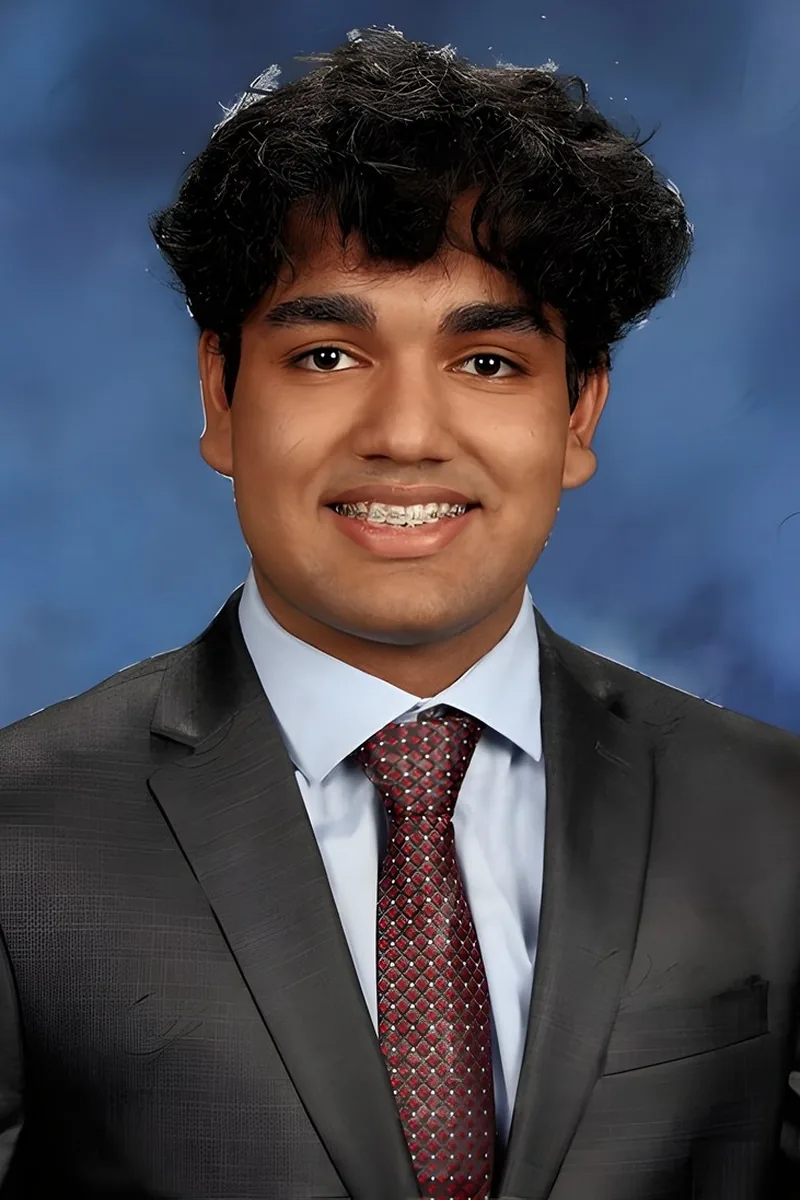
Computer science at Cornell Engineering required Ravnoor to grind through the same rigorous gen chem sequence that gates so many STEM majors — and his 5.0 rating suggests he retained more than enough to teach it. He tackles calculation-dense topics like stoichiometry and gas laws by decomposing them the way a programmer would: isolate the variables, track the units, and debug each step before moving forward.
Chemical and biomolecular engineering at MIT means Natasha uses general chemistry concepts — equilibrium, kinetics, electrochemistry — as daily tools, not just exam topics. She talks through reaction mechanisms and stoichiometry problems out loud with students, treating each session more like a collaborative lab meeting than a lecture. Rated 4.9 by students.
General chemistry at the college level demands comfort with both conceptual reasoning and quantitative problem-solving — balancing redox half-reactions one day, then interpreting molecular orbital diagrams the next. Kate's master's work in environmental engineering required deep fluency in chemical thermodynamics and kinetics, and she brings that applied perspective to topics like enthalpy calculations, acid-base equilibria, and electrochemistry.
Sung earned his B.S. in Chemistry, which means he can unpack topics like thermodynamics, equilibrium constants, and molecular orbital theory with real depth rather than surface-level definitions. He connects abstract concepts — like why Gibbs free energy determines spontaneity — to concrete problem-solving strategies that stick. Rated 5.0 by students.
Neuroscience at Yale meant David couldn't just skim gen chem — he needed concepts like electrochemistry, molecular bonding, and reaction thermodynamics to stick, because they showed up again in every neurobiology and biochemistry course that followed. Now pursuing graduate work in bioethics, he teaches college chemistry by linking each topic to the bigger scientific picture, so students see why mastering something like intermolecular forces or acid-base equilibria pays off well beyond the final exam. Rated 5.0 by students.
Thermodynamics, equilibrium constants, and electrochemistry all click faster when the tutor has spent years applying them in engineering contexts. Abismael earned his B.S. in Chemical Engineering, so he teaches college-level concepts through real reaction systems rather than abstract formulas. He's known for pushing students with spontaneous, exam-level questions until the material becomes second nature.
Li's doctoral-level medical coursework means she's encountered college chemistry concepts like acid-base equilibria, solution chemistry, and reaction energetics in clinical contexts where getting the chemistry wrong has real consequences. Her microbiology and anatomy teaching background also means she can ground abstract gen chem topics — like intermolecular forces or oxidation states — in the biological systems students will see again in upper-level courses.
Forty-plus students tutored in general and AP Chemistry, a bachelor's in chemistry, and a master's in environmental toxicology — Amy has seen college-level chemical concepts from the classroom side and the research side, where sloppy equilibrium reasoning or shaky thermodynamics understanding actually costs you results. She walks through problems like calorimetry, solution preparation, and reaction stoichiometry with an emphasis on dimensional analysis and unit tracking, which is where most gen chem mistakes quietly start. Rated 5.0 by students.
Tackling college-level chemistry means juggling thermodynamics, kinetics, and equilibrium all in the same problem set. Brittany was employed at the University of Pennsylvania's Tutoring Center specifically for General Chemistry I and II, where she worked with both undergraduates encountering the material for the first time and graduate students brushing up on fundamentals. That range sharpened her ability to adjust explanations to any level of preparation.
Fourth-year med student at Albert Einstein College of Medicine, Michael has been applying gen chem principles — acid-base chemistry, reaction thermodynamics, solution behavior — in clinical and biochemical contexts for years, which means he can explain not just how to solve a problem but where that concept resurfaces later. His biology degree from Yeshiva College (summa cum laude) and time teaching MCAT prep for Kaplan gave him practice breaking down the exact topics that trip up college chemistry students: stoichiometry setups, equilibrium expressions, and the leap from qualitative reasoning to quantitative problem-solving.
Engineering coursework at Harvard means Christopher regularly uses chemistry concepts like thermodynamics, equilibrium, and reaction kinetics in applied settings. He teaches college chemistry by connecting abstract ideas — say, Gibbs free energy or electrochemical cells — to tangible problems, making the material easier to internalize before exams.
Working in Duke's Bilbo lab on neuroimmune interactions means Lauren applies gen chem principles — reaction kinetics, molecular polarity, acid-base behavior — in a research setting where getting the chemistry wrong has real consequences for experimental design. That hands-on context, paired with her neuroscience and chemistry coursework, gives her a practical read on which concepts students need to truly internalize versus which ones they're just memorizing long enough to pass the exam. Rated 4.8 by students.
Testimonials
Because the right College Chemistry tutor makes all the difference.
Average Session Rating – Based on 3.4M Learner Ratings
Other Washington Tutors
Related Science Tutors in Washington
Frequently Asked Questions
College Chemistry typically covers atomic structure, bonding, stoichiometry, thermodynamics, kinetics, equilibrium, acid-base chemistry, and oxidation-reduction reactions. Many courses also include an lab component where you'll conduct experiments to reinforce theoretical concepts and develop hands-on scientific skills. The exact curriculum varies by institution, so it's helpful to review your course syllabus to identify which topics need the most support.
Balancing equations requires understanding both the conservation of mass principle and how to manipulate coefficients without changing the chemical formulas themselves—a skill that takes practice to develop. Many students struggle because it feels like trial-and-error rather than a systematic process. Personalized tutoring helps you learn strategic approaches, like identifying oxidation states or using algebraic methods, so equations become logical rather than frustrating.
Molecular visualization is crucial for understanding College Chemistry, but it's an abstract skill that doesn't come naturally to everyone. Tutors can help you develop mental models by working with 3D representations, Lewis structures, and VSEPR theory in ways that connect to how you learn best. Regular practice with different visualization tools and real-world examples—like how molecular geometry affects drug interactions or material properties—makes these concepts stick.
Lab work bridges the gap between abstract theory and real-world chemistry by letting you observe reactions, measure data, and test predictions firsthand. However, many students struggle to connect what they see in the lab back to the concepts they're learning in class. A tutor can help you design experiments with purpose, interpret your results critically, and understand how your observations confirm (or challenge) theoretical predictions.
Unit conversions and stoichiometry are foundational skills that unlock success in College Chemistry, but they require both conceptual understanding and procedural fluency. Many students memorize conversion factors without grasping why the method works, which leads to errors on complex problems. Personalized instruction focuses on building your dimensional analysis skills and problem-solving strategy so you can tackle any stoichiometry problem with confidence.
College Chemistry rewards deep understanding over memorization—you can't memorize your way through problem-solving or lab work. That said, some foundational knowledge (like common ions or periodic trends) does need to be internalized so you can apply it quickly. The best approach is learning why things work the way they do, then using spaced repetition and practice problems to reinforce key facts until they become automatic.
Varsity Tutors connects you with expert tutors for College Chemistry in Washington, DC who understand both the subject matter and the specific challenges students face. You can get matched with a tutor who fits your learning style and schedule, whether you need help with a particular unit, lab preparation, or comprehensive exam review. The matching process takes your goals and preferences into account so you work with someone who can support your success.
Your first session is about building a foundation for your work together—your tutor will assess your current understanding, identify specific challenges (whether it's balancing equations, understanding equilibrium, or lab skills), and learn how you learn best. You'll discuss your goals, whether that's improving your grade, preparing for an exam, or developing stronger problem-solving skills. From there, your tutor will create a personalized plan that targets your needs and helps you make real progress.
Let’s find your perfect tutor
Answer a few quick questions. We’ll recommend the right plan and match you with a top 5% tutor.