Award-Winning IB Mathematics: Analysis and Approaches Tutors
serving Washington, DC
IB Mathematics: Analysis and Approaches
Tutors in Washington
Private 1-on-1 tutoring, weekly live classes for academic support, test prep & enrichment, practice tests and diagnostics, and more to elevate grades and test scores.
Based on 3.4M Learner Ratings
UniversitiesSchools & Universities
DeliveredHours Delivered
ProficiencyGrowth in Proficiency
Who needs tutoring?
No obligation. Takes ~1 minute.

IB Analysis and Approaches is proof-heavy and conceptual in a way that surprises students used to procedural math classes — the exam expects real reasoning about functions, sequences, and differential calculus. Having navigated the IB system herself, Kaya knows how to prepare for both Paper 1's no-calculator rigor and Paper 2's applied problems. She also coaches students through the internal assessment from topic selection to final write-up.
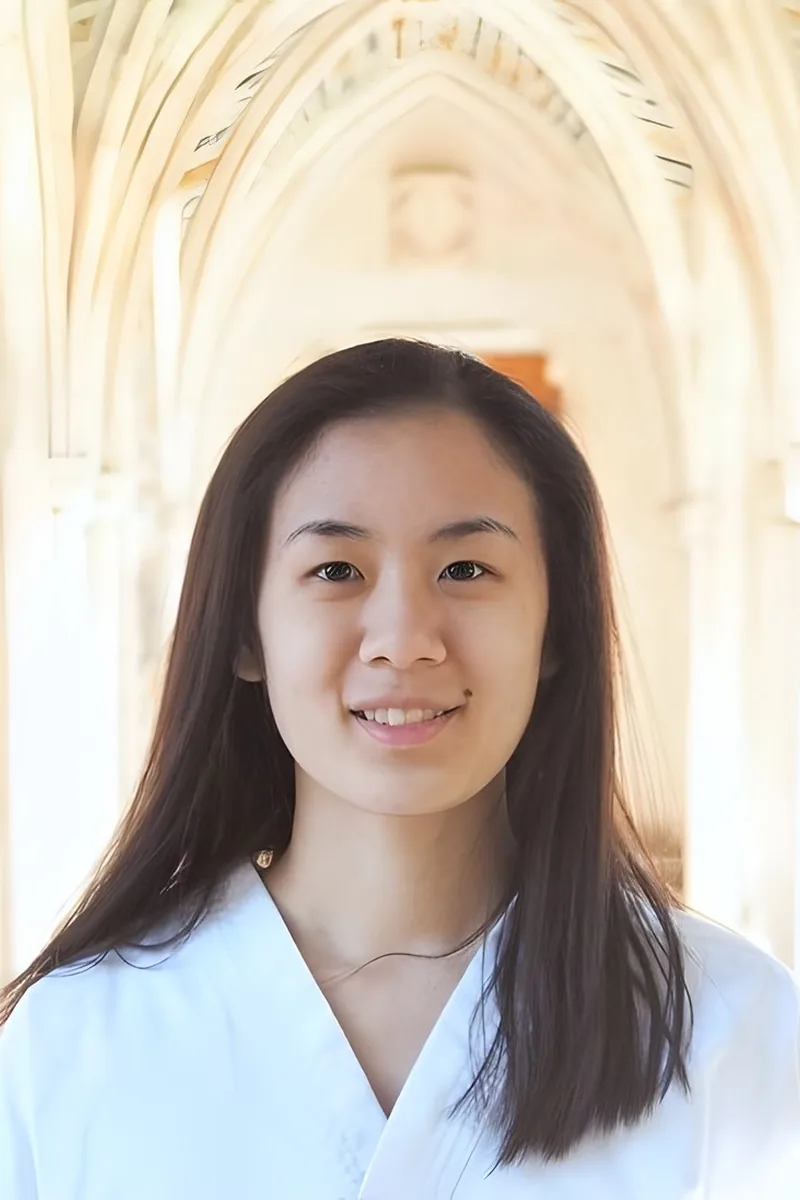
IB Analysis and Approaches covers a demanding range — from proof by induction and complex numbers to calculus-based optimization — and the exam expects both procedural skill and conceptual depth. Florence's combined CS and physics background at Duke maps directly onto the course's emphasis on mathematical modeling and rigorous reasoning. She's scored a 36 ACT and holds a 5.0 tutoring rating, so she knows how to perform under pressure and teach others to do the same.
IB Math: Analysis and Approaches demands comfort with proof-style reasoning and multi-step problem solving that goes well beyond a standard curriculum. Karen's education training at Vanderbilt, combined with her own strong math background, means she can unpack topics like sequences, differential calculus, and probability distributions in ways that align with IB's emphasis on mathematical thinking. She knows how to bridge the gap between understanding a concept and performing under exam conditions.
IB Math: Analysis and Approaches demands comfort with proof-based reasoning, extended problem sets, and topics like sequences, complex numbers, and differential equations that go well beyond a standard curriculum. James's physics background aligns closely with the course's emphasis on mathematical modeling and analytical thinking. He's particularly effective at preparing students for Paper 2 and Paper 3 problems that require multi-step synthesis across topics.
IB Analysis and Approaches demands comfort with proof-style reasoning and multi-step problems that blend calculus, trigonometry, and statistics in a single question. Ehigbor's science-heavy premed training gave her daily practice with exactly that kind of applied mathematical thinking. She tackles both SL and HL content, including the exploration (IA), where choosing a viable research question is half the battle.
IB Analysis and Approaches leans heavily on proof-based reasoning and formal calculus — topics like convergence of series, differential equations, and rigorous probability that demand both computational skill and conceptual clarity. Emily's math background extends through Calc 3, giving her the depth to explain the theory behind HL topics rather than just walking through mark schemes. As a University of Chicago student familiar with the IB system, she also knows how to prep for the paper-specific question styles that catch students off guard.
IB Analysis and Approaches leans heavily on proof-based reasoning and abstract problem-solving, especially at the HL boundary — even SL students need comfort with formal mathematical arguments. Rosalyn's university math training at Amherst gives her fluency with the kind of rigorous thinking the course demands, from differential calculus to probability distributions. She adapts her explanations until each concept lands, which is reflected in her 5.0 student rating.
IB Analysis and Approaches demands comfort with proof-style reasoning and multi-step problem solving that goes well beyond standard coursework. Stephen's experience across abstract and applied math lets him walk students through the program's trickier territory, from differential calculus to probability distributions, while keeping the IB's emphasis on mathematical communication front and center.
IB Math: Analysis and Approaches demands comfort with proof-style reasoning and multi-step problems that blend calculus, algebra, and statistics in a single question. Allison's physics background gives her fluency with the kind of mathematical modeling the IB curriculum emphasizes, and her eight years of tutoring experience mean she knows how to pace students through both SL and HL content without letting anything slip through the cracks.
IB Analysis and Approaches rewards students who can move fluidly between proof-based reasoning and applied problem-solving, especially in the calculus and statistics units. Steven's PhD-level engineering background means he's comfortable with both the rigor the IB expects and the real-world modeling questions that distinguish HL from SL. He carries a 4.9 student rating.
IB Analysis and Approaches blends pure math rigor with applied problem-solving — from differential calculus and series convergence to the statistics and probability options that many students underestimate. Bahaeddine's PhD in Statistics and bachelor's in Mathematics mean he can tackle both the calculus-heavy and data-analysis strands with equal depth. His years teaching at the college level translate into clear explanations of proof-based questions and the internal assessment's mathematical exploration.
IB Analysis and Approaches leans heavily on proof-style reasoning and abstract topics like complex numbers, sequences, and differential equations. Theresa's biomedical engineering degree at Rice covers much of this same territory, giving her a working fluency with the Higher Level content that goes well beyond exam prep.
Testimonials
Because the right IB Mathematics: Analysis and Approaches tutor makes all the difference.
Average Session Rating – Based on 3.4M Learner Ratings
Other Washington Tutors
Related Math Tutors in Washington
Frequently Asked Questions
IB Mathematics: Analysis and Approaches focuses on developing deep conceptual understanding of mathematical principles rather than just procedural skills. The curriculum covers algebra, functions, trigonometry, calculus, statistics, and probability, with an emphasis on mathematical reasoning and real-world applications.
The course is structured around core topics like functions and equations, sequences and series, trigonometry, calculus (differentiation and integration), and statistics and probability. A key difference from standard mathematics courses is the focus on proof, mathematical modeling, and making connections between different mathematical concepts. Tutors working with Washington, DC students can help bridge the transition from procedural learning to the deeper conceptual understanding the IB curriculum demands.
Analysis and Approaches is more theoretical and proof-focused, emphasizing algebraic and calculus concepts with less emphasis on technology. Applications and Interpretation, by contrast, is more applied and technology-driven, focusing on real-world modeling and data analysis.
If you're studying Analysis and Approaches in Washington, DC, you're preparing for a course that requires strong abstract reasoning and comfort with mathematical proofs. Many students find they need support developing this conceptual depth, especially when transitioning from traditional high school math courses that emphasized calculation over understanding.
Students often struggle most with calculus (particularly limits, differentiation, and integration), mathematical proofs, and applying abstract concepts to unfamiliar problem types. The transition from procedural mathematics to conceptual understanding—where you need to explain the "why" behind each step—challenges many learners.
Word problems and multi-step reasoning questions are also common pain points, as they require students to translate real-world situations into mathematical models. With Washington, DC's strong academic environment and competitive IB programs, personalized tutoring can help you develop the problem-solving strategies and mathematical intuition needed to tackle these complex topics confidently.
Varsity Tutors connects students with tutors who understand the specific structure and expectations of IB exams—including the Paper 1 and 2 (non-calculator and calculator sections), Paper 3 (advanced topics), and the internal assessment requirements. Expert tutors help you practice time management, develop efficient problem-solving strategies, and learn how to show your mathematical reasoning clearly, which is essential for earning full marks on IB assessments.
Beyond drill-and-practice, tutoring can help you see patterns across topics and make connections between concepts—a key expectation in the IB curriculum. For Washington, DC students juggling multiple IB courses, personalized instruction allows you to focus on exactly where you need the most support.
Proofs require a shift from "solving for an answer" to "justifying why something is true." This conceptual leap challenges many students because it demands logical reasoning and the ability to communicate mathematics precisely. You're not just calculating—you're constructing an argument.
Tutors help students build this skill by breaking down proof strategies, teaching you to identify what you need to prove, what tools (theorems, definitions, algebraic manipulations) you'll need, and how to structure your reasoning. Regular practice with personalized feedback allows you to develop the mathematical fluency and confidence that makes proofs feel less intimidating and more like a logical puzzle to solve.
Showing work is critically important in IB Mathematics. You can earn significant partial credit by demonstrating correct mathematical reasoning and steps, even if your final answer is wrong. Examiners are evaluating not just your answer, but how you think through problems and justify your methods.
Many students underestimate this and rush through their work. Tutors help you develop clear, organized problem-solving practices where each step follows logically from the last and your reasoning is transparent. This habit of showing work thoroughly also helps tutors identify where your understanding breaks down, allowing them to target instruction exactly where you need it most.
Varsity Tutors connects Washington, DC students with expert tutors who have deep knowledge of the IB Mathematics: Analysis and Approaches curriculum and exam structure. When you get matched with a tutor, you can discuss your specific challenges—whether that's calculus, proofs, exam preparation, or building overall confidence—and work together on a personalized learning plan.
With over 11.7 students per teacher on average across DC schools, personalized 1-on-1 instruction offers a valuable alternative for getting the focused attention you need to develop genuine conceptual understanding in a rigorous curriculum.
Let’s find your perfect tutor
Answer a few quick questions. We’ll recommend the right plan and match you with a top 5% tutor.