Award-Winning AP Pre-Calculus Tutors
serving Washington, DC
AP Pre-Calculus
Tutors in Washington
Private 1-on-1 tutoring, weekly live classes for academic support, test prep & enrichment, practice tests and diagnostics, and more to elevate grades and test scores.
Based on 3.4M Learner Ratings
UniversitiesSchools & Universities
DeliveredHours Delivered
ProficiencyGrowth in Proficiency
Who needs tutoring?
No obligation. Takes ~1 minute.

Being a math and physics major at MIT means Bereket doesn't just know the polynomial, trigonometric, and exponential models in AP Pre-Calculus — he uses them as building blocks in courses that assume total fluency. He teaches the course by slowing down at the exact moments where students lose the thread, particularly when function composition and transformations shift from mechanical steps to questions about behavior and interpretation. That patience with conceptual understanding over formula memorization is what makes his approach click for students preparing for the AP exam.
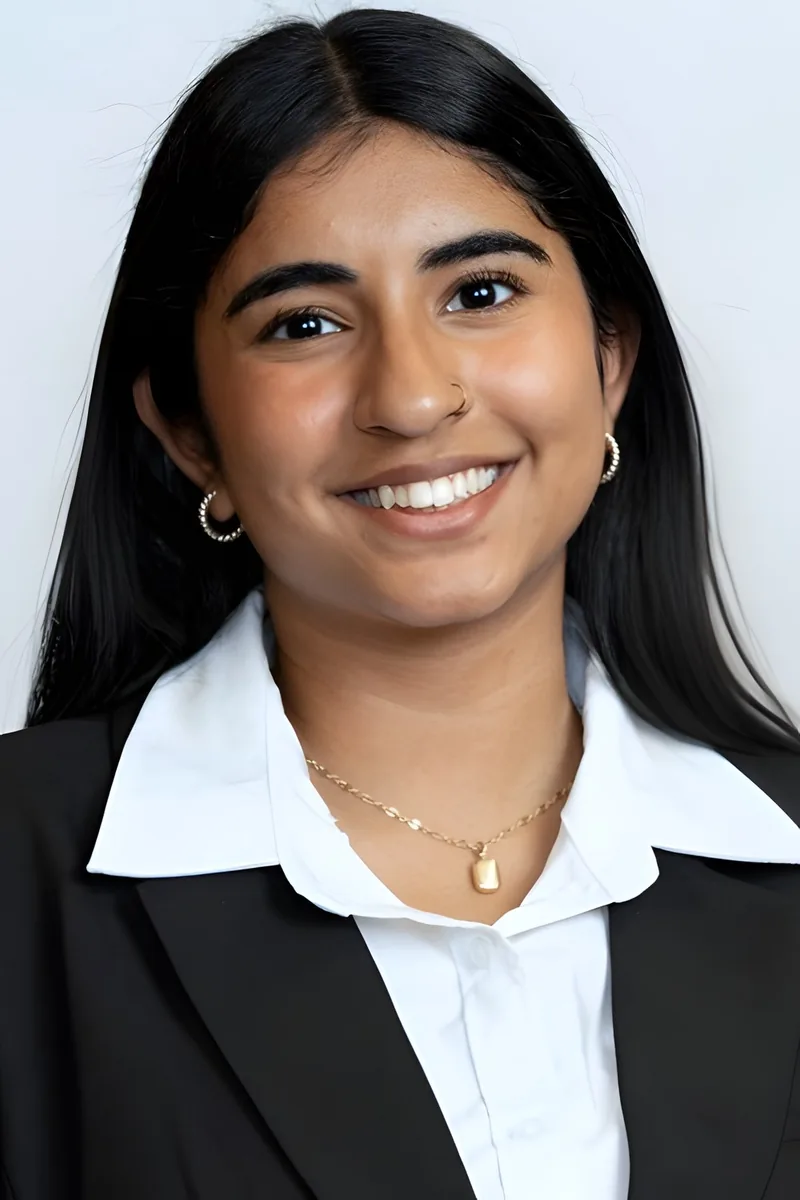
Hi! I'm Kavya, and I'm passionate about helping students build confidence and succeed in school. I tailor each lesson to a student's learning style, making concepts clear, engaging, and easy to understand. I specialize in math, from elementary concepts to algebra, geometry, trigonometry, statistics, calculus, and college-level courses, focusing on true understanding rather than memorization. I also tutor English, reading, writing, grammar, homework support, study skills, organization, and test preparation. My sessions are patient, supportive, and interactive, creating a comfortable environment where students feel confident asking questions. Whether a student needs extra help, wants to improve grades, or wants to get ahead, I provide personalized lessons that build strong academic skills, confidence, and a lifelong love of learning.
Having earned a BS in Biology with High Honors from New Mexico State, Kayley knows the math-science pipeline firsthand — AP Pre-Calculus concepts like exponential growth models and trigonometric cycles showed up constantly in her genetics and ecology coursework. She leans into that cross-disciplinary angle, using real biological scenarios to make abstract function behavior feel concrete. Her approach zeroes in on building the graphical intuition the AP framework rewards, especially around transformations and end behavior.
Studying Astronomy, Astrophysics, and Planetary Science at Florida Institute of Technology, Matthew uses trigonometric and exponential models to describe everything from stellar luminosity curves to orbital dynamics — the same function families AP Pre-Calculus builds its entire framework around. He teaches composition and transformation questions by walking students through what's actually happening to a function's shape and why, drawing on the physical intuition that comes from applying these tools to real systems daily. His experience tutoring college peers in calculus and advanced physics means he can pinpoint exactly where a student's algebraic reasoning needs tightening before the AP exam.
One of the most important things in tutoring math is to make sure students understand why a mathematical procedure works, not just how to do it. When student know how to do the procedure, but don't understand why it works, they will forget the procedure or misapply it, or worse, they may begin to hate math, not because they can't do it, but because they don't understand its relevance.
Industrial engineering coursework at Oakland University had Carly building and optimizing mathematical models daily — the same polynomial, exponential, and trigonometric functions that form the backbone of AP Pre-Calculus, applied to real systems like production scheduling and quality control. She zeros in on helping students move past rote computation to actually interpreting what a function's rate of change or end behavior is telling them, which is where the AP exam separates strong scores from average ones. Her teaching assistant experience in college means she's practiced at catching the specific algebraic missteps that derail students mid-problem.
I love to teach. I love young minds and fresh brains. Those are just like clean sheets of papers I can draw anything I like. I really like to help young people to achieve their full capacities with my long experience of teaching. I am very patient and good at explaining complex concepts in simple terms. I am looking forward to meeting students who need my help.
I love math, and have a passion for sharing that love and knowledge. Progressing through courses of mathematics teaches much beyond what is on the page. It teaches problem-solving, critical and creative thinking. I try not only to teach the mechanics of math, but instill an appreciation for the skills the process can develop. And while math is my favorite subject to tutor, I have had training in and am qualified for all sections of SAT and ACT test prep, and enjoy working with students to help them learn and meet their college goals.
I have tutored and/or taught mathematics since 2009. I have received graduate degrees in mathematics from Clark Atlanta University and the University of Florida. I am very patient with my students and strive to develop their skills, strategies and critical thinking.
AP Pre-Calculus covers function analysis, trigonometry, and modeling at a pace that can overwhelm students who've only seen these topics casually. Joey's scientific computing work at Penn demanded fluency with polynomial behavior, transformations, and rate-of-change reasoning — exactly the skills this course tests. He teaches each unit by tying abstract function properties back to problems students can visualize.
Hi, I'm Sebastian! I'm a student-athlete at Trinity College studying Mechanical Engineering, and I am passionate about helping students find their stride in the classroom. My experience leading youth soccer clinics and mentoring younger teammates taught me that every individual learns differently. I focus on creating an encouraging, structured environment where students feel comfortable asking questions. From math and sciences to study skills, I'm dedicated to providing the guidance and support
Before she found her footing in STEM, Riya struggled with the same abstract leaps that trip up most AP Pre-Calculus students — making sense of how trigonometric, exponential, and polynomial functions actually behave instead of just memorizing formulas. That personal experience shapes how she teaches the course now as a Computer Science major at Texas A&M, where she breaks down composition and transformation questions into concrete, step-by-step reasoning that builds real understanding. She's especially sharp at helping students bridge the gap between algebraic manipulation and the graphical interpretation the AP framework demands.
Testimonials
Because the right AP Pre-Calculus tutor makes all the difference.
Average Session Rating – Based on 3.4M Learner Ratings
Other Washington Tutors
Related Math Tutors in Washington
Frequently Asked Questions
The AP Pre-Calculus exam focuses on four main units: functions and their properties, polynomials and rational functions, exponential and logarithmic functions, and trigonometric functions. The exam tests both conceptual understanding and problem-solving skills, with questions requiring you to analyze function behavior, work with transformations, and apply these concepts to real-world situations.
A personalized tutor can help you master each unit systematically, ensuring you understand not just how to solve problems, but why the methods work. This deeper understanding is key to performing well on the multiple-choice and free-response sections.
Most students benefit from 3-4 months of consistent preparation, though this depends on your starting point and current comfort with algebra and trigonometry. If you're struggling with foundational concepts, starting earlier gives you time to build a stronger base before tackling more complex material.
A structured study plan that includes regular practice, review of weak areas, and full-length practice tests typically leads to better retention and confidence. Varsity Tutors connects you with tutors who can customize a study schedule based on your timeline and goals, helping you prepare efficiently rather than just spending more hours on the material.
Students in Washington often struggle most with trigonometric functions and their applications, particularly understanding unit circle values and working with inverse trig functions. Function transformations and analyzing end behavior of polynomials are also common trouble spots, as they require strong conceptual understanding rather than just procedural skills.
Additionally, the free-response section requires explaining your reasoning clearly, which trips up many students who can solve problems but struggle to communicate their thinking. A tutor can target your specific weak areas, help you recognize question patterns, and coach you on articulating your mathematical reasoning.
Score improvement depends on your starting level and how consistently you engage with tutoring and practice. Students who start with foundational gaps and work with a tutor for several months often see improvements of 2-3 points on the AP scale (1-5). Those already scoring 3s may see their score jump to a 4 or 5 with focused work on advanced topics and test-taking strategy.
The most significant gains come from targeted practice on your specific weak areas rather than generic review. Varsity Tutors connects you with tutors who diagnose exactly where you're losing points and develop a personalized plan to address those gaps.
You'll have 3 hours total, split between two sections: multiple-choice and free-response. Effective pacing means spending about 1 minute per multiple-choice question, which leaves time to review. For free-response questions, allocate 10-15 minutes per problem depending on difficulty, and always skip challenging problems initially to maximize your total points.
Practice with full-length, timed practice tests is essential for developing pacing instincts. A tutor can help you identify which problem types slow you down, teach you to recognize when to move on versus push through, and build your confidence so test anxiety doesn't derail your timing strategy.
Tutoring is beneficial if you're struggling to understand core concepts, consistently making mistakes on similar problem types, feeling anxious about the exam, or trying to move from a 3 to a 4 or 5. Even strong math students often benefit from personalized instruction that focuses on AP-specific strategies and question formats.
With 71 school districts across Washington, DC, students have varying levels of AP preparation support at their schools. Varsity Tutors connects you with expert tutors who specialize in AP Pre-Calculus and can supplement your classroom learning, fill knowledge gaps, and build the problem-solving skills and confidence you need to succeed.
Taking 4-6 full-length practice tests under timed conditions is ideal. Your first practice test helps identify weak areas, middle tests let you apply targeted learning and refine strategies, and final tests build confidence and test-day readiness. More importantly than quantity is quality—after each test, you should thoroughly review every question you missed and understand why.
A tutor can guide your practice test strategy, help you analyze results to spot patterns in your mistakes, and coach you on questions that are still confusing. This turns practice tests into a learning tool rather than just a way to measure where you stand.
Let’s find your perfect tutor
Answer a few quick questions. We’ll recommend the right plan and match you with a top 5% tutor.