Award-Winning AP Chemistry Tutors
serving Hartford, CT
AP Chemistry
Tutors in Hartford
Private 1-on-1 tutoring, weekly live classes for academic support, test prep & enrichment, practice tests and diagnostics, and more to elevate grades and test scores.
Based on 3.4M Learner Ratings
UniversitiesSchools & Universities
DeliveredHours Delivered
ProficiencyGrowth in Proficiency
Who needs tutoring?
No obligation. Takes ~1 minute.

Between earning a biochemistry degree magna cum laude and pursuing a PhD in medicinal chemistry, Noah has lived AP Chemistry's toughest topics — equilibrium, thermodynamics, bonding theory, kinetics — at a level far beyond the AP exam. He knows exactly which conceptual leaps trip students up on free-response questions and tackles those gaps head-on. His 5.0 tutoring rating speaks to how clearly he communicates complex material.
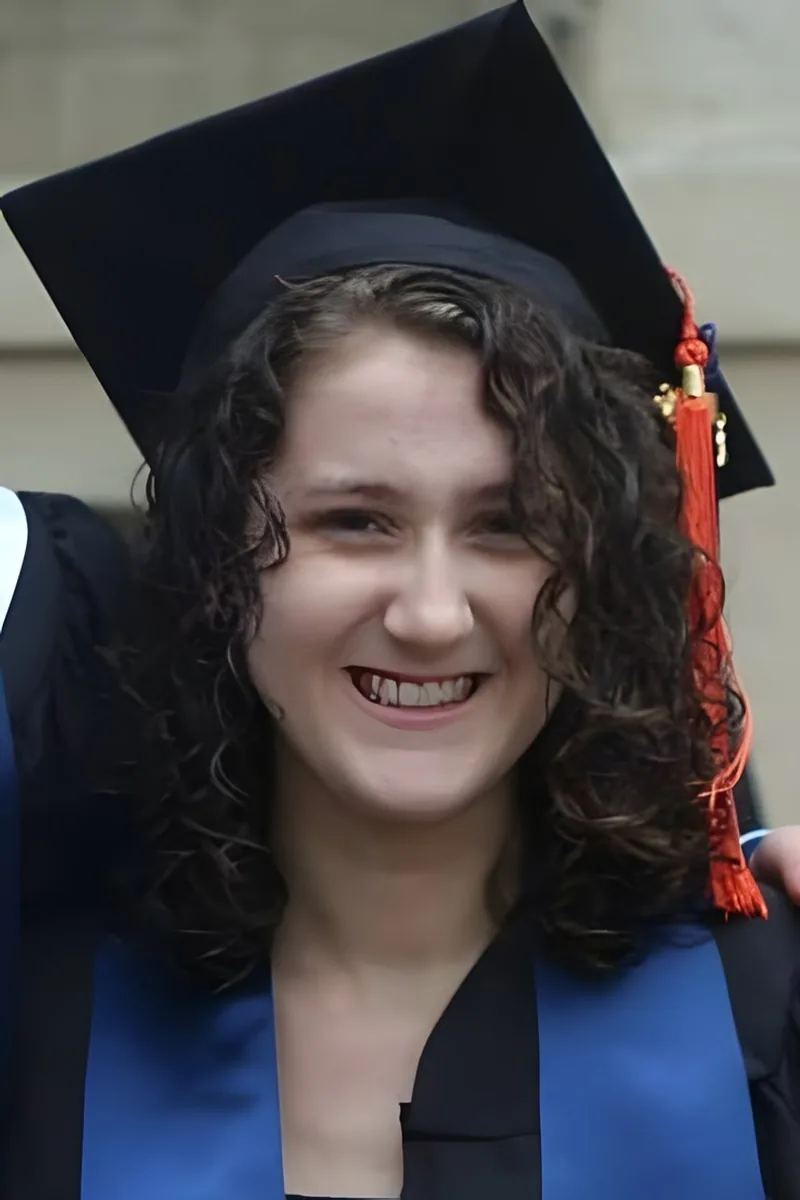
I am a PhD student in Inorganic Chemistry at Yale University. I've been spreading my love of chemistry for the past several years as a TA for general chemistry, and I'm excited to share my passion with you! Prior to Yale, I got my B.S. in chemistry from Caltech, where I also served as a TA for both general chemistry lab and advanced inorganic chemistry. Outside of teaching and research, I enjoy fencing, reading, and playing piano.
Richard coached his school's Chemistry Olympiad team, which means he's comfortable with the kind of multi-step equilibrium, thermodynamics, and kinetics problems that define the AP Chemistry exam. He knows which conceptual gaps — like confusing enthalpy with entropy or misapplying Le Chatelier's principle — tend to cost students the most points on free-response sections. His competition-level chemistry background gives him a toolkit that goes well beyond what most AP prep covers.
A chemistry degree means Sabine didn't just study AP Chemistry topics like equilibrium, electrochemistry, and thermodynamics — she built an entire undergraduate career around them, giving her the depth to explain not just how to solve a problem but why the chemistry works that way. She's particularly sharp on the conceptual reasoning behind reaction spontaneity and acid-base behavior, areas where students often memorize rules without understanding the molecular story. Rated 5.0 by students.
A medical student now applying to Head & Neck Surgery residencies, Patrick has lived through every level of chemistry — from general and organic through biochemistry and the MCAT's chemical foundations — and knows which AP Chemistry concepts actually matter downstream, especially equilibrium, thermodynamics, and acid-base theory. He teaches the free-response side of the exam by connecting each calculation back to the physical process it represents, so students aren't just balancing equations but understanding what drives a reaction forward.
Eric earned his master's in inorganic chemistry and scored a 1500 on the SAT, so he knows both the content depth and the test-taking stamina that AP Chemistry demands. He digs into the trickiest parts of the exam — equilibrium calculations, electrochemistry, and thermodynamic reasoning — with the kind of precision that turns 3s into 5s. His 5.0 client rating speaks to how well that approach lands.
Three semesters as a college chemistry TA gave Joshua deep familiarity with the exact concepts that stump AP students: equilibrium calculations, thermodynamics, and electrochemistry. He knows how free-response questions are structured and teaches students to connect mathematical problem-solving with the conceptual reasoning the AP exam rewards.
Samantha's psychology studies at Princeton might seem unrelated to AP Chemistry, but her neuropsychology focus requires understanding the chemical processes underlying brain function — neurotransmitter synthesis, ion channel dynamics, and the thermodynamics of cellular signaling all draw on the same principles tested in AP Chem. She applies that molecular-level thinking to topics like atomic structure and reaction energetics, teaching students to reason through problems rather than memorize isolated facts. Rated 4.9 by students.
AP Chemistry's free-response questions demand more than correct calculations — they want students to explain why a reaction proceeds, connect molecular structure to macroscopic behavior, and justify claims with particulate-level reasoning. Jake digs into those conceptual explanations alongside the quantitative work, so students aren't blindsided by the written portions of the exam.
The jump from regular chemistry to AP Chemistry usually hits hardest around equilibrium, thermodynamics, and electrochemistry, where problems demand both quantitative precision and conceptual reasoning. Rebecca pairs her biology degree's deep chemistry coursework with a knack for walking through multi-step free-response questions so students learn to show their thinking clearly under exam pressure.
Raj's biochemistry and molecular biology degree means he's lived through the college-level versions of every AP Chemistry topic — from reaction kinetics and acid-base equilibria to the thermodynamic principles that trip up most students on free-response questions. He teaches the quantitative side (stoichiometry, ICE tables, rate law setups) by anchoring each calculation in what's physically happening at the molecular level, so students build intuition alongside technique. His 36 ACT and 5.0 rating back up that approach.
Stoichiometry, equilibrium, and thermodynamics each require a different kind of problem-solving, and AP Chemistry expects fluency in all of them by May. Kendall approaches each unit by anchoring the math in the underlying chemical logic — why a reaction favors products, what a mole ratio actually represents — so students can reason through unfamiliar problems on the exam. She also dedicates time to the lab-based questions that many students overlook in their prep.
A mechanical engineering degree from WashU (Magna Cum Laude) and refinery work at ExxonMobil mean Caroline has applied thermodynamics, kinetics, and gas behavior in industrial settings where precision isn't optional — that real-world fluency translates directly to AP Chemistry's most calculation-heavy units. She teaches concepts like enthalpy changes and reaction spontaneity by connecting them to the energy systems she actually engineered, giving students a concrete anchor for abstract ideas. Rated 5.0 by students.
Cornell's engineering curriculum put Ravnoor through rigorous college-level chemistry, and his computer science training sharpened the algorithmic thinking that pays off when students need to systematically work through multi-step problems like limiting reagent calculations or electrochemical cell setups. He teaches AP Chemistry's quantitative sections by treating each problem like a debugging exercise — isolating variables, checking units at every step, and building toward answers methodically rather than jumping to formulas. Rated 5.0 by students.
Cornell's Chemistry & Chemical Biology program meant Samantha spent years doing the kind of lab work and quantitative problem-solving that AP Chemistry's free-response section is designed to test — from designing experiments around reaction stoichiometry to interpreting spectroscopic data. She's a deeply visual teacher who uses molecular models and diagrams to make abstract ideas like orbital hybridization and intermolecular forces click, especially for students who struggle when the textbook stays purely symbolic. Rated 5.0 by students.
Forty-plus AP and general chemistry students have worked through thermodynamics, electrochemistry, and equilibrium calculations with Amy, and her 5.0 rating speaks to the results. Her master's in environmental toxicology keeps her deeply connected to the material — she teaches AP concepts like Gibbs free energy and kinetics as tools scientists actually use, not just formulas to memorize for the exam.
AP Chemistry's free-response questions demand more than memorizing reactions — they require students to connect equilibrium, thermodynamics, and kinetics into coherent explanations under time pressure. Vishank's data analytics background at Ohio State sharpens how he breaks down multi-step problems, teaching students to identify what the question is really testing before diving into calculations. Rated 4.9 by students.
Testimonials
Because the right AP Chemistry tutor makes all the difference.
Average Session Rating – Based on 3.4M Learner Ratings
Practice AP Chemistry
Free practice tests, flashcards, and AI tutoring for AP Chemistry
Nearby AP Chemistry Tutors
Other Hartford Tutors
Related Science Tutors in Hartford
Frequently Asked Questions
AP Chemistry covers eight major units: atomic structure and properties, molecular and ionic bonding, intermolecular forces and properties, chemical reactions, kinetics, thermodynamics, equilibrium, and acids and bases. The course also includes redox reactions, electrochemistry, and organic chemistry fundamentals. A tutor can help you master these topics systematically and understand how they connect to the free-response and multiple-choice sections of the exam.
Score improvement depends on your starting point and how much time you invest. Students who work consistently with personalized tutoring typically see gains of 2-4 points on the AP scale (out of 5), though some improve more with focused effort on weak areas. The key is identifying which units challenge you most—whether that's equilibrium calculations, thermodynamics, or lab-based questions—and building mastery there first.
Many students struggle with equilibrium problems, thermodynamic calculations, and kinetics because they require both conceptual understanding and mathematical precision. The free-response section also trips up students who can't clearly explain their reasoning or show all steps in multi-part problems. Tutors can break down these challenging units into smaller concepts, use practice problems to build confidence, and teach you how to structure written responses for full credit.
The exam is 3 hours and includes 60 multiple-choice questions (90 minutes) and 3 free-response questions (90 minutes). A smart strategy is to answer all multiple-choice questions first, flagging harder ones to return to, then tackle free-response questions by reading all three before starting—this helps you manage time and energy. Tutors can help you practice pacing with full-length exams, identify which question types you solve fastest, and develop a routine that reduces test anxiety.
Taking 4-6 full-length practice tests spaced throughout your prep is ideal—this builds stamina, reveals weak areas, and familiarizes you with the exam format. Start with one diagnostic test early to identify gaps, then take 2-3 mid-prep to track progress, and finish with 1-2 final exams under timed conditions. A tutor can review your practice test results with you, pinpoint patterns in your mistakes, and adjust your study plan accordingly.
Varsity Tutors connects you with expert tutors for AP Chemistry in Hartford who understand the curriculum and exam format. When you get matched with a tutor, you can discuss your current level, target score, and schedule—whether you need intensive prep or ongoing support through the school year. Tutors work with you flexibly to fit your timeline and learning style.
Your first session is typically diagnostic—the tutor will assess your current understanding of AP Chemistry concepts, ask about your goals and timeline, and learn your learning style. You might take a quick diagnostic quiz or work through a sample problem together to identify your strongest and weakest areas. From there, the tutor creates a personalized study plan that prioritizes the topics you need most help with.
Lab questions on the AP Chemistry exam test your ability to design experiments, analyze data, and explain results—skills that require both conceptual knowledge and communication. A tutor can walk you through past exam lab questions, teach you how to structure your written responses to address all parts of the prompt, and help you practice explaining your reasoning clearly and concisely. Regular practice with real exam questions builds the confidence you need to earn full credit.
Let’s find your perfect tutor
Answer a few quick questions. We’ll recommend the right plan and match you with a top 5% tutor.