Award-Winning College Chemistry Tutors
serving Denver, CO
College Chemistry
Tutors in Denver
Private 1-on-1 tutoring, weekly live classes for academic support, test prep & enrichment, practice tests and diagnostics, and more to elevate grades and test scores.
Based on 3.4M Learner Ratings
UniversitiesSchools & Universities
DeliveredHours Delivered
ProficiencyGrowth in Proficiency
Who needs tutoring?
No obligation. Takes ~1 minute.

Biomedical engineering at UVA meant Colton didn't just take college chemistry — he leaned on it daily through courses in biomaterials, thermodynamics, and biochemistry, where concepts like reaction kinetics and molecular bonding had to actually work in applied contexts. He also served as a TA for Cell & Molecular Biology, so he's practiced at breaking down the overlap between chemistry and biology that trips up so many pre-med and engineering students. Rated 4.7 by students.
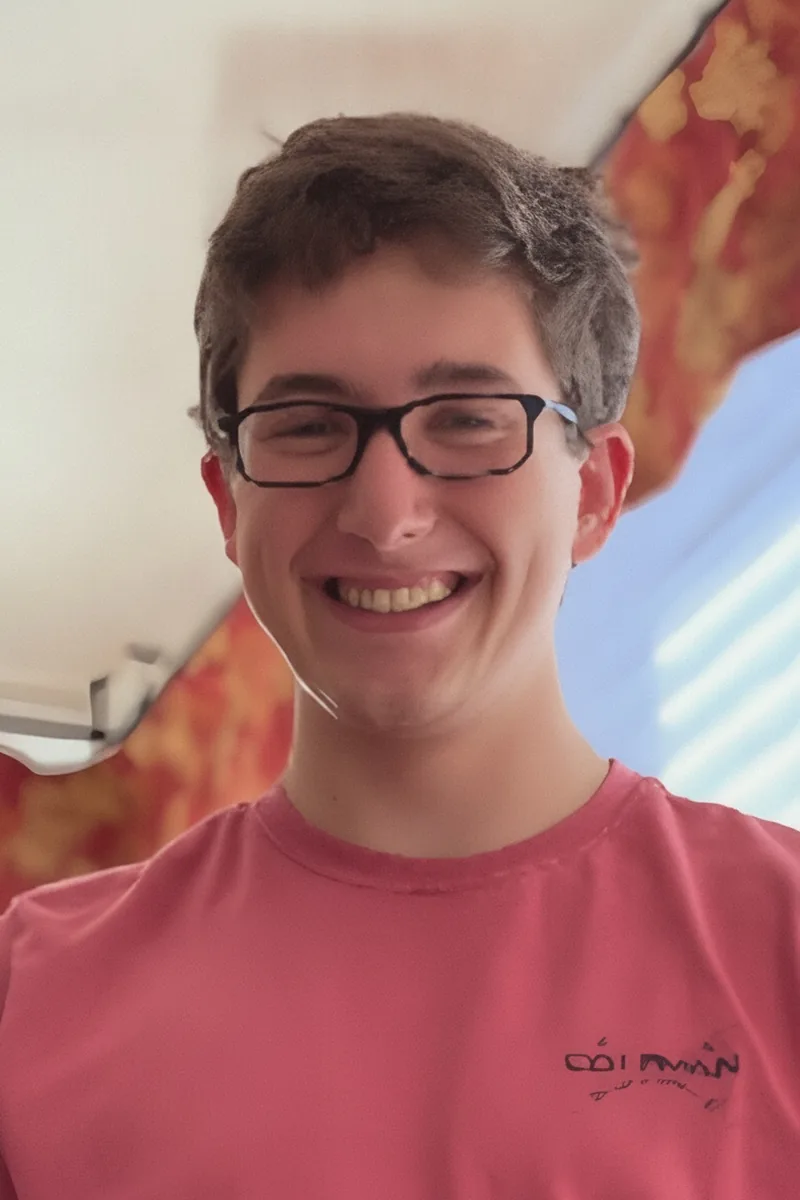
The jump from high school to college chemistry often hits hardest around quantum mechanical models of the atom, thermochemistry, and equilibrium calculations that demand real mathematical fluency. Graham is living that coursework right now as a chemistry major at CU Boulder with a 4.0 GPA, so he knows which textbook explanations actually clarify things and which ones just add confusion. He unpacks derivations step by step so the logic sticks.
A bio-organic chemistry degree means Alex has lived through the full gen chem sequence and then pushed those concepts further — into reaction mechanisms, molecular orbital theory, and the quantitative problem-solving that upper-level chemistry demands. That depth shows up when tackling topics like chemical kinetics or periodic trends, where he can explain not just how to solve a problem but why the underlying chemistry behaves the way it does.
MIT's general chemistry sequence is notoriously fast — Vania not only survived it but tutored other students through it via the university's Seminar XL and Tutorial Services Room programs, where she got fluent in the exact places students stall out on topics like thermochemistry, equilibrium, and electron configuration. Her mechanical engineering training means she thinks about chemistry problems quantitatively, tracing how molecular-level behavior connects to the math rather than treating equations and concepts as separate tasks. Rated 5.0 by students.
Having taken the full gen chem sequence at Cornell alongside organic chemistry and upper-level biology coursework, Jonathan knows exactly where college chemistry concepts like electron configuration, VSEPR theory, and solution stoichiometry start causing problems — usually when the course shifts from memorizable rules to applied reasoning. His human biology background means he naturally ties chemical principles back to biological systems, which tends to click for the pre-med and life science students who make up most of his college chemistry sessions. Rated 4.9 by students.
Computer science at Cornell Engineering required Ravnoor to grind through the same rigorous gen chem sequence that gates so many STEM majors — and his 5.0 rating suggests he retained more than enough to teach it. He tackles calculation-dense topics like stoichiometry and gas laws by decomposing them the way a programmer would: isolate the variables, track the units, and debug each step before moving forward.
Dental school entrance exams and a microbiology degree meant Daniel had to master gen chem twice — once as an undergrad learning the fundamentals, and again at a higher level when topics like acid-base chemistry, solution concentration, and molecular interactions became the foundation for clinical science. That repetition gives him a sharp sense of which concepts students need to truly internalize versus which ones they can reference, and he teaches accordingly — spending more time on the reasoning behind equilibrium and bonding than on memorizing formulas that won't stick.
Matt's neuroscience degree with a chemistry minor means he didn't just pass gen chem — he built on it through upper-level coursework in biochemistry and physiology, where concepts like molecular bonding, reaction energetics, and equilibrium stop being abstract and start explaining how biological systems actually function. That applied perspective lets him teach college chemistry topics by anchoring them to something concrete, which tends to make the leap from lecture notes to problem sets much less painful. Rated 5.0 by students.
Studying chemistry at MIT means Max has tackled the same problem sets, lab reports, and conceptual leaps that trip up college chemistry students — quantum mechanical models, thermodynamic cycles, molecular orbital theory. He approaches each session by identifying the specific concept a student is stuck on and building understanding from the ground up, not just drilling practice problems. His 5.0 rating speaks to how well that method works at the college level.
Neuroscience at Brown meant Crony couldn't just skim gen chem — courses in neurochemistry and cellular biology demanded real fluency with topics like electrochemistry, molecular interactions, and reaction energetics long after the introductory sequence ended. That background gives him a sharp sense of which college chemistry concepts actually need to be internalized versus merely memorized, especially for students heading into upper-level STEM work. Rated 4.6 by students.
Pre-med bio-psychology coursework at UCSB means Aaron has pushed through college chemistry the same way his students are — as a high-stakes prerequisite where every gap in stoichiometry or equilibrium shows up again in upper-division science courses. He talks through problems conversationally, pressing students to explain the reasoning back to him, which exposes shaky understanding far faster than just re-solving practice sets. Holds a 5.0 rating.
Going from a Penn undergrad to medical school means Jessica sat through college chemistry twice — once as a prerequisite and again when biochemistry and pharmacology demanded she actually internalize concepts like reaction energetics, acid-base equilibria, and molecular interactions at a deeper level. That second pass gave her a clear sense of which gen chem topics students need to truly own versus merely survive, and she teaches accordingly. Rated 4.8 by students.
Most college chemistry students don't expect a math major to be the one who makes electron configurations or equilibrium expressions click — but Tessa's mathematics training at Yale means she can cleanly separate the quantitative mechanics of a problem from the chemical reasoning, which is exactly where most gen chem confusion hides. She also scored a 36 ACT and holds a 4.9 rating, though what matters more is her knack for showing students the logical structure underneath topics that otherwise feel like pure memorization.
I've been working with students for over seven years, from middle school all the way through college, across subjects like math, calculus, statistics, linear algebra, chemistry, and physics, with a lot of SAT and ACT prep mixed in. My background is perhaps a little unconventional. I have two bachelor's degrees, one in Engineering and one in Communication Studies, plus a Master's in Design. That combination means I can guide you through challenging technical material and communicate it in a way that is easy to grasp. What I care most about is helping students get to a place where they don't need me anymore. I know that sounds like a strange thing for a tutor to say, but I think it's the right goal. I'm not here to walk you through steps to copy down. I want you to understand why something works, because that's what holds up under pressure, on a test you haven't seen before. If you're ready to ace that test or prove that theorem that's been bugging you, reach out and let's work together
Testimonials
Because the right College Chemistry tutor makes all the difference.
Average Session Rating – Based on 3.4M Learner Ratings
Nearby College Chemistry Tutors
Other Denver Tutors
Related Science Tutors in Denver
Frequently Asked Questions
College Chemistry requires mastering both conceptual understanding and problem-solving skills—many students struggle with balancing equations, unit conversions, and visualizing molecular structures. Additionally, the pace moves quickly, and labs demand careful attention to the scientific method and data interpretation. Personalized 1-on-1 instruction helps students build a solid foundation in these areas before gaps widen, which is especially important since Chemistry often serves as a prerequisite for organic chemistry, biochemistry, and other advanced courses.
Expert tutors use hands-on examples and real-world contexts to make abstract concepts tangible—like explaining equilibrium through industrial processes or bonding through material properties. This approach helps you understand *why* chemistry works the way it does, not just memorize formulas. When you grasp the underlying principles, problem-solving becomes more intuitive, and you're better prepared for lab work and exams.
Yes. Tutors can help you understand experimental procedures, interpret lab results, and apply the scientific method to your coursework. They can also clarify concepts that come up during lab—like why certain reactions occur, how to balance equations for what you're observing, or how to analyze data properly. Strong lab performance often reflects deeper conceptual understanding, which personalized instruction builds.
Your first session focuses on understanding your current level, identifying specific challenges (whether it's stoichiometry, thermodynamics, or lab concepts), and learning your goals. Tutors assess what you already understand well and where gaps exist, then create a personalized plan tailored to your course pace and upcoming exams or projects. This foundation ensures every session after that targets exactly what you need.
Understanding is far more important. While you'll need to know some key formulas and the periodic table, College Chemistry is fundamentally about grasping *why* reactions happen and *how* to apply concepts to new problems. Tutors focus on building conceptual understanding through explanation, visualization, and practice—this approach actually makes retention easier because you're learning the logic behind concepts, not just facts in isolation.
Varsity Tutors connects you with tutors who have strong backgrounds in Chemistry and experience working with college-level students. You can share your specific needs—whether you're taking general chemistry, organic chemistry, or need lab support—and get matched with someone who fits your learning style and schedule. The matching process ensures you work with a tutor who understands Denver-area college curricula and can support your success.
Tutors help you develop problem-solving strategies, practice difficult question types, and identify weak areas before test day. Rather than cramming facts, you'll work through practice problems, learn to visualize molecular interactions, and build confidence in your reasoning. Regular sessions leading up to exams also help you manage the cumulative nature of Chemistry—where early concepts like stoichiometry show up repeatedly in thermodynamics, kinetics, and equilibrium.
Unit conversions require both dimensional analysis skills and understanding of what the units represent—many students memorize steps without grasping the logic, which leads to mistakes. Tutors teach the underlying reasoning behind conversion factors and help you develop a systematic approach to tackling any unit problem. With practice and clear explanation, unit conversions become a reliable tool rather than a source of anxiety.
Let’s find your perfect tutor
Answer a few quick questions. We’ll recommend the right plan and match you with a top 5% tutor.