Award-Winning 12th Grade AP Environmental Science Tutors
serving Colorado Springs, CO
Who needs tutoring?
FEATURED BY


TUTORS FROM
- YaleUniversity
- PrincetonUniversity
- StanfordUniversity
- CornellUniversity
Award-Winning 12th Grade AP Environmental Science Tutors serving Colorado Springs, CO

Certified Tutor
2+ years
Blue
I'm a certified tutor with three years of experience in math and science. I tailor lessons to each student's learning style, making difficult concepts easy to understand. My goal is to build confidence and help students achieve lasting academic success.
Marywood University
Bachelor's

Certified Tutor
Kate
I'm available to tutor biology, chemistry, physics, math from Algebra up through AP Calculus, SAT test prep, and French. I've been tutoring students in science and math for 7 years. I also spent 8 months working and studying in France, and have tutored high school and adult students in French. When ...
Massachusetts Institute of Technology
Masters, Environmental Engineering
Massachusetts Institute of Technology
Bachelors
Certified Tutor
I am a licensed physician from Florida who is currently changing careers. I graduated from the University of Pennsylvania in 2009 and have extensive tutoring and editing experience. While a student, I became a certified writing tutor through the Critical Writing Department. Since I completed my writ...
Nova Southeastern University
PHD, Medicine
University of Pennsylvania
Bachelors, History
University of Pennsylvania
undergraduate
Certified Tutor
9+ years
Jai
I'm a recent Stanford graduate (Electrical Engineering and Computer Science), and have been working at a major Management Consulting firm for a few years now. I personally scored a 2360 (out of 2400) on the SAT and 35 on the ACT and was successful in gaining admission to several top universities. I'...
Stanford University
Bachelors in Electrical Engineering and Computer Science
Certified Tutor
6+ years
Jeffrey
I am enrolled in the Mechanical Engineering PhD program at Rice University which will begin Fall 2020, and I am hoping to return to academia as a professor after earning my PhD. In the meantime, I am looking to share my passion for gaining knowledge, specifically in STEM, by educating the up and com...
University of Notre Dame
Bachelor of Science
Rice University
Doctor of Philosophy, Mechanical Engineering
Certified Tutor
Erika
I am available to tutor middle and high school math, history and test prep. I have tutored math and history in the past and I previously taught a test prep course at a school in Hanoi, Vietnam. I have a lot of experience teaching all the need-to-know tricks to doing great on the SATS/ACTS! When I am...
Harvard University
Master of Public Policy, Public Policy
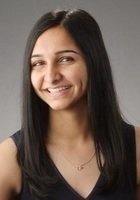
Certified Tutor
6+ years
Rhea
I am a current student at the University of Chicago. I am working towards a Bachelor of Science in Biological Sciences, and I am on the pre-medical track. I am extremely passionate about tutoring, and I have several years of experience tutoring students in my high school's learning center in various...
University of Chicago
Bachelor of Science, Biology, General
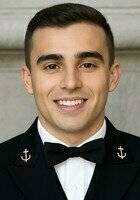
Certified Tutor
Charles
I am a junior Mechanical Engineering major at Yale, and I hope to become a Naval Aviator after college. I am also a varsity sailor, and enjoy playing music with friends when I can get some free time. I have been tutoring my fellow students throughout my entire academic career, and I would best descr...
Yale University
Bachelor of Science, Mechanical Engineering

Certified Tutor
Matthew
I'm a highly creative person who works best with visual thinkers. Very recently graduated from Stanford University, I majored in Human Biology with a concentration in Bioinformatics and Stem Cell Science. Technical though my background may be, I am currently gigging as a singer/songwriter/composer i...
Stanford University
Bachelors in Human Biology (concentration in Bioinformatics and Stem Cell Science)
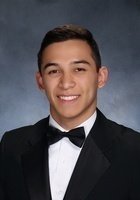
Certified Tutor
6+ years
Samuel
I am a freshman at Caltech majoring in Applied and Computational Mathematics. My favorite subject to tutor is math because I find it very rewarding to simplify complex topics to aid in understanding. I have lots of tutoring experience. In high school, I ran and taught an SAT prep class and was vice ...
California Institute of Technology
Bachelor of Science, Applied Mathematics
Nearby 12th Grade AP Environmental Science Tutors
Other Colorado Springs Tutors
Related Science Tutors in Colorado Springs
Frequently Asked Questions
AP Environmental Science covers eight major units: energy resources and consumption, climate change, ecosystems and biodiversity, soil and water resources, land use and conservation, pollution and human health, social and political responses to environmental issues, and environmental measurement and data analysis. The exam emphasizes both scientific concepts and real-world environmental problem-solving, so understanding how to apply these principles to current environmental challenges is essential for success.
The AP exam consists of two sections: a 90-minute multiple-choice section with 80 questions and a 90-minute free-response section with 3 questions. The multiple-choice tests your knowledge of concepts and data interpretation, while the free-response questions require you to analyze environmental scenarios, design solutions, and support arguments with evidence. Success requires both content mastery and strong analytical writing skills.
Students often struggle with quantitative analysis—calculating population growth, energy conversions, and interpreting graphs and data sets—as well as understanding complex systems like biogeochemical cycles and ecosystem dynamics. Additionally, the free-response section challenges students to synthesize information across multiple units and explain environmental concepts clearly in writing. Personalized 1-on-1 instruction can help you identify which topics need extra focus and develop strategies to tackle them.
Most students benefit from starting exam preparation 2-3 months before the May test date, dedicating 3-5 hours per week to review and practice. This timeline allows you to work through each unit systematically, take multiple practice tests, and identify weak areas before test day. Working with a tutor can help you create a personalized study schedule that fits your learning pace and addresses your specific gaps.
Practice tests are critical—they help you get comfortable with the exam format, improve your pacing under timed conditions, and reveal which concepts need more review. Taking full-length practice tests every 2-3 weeks during your study period allows you to track progress and adjust your preparation strategy. Reviewing your mistakes carefully is just as important as taking the test itself, since understanding why you missed questions helps prevent similar errors on exam day.
Score improvement depends on your starting point and commitment level, but students who work with tutors typically see gains of 1-2 score points (on the 1-5 scale) when they combine personalized instruction with consistent practice over several months. The key is identifying your specific weak areas—whether that's data analysis, essay writing, or particular content units—and targeting those gaps with focused study. Tutors can help you develop efficient study habits and test-taking strategies that maximize your performance.
Data analysis is tested heavily on AP Environmental Science, so practicing with real datasets and graphs is essential. Focus on understanding what different graph types communicate, practicing unit conversions and calculations, and learning to interpret scientific studies and their limitations. Working through practice problems regularly and reviewing your calculation errors helps build confidence—tutors can guide you through complex quantitative concepts and help you develop a systematic approach to solving these problems.
Your first session focuses on understanding your current knowledge level, identifying which topics feel strongest and weakest, and discussing your goals for the exam. A tutor will likely assess your comfort with quantitative reasoning, review your understanding of key concepts, and learn about your learning style and preferences. From there, you'll develop a personalized study plan that targets your specific needs and fits your timeline before test day.
Connect with 12th Grade AP Environmental Science Tutors in Colorado Springs
Get matched with local expert tutors